


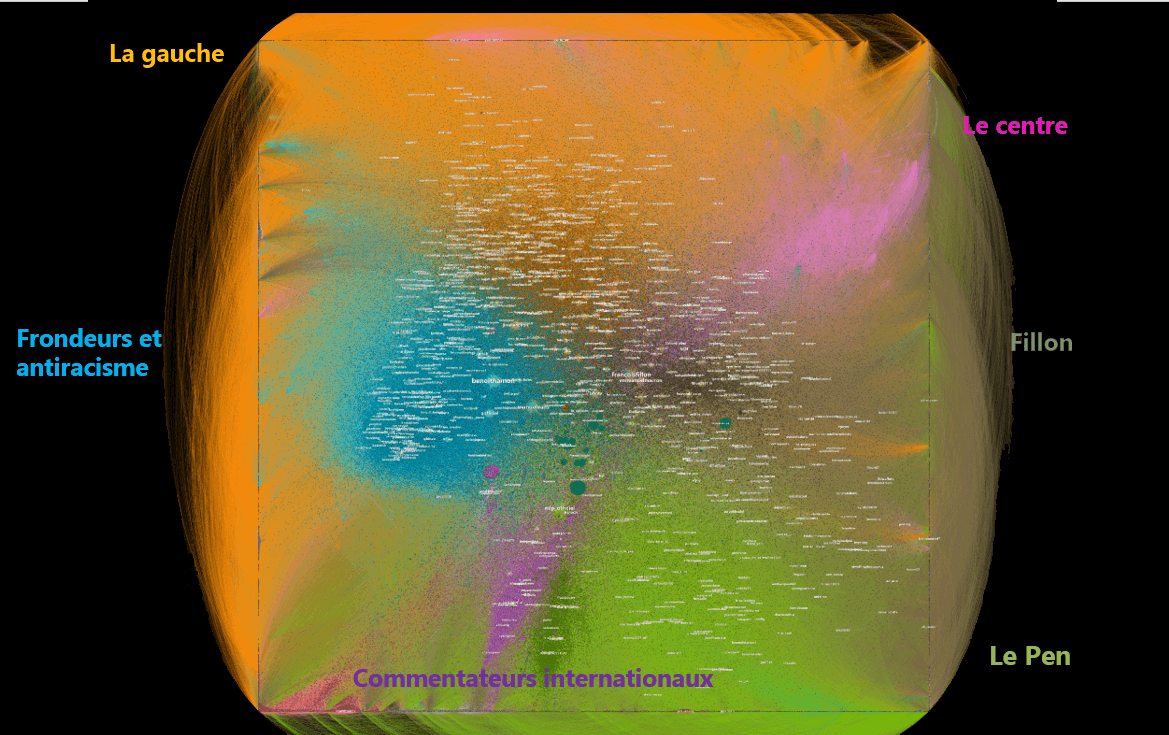
The American elections talked a great deal about information bubbles. Social media are said to lock us into information communities that we gradually fall into. It was therefore very interesting to run the exercise on Twitter, the social network where, by definition, you can follow anyone, and where there is no timeline algorithm. Analysis via Visibrain.
I. 10 million tweets mapped
The first step was to extract more than 10 million tweets around the presidential election. I then mapped all the interactions. The bigger a dot, the more it is mentioned by the other actors. Each colour represents a community according to a clustering algorithm. In reality, the main camps are found in the interactions. This shows de facto that we are in the same situation as on Facebook: we interact with our own political in-group bubble.
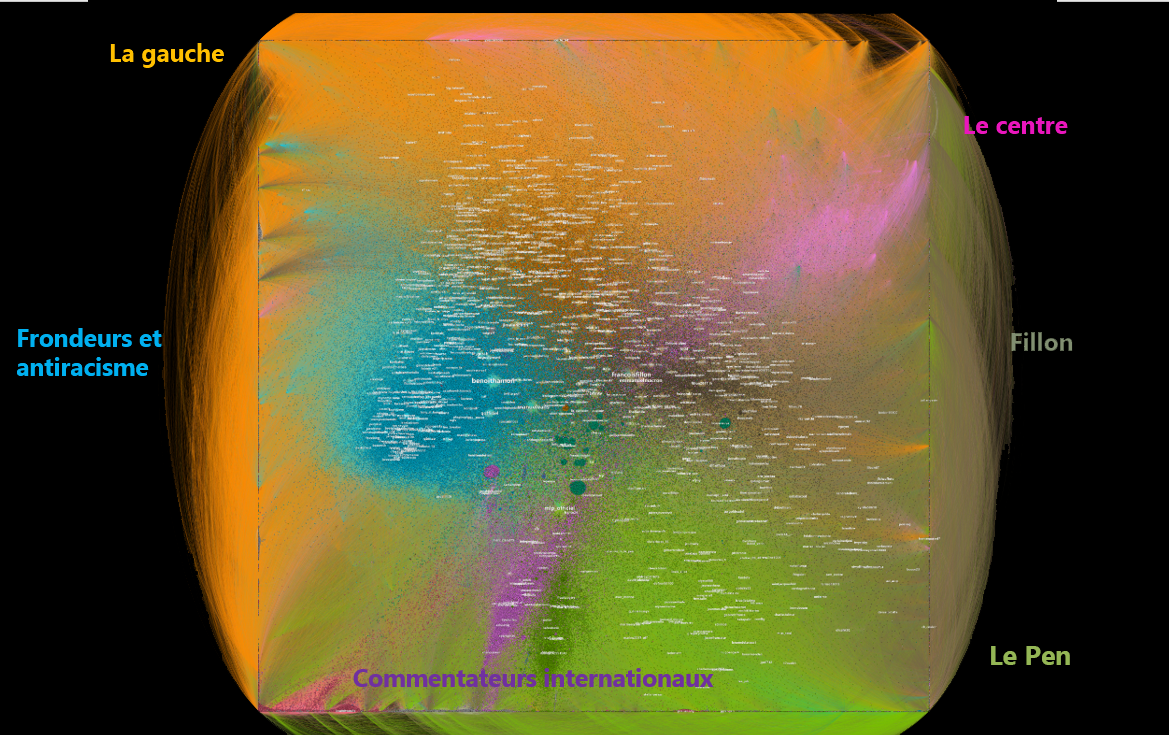
At the same time, I carried out the same exercise for 500,000 tweets around the presidential election (a week of tweets, taken between 7 and 15 April), but this time I observed not the interactions between Twitter accounts and Twitter accounts, but between accounts and domain names:
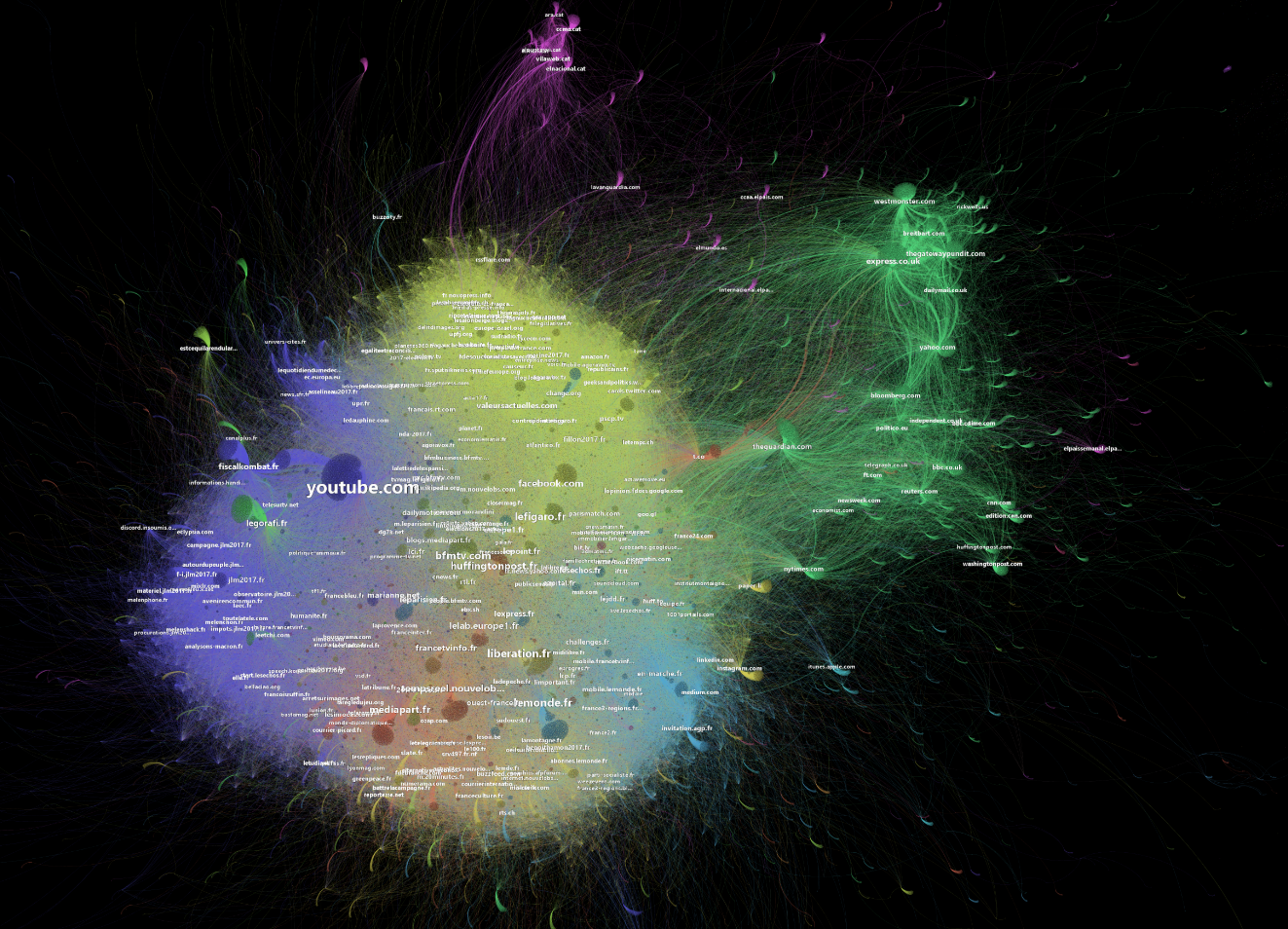
Here again, each activist of each candidate locks themselves into information bubbles. Filtered, this gives the following:
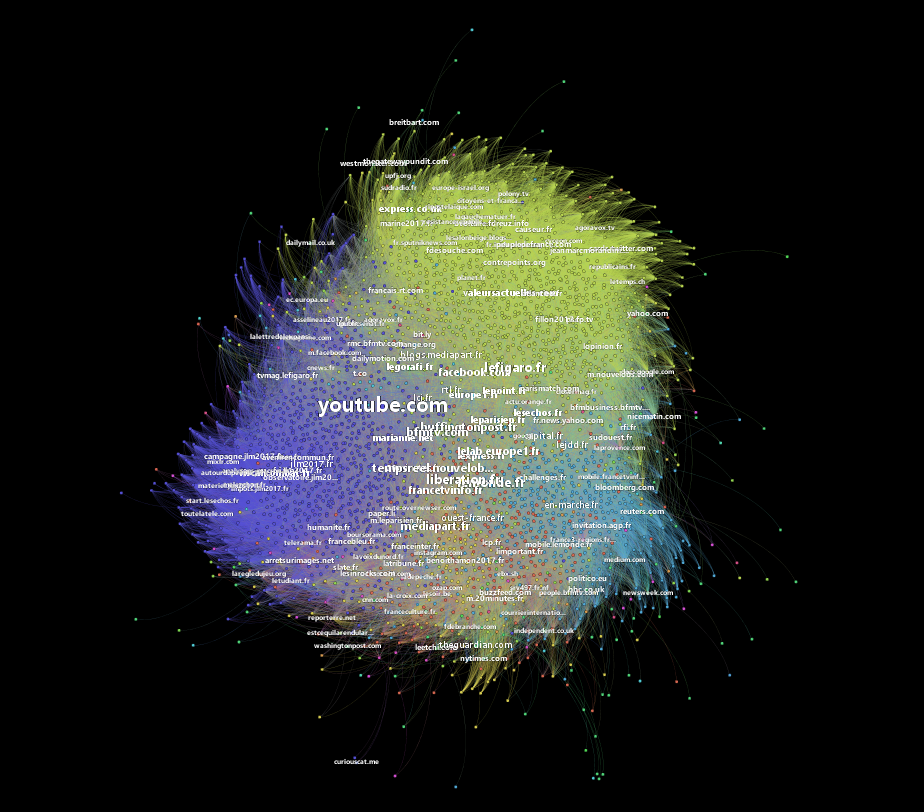
As this is very general, we will look at the main domain names by information bubble.
Information sources by candidate
To filter the communities, I used the communities from the 10 million tweets. For each candidate, I took the 1,000 most active activists within the community, which provides a table of domains via Visibrain. (Over the last two months) In a second step, the map shows a zoom on the part of the domain interaction map that is specific to the community. (The data shown are therefore not the same)
1. Le Pen

With Le Pen, we are very close to the Fillon camp's sources, but on far more conspiracy-minded sites. The top 3 is therefore:
- Boulevard Voltaire
- FrDeSouche
- Le Figaro
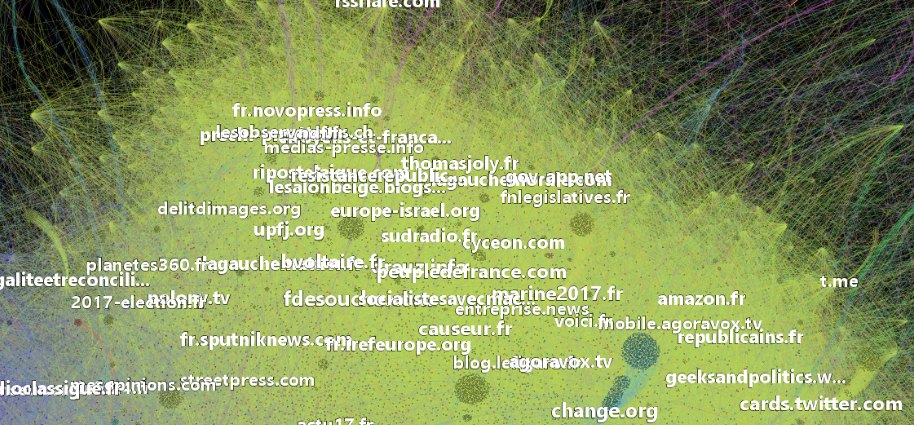
In the map, we note the presence of Sputnik, Égalité et Réconciliation, and other sites that make up the perfect conspiracy theorist's kit.
2. Fillon
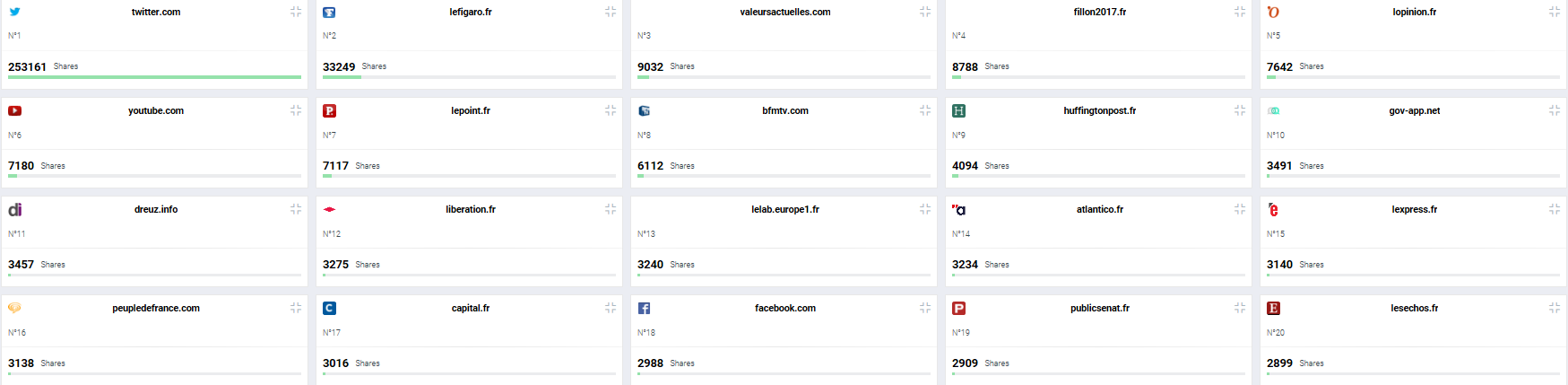
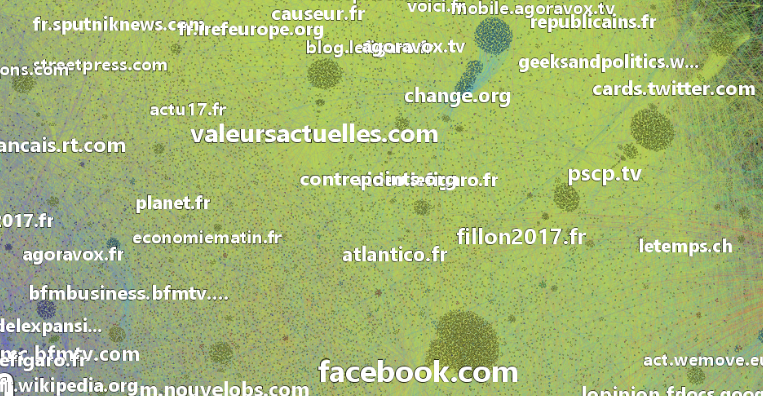
Quite close to Marine Le Pen, François Fillon's communities consult first and foremost:
- Le Figaro
- Valeurs Actuelles
- L’Opinion
3. Macron
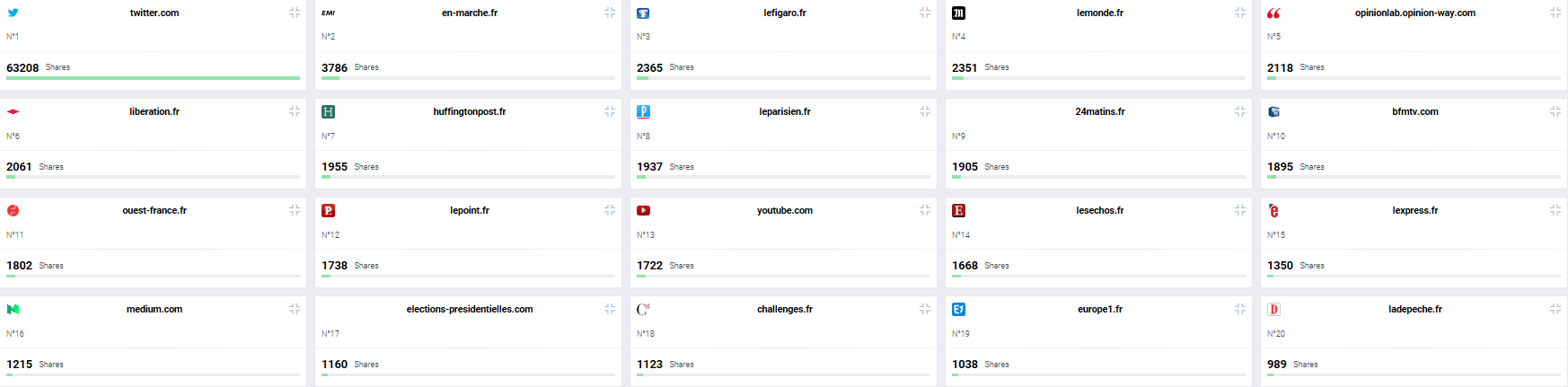
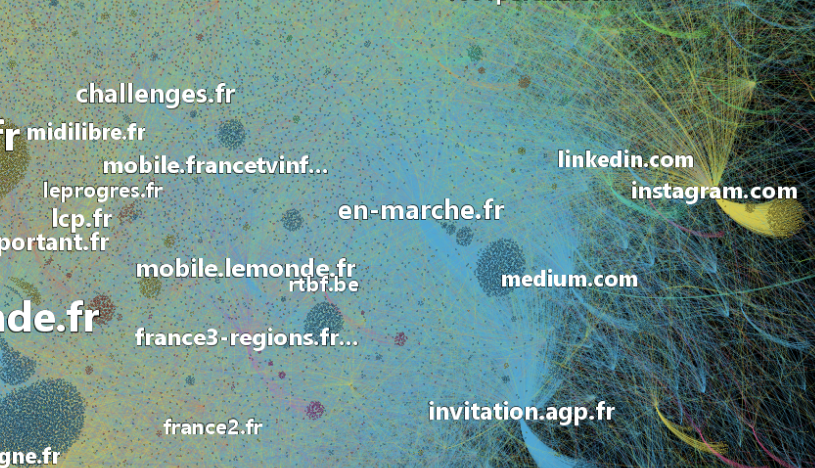
Among Macron's supporters, there is more reading of:
- Le Figaro
- Le Monde
- Libération
In the map we note a clear appetite for Challenges magazine.
4. Mélenchon
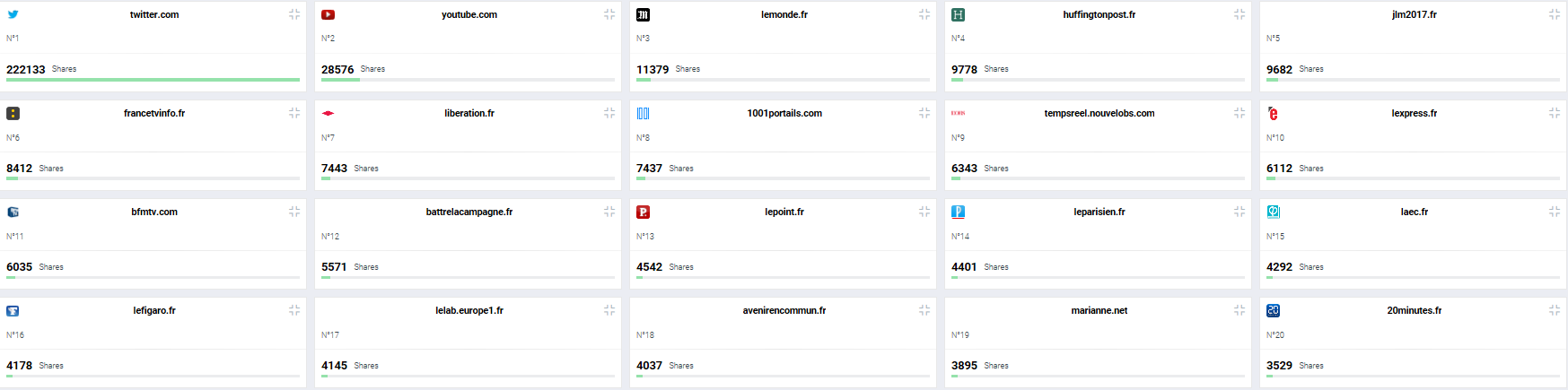
Among Mélenchon's communities, there is more sharing of:
- Le Monde
- L’Huffington Post
- FranceTvInfo
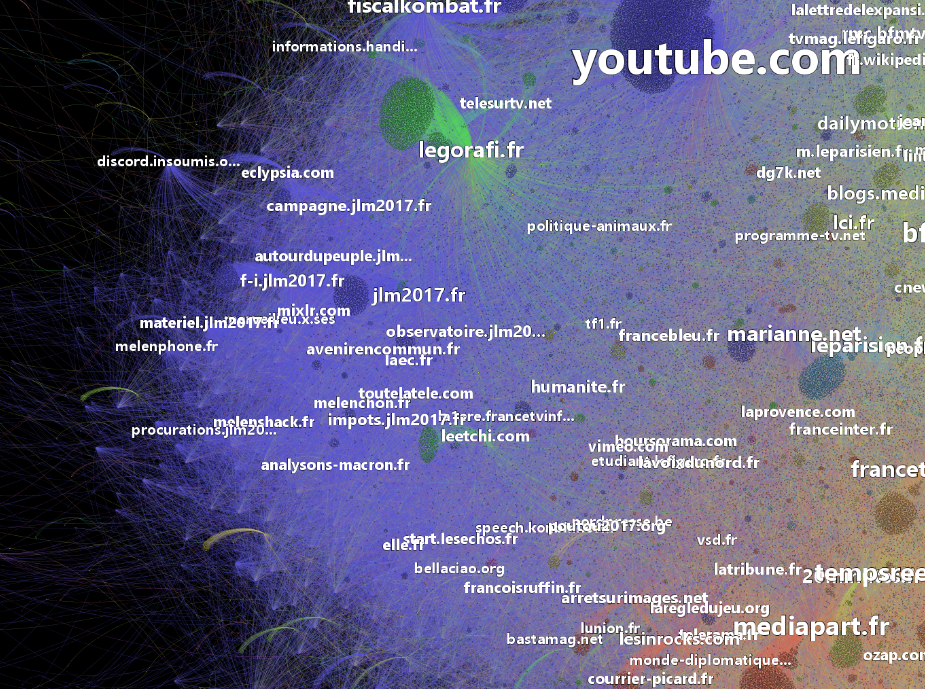
In the map, we can isolate YouTube in particular, the spearhead of Mélenchon's communication. We also see the Discord channel, a platform popular with gamers.
5. Hamon
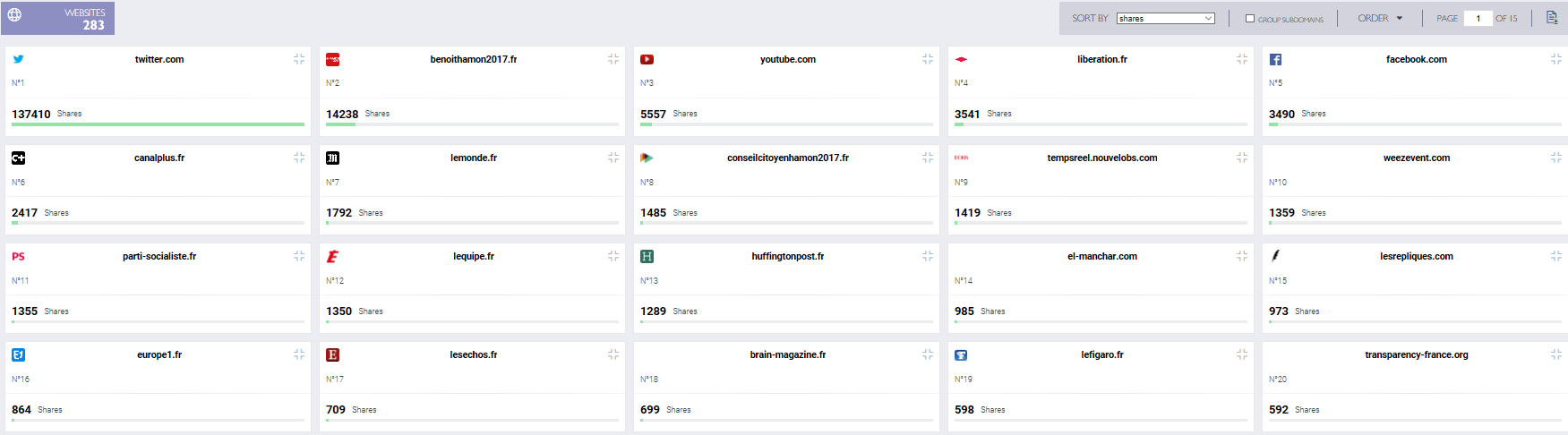
Hamon's activists, for their part, share more information from:
- Libération
- Canal +
- Le Monde
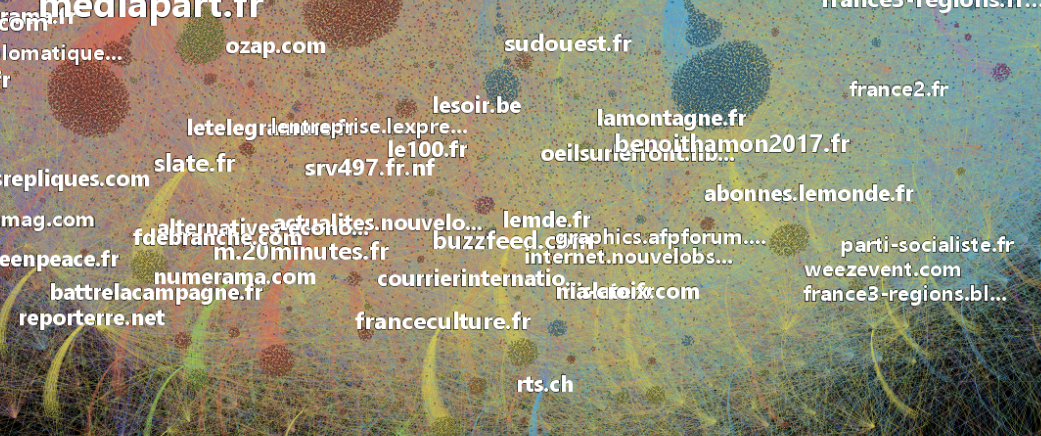
They are also more open to the outside world. In the map we thus see Le Soir or RTS.
Conclusions
Yes, we have information bubbles. And no, it is not an algorithm that puts us in them. We jump in knowingly. This small analysis of Twitter makes it fairly easy to establish. However, caution is still needed, given that most of the people expressing themselves on the presidential election in the press are activists and are therefore more likely to lock themselves knowingly into bubbles. The main media are cited by everyone. One can, however, get frightened on seeing the information bubble formed by Fillon and Le Pen, which drifts away from the traditional media and relays sites that can be described as conspiracy sites.