At every election, I try to deliver, before the vote, the candidates' main indicators on social media. The aim? To avoid any after-the-fact analysis by social media soothsayers. In an election where fake polls have emerged here and there (Filteris, can you hear me?), this work seems more than necessary to me. According to it, Mélenchon would win by a wide margin ahead of Marine Le Pen. Thanks to Visibrain, Talkwalker, SoPrism, and Brandwatch.
Key findings
1. If social media were to vote: Mélenchon wins ahead of Le Pen
Let us be precise: in my view these indicators are worthless. They are merely an indicator of good social media performance, and are no proof of any future result at the ballot box. I dare even hope that the indicators will fail miserably this Sunday.
- Mélenchon would come first: best engagement rate on Twitter and Facebook, largest number of people with an interest according to Facebook, largest number of views on YouTube, largest community during the debates. He outperforms everyone.
- Le Pen would come second: more followers on Twitter and Instagram, second on most of the indicators where Mélenchon performs.
- Macron would come third: the one who manages best to engage the other candidates' Twitter users, biggest gain in Facebook fans and greatest reach on Facebook in public pages (though to be tempered, as there is a lot of negative content)
- Fillon would be 4th: the only indicator he has is the number of comments on his Facebook page.
- Hamon would come dead last. He stands out on no indicator at all.
2. Mélenchon and Macron, the candidates most criticised by the others
Macron and Mélenchon are clearly among the most criticised. However, Fillon also has a community that criticises him assiduously, but this opposition forms a homogeneous whole that gives us a polarised crowd in the conversations.
3. A quick portrait of the candidates
Mélenchon: ultra-high performing on social media, he has the best indicators on almost all social networks. He has managed to capture a young audience, as we see in the article on Facebook. Among his most used words: the Republic, retirement at 60, ecology, social struggles, wages and the citizens' revolution.
Marine Le Pen: lying in wait behind Mélenchon, she manages to place herself well on the main social media. Among her most tweeted themes: Islamism, national borders and economic patriotism. She receives very little criticism from the others, while she is the only one with an international anti-Islam community supporting her.
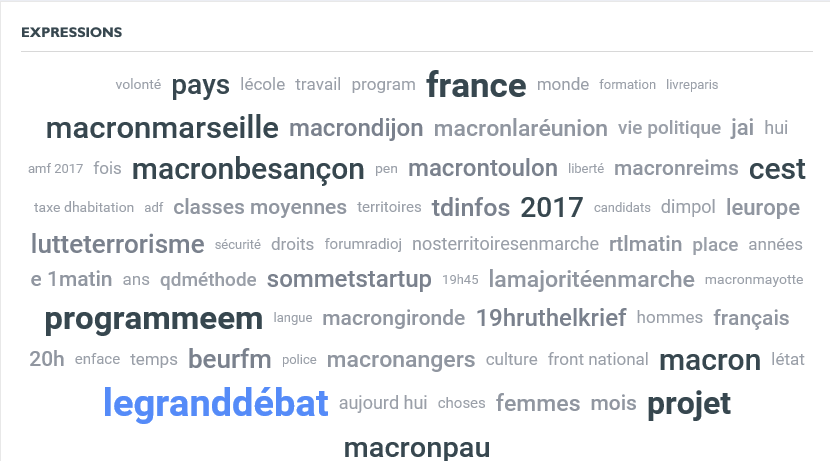
Macron: his indicators are far from the best. There seem to be mainly organisational problems. Among the most tweeted words: terrorism, the “project”, the country. Then come the middle classes, work and culture.
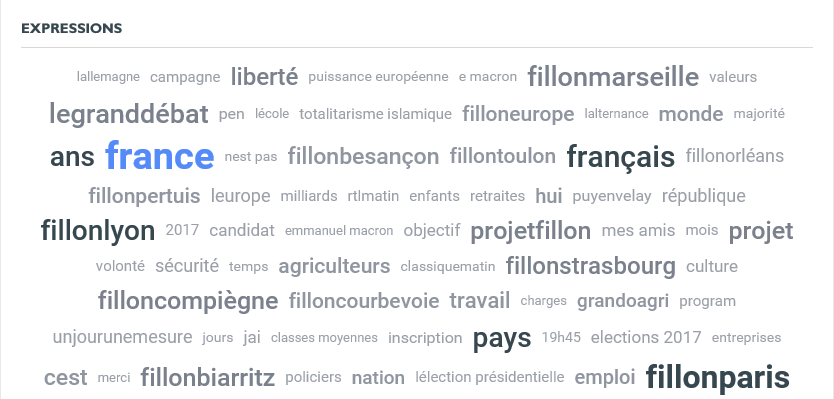
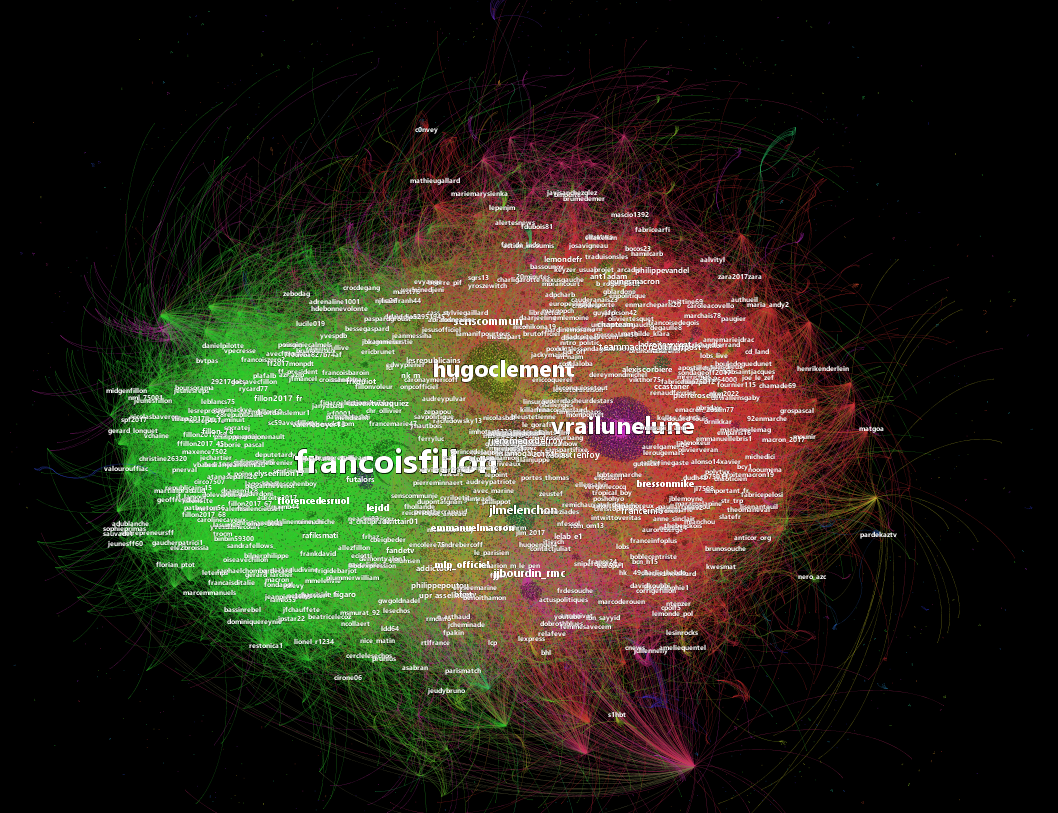
Fillon: After a fairly long period of inactivity due to his troubles, François Fillon was very active in March. His expressions are strongly rooted in France, freedom, work and farmers. Compared with the others, he places quite a few of his campaign themes: European power, Islamic totalitarianism, culture, security and the middle classes. François Fillon is particularly divisive, as we see a crowd polarised between the pro-Fillon (green) and the anti-Fillon (red). His community nonetheless remains very contained, but is extremely active and well organised.
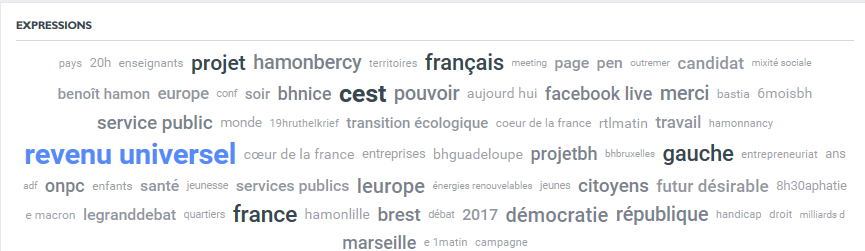
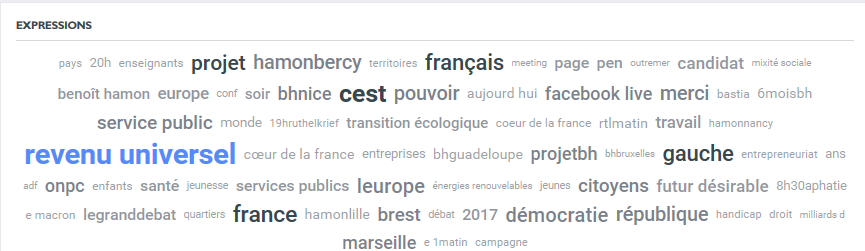
Hamon: far behind the others, Hamon is struggling a little. The expressions include universal basic income, democracy, teachers, the ecological transition and public services.
Contents
I. Comparisons across the different social networks
III. The profile of each candidate based on social media
I. Comparisons across the different social networks
-
Twitter
a) Engagement analysis
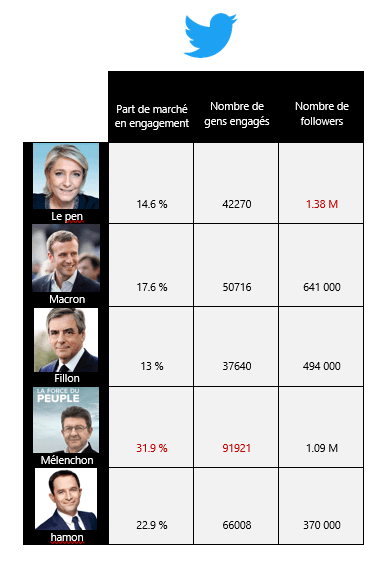
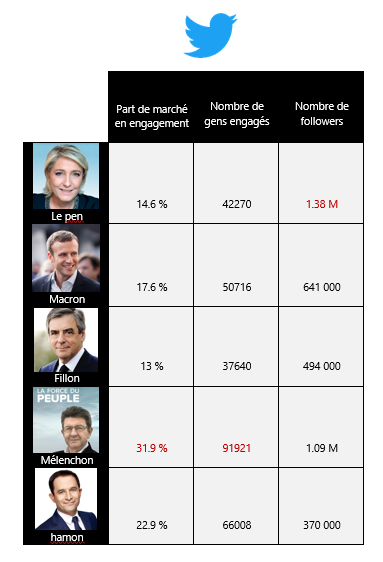
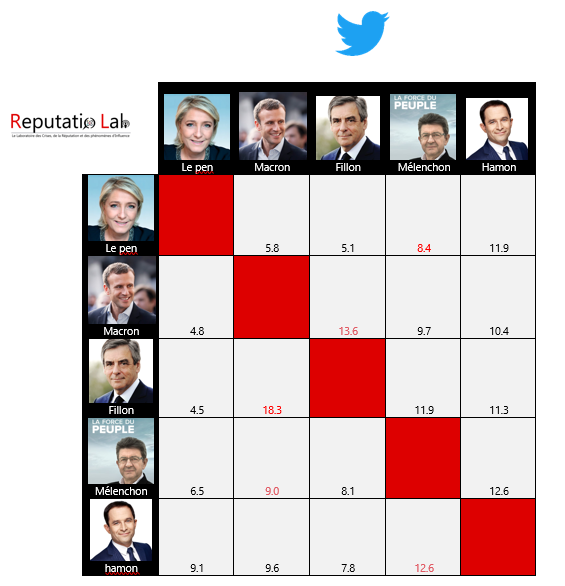
In terms of engagement, Jean-Luc Mélenchon is well ahead of the others with a 31.9% share of engagement. The number of followers goes to Marine Le Pen, but these figures mean little given that the number of fake and inactive users must be particularly large. It is then interesting to look at the overlap between engaged audiences. It is read from horizontal to vertical:
Example: 5.6% of the people who interacted with Le Pen also interact with Macron, whereas 4.6% of those who interacted with Macron also did so with Le Pen, and so on.
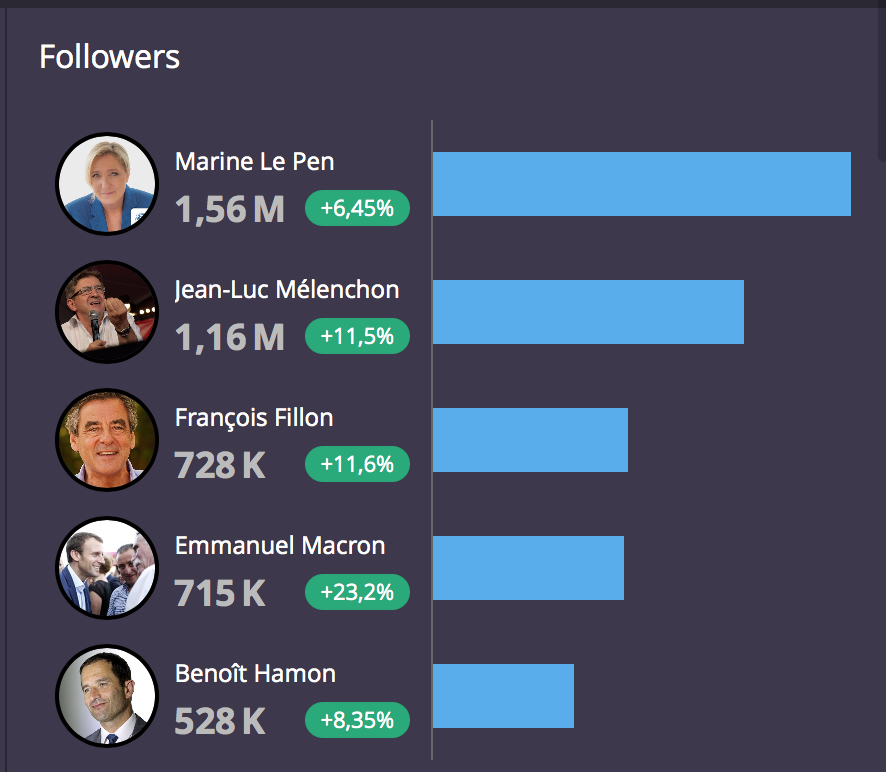
In terms of followers, the one who gained the most in percentage terms over the last 2 months is Emmanuel Macron. This is quite logical given that he had an account with a very low number of followers.
b) Demographic analysis
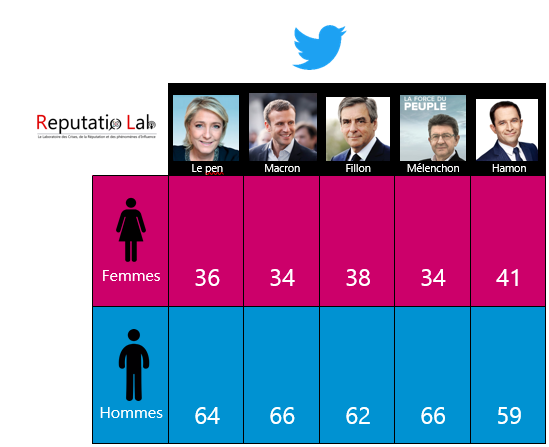
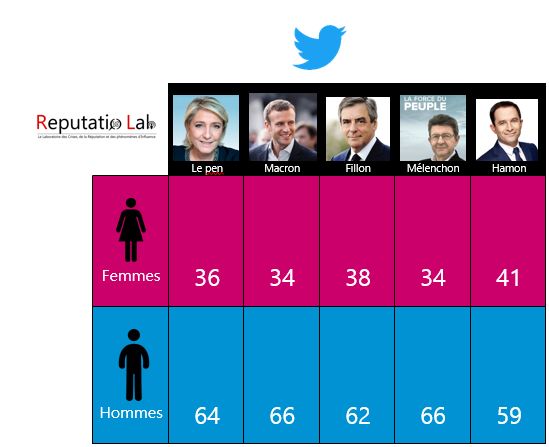
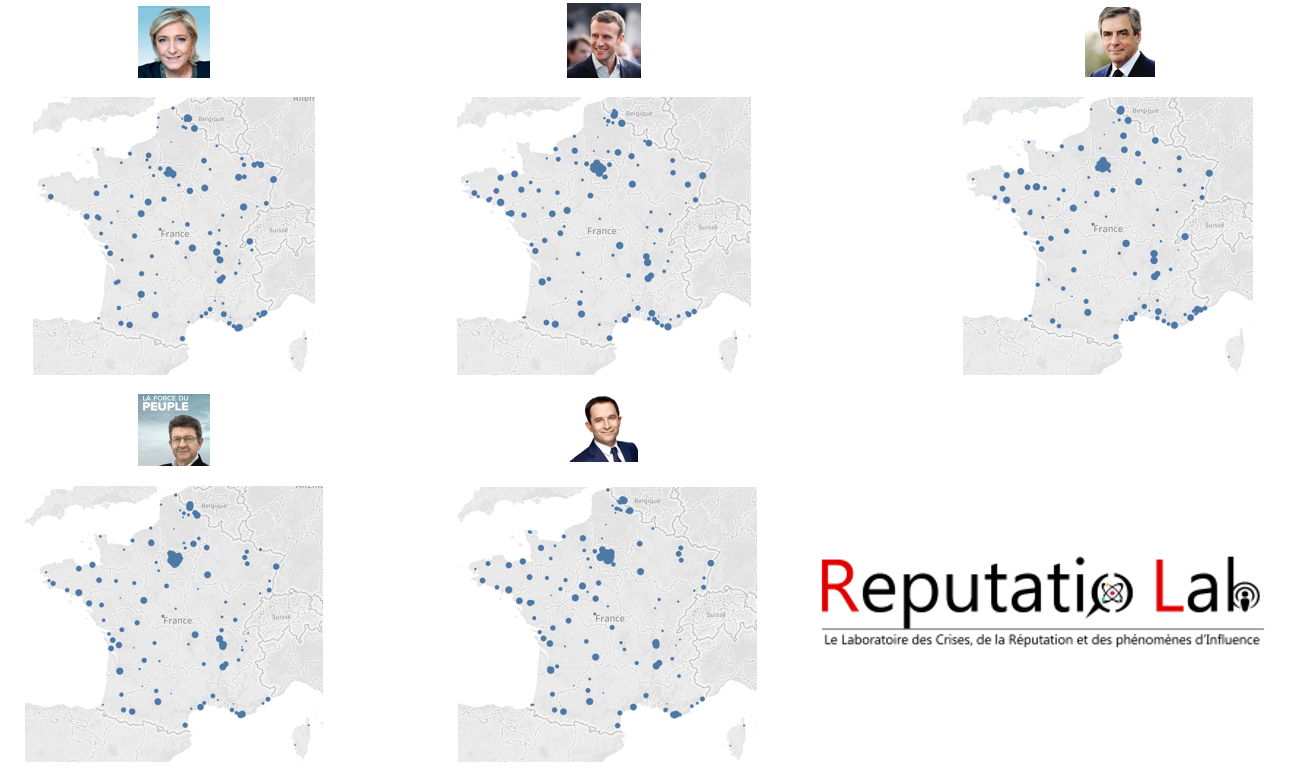
Mélenchon and Macron reach the female audience least on Twitter. By contrast, Hamon is the one with the most women to his credit. Geographically, all the candidates are well spread, unlike in the primaries. We simply note that Marine Le Pen has less audience in the Paris region than the others.
2. Facebook
Back to Contents
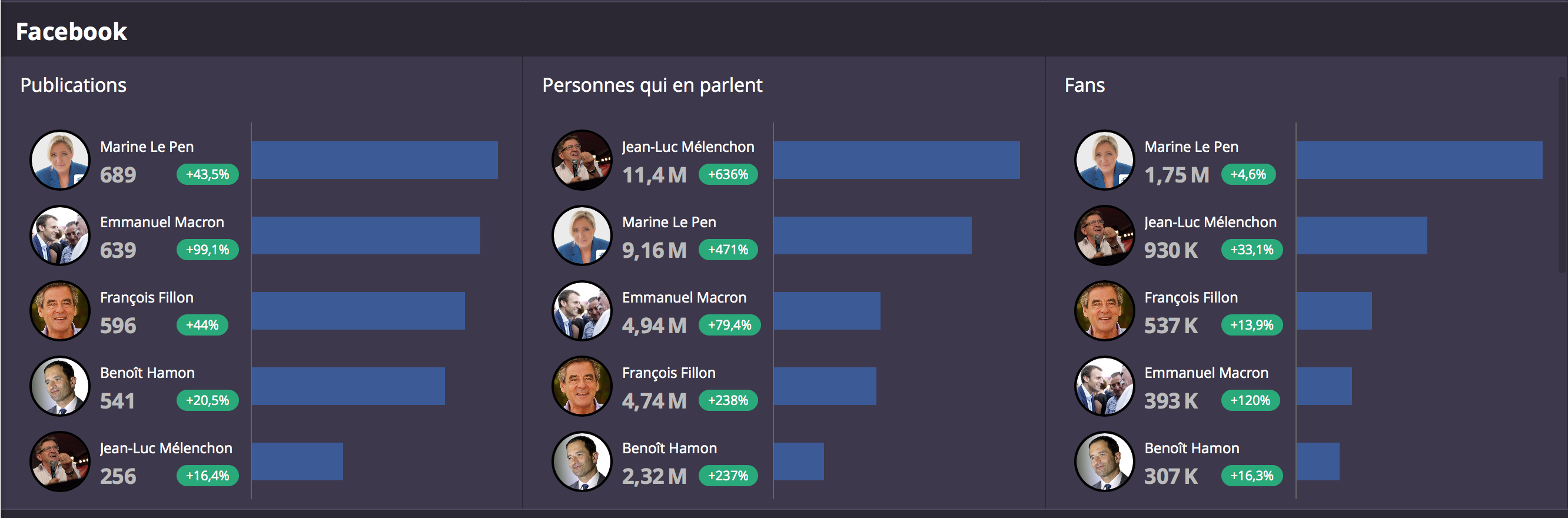
Among those who, according to Facebook, have expressed an interest in a candidate, Mélenchon wins hands down ahead of Marine Le Pen.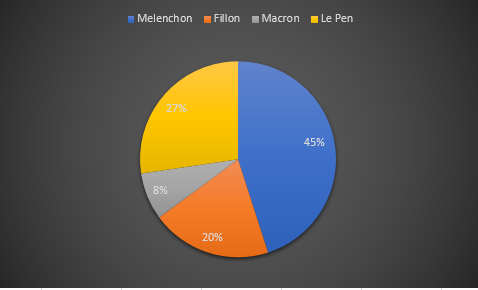
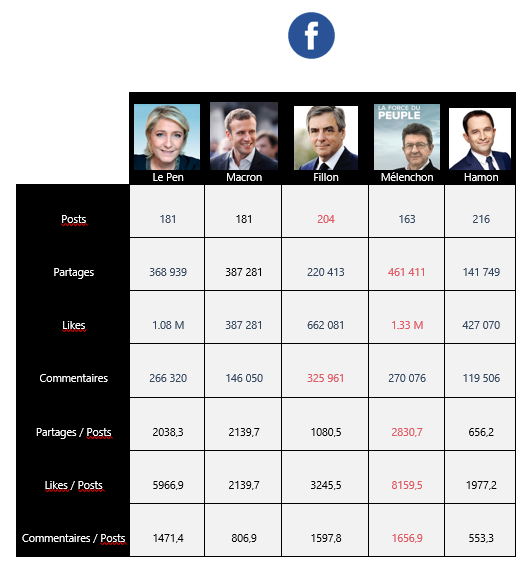
In the full statistics based on the last month this time, Mélenchon also wins: highest number of shares (double Fillon's, triple Hamon's!) and even on comments. (Correction for Macron: it is 104,843 shares)
In the benchmark provided by Radarly, the ranking over 2 months is more or less the same.
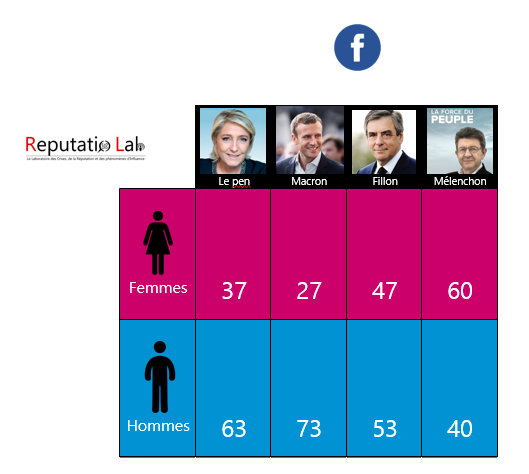
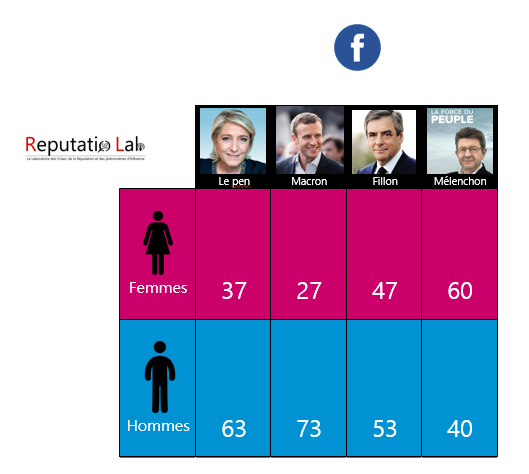
On gender, the figures were obtained via SoPrism, and therefore from people who, according to Facebook, have an interest in the candidates. Emmanuel Macron is clearly the one who captures the female audience least, which confirms the Twitter statistics.
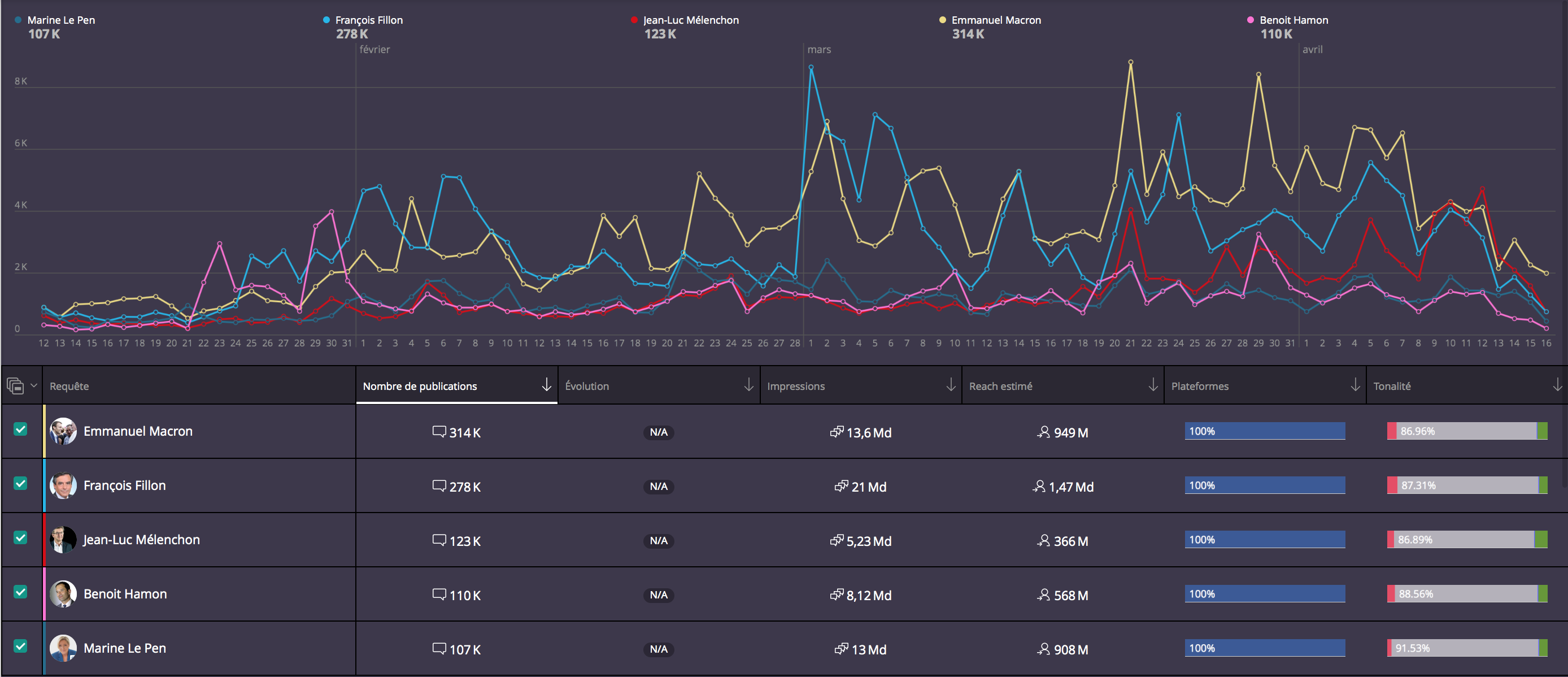
Across all public pages on Facebook, Macron nonetheless comes out on top in reach:
3. The others, in no particular order
Back to Contents
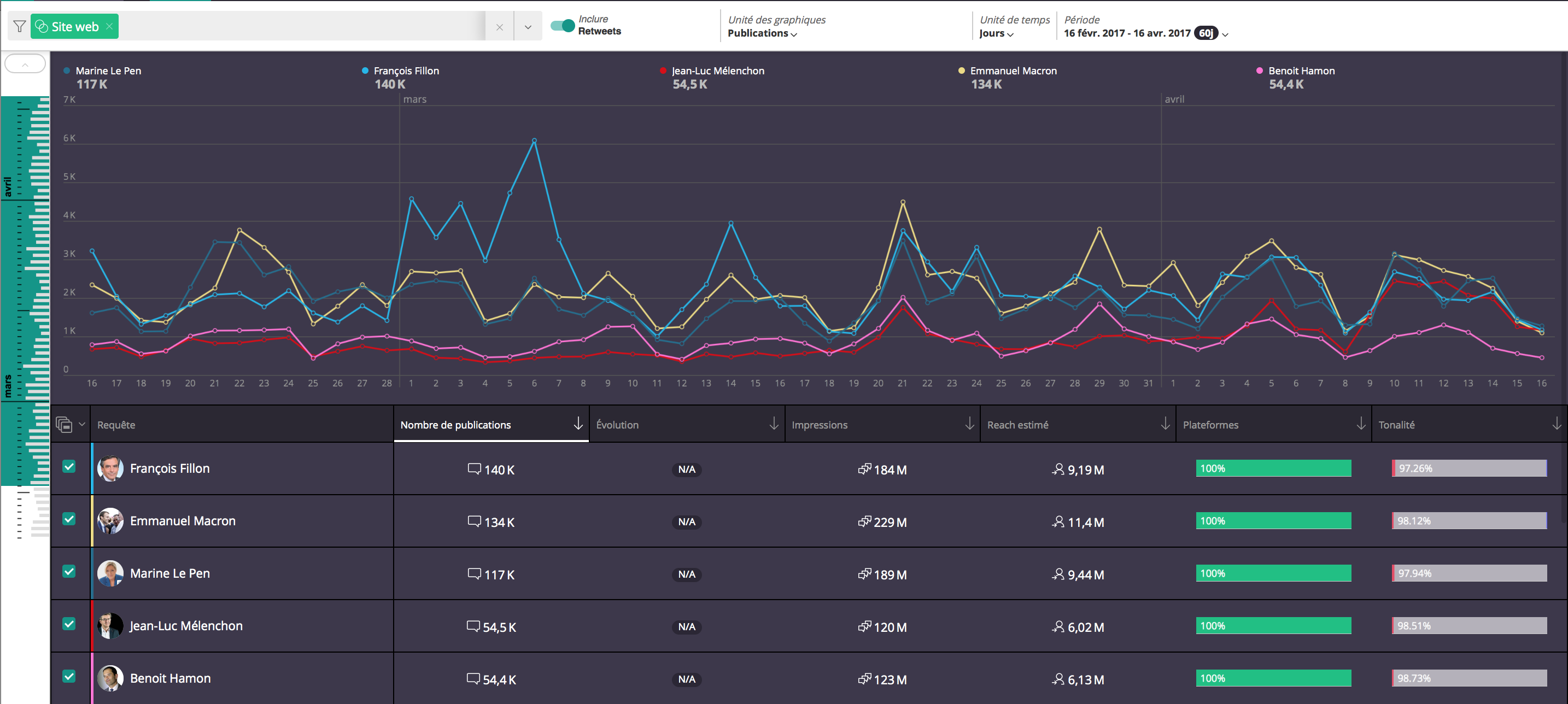
On websites, Fillon is the most mentioned (surely because of the affairs) ahead of Macron and Le Pen: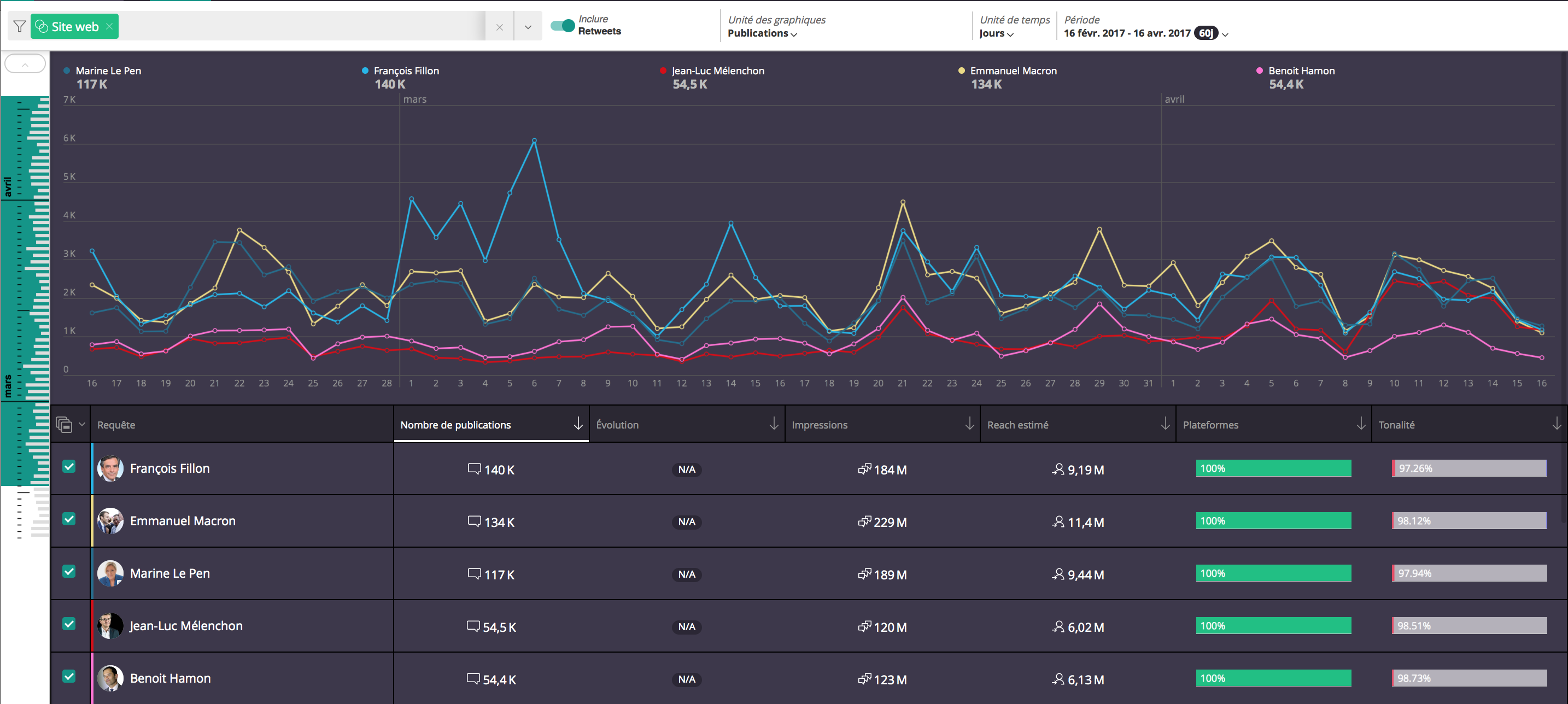
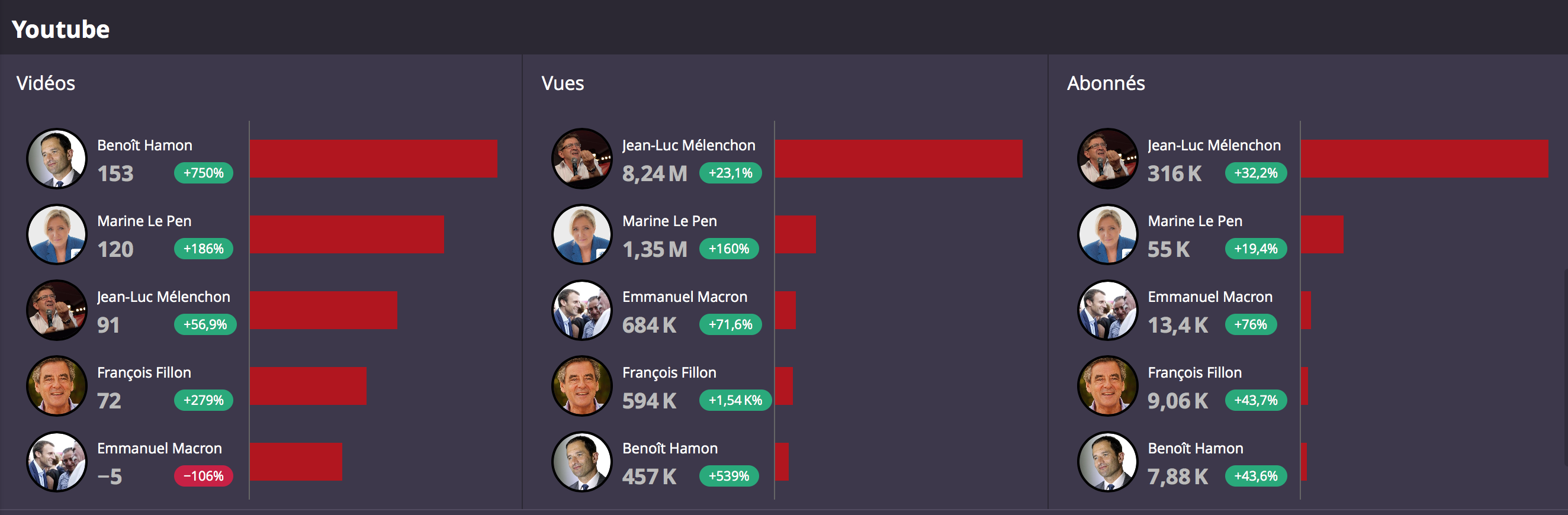
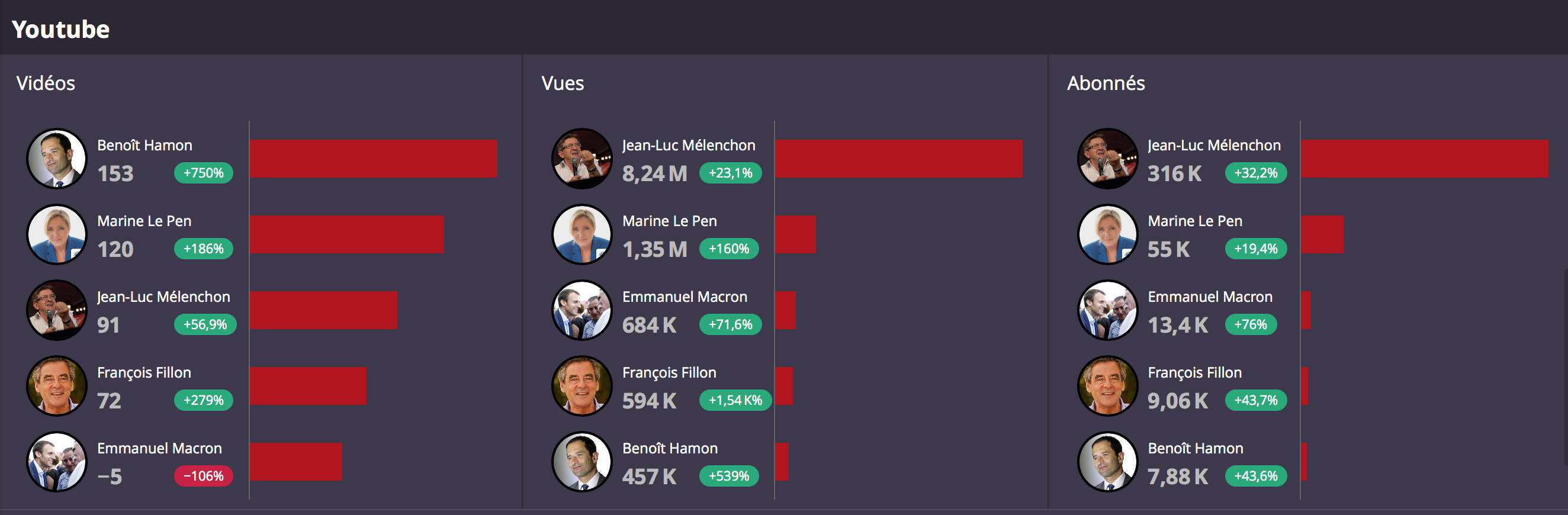
On YouTube, it is of course Mélenchon who wins by a wide margin over all the others. Le Pen is his runner-up.
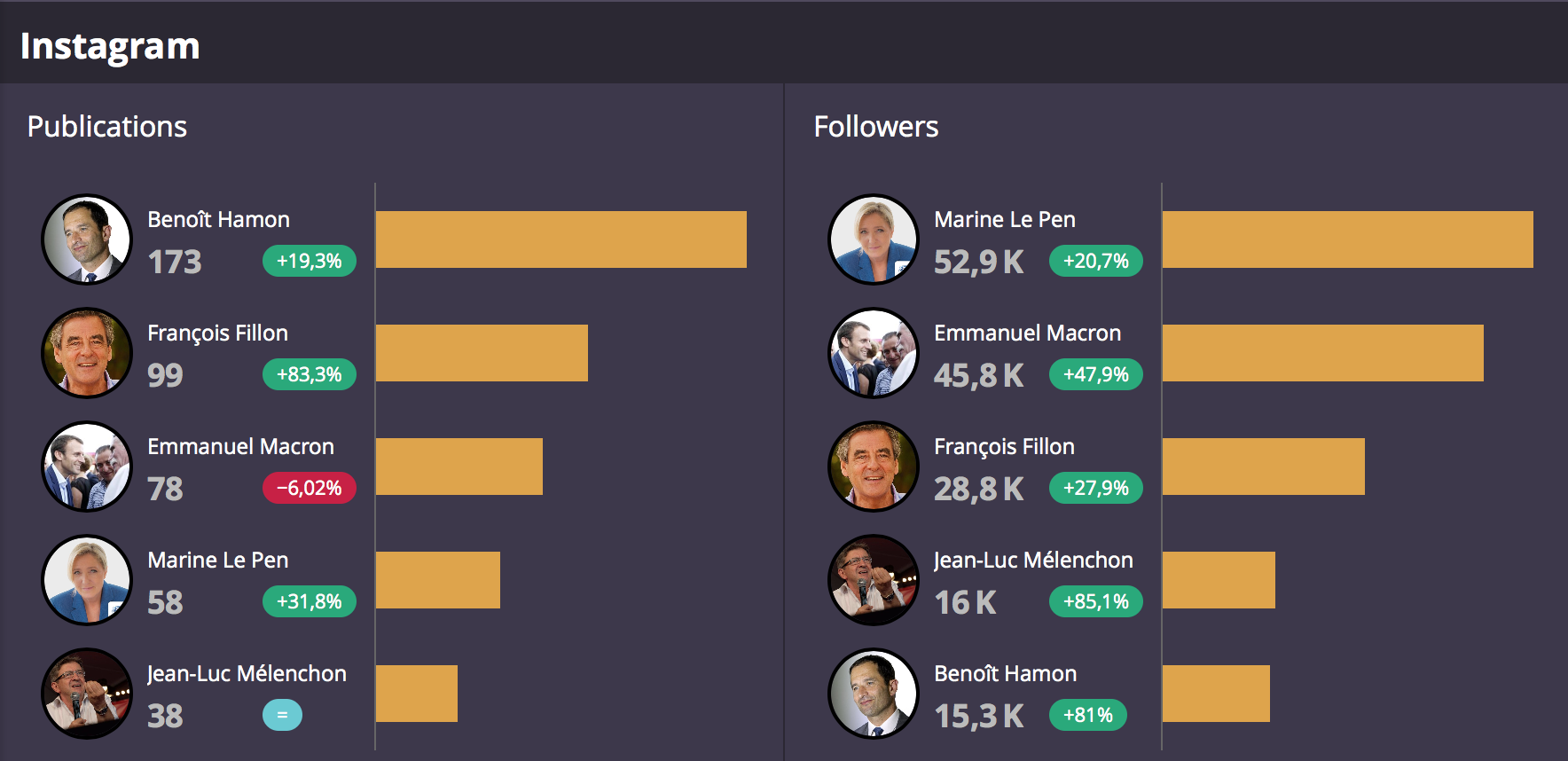
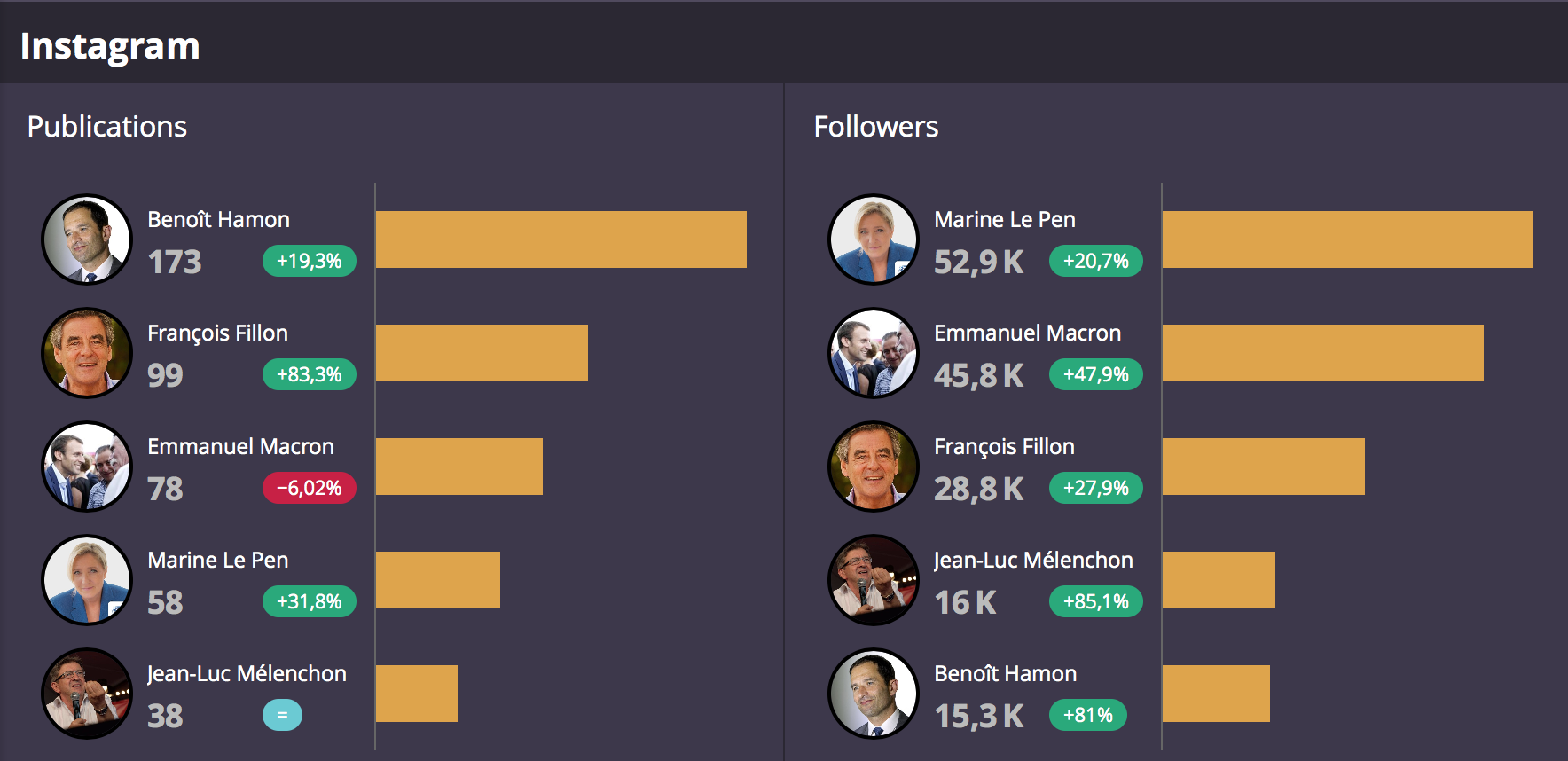
On Instagram, the statistics cannot be said to give us any lesson.
II. The overall picture
Back to Contents
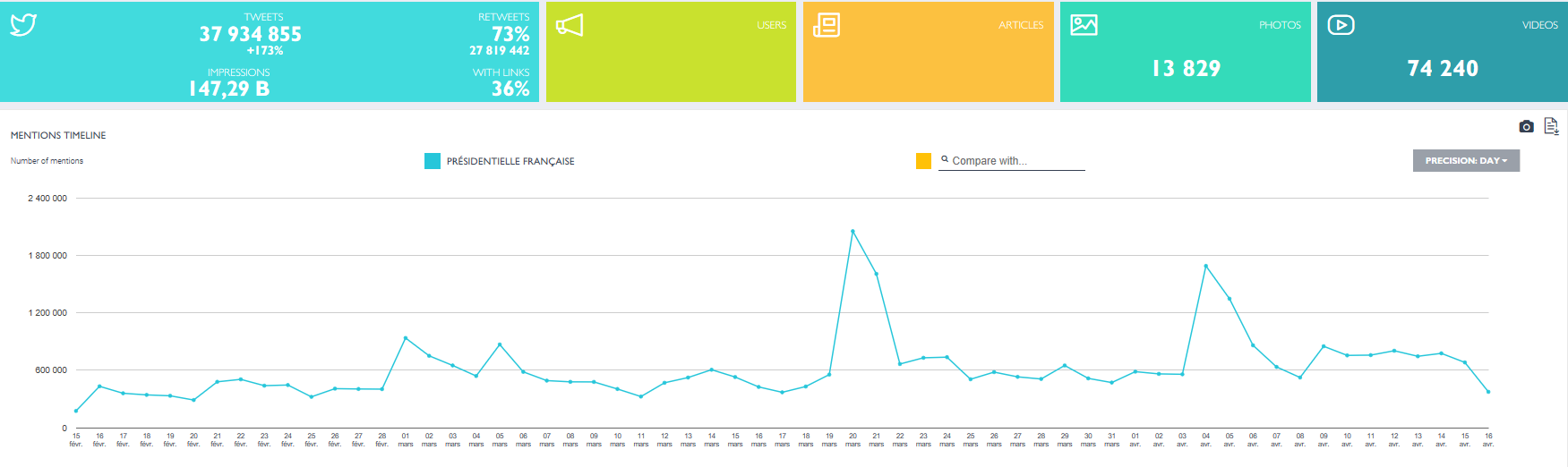
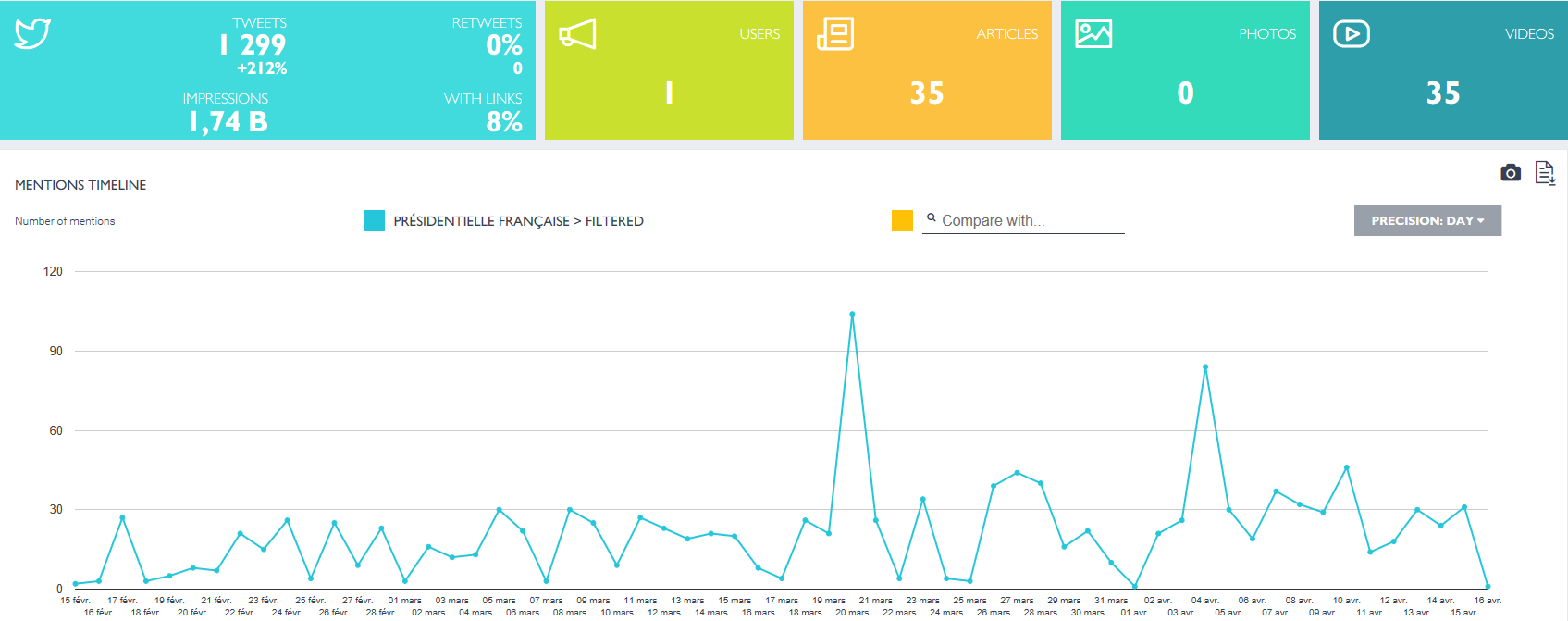
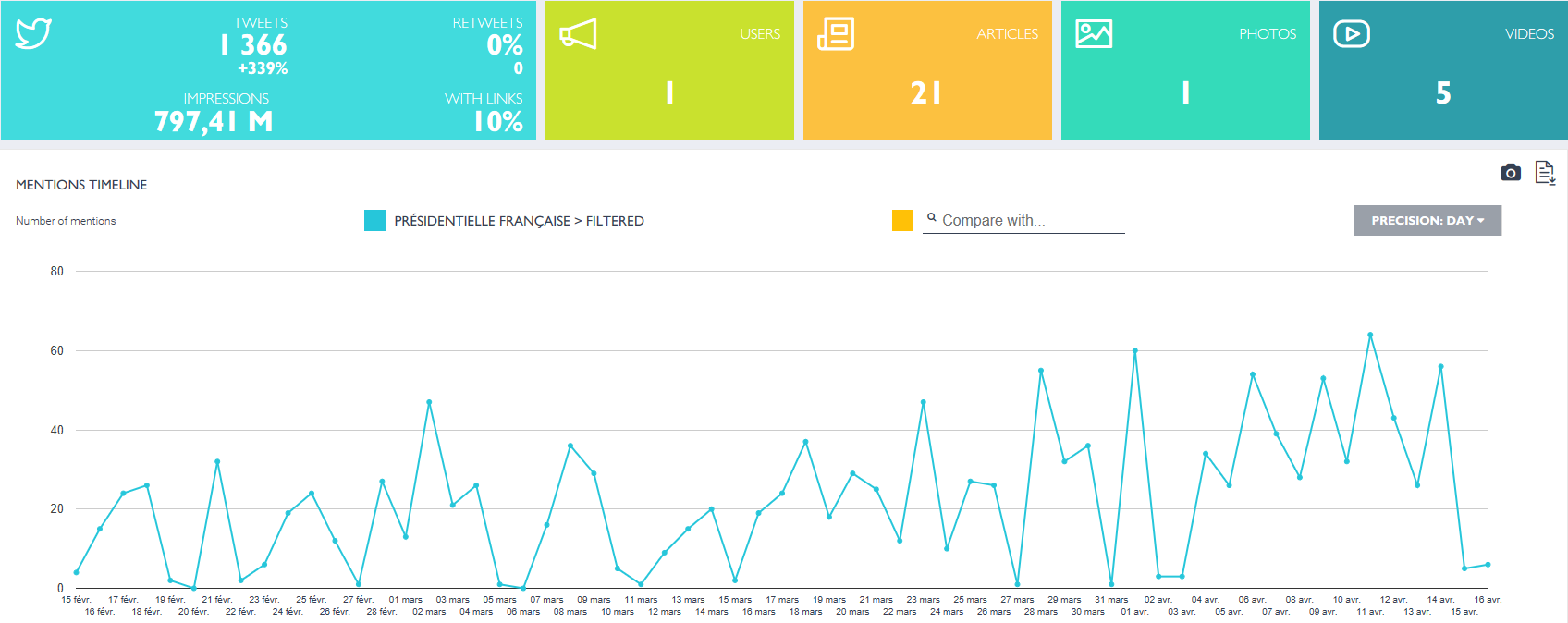
If we look at the whole presidential election over the last two months, we see a quite incredible volume of almost 38 million tweets! Activity is paced by the debates.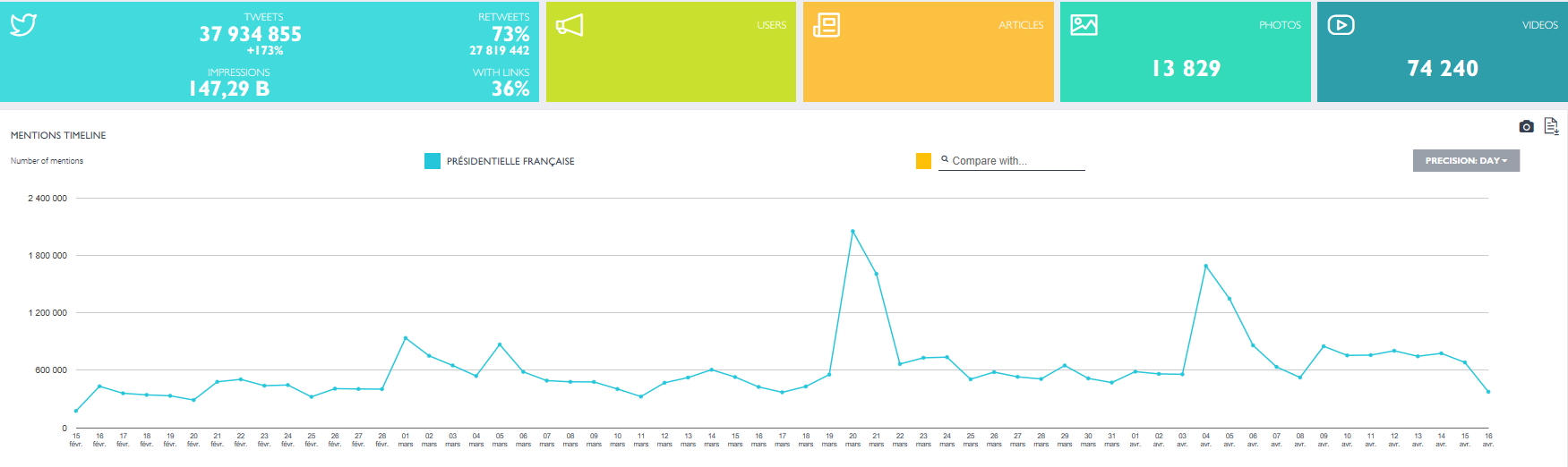
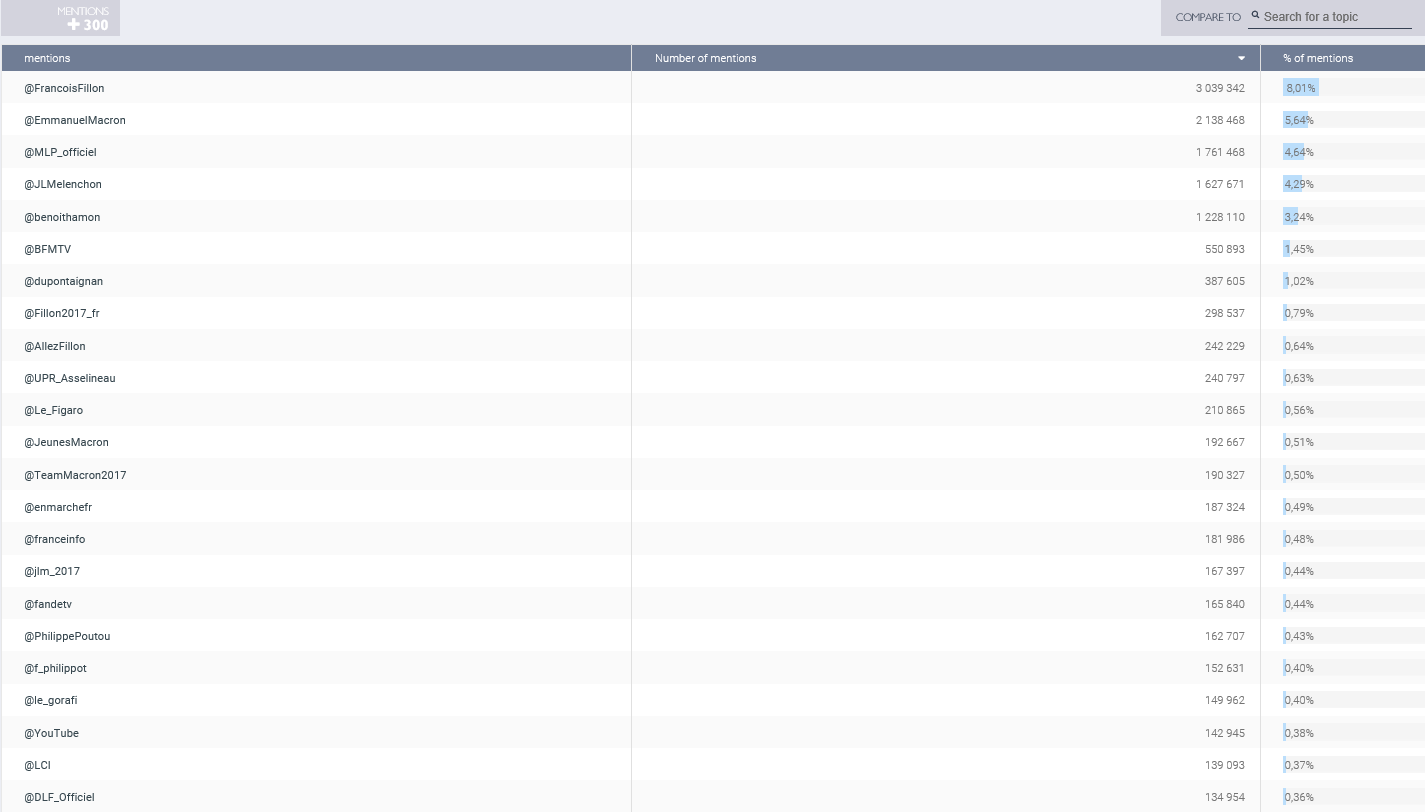
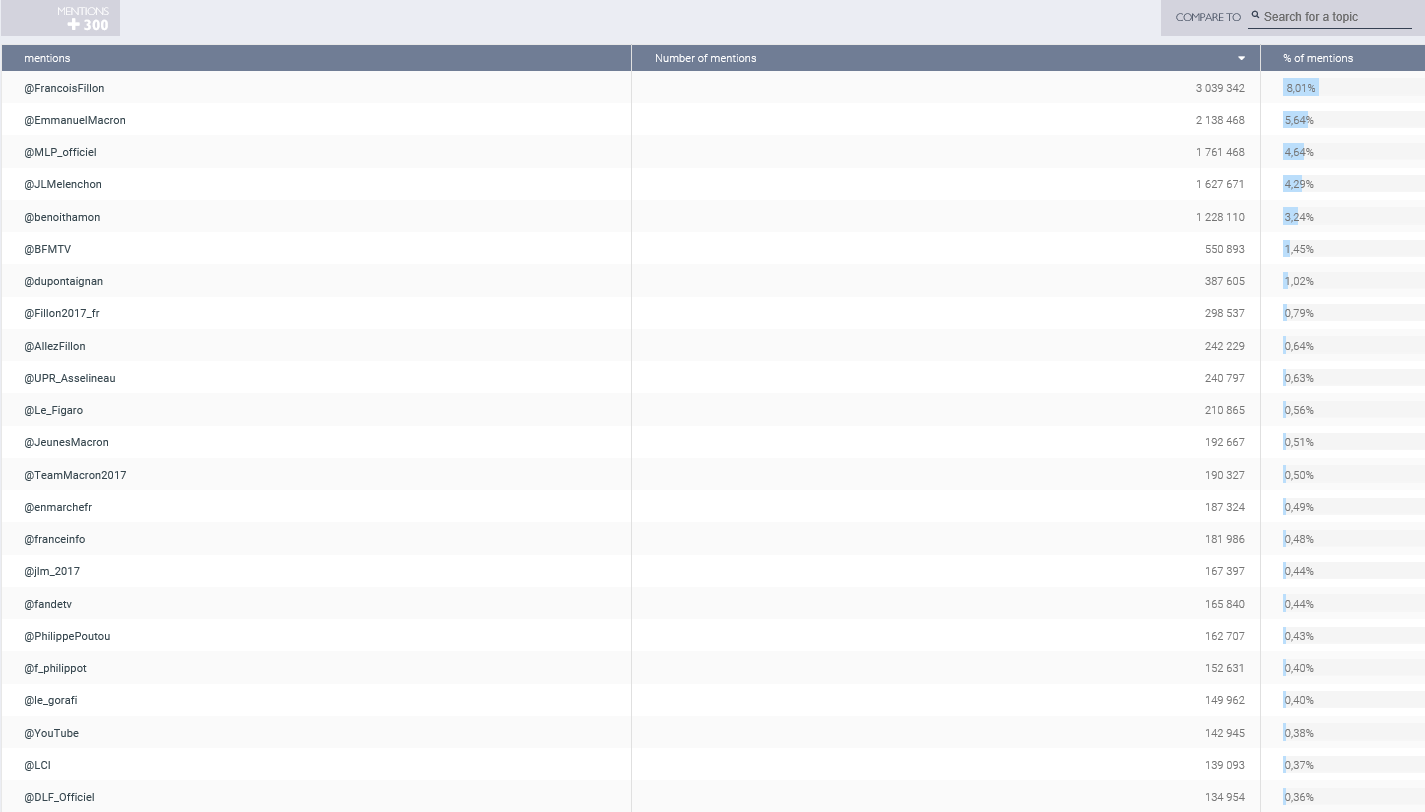
The most cited candidates are Emmanuel Macron and François Fillon:
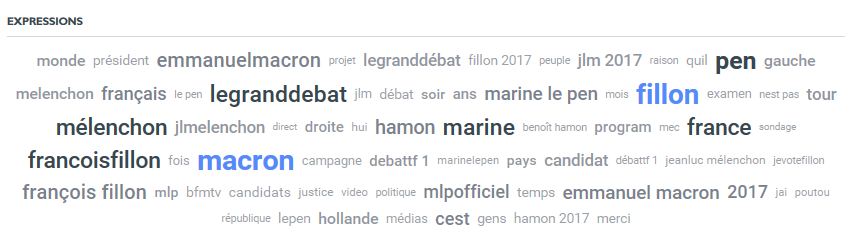
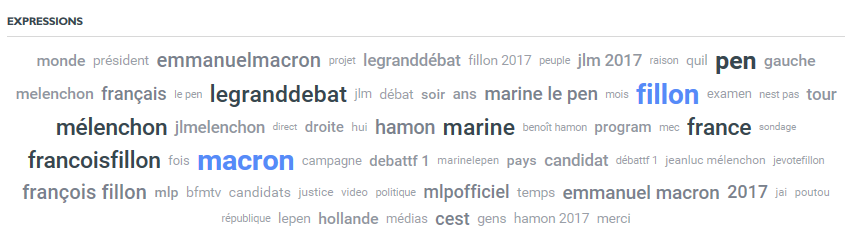
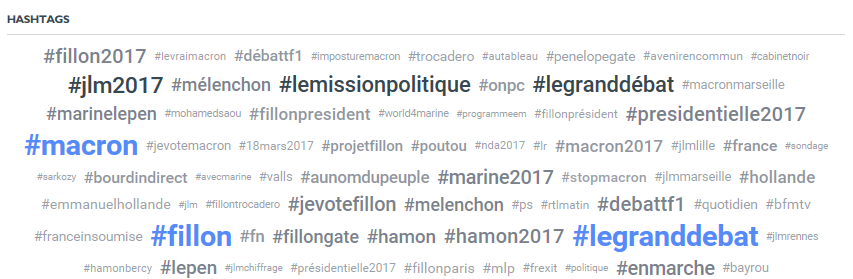
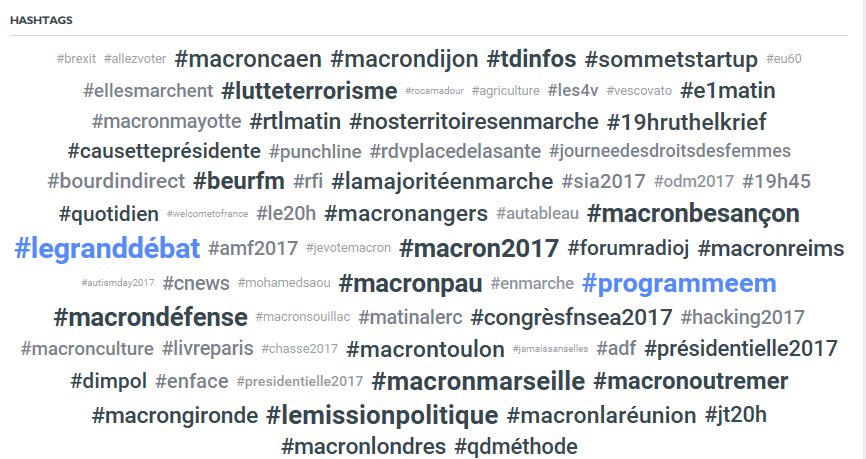
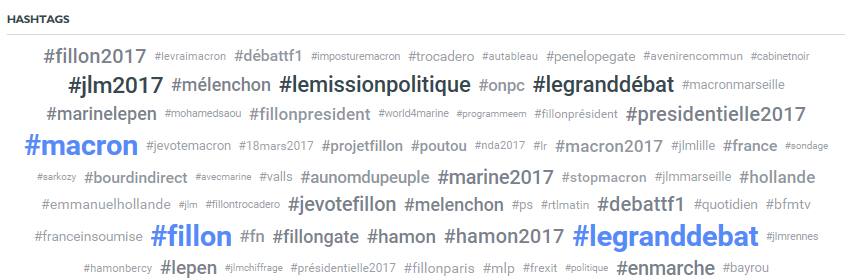
As usual, it is the debates that dominate the exchanges. We also note that Jean-Luc Mélenchon has the most tweeted slogan hashtag, ahead of Fillon and Marine.
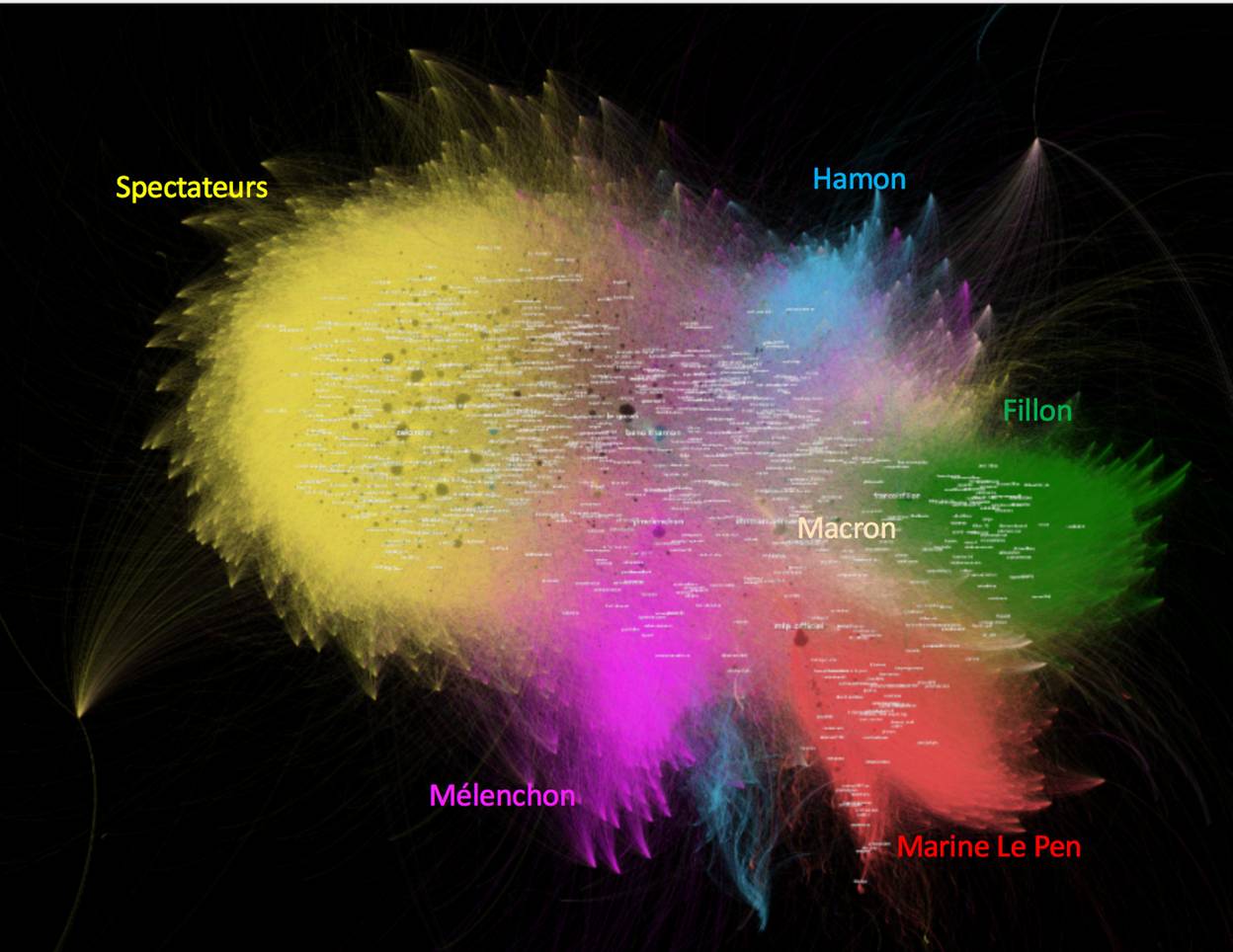
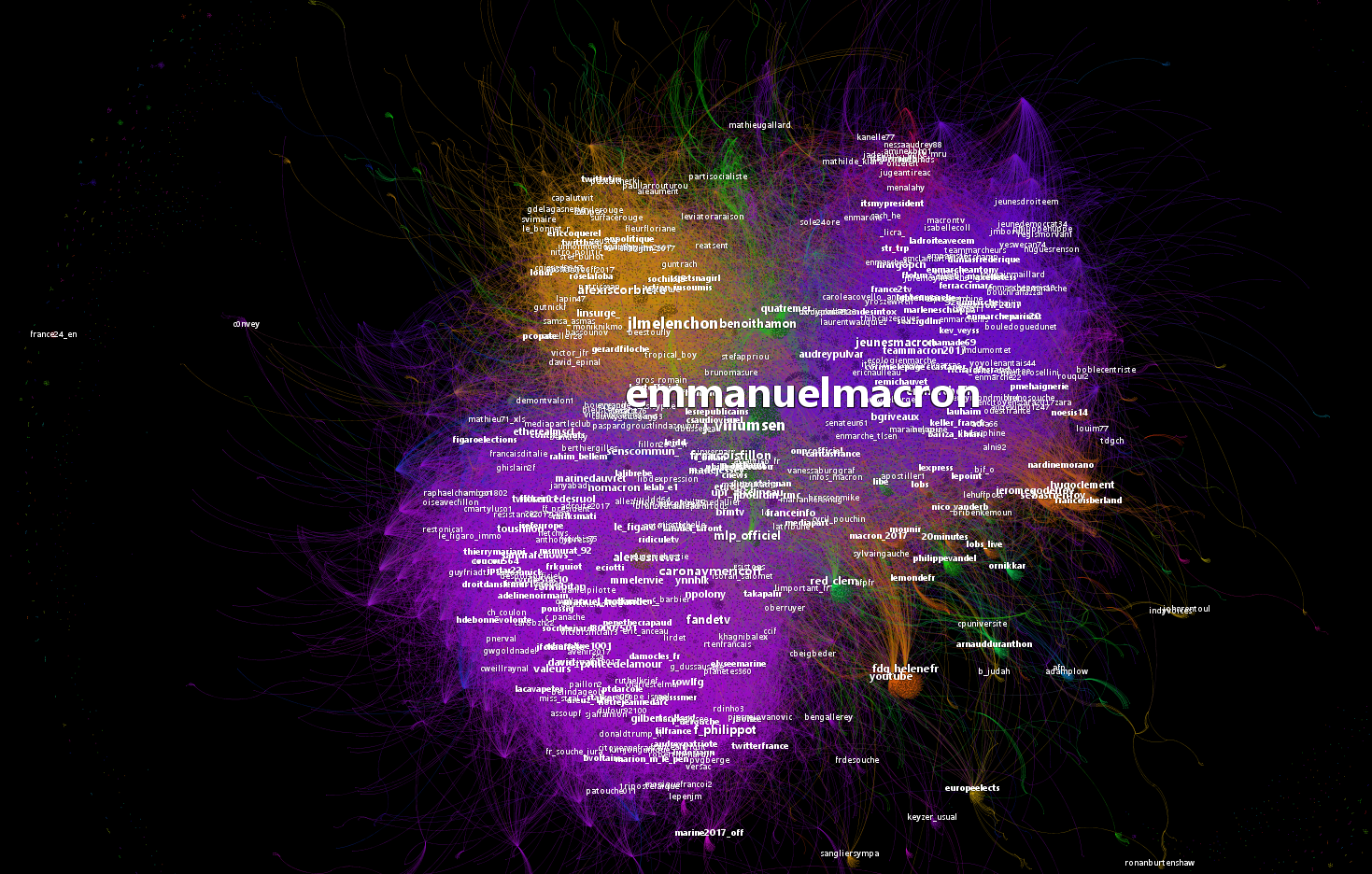
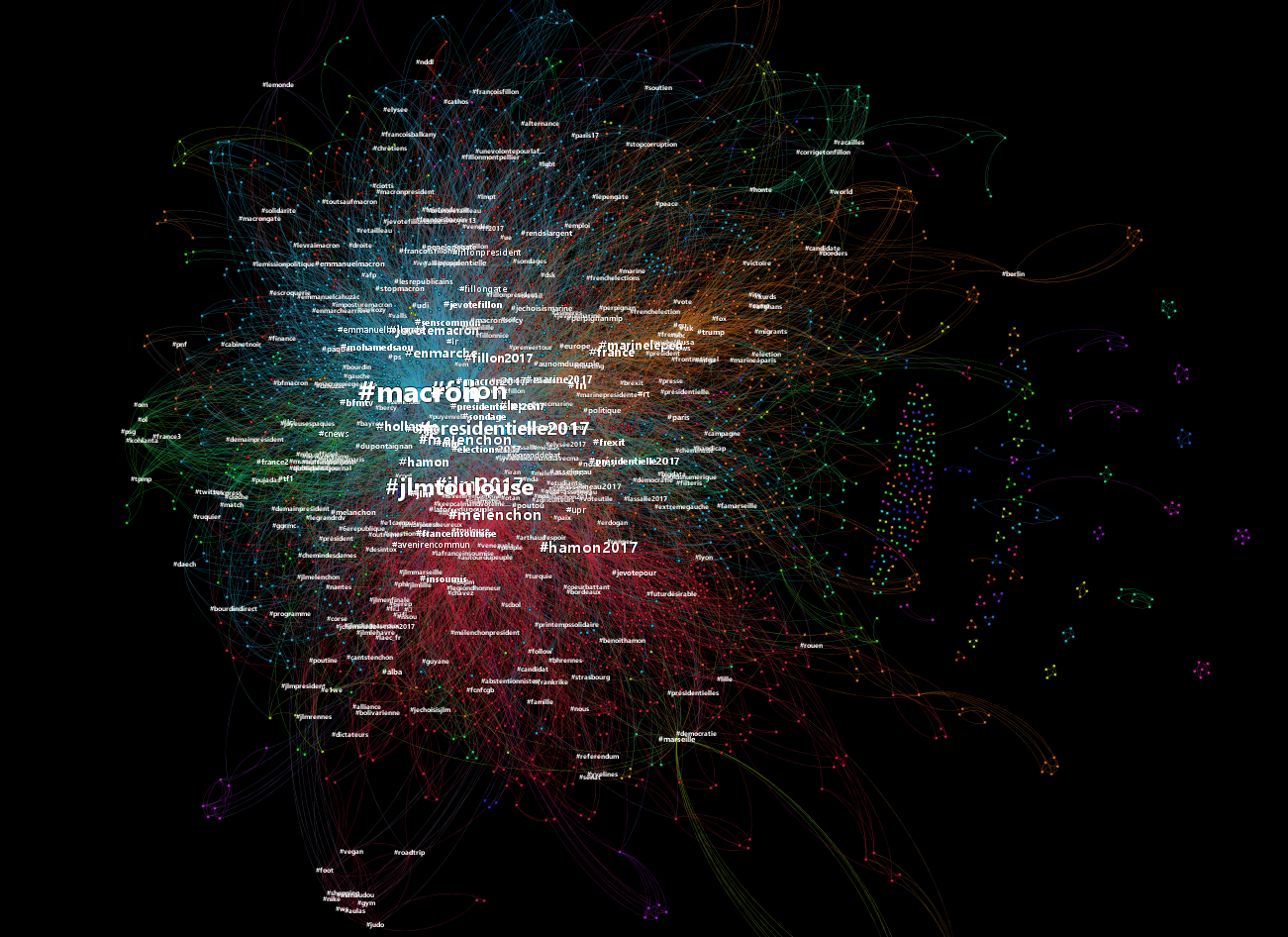
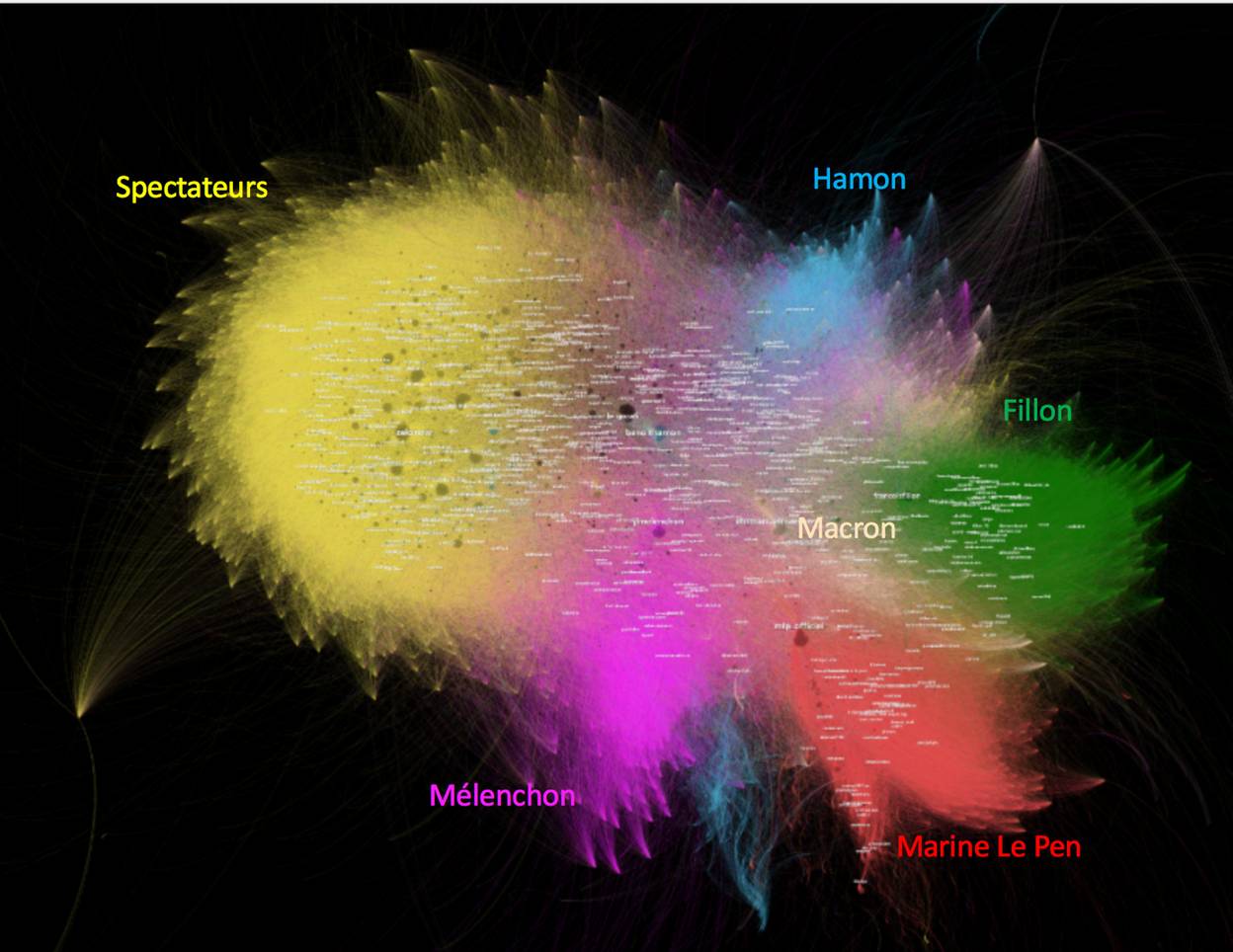
The hashtag map mainly shows a build-up around Macron, the target of all the candidates.
As noted in the comparative indicators between the candidates, all the exchanges are dominated by a very male audience:

A sign that studies of the Filteris type must always be taken with great caution (and why this one must be taken with a pinch of salt given what is done with it), here are the most frequently used occupations listed in biographies:

Unsurprisingly, journalist, activist and town councillor stand out. The most cited over the last two months are Fillon, Macron and Le Pen.
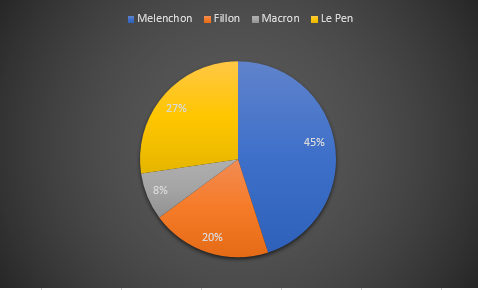
As a reminder, during the first debate, Mélenchon (9%) won ahead of Le Pen (7.6%) and Macron (7.2) in terms of community size:
III. By candidate
1. Marine Le Pen
Back to Contents
a) his digital portrait on Twitter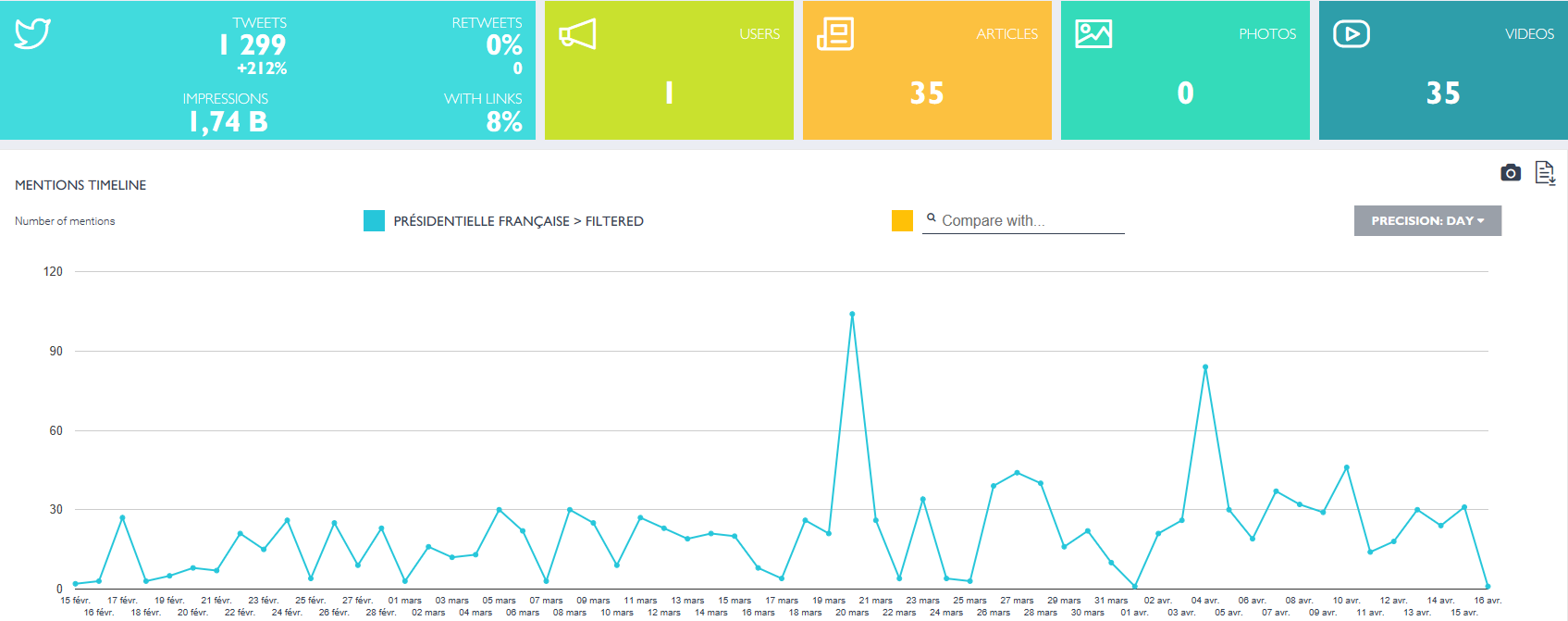
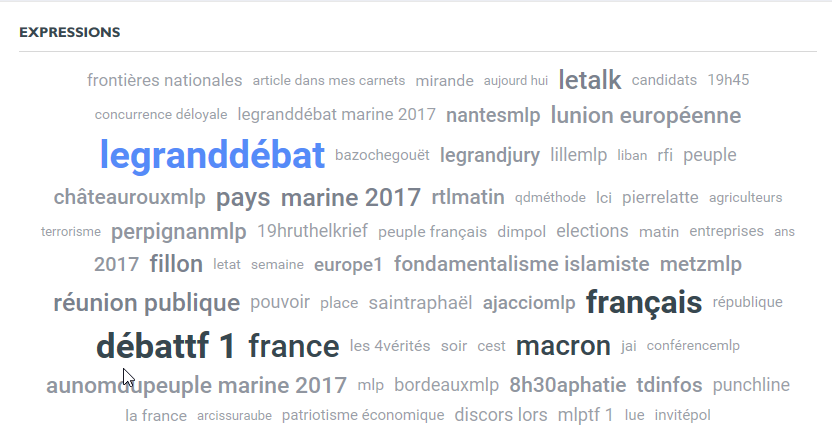
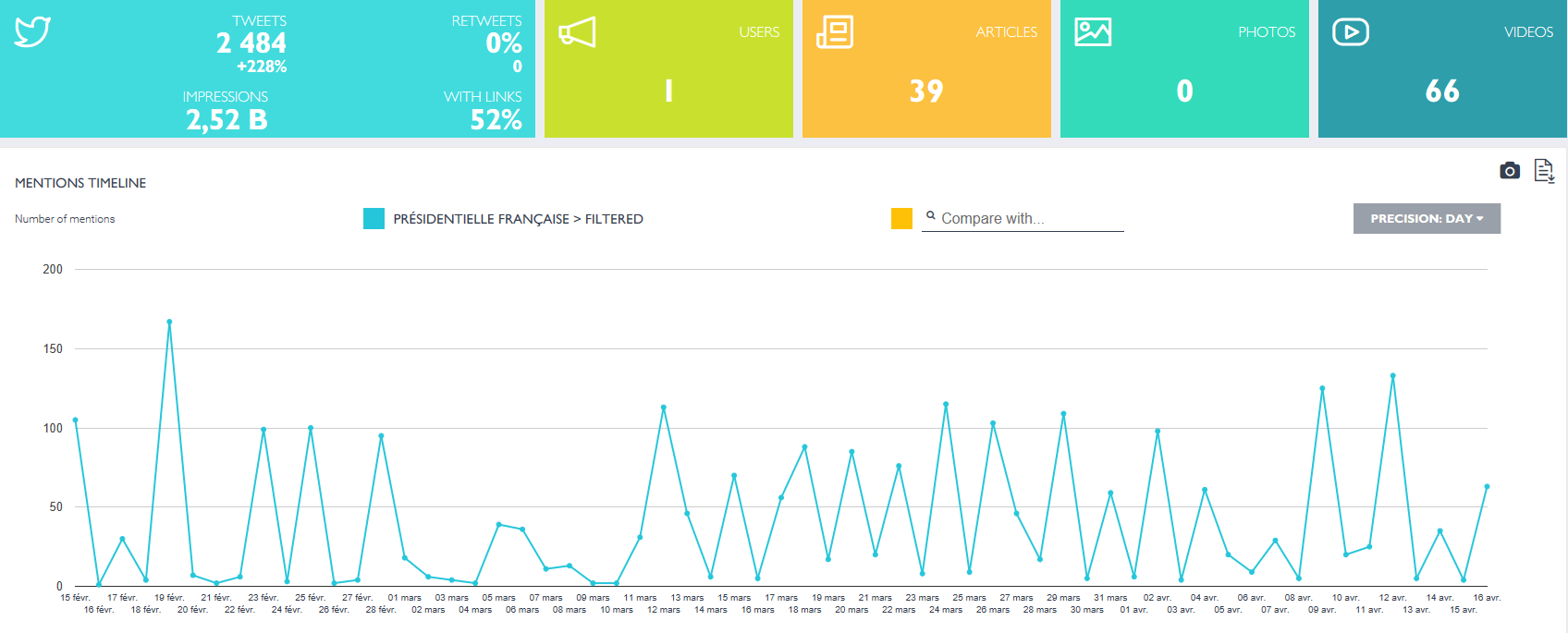
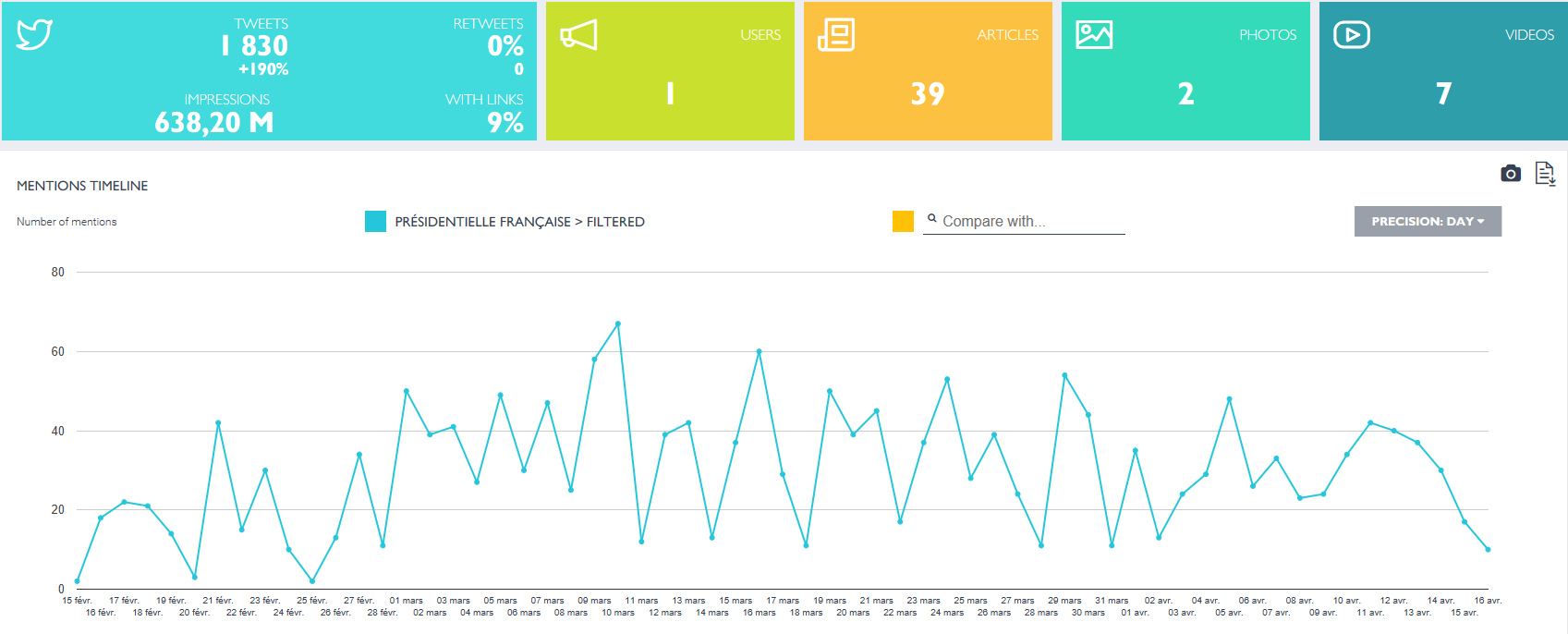
Marine Le Pen's activity intensified over the last month. She is the least active of the candidates on Twitter. Like most, she talked mainly about the presidential debates. Among her most tweeted themes: Islamism, national borders and economic patriotism.
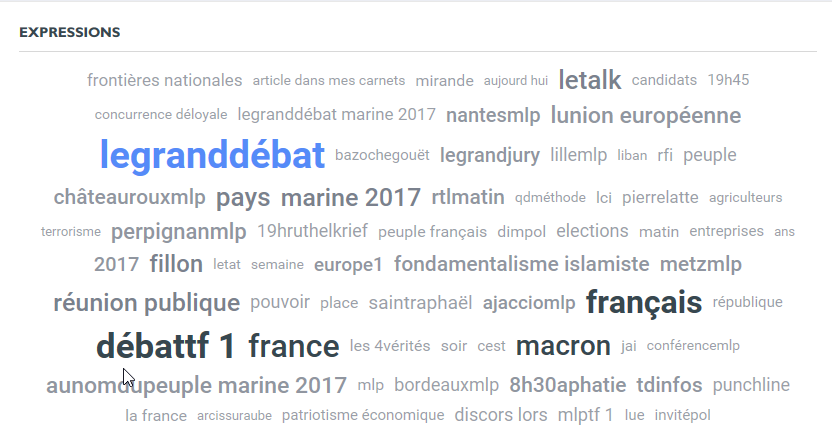
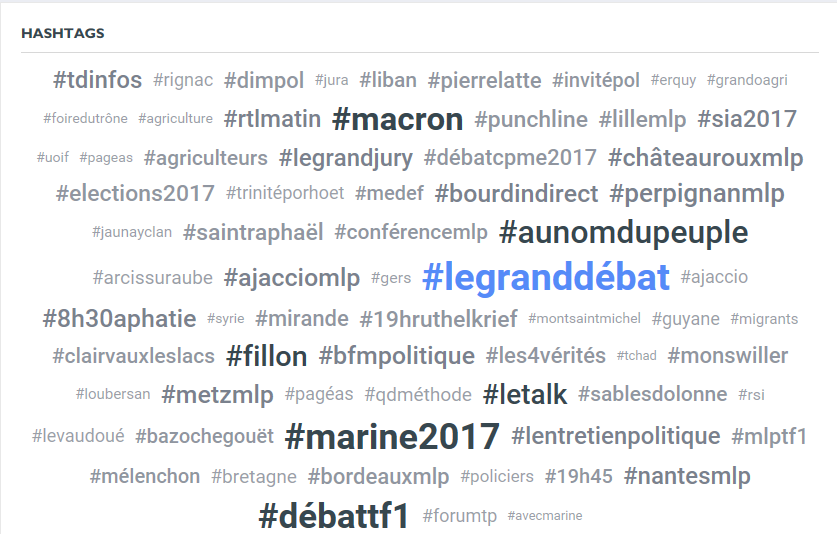
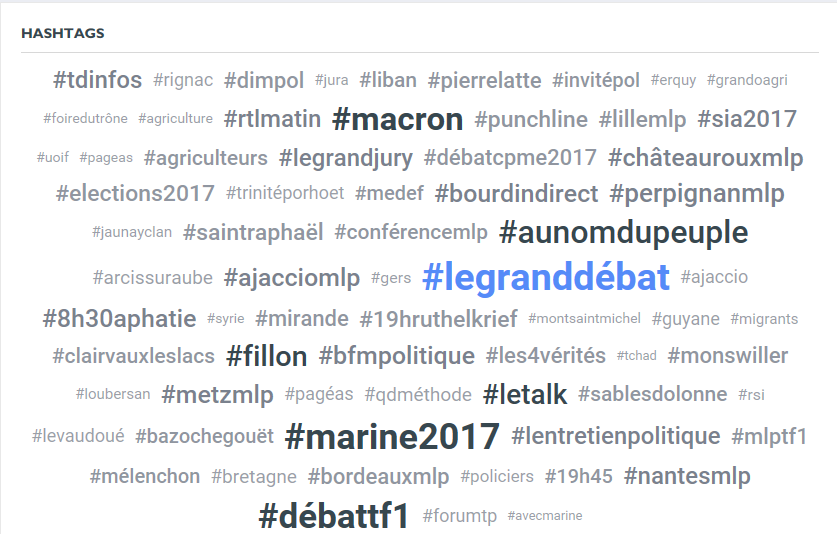
In the hashtags, mainly the various rallies and political TV shows. We also see that she mentions Macron and Fillon a lot.
b) His audience

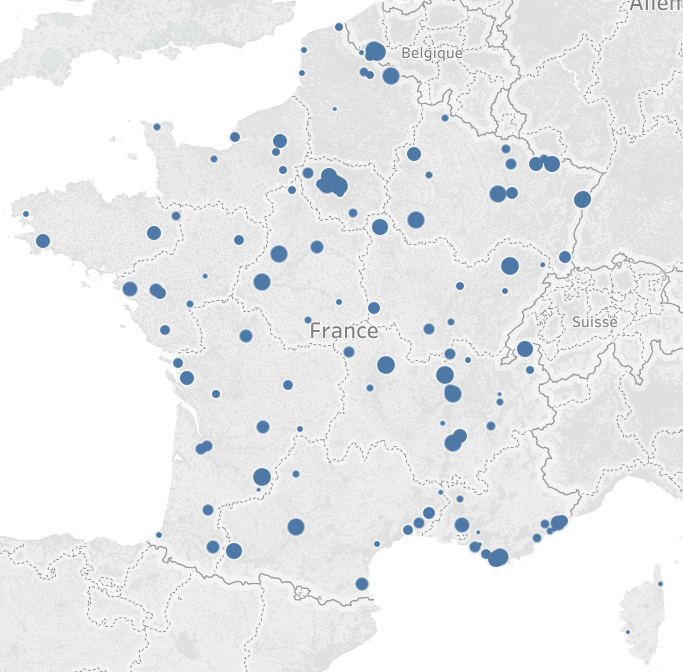
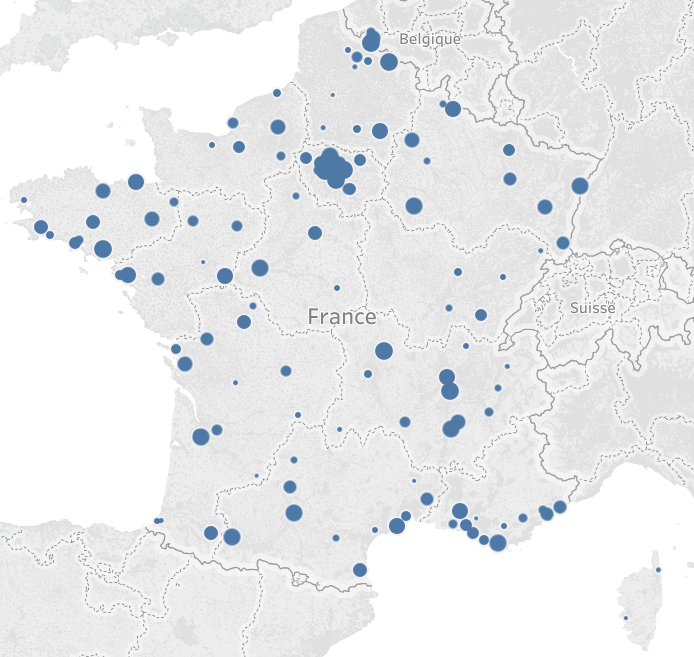
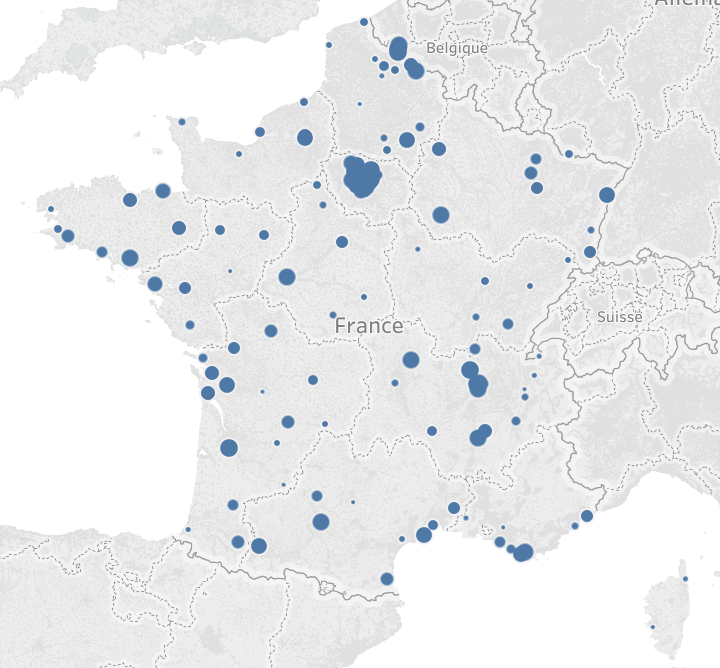
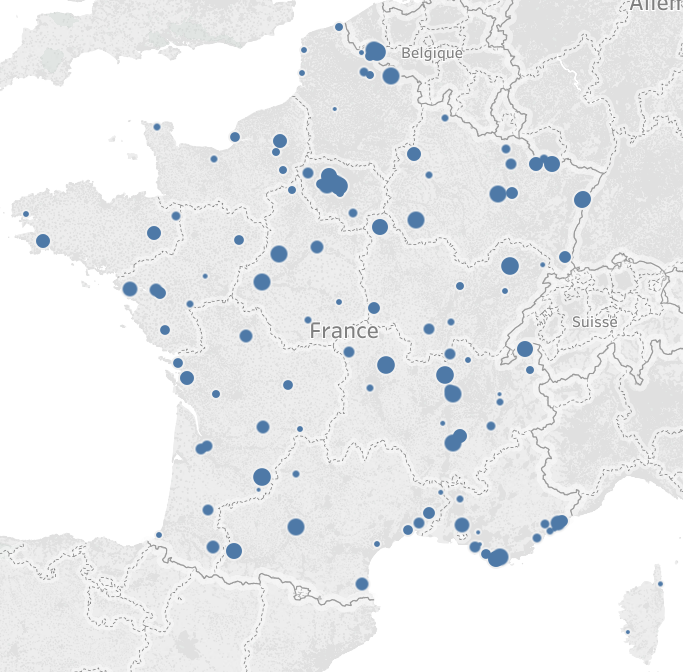
On Twitter she has mainly a male audience. This audience is present regionally, but quite little in Paris.
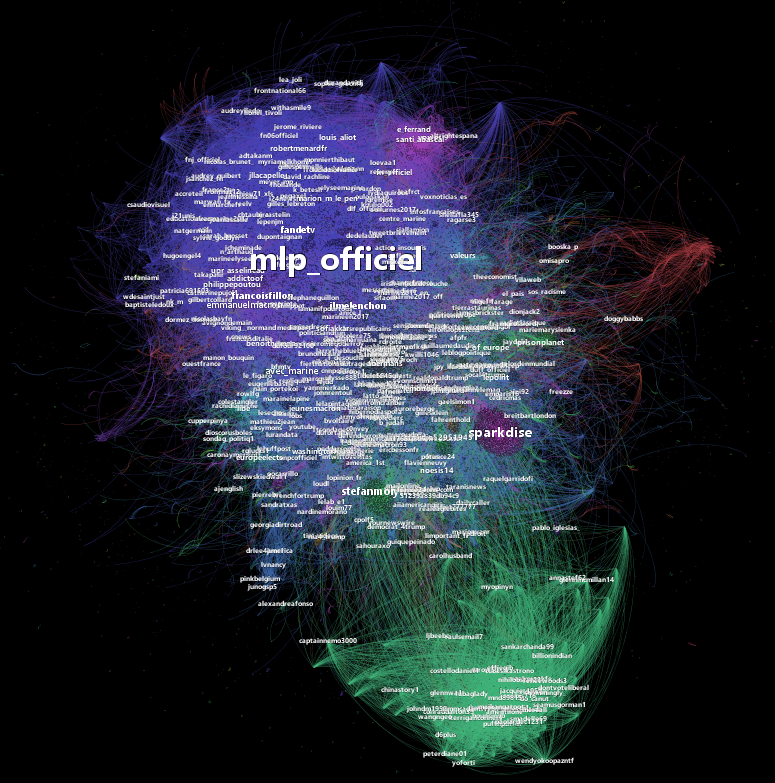
In Marine Le Pen's ecosystem, there are in the end very few people who criticise her.
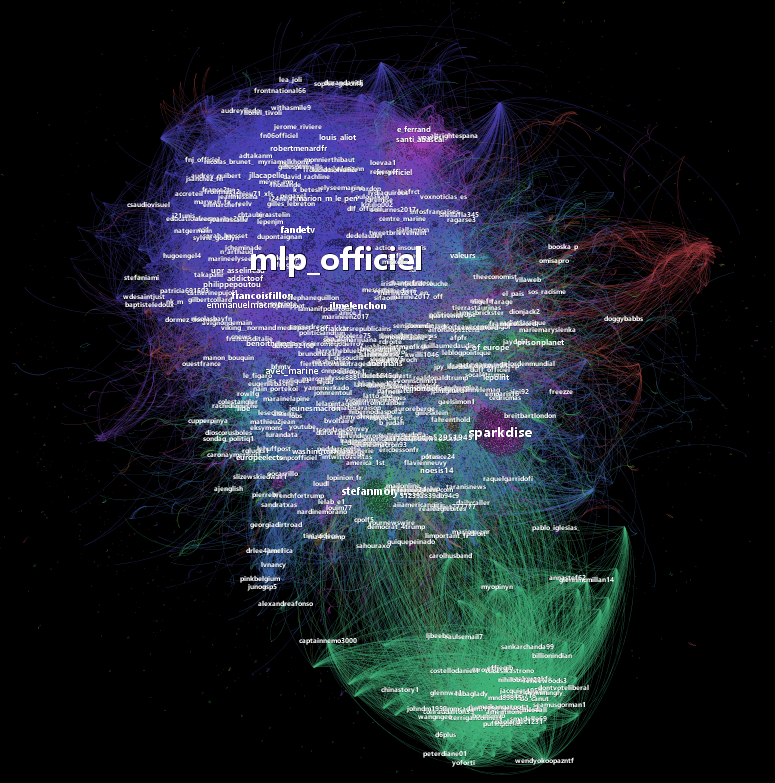
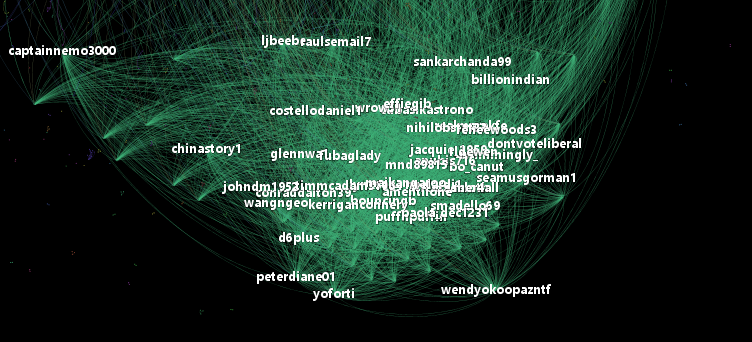
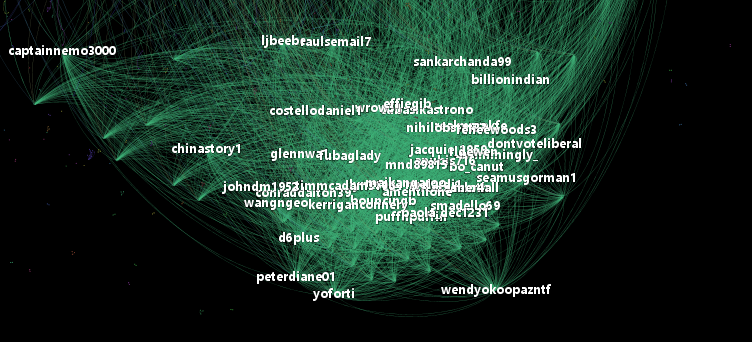
The community at the bottom is in fact an international community that supports her. It is nationalist and anti-Muslim.
c) What Twitter says about him
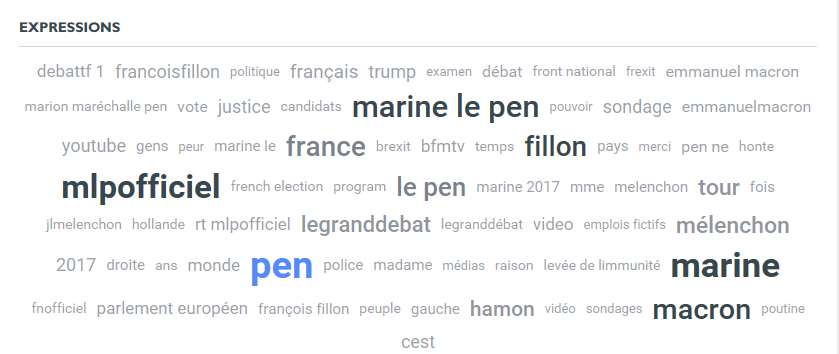
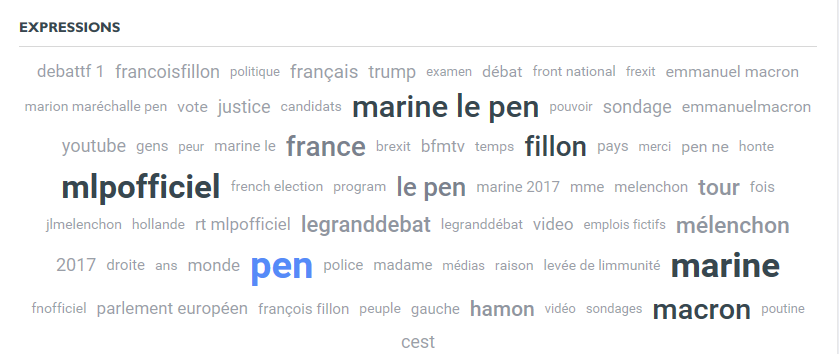
Comparisons with Trump are present. She is mainly talked about in relation to the other candidates and to the polls.
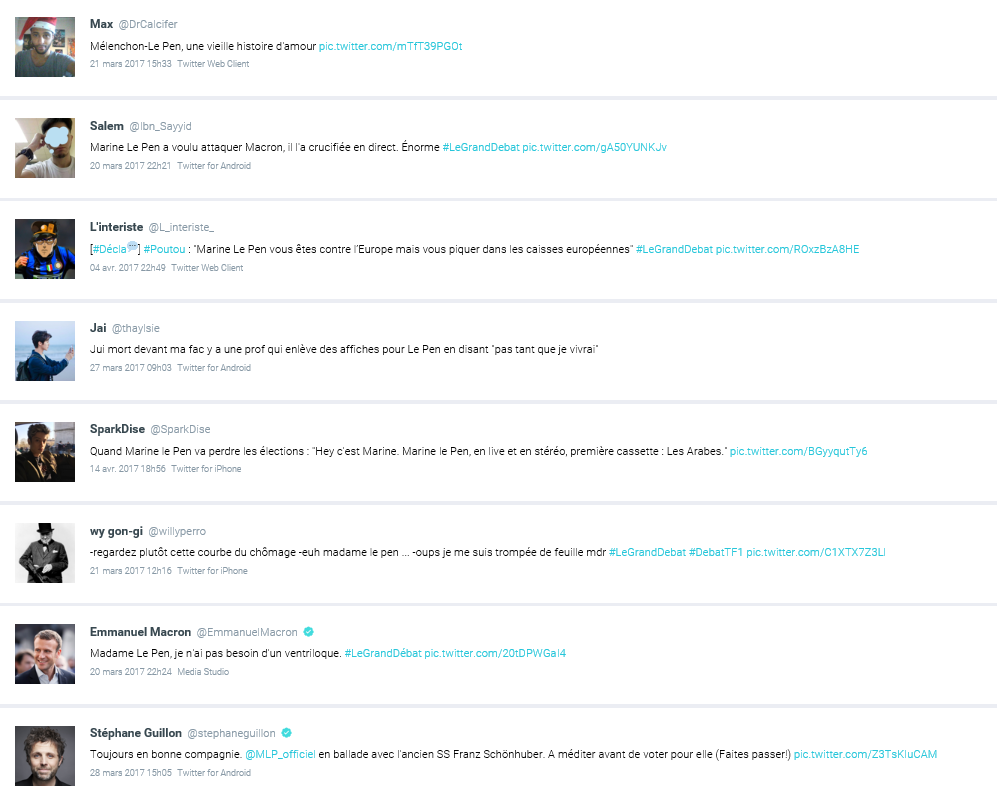
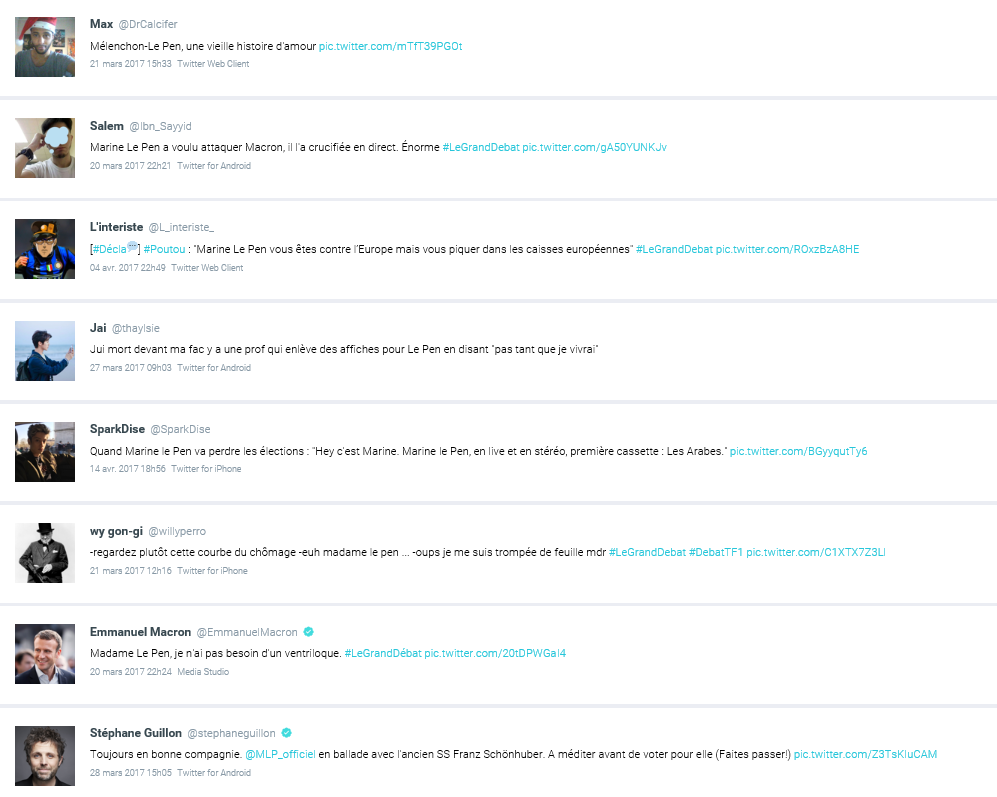
Among the most retweeted tweets, mainly criticism of her personally. Along with the punchlines from the debates: ventriloquist and workers' immunity.
2. Emmanuel Macron
Back to Contents
a) his digital portrait on Twitter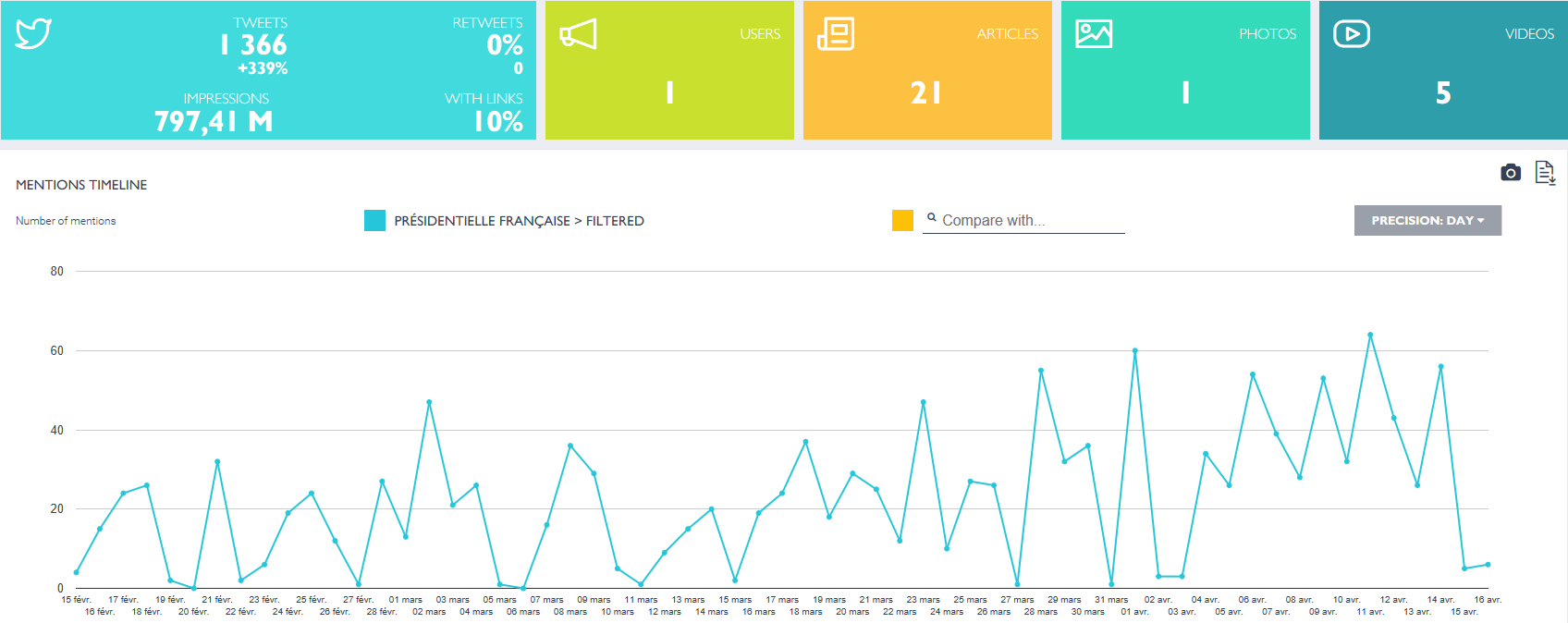
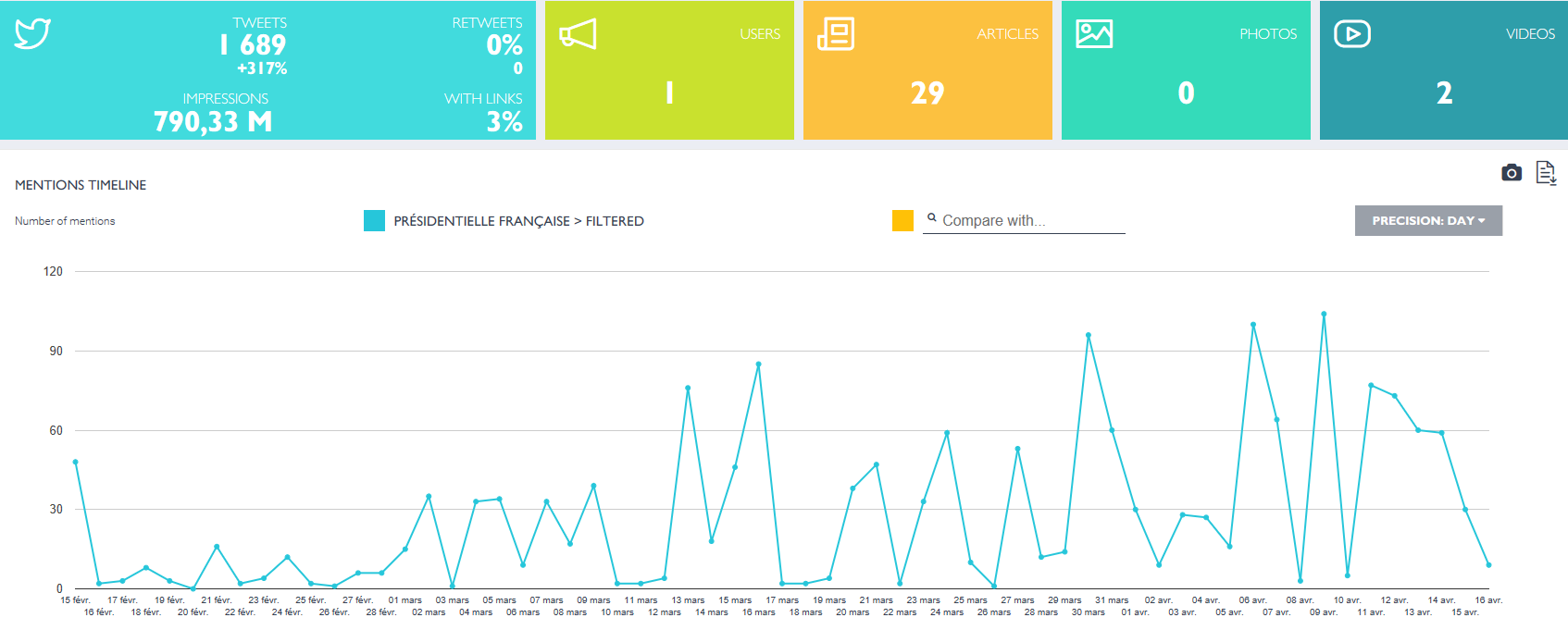
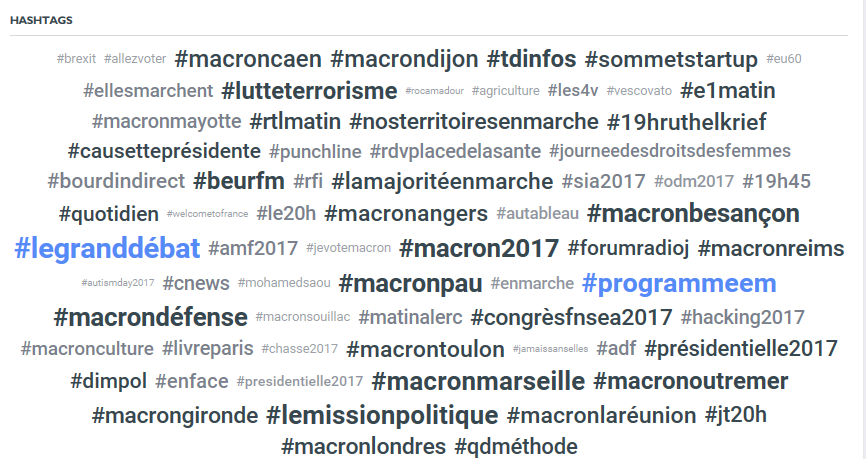
Emmanuel Macron's activity is steady and includes periods of rest. The hashtags are mainly about the debates, political TV shows and rallies. Unlike Marine Le Pen, his opponents do not feature.
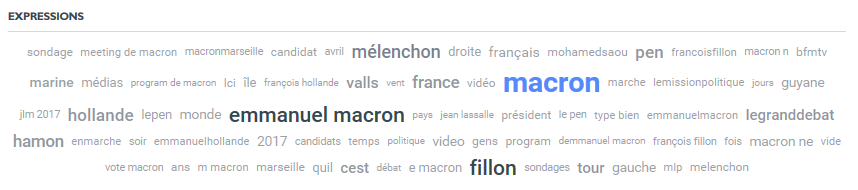
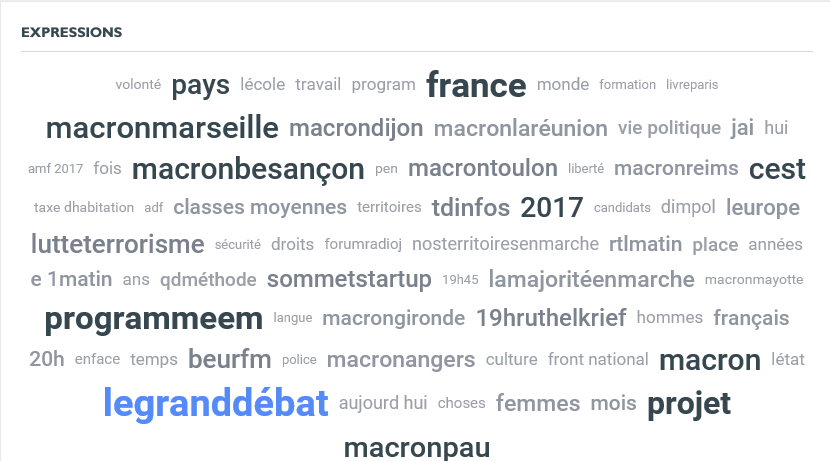
Among the most tweeted words: terrorism, the “project”, the country. Then come the middle classes, work and culture.
b) His audience
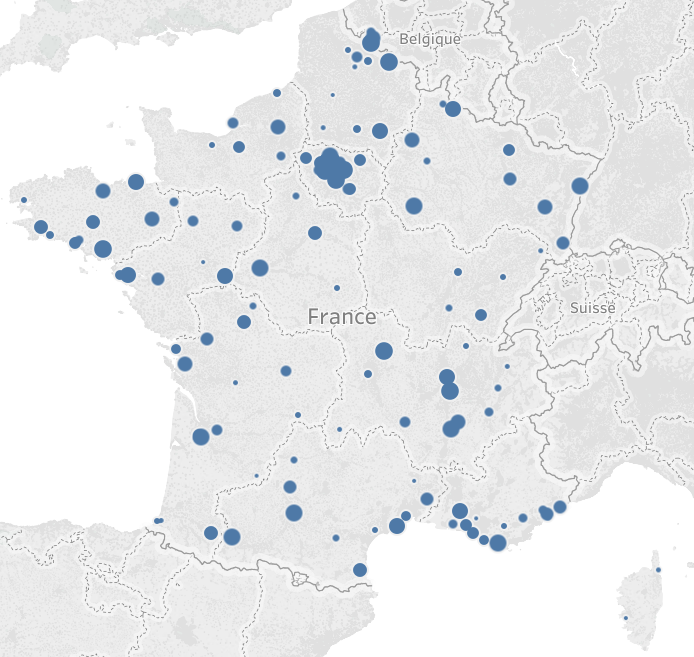
A rather sparse audience with a strong male presence.

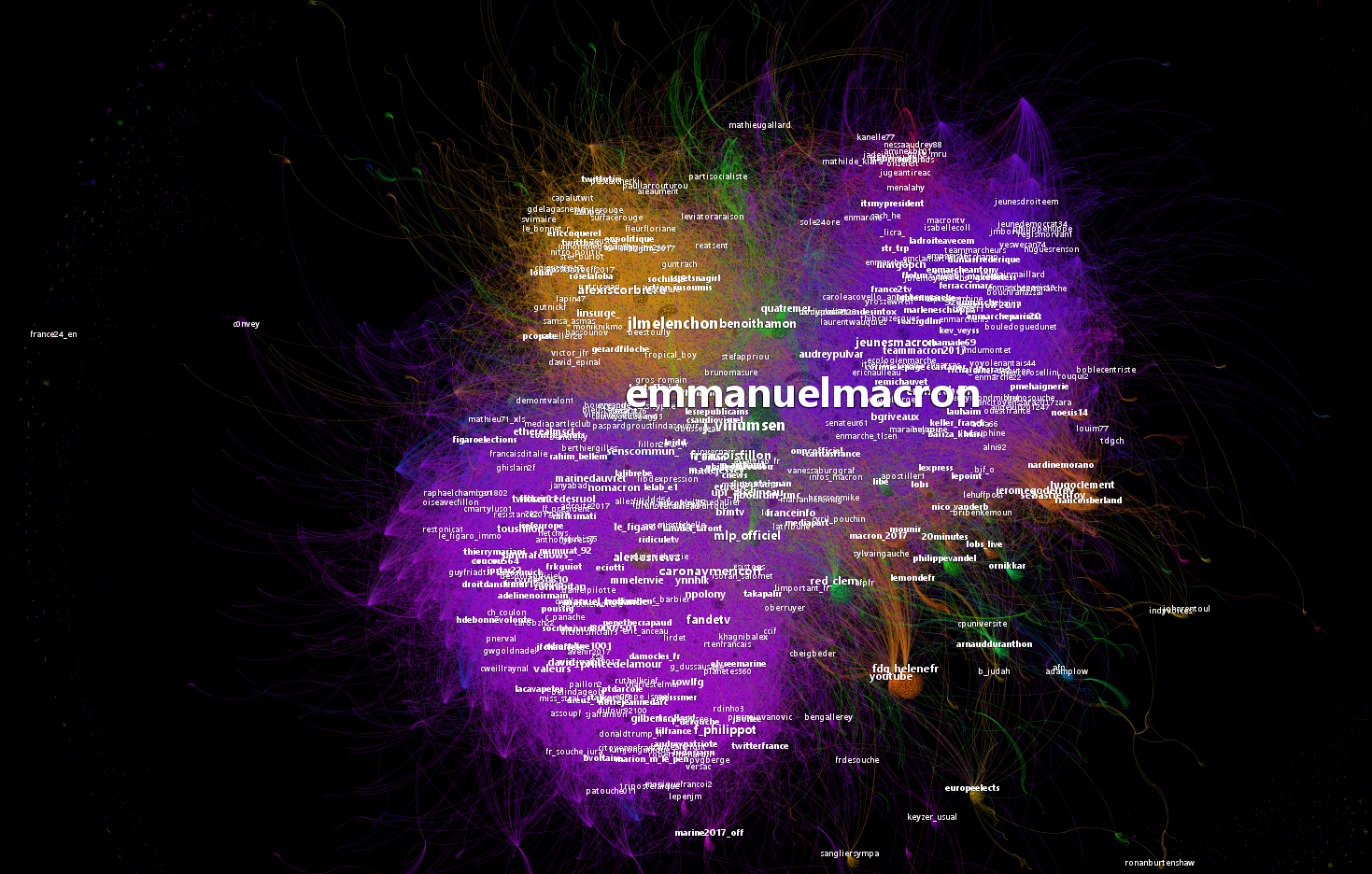
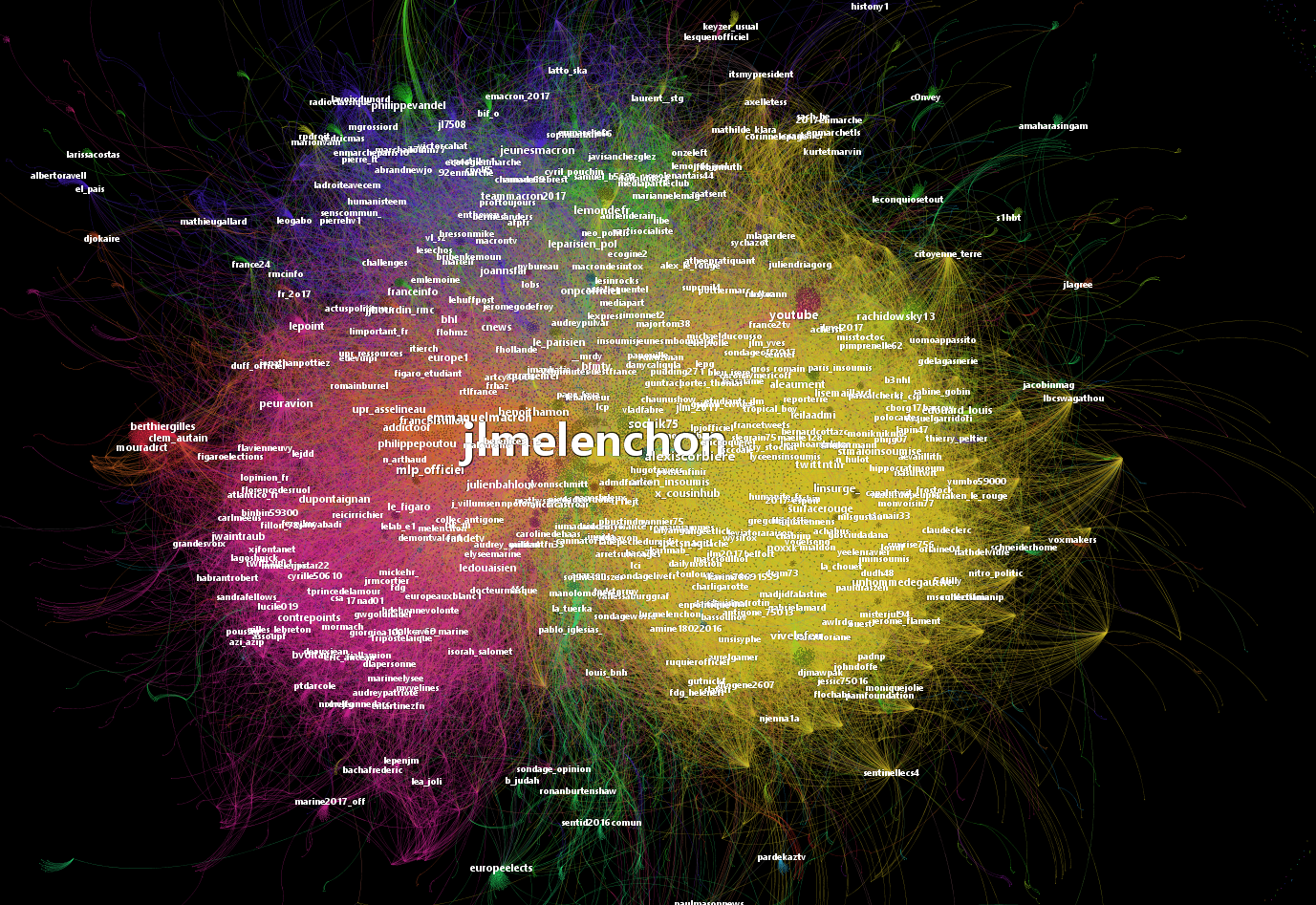
In his communities, we can see that he is strongly attacked by Mélenchon supporters and by Fillonists allied with Le Pen supporters.
c) What Twitter says about him
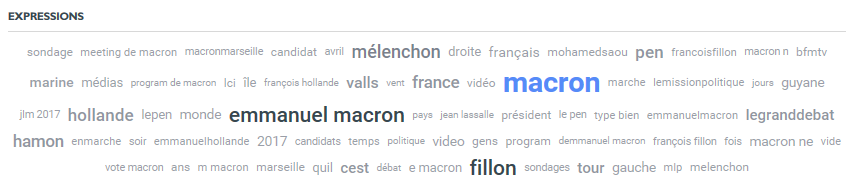
Here again, he is cited alongside the other candidates and the polls. The French Guiana episode is also visible.
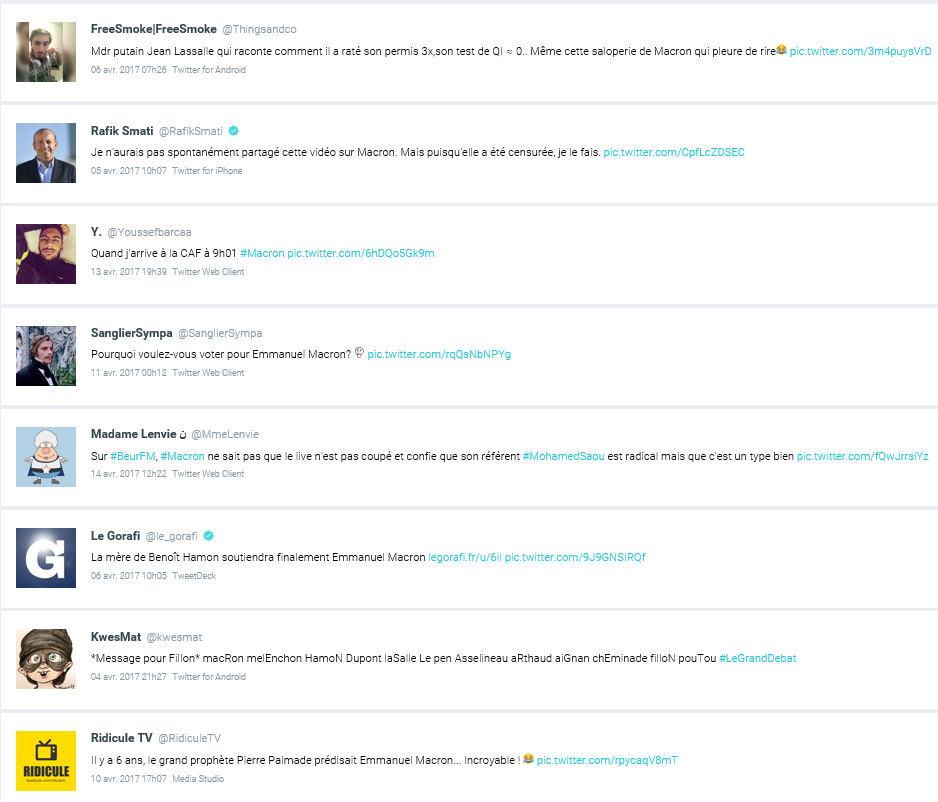
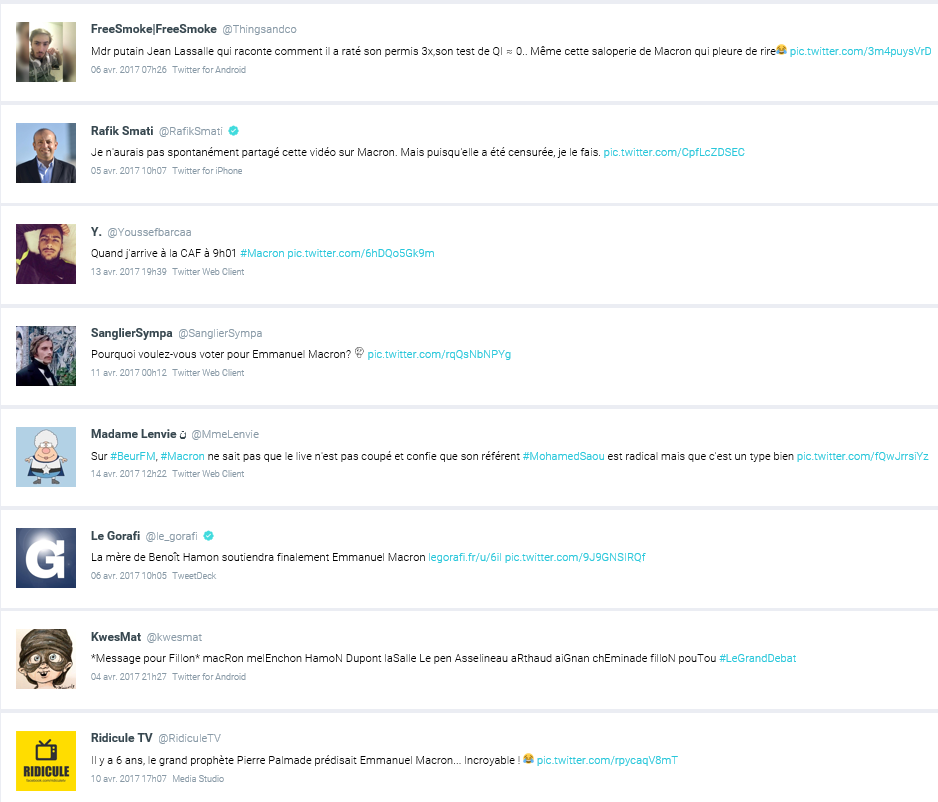
In the top tweet, negative comments are in the end rare. Macron appears only as a contextual element.
3. François Fillon
Back to Contents
a) his digital portrait on Twitter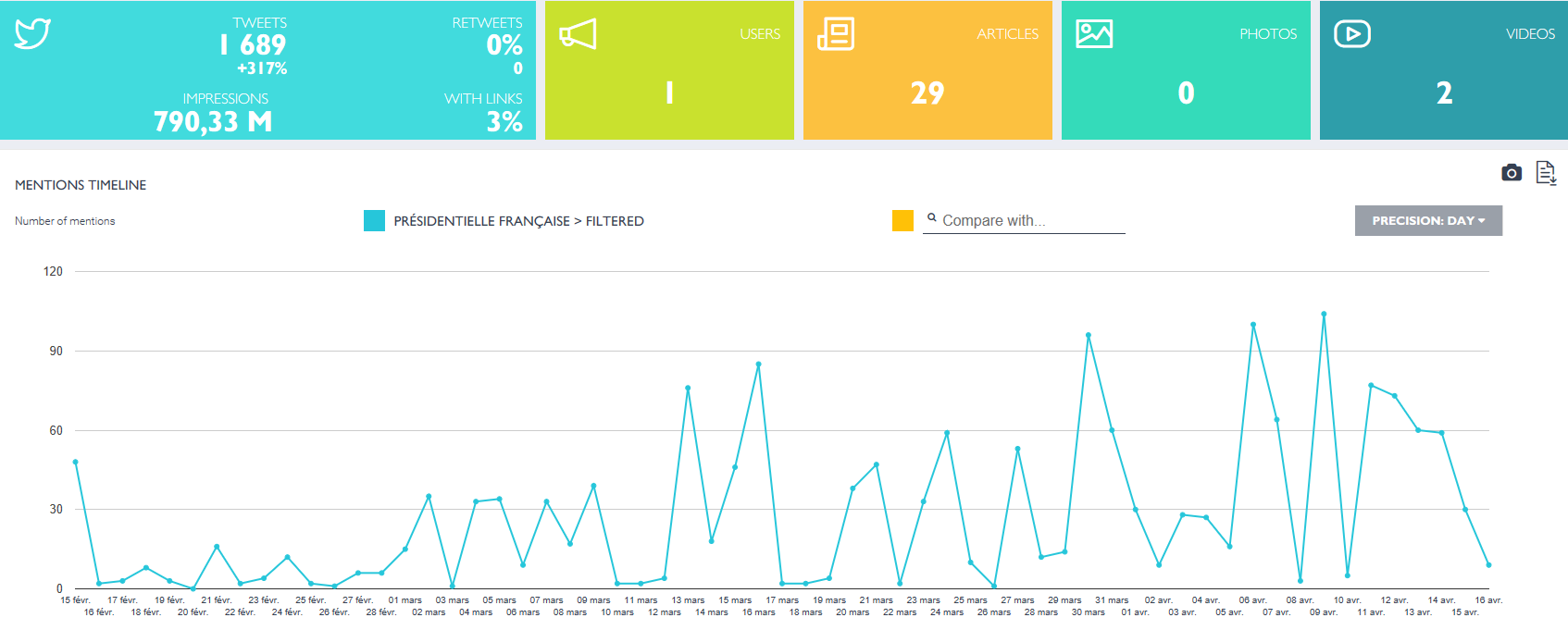
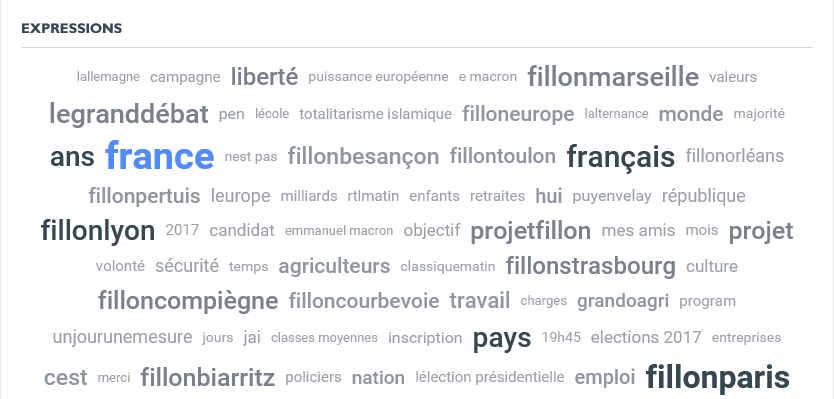
After a fairly long period of inactivity, François Fillon was very active in March. His expressions are strongly rooted in France, freedom, work and farmers. Compared with the others, he places quite a few of his campaign themes: European power, Islamic totalitarianism, culture, security and the middle classes.
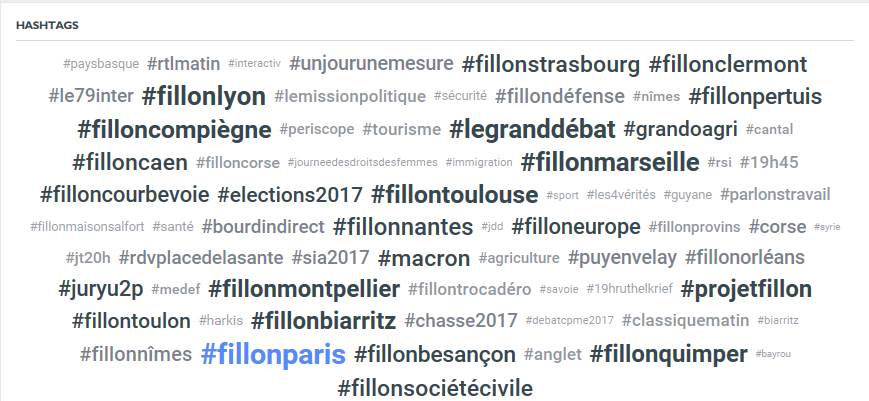
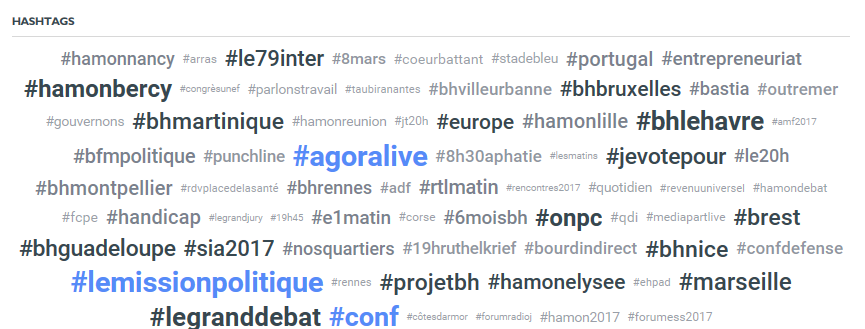
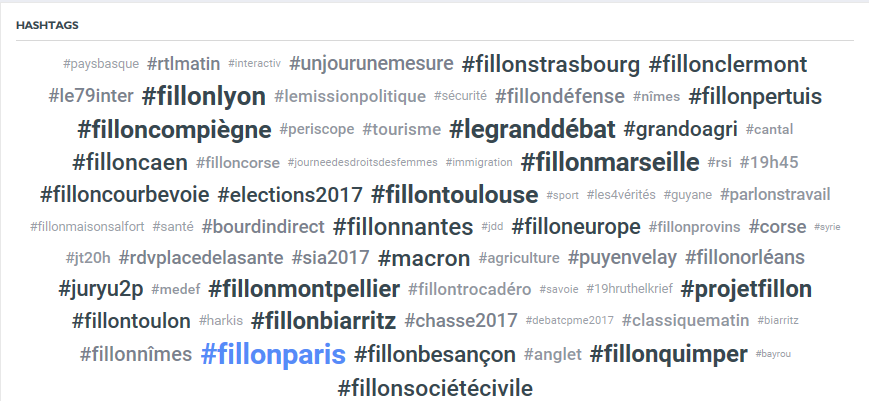
In the hashtags, as for the others, it is the rallies that set the tempo:
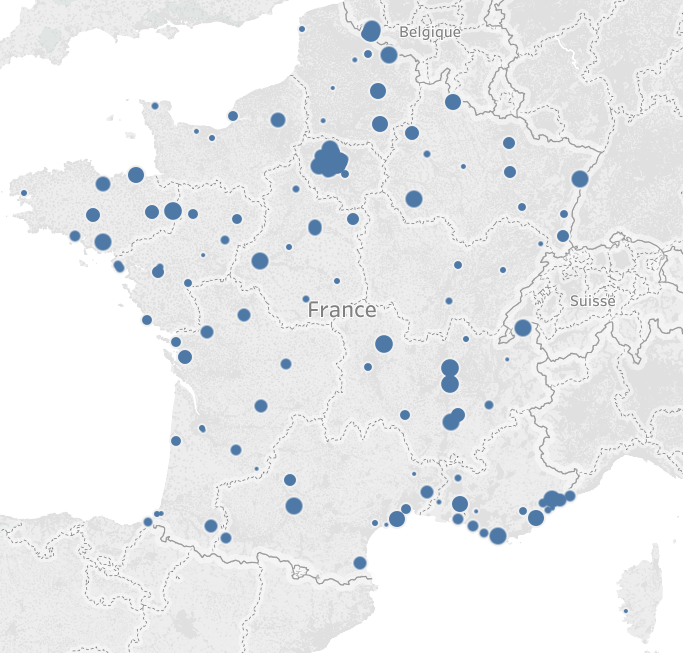
b) His audience

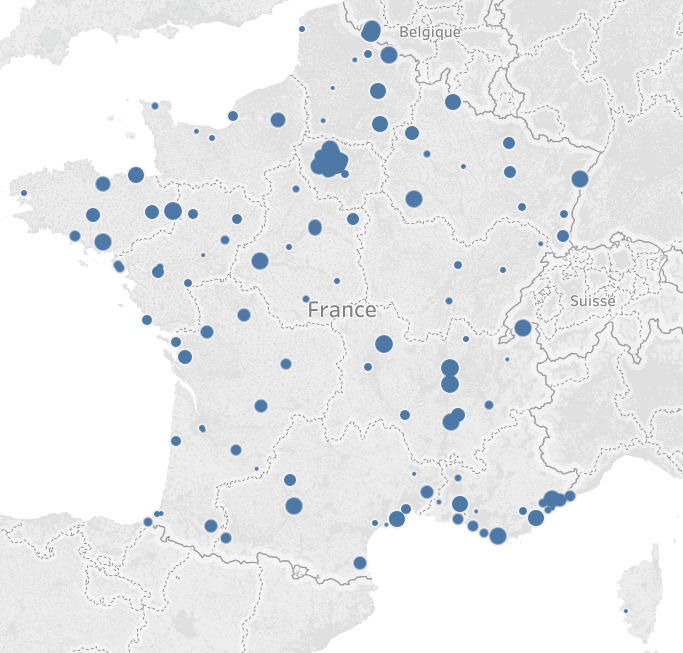
The audience is mostly male and scattered locally:
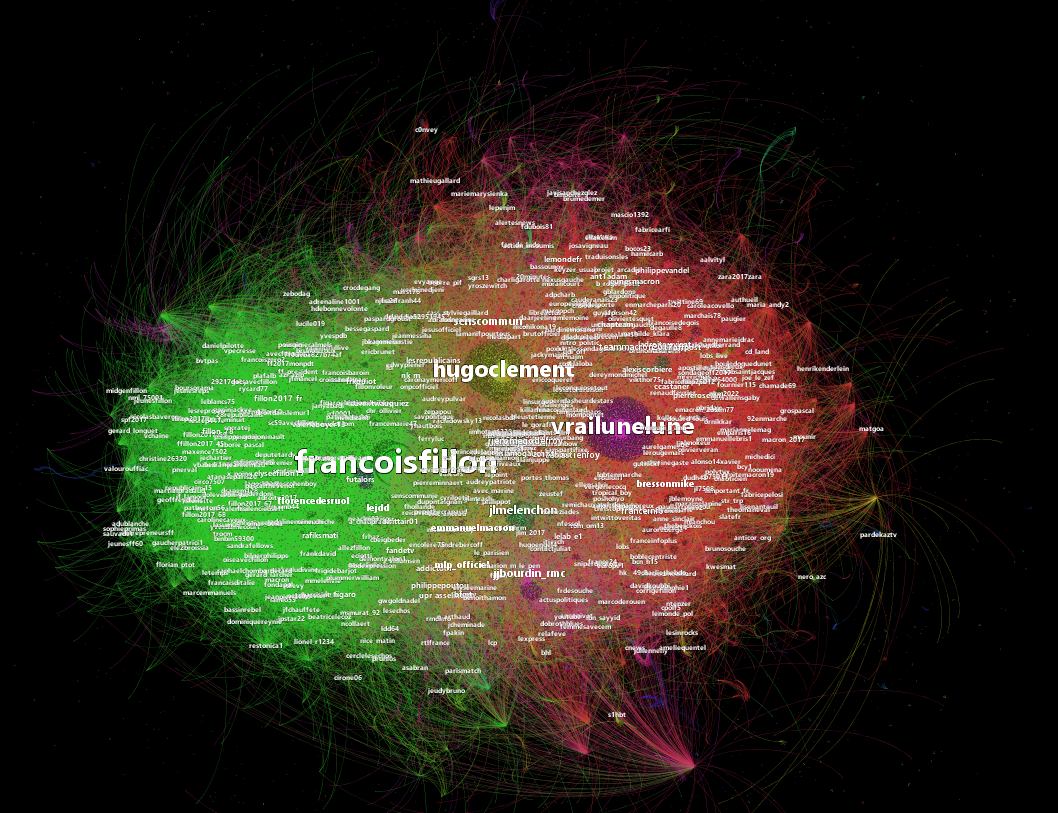
François Fillon is particularly divisive, as we see a crowd polarised between the pro-Fillon (green) and the anti-Fillon (red)
c) What Twitter says about him
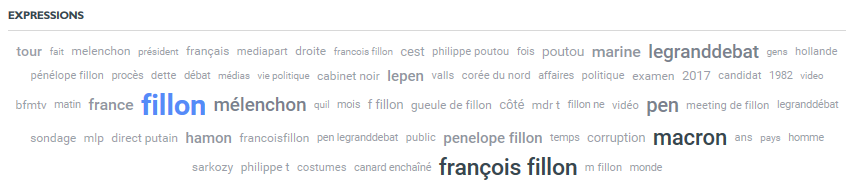
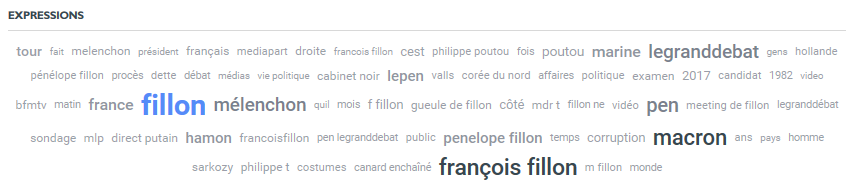
The words around Fillon are rather negative: corruption, shadow cabinet, Mediapart, debt, Pénélope Fillon and Canard Enchaîné.
4. Jean-Luc Mélenchon
Back to Contents
a) his digital portrait on Twitter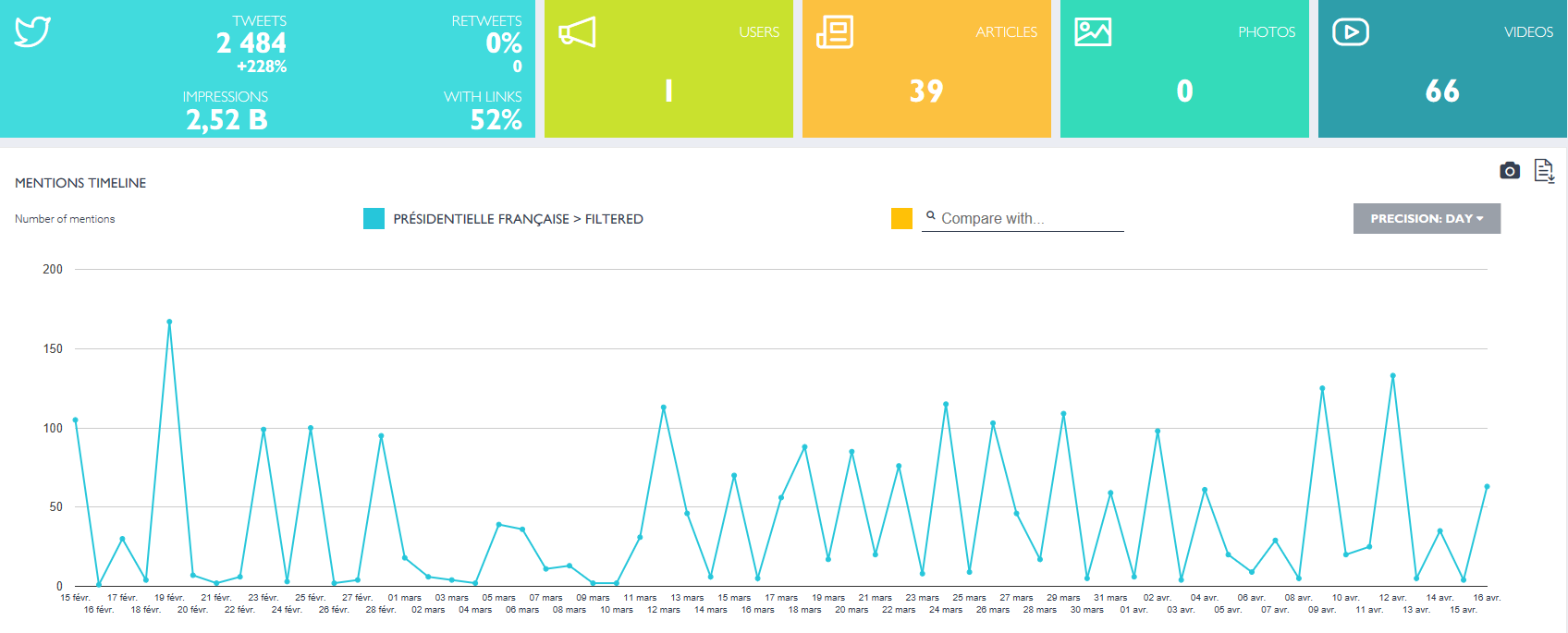
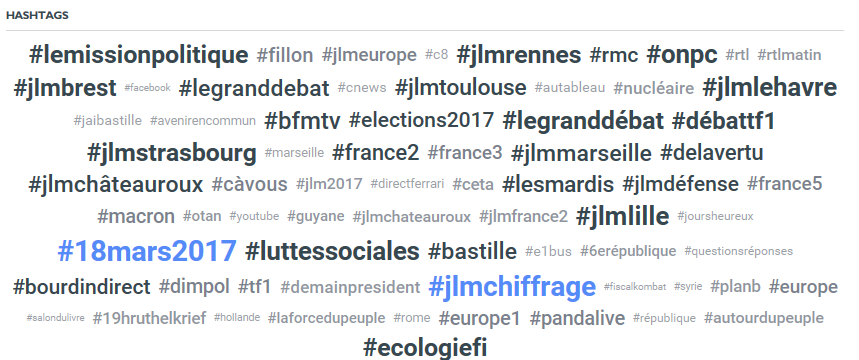
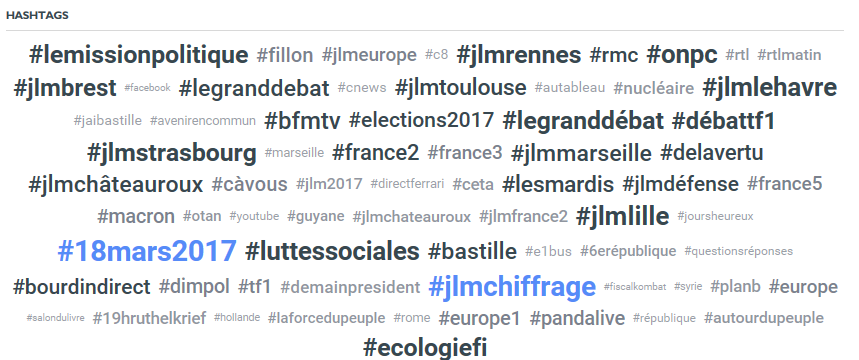
Clearly the most active. He also uses YouTube enormously. His activity is also very strongly marked by live-tweeting sessions. It is quite logical to find the rallies and TV shows:
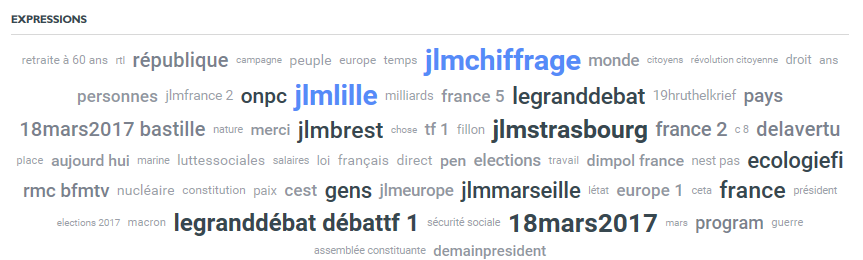
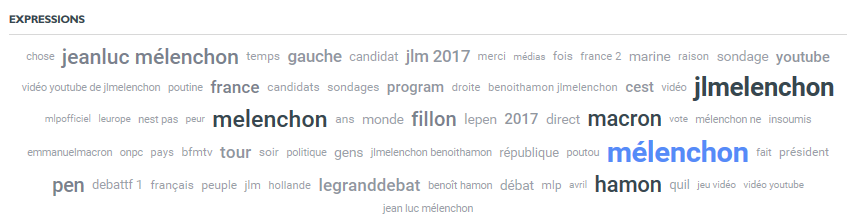
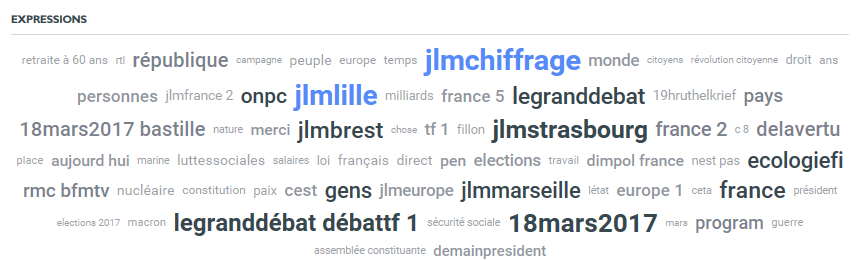
Among the most used words: the Republic, retirement at 60, ecology, social struggles, wages and the citizens' revolution.
b) His audience

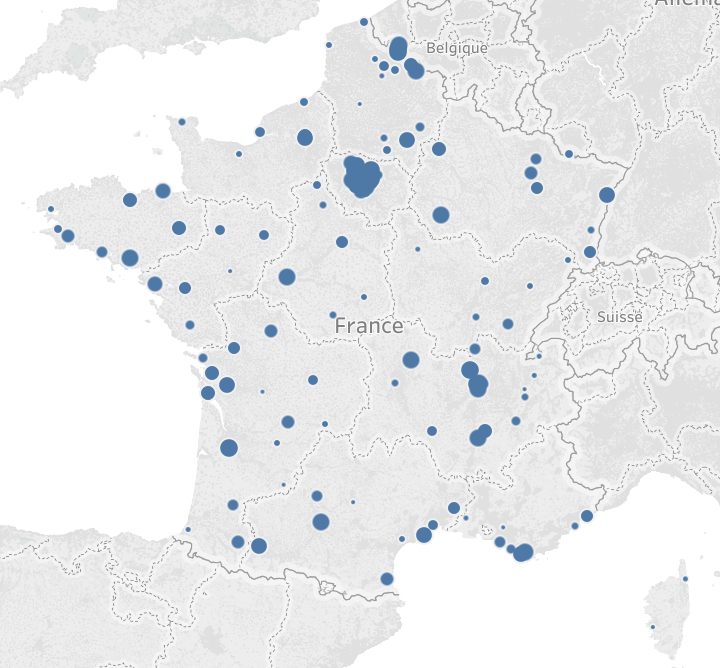
Once again, very male on Twitter and particularly present in the Paris region:
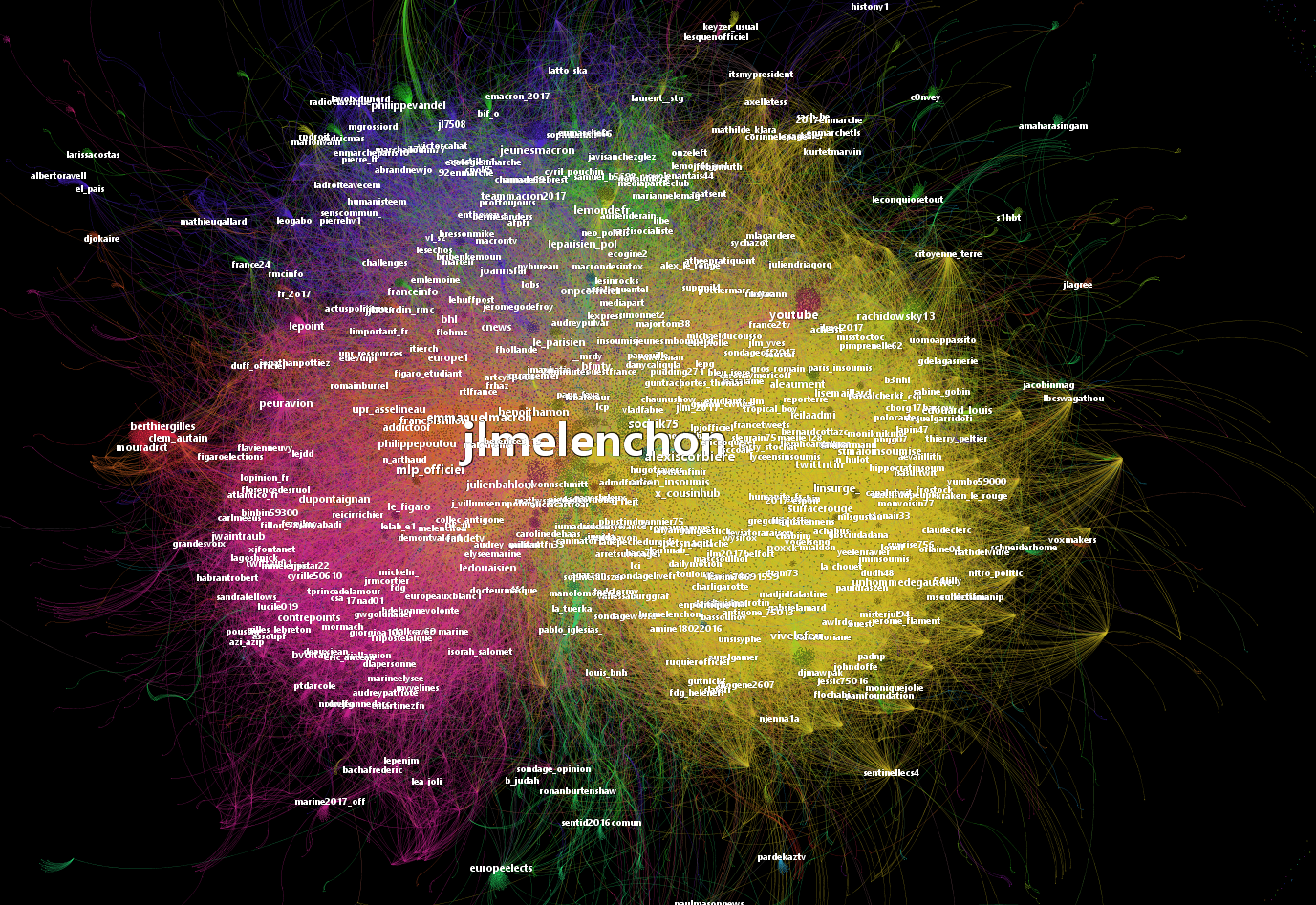
Mélenchon is also attacked by Macron supporters (blue) and Fillonists (pink)
c) What Twitter says about him
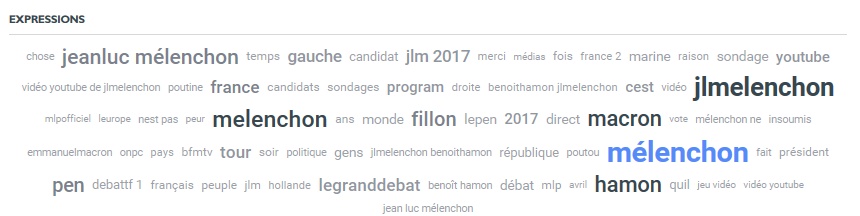
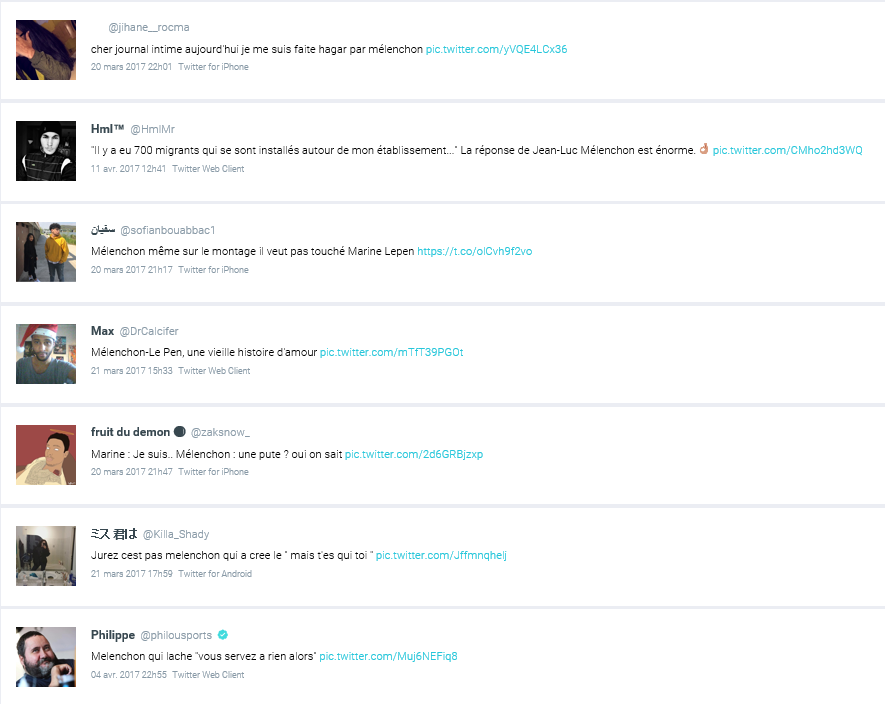
With Mélenchon we find many unusual words such as YouTube, games or video, but nothing very tangible, positive or negative.
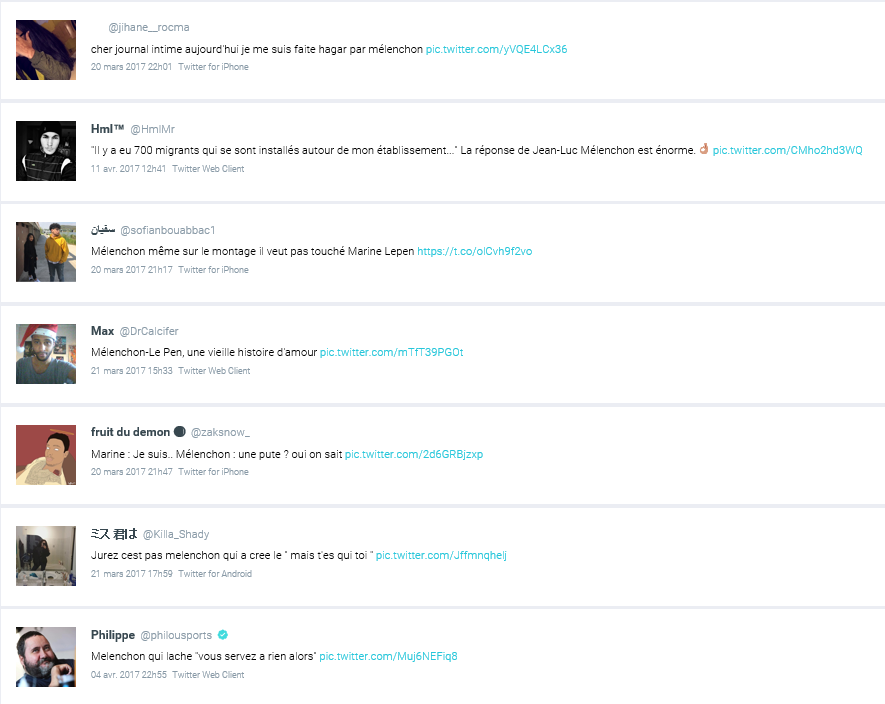
In the top tweets, mostly non-negative comments posted by young people:
5. Benoit Hamon
Back to Contents
a) his digital portrait on Twitter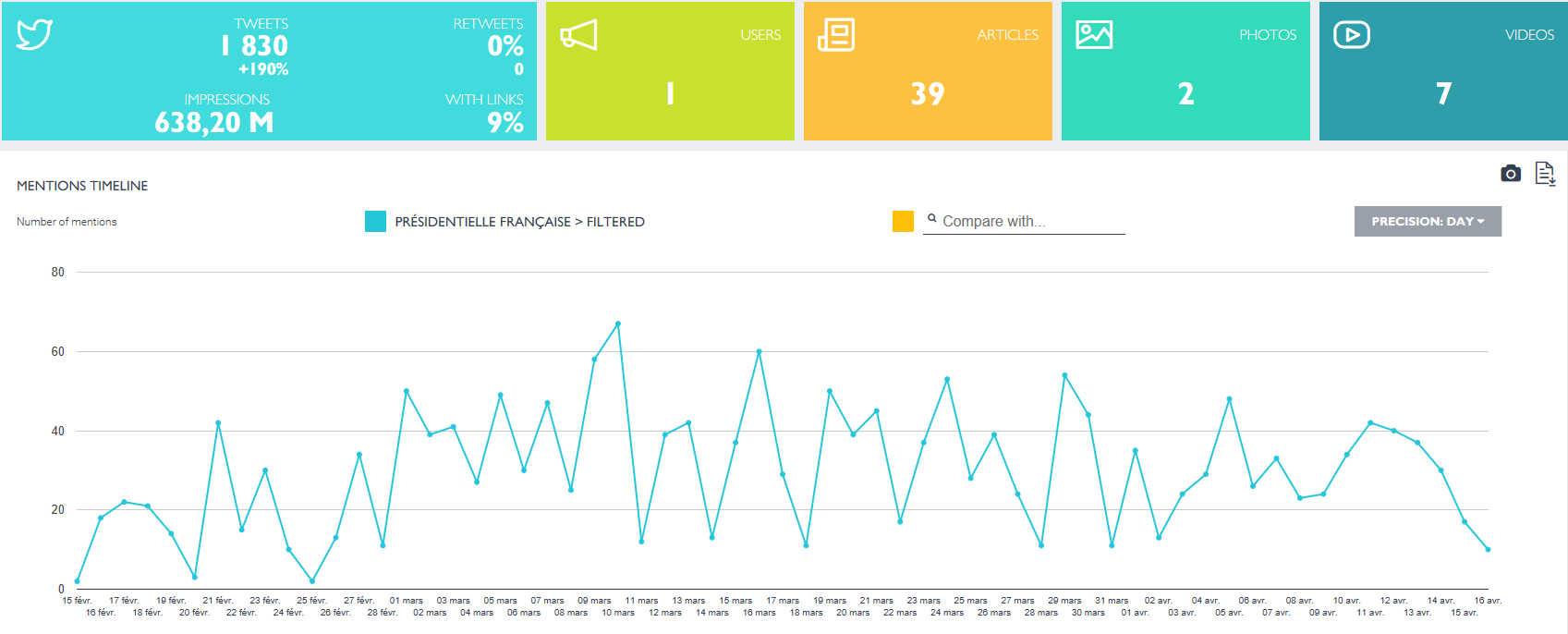 Benoit Hamon never takes a break in his activities.
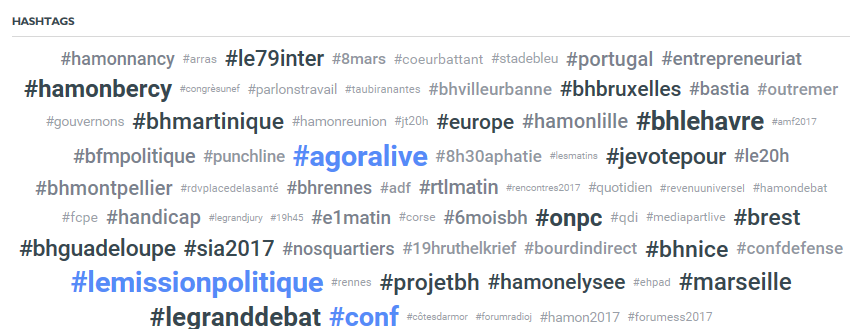
In the hashtags, as for the others, hashtags for TV shows and rallies.
In the expressions, we find universal basic income, democracy, teachers, the ecological transition and public services.
b) His audience

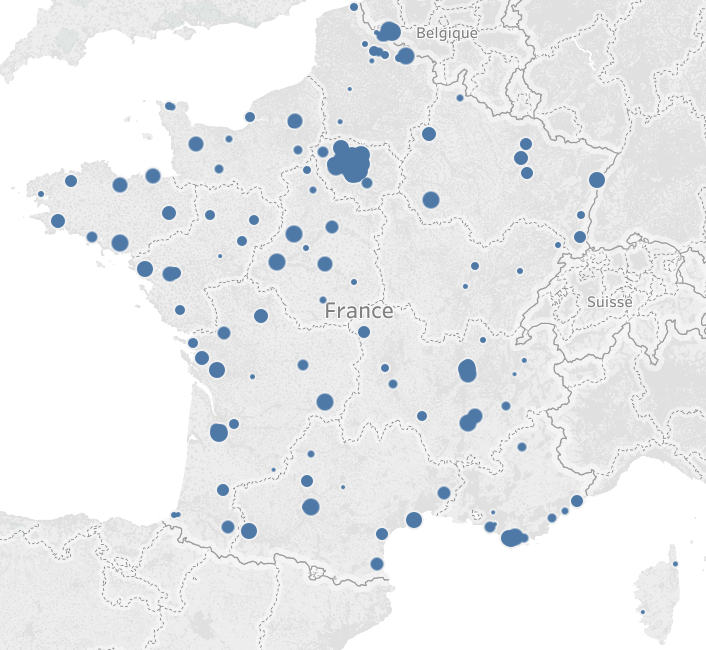
Mainly male, but less so than for the others, he is present everywhere and particularly well in the Paris region.
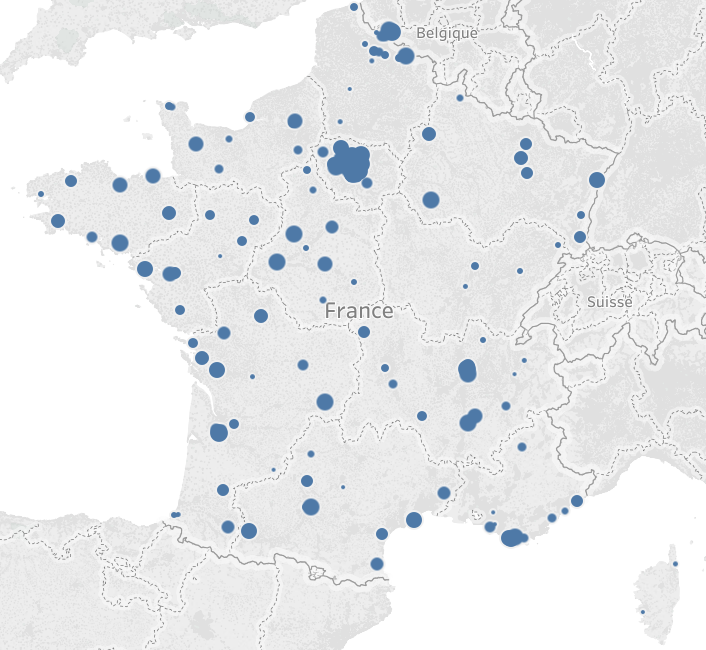
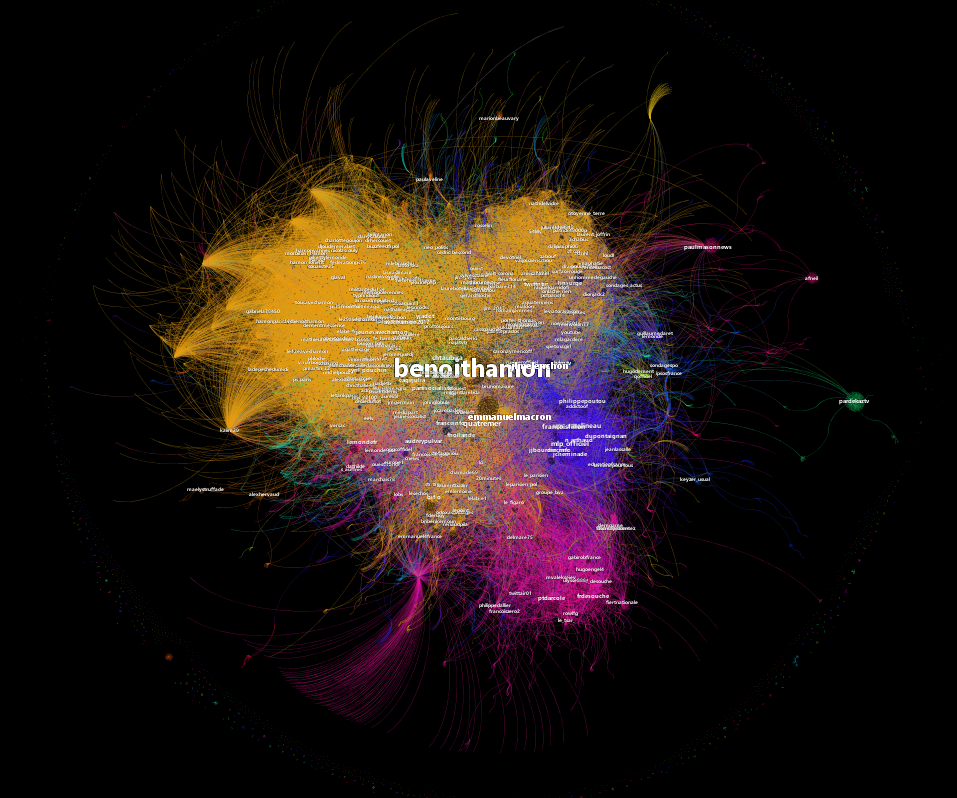
For Hamon, it is mainly his supporters who mention him. There are just a few Fillonist and Macronist communities.
c) What Twitter says about him
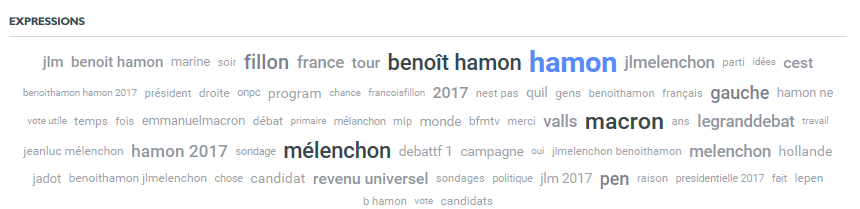
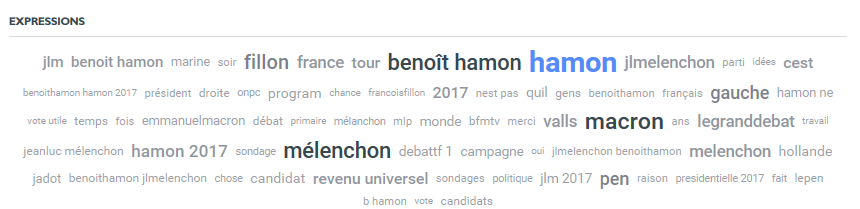
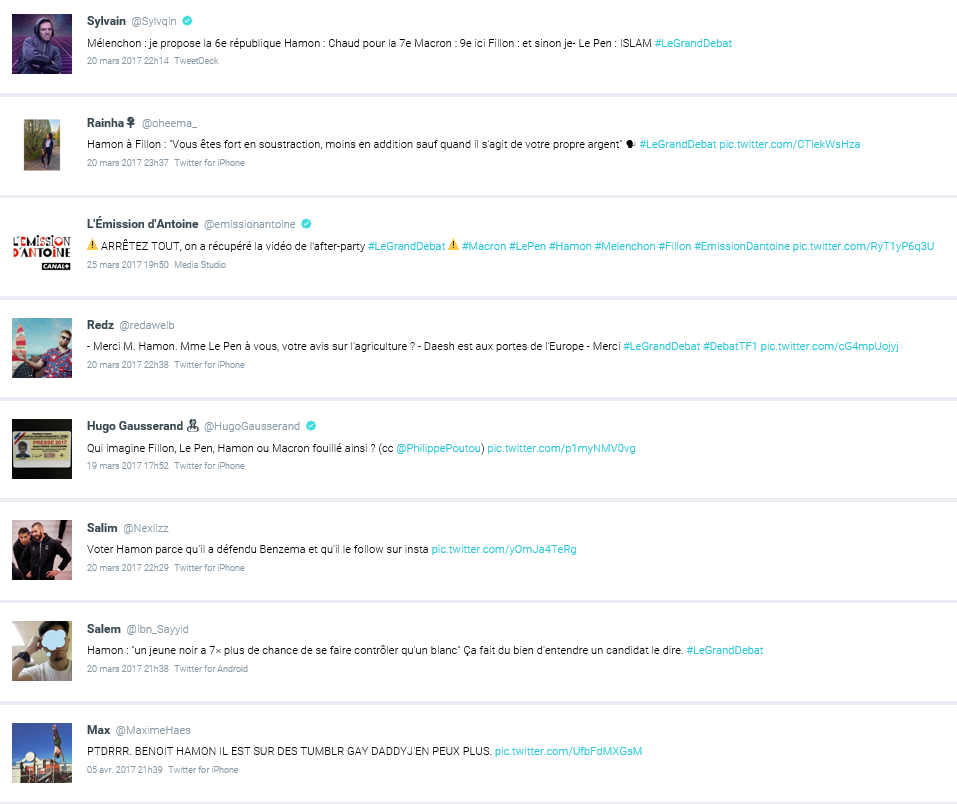
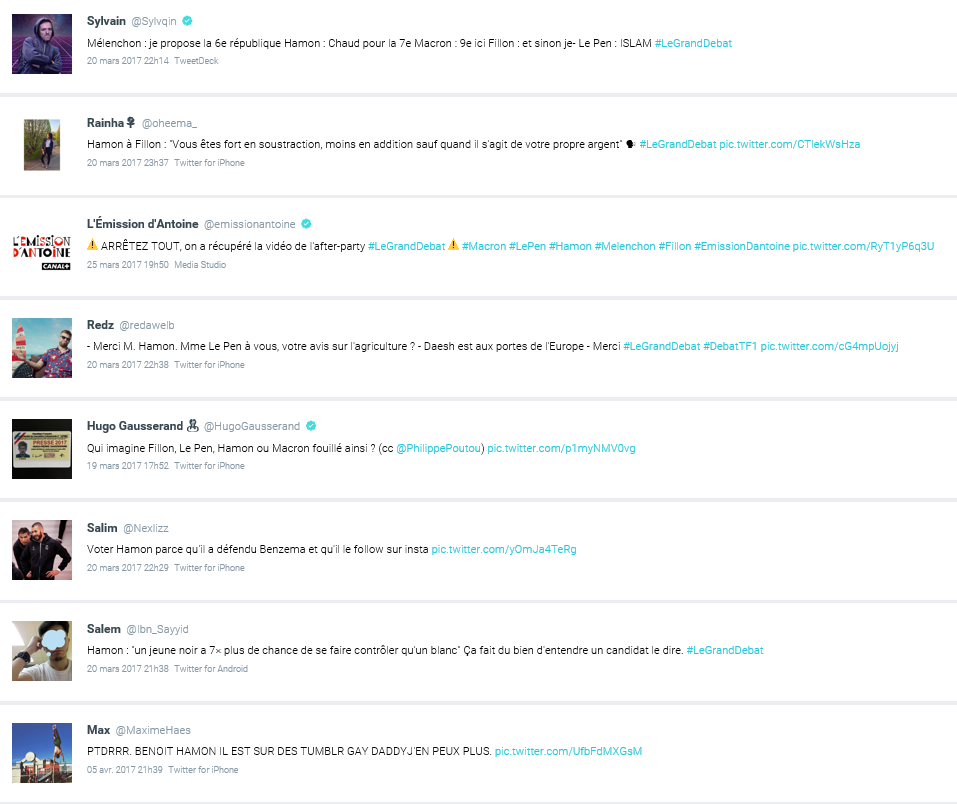
The talk is mainly about his universal basic income and his negotiations with Mélenchon. In the top tweets, a majority of supportive tweets:
Methodology
All the Twitter results were obtained by Visibrain. Visibrain collected all the tweets on the presidential election and I took all the data from 14 February to 16 April. For everything that is not Twitter, I used the Radarly panel (for the same period) as well as Talkwalker data for the Facebook table (Last month). The data run from 13 November to 22 January. Other data were compared with Brandwatch.