Today will see the first round of the citizens' primary. A chance to take stock of this election on the basis of data gleaned from social media. To do so, I combined all the best software (Visibrain, Talkwalker and Brandwatch), and a good part of what it is currently possible to do through social media.
Key findings
1. If social media were to vote: Hamon wins. Valls lying in wait, Montebourg far behind
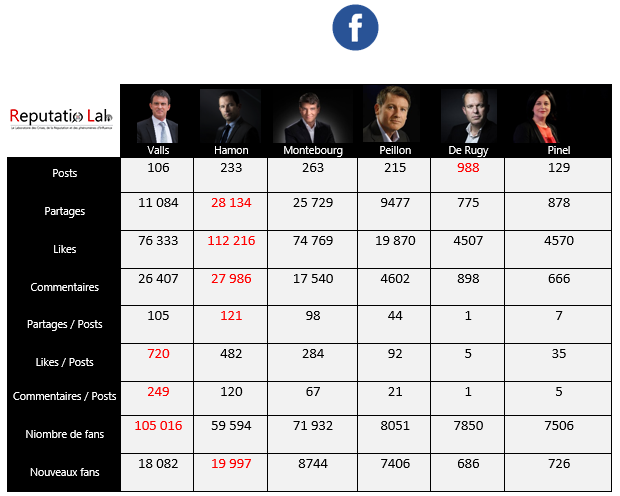
- Hamon would come first. (Best engagement on Twitter, best engagement rate among his rivals, best engagement on Facebook in shares, likes and comments, best gain in Facebook fans, best engagement rate among Facebook super-fans, best activation of activists on Twitter)
- Valls would come second. (Best among women, best rate of likes and comments per post on Facebook, best in the press and in press headlines, best geographic spread of Twitter users, and he is almost level with Hamon on activating activists on Twitter)
- Montebourg would come third. (The only indicator that would put him in the second round is his appearance in press headlines!)
EDIT: For once, the social media indicators were more accurate than the polls. How do we explain the difference with the right? Plenty of factors. I really doubt that social media can be a good indicator of who will win a presidential election. Nevertheless, I will keep taking these measurements so that we can identify the factors.
2. The primary debates lose steam
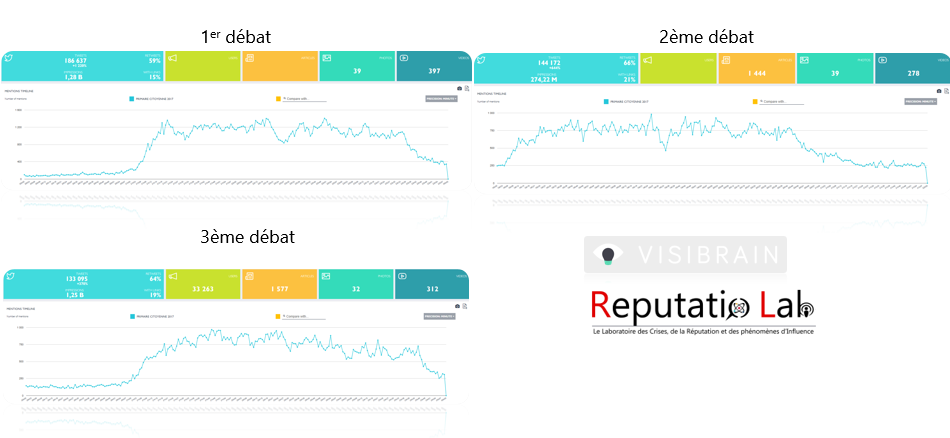
There is a steady loss of steam in the primary debates in terms of the number of tweets. From 180,000 down to 130,000 tweets, which tends to show that holding no fewer than 3 debates in 1 week wore people out and that they gradually turned away from the debates.
3. The patriosphere on Montebourg
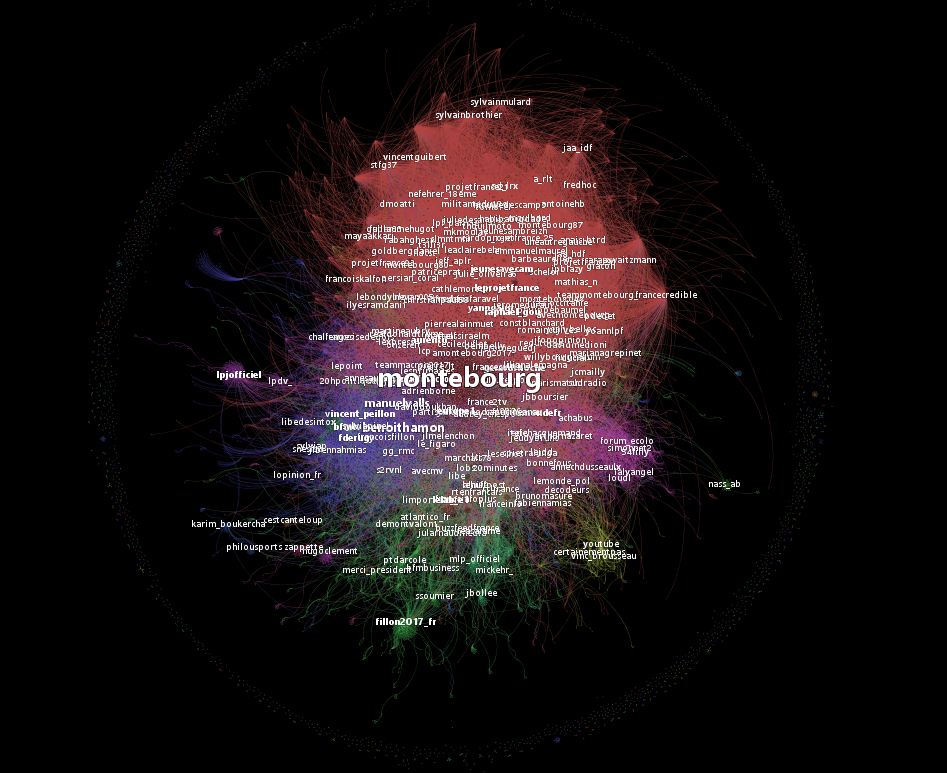
Only one candidate received bullying and frontal attacks from the patriosphere: Arnaud Montebourg. This shows that the patriosphere is aware of certain political lines that need to be isolated to ensure Marine Le Pen's passage. Montebourg probably embodies, through his patriotic communication and his social stance, the Socialist Party candidate closest to Marine Le Pen. It is therefore a safe bet that the rest of the presidential campaign will be the same, with attempts at destabilisation and attacks through social media.
4. Similarities and differences with the right-wing primary.
As a reminder, I had analysed the right-wing primary here with the same indicators. Similarities stand out:
- A universe that is still male.
- Also candidates who are entirely absent from Twitter and poke their noses back in once the campaign starts!
- Negativity always pays.
- Conversations always follow a narrow crowd.
And differences:
- Political sensibilities are somewhat less tangible between the different candidates. However, activists are still clearly identifiable through Social Network Analysis
5. The first bot of the elections.
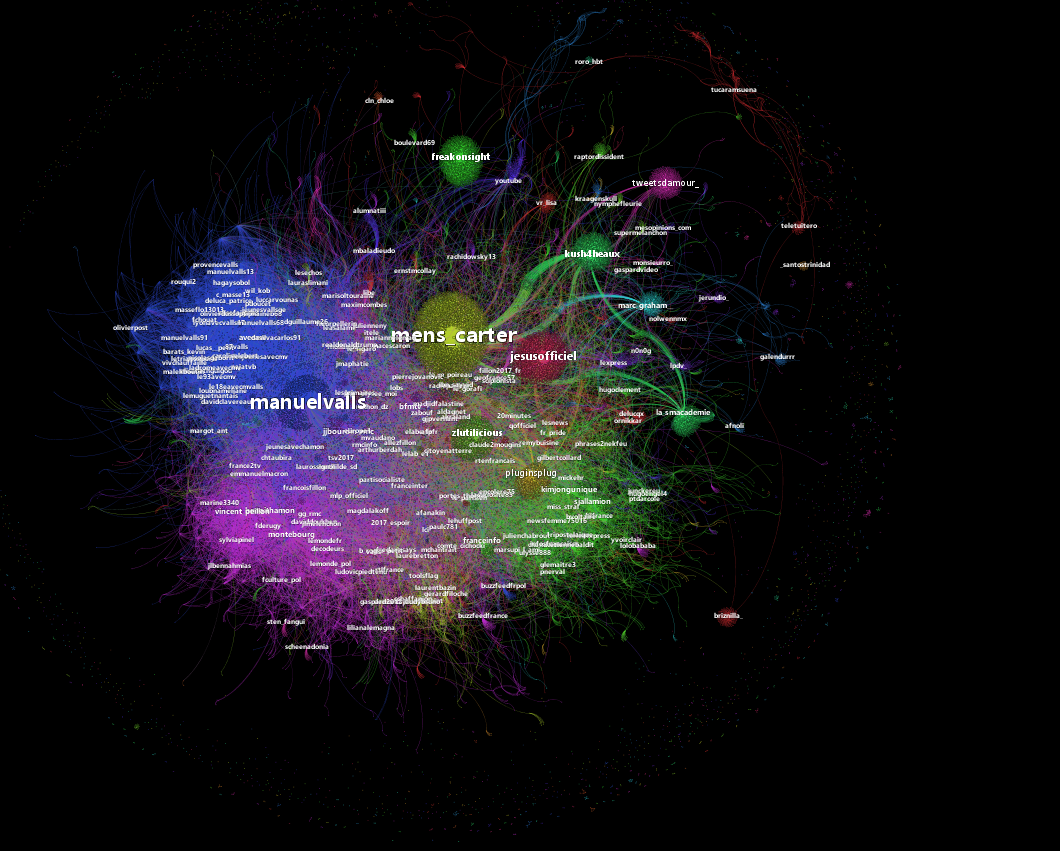
As I indicated and demonstrated earlier in the week, we had our first botter of the election on the National Front side. Fortunately, he is easily identifiable through the mapping of conversations. (Like Valls's namesake!)
6. A quick portrait of the candidates based on the social web
- Manuel Valls: growing in his presence on Twitter, Manuel Valls has a good base of activists similar to Hamon's and heavy press coverage. Less active on Facebook than the others, each of his posts gathers the highest average of likes. He is also very good among women and gathers the most scattered audience of all the candidates.
- Benoit Hamon: Benoit Hamon is the leader of the primary on social media. He is the one who manages best to capture the other candidates' audience, the one with the most activists in the share of voice about him, and many other indicators. He may be weaker among women and has not had as much press coverage as his main rivals.
- Arnaud Montebourg: he is the one who, compared with the polls, achieves the weakest scores. Particularly weak among women, he is the only candidate to have received a few warning shots from the patriosphere. Should he reach the second round, the only supporting indicator would be his presence in article headlines.
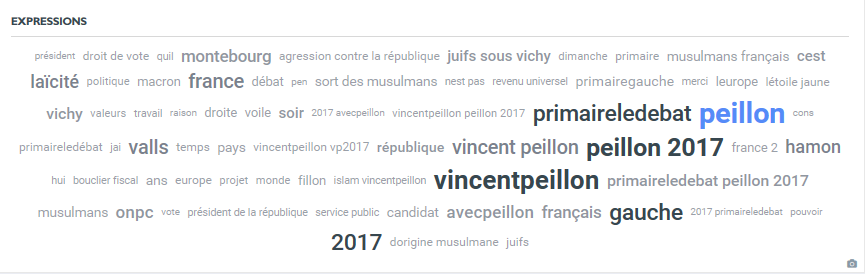
- Vincent Peillon: Peillon is more active on Twitter when launching his campaign than during the debates. He does not really stand out and most of the comments are about his remark on the Second World War.
- François de Rugy: Despite a high rate of output on Facebook (in reality, he relays citizens who are positive towards him), engagement is at its lowest.
- Sylvia Pinel: despite a small community of loyal followers, she speaks up almost as rarely as she does in the debates.
- Jean-Luc Bennahmias: given the activity on social media and the communities present to support him, one wonders whether the candidacy is serious.
Contents
I. Comparisons across the different social networks
II. General discussions on the primary
III. The profile of each candidate based on social media
- Manuel Valls
- Benoit Hamon
- Arnaud Montebourg
- Vincent Peillon
- François de Rugy
- Sylvia Pinel
- Jean-Luc Bennahmias
Methodology
I. Comparisons across the different social networks
1. Twitter
Back to contents
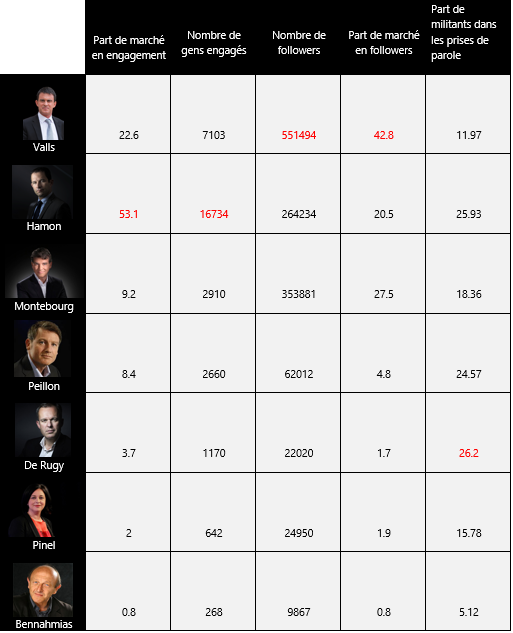
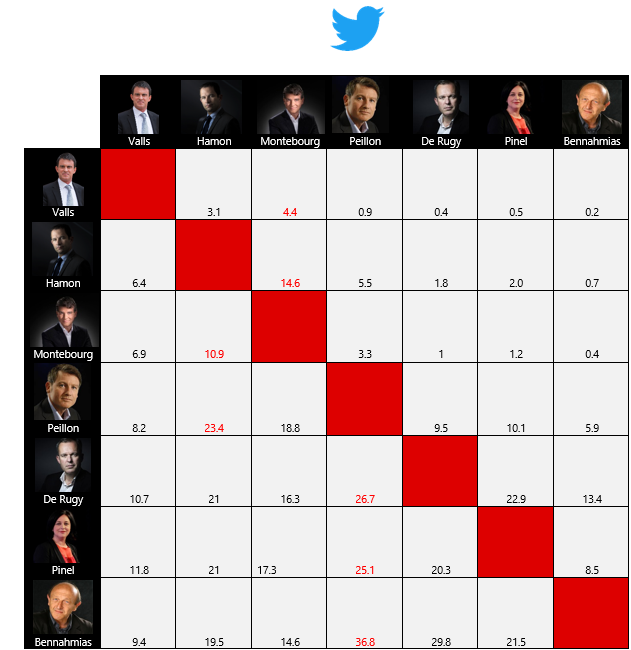
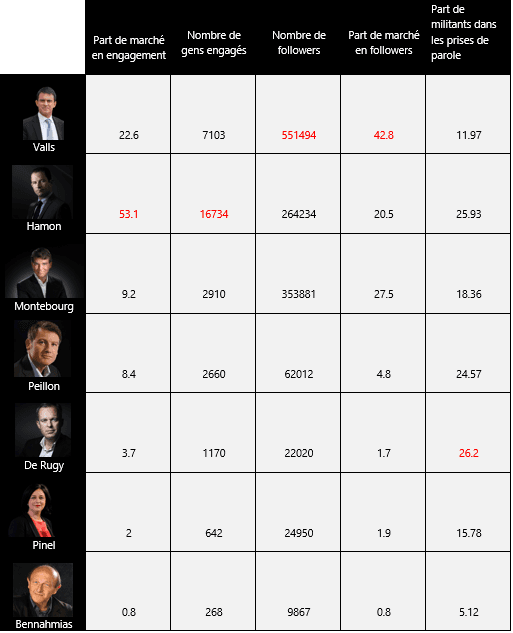
Manuel Valls, by virtue of his position, has a comfortable audience, but is overtaken by Hamon when it comes to engaging it. Hamon also has the largest share of activists among those speaking about him, among the favourites. Only De Rugy does better, but with far fewer people speaking about him than Hamon.
a) The overlap between followers
It is read from horizontal to vertical:
Example: 3.1% of Manuel Valls's followers also follow Benoit Hamon, whereas only 6.4% of Benoit Hamon's followers also follow Manuel Valls, and so on.
The small amount of shared audience between Valls and the others is rather odd, since these figures were not observed for the left-wing primary. Peillon is the one with the most overlap with the minor candidates.
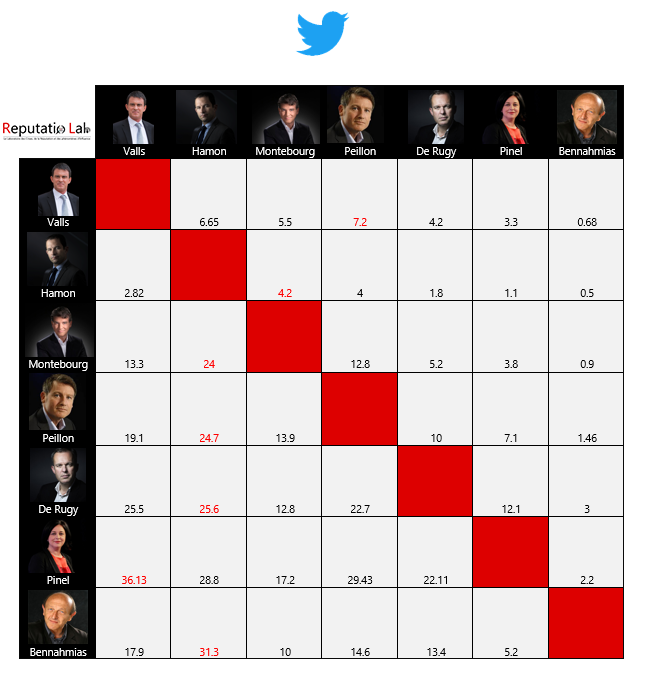
b) The overlap between engaged audiences
For this chapter, I isolated, between 21 December 2016 and 21 January 2017, the audiences that interacted with the different candidates in the Republican primary. It is read from horizontal to vertical:
Example: 6.65% of the people who interacted with Manuel Valls also interact with Hamon, whereas 2.82% of those who interacted with Benoit Hamon also did so with Manuel Valls, and so on.
Benoit Hamon is the one who manages best to win over the others' audience.
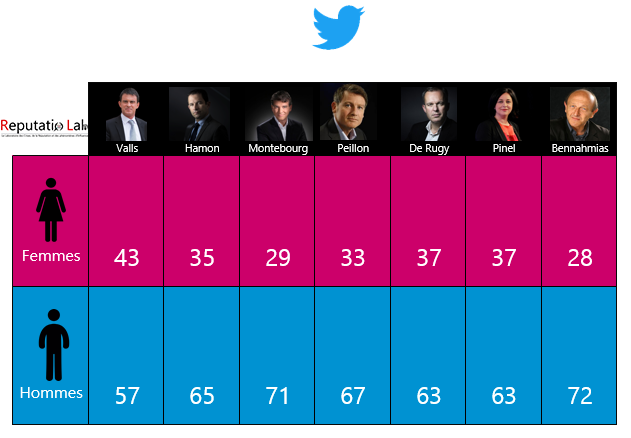
c) Demographic analysis
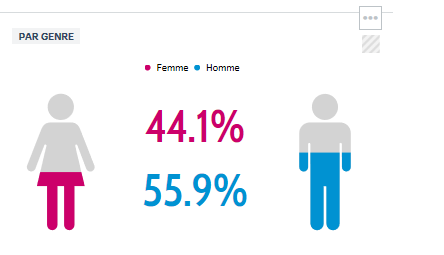
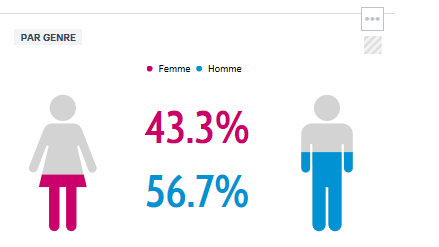
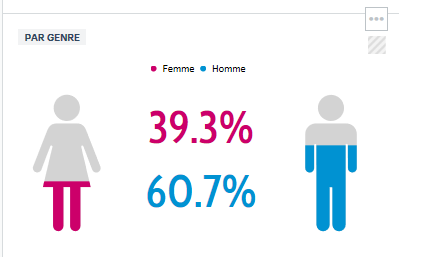
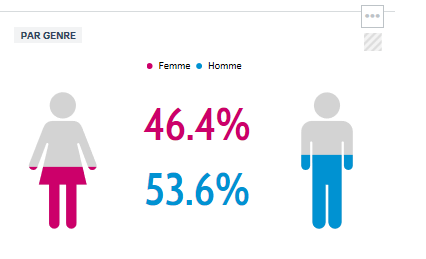
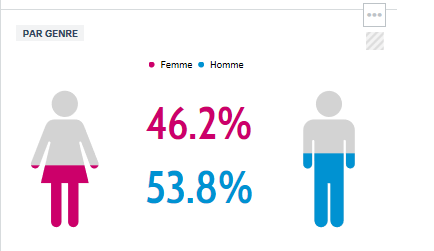
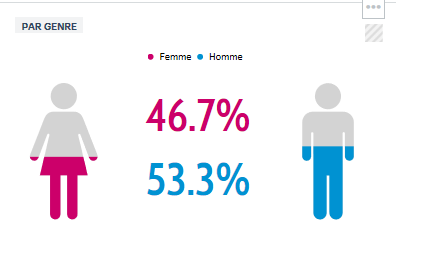
On Twitter, the majority of people who interact with politicians are men. Montebourg is the one who works least well with women.
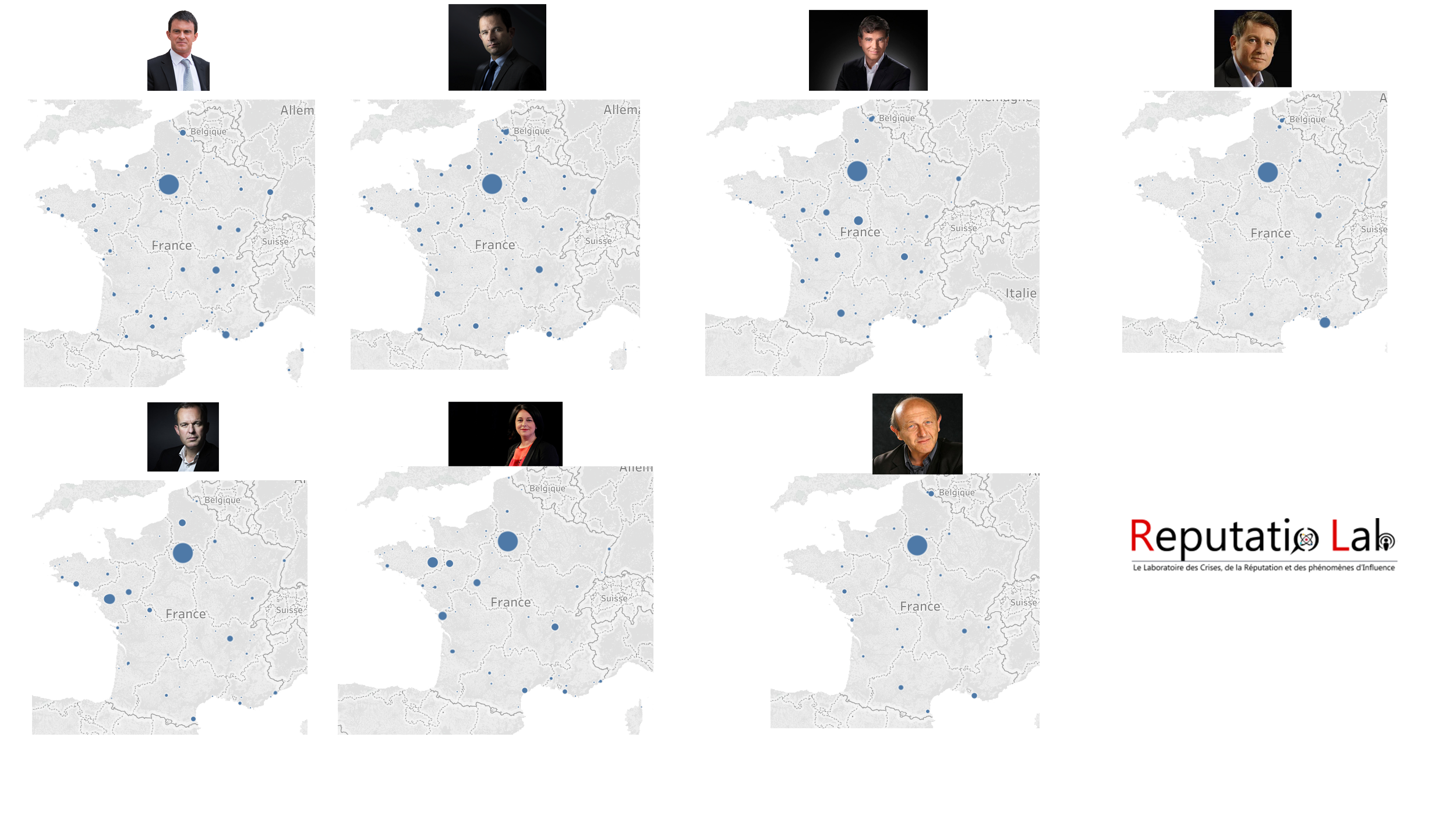
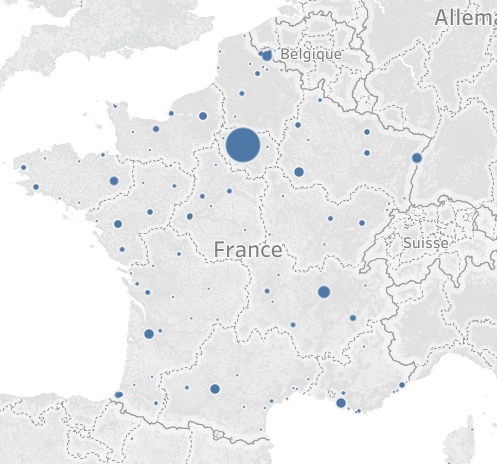
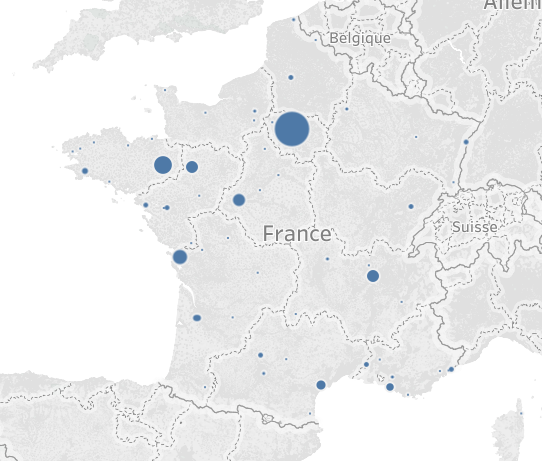
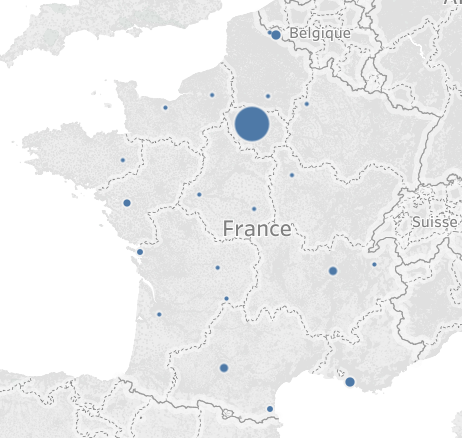
Before any analysis, one clarification is needed: the size of the dots is proportional and therefore cannot be compared between candidates.
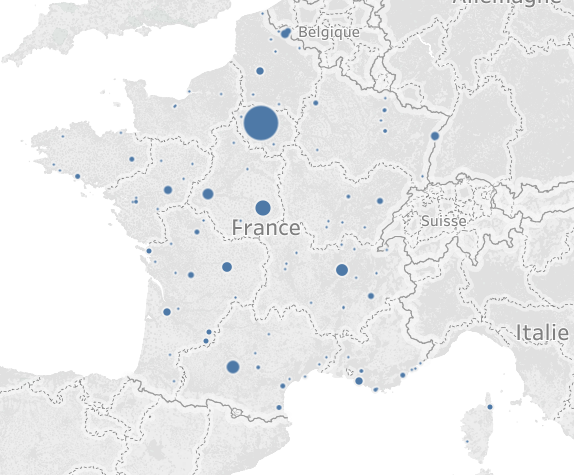
The only one who ensures a total presence is Manuel Valls. Hamon reaches the North more than the others, while Montebourg ensures a presence in the West.
2. Facebook
On Facebook, it is definitely Hamon who gets the best results without having the highest activity. It is only by weighting engagement per post that Valls gets a higher number of likes, the only indicator where Hamon does not come out on top. Note De Rugy's number of Facebook posts: 988!! This makes his engagement rate per post plummet dramatically.
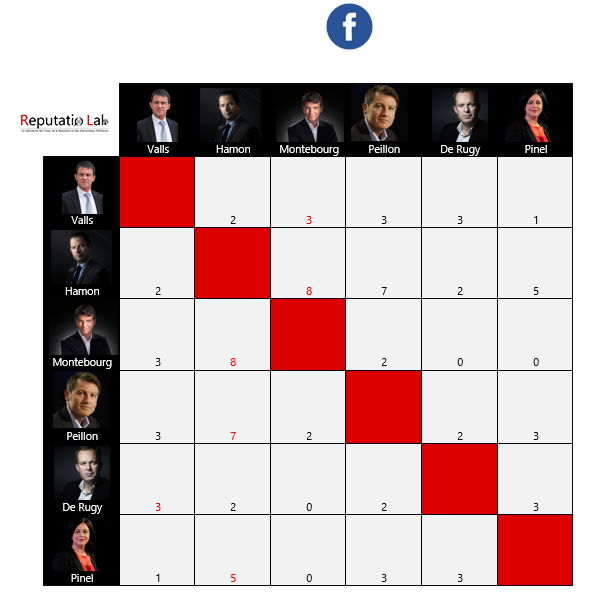
a) The overlap between the 100 most active users
No monitoring platform currently makes it possible to obtain more than 100 users of a Facebook page. I therefore had to compare on the basis of the 100 most active Facebook users of the 4 main primary candidates.
Here again, it is Hamon who draws the most from the others!
B) Demographics
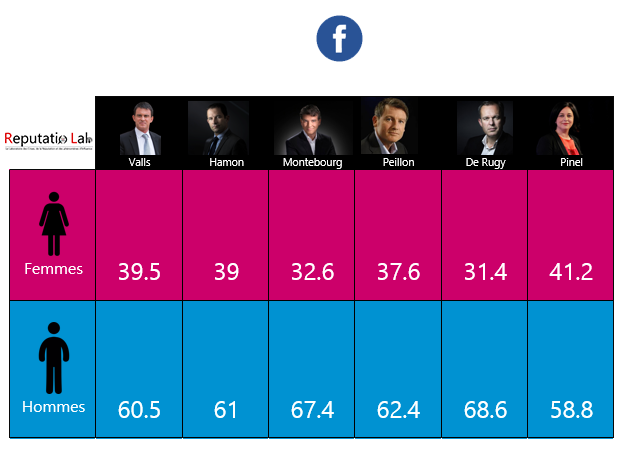
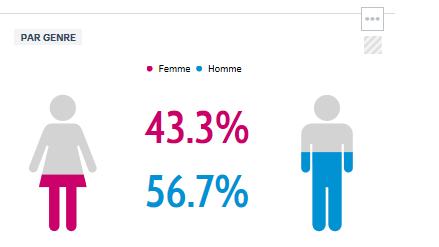
On Facebook, it is not possible to isolate users geographically, but it is possible to break down gender among the people who interacted.
On Facebook, De Rugy is ahead of Montebourg among those who capture the smallest female audience. Valls remains the candidate with the most interactions among women.
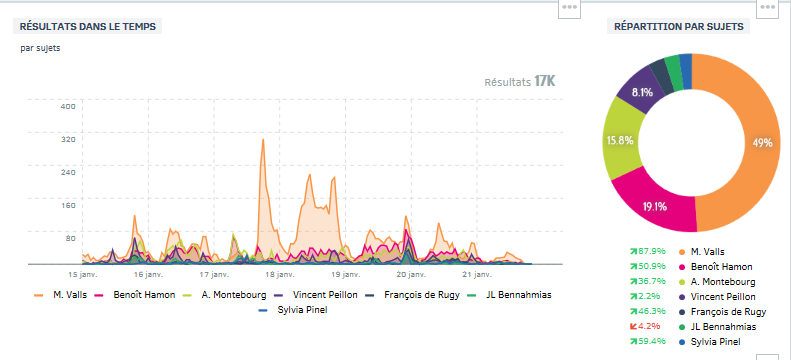
3. In the press
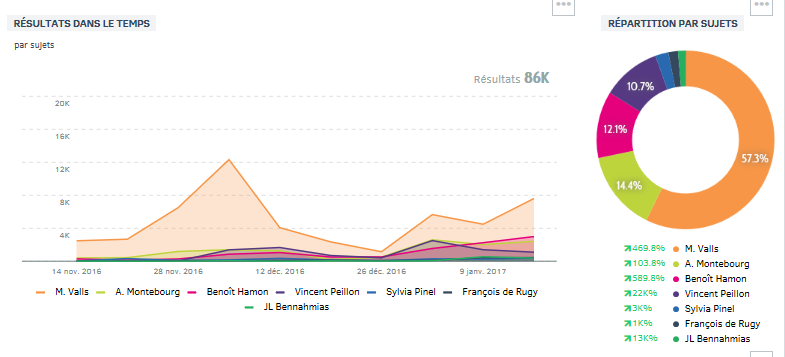
For press headlines, the breakdown is as follows:
Valls wins by a wide margin and this is not solely due to a single news item (the slap), even if it weighs, since the gap is constant throughout the month. Indeed, even in the body of texts, he is more present:
II. General discussions on the primary
Back to contents
1. In general
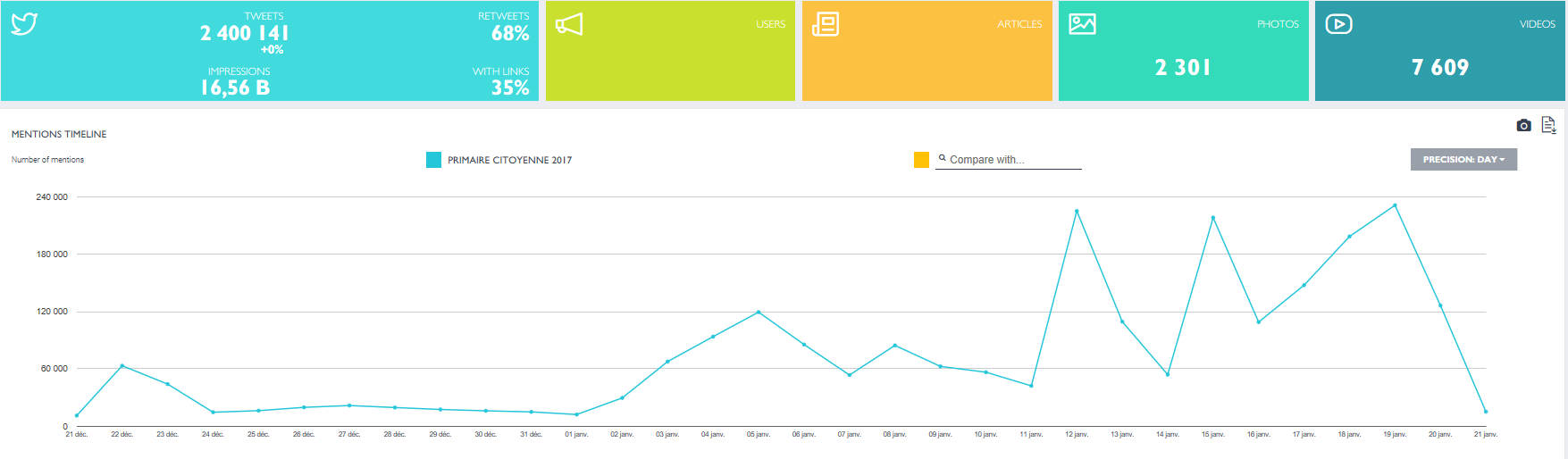
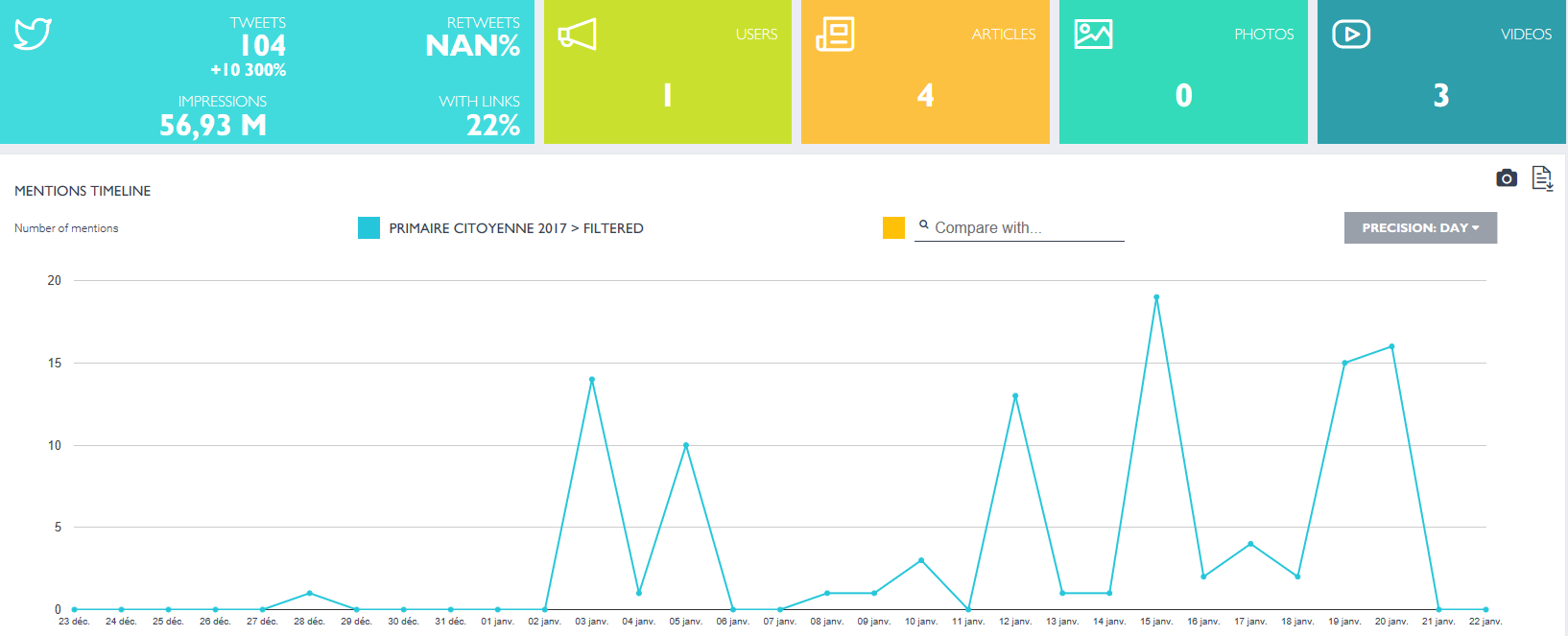
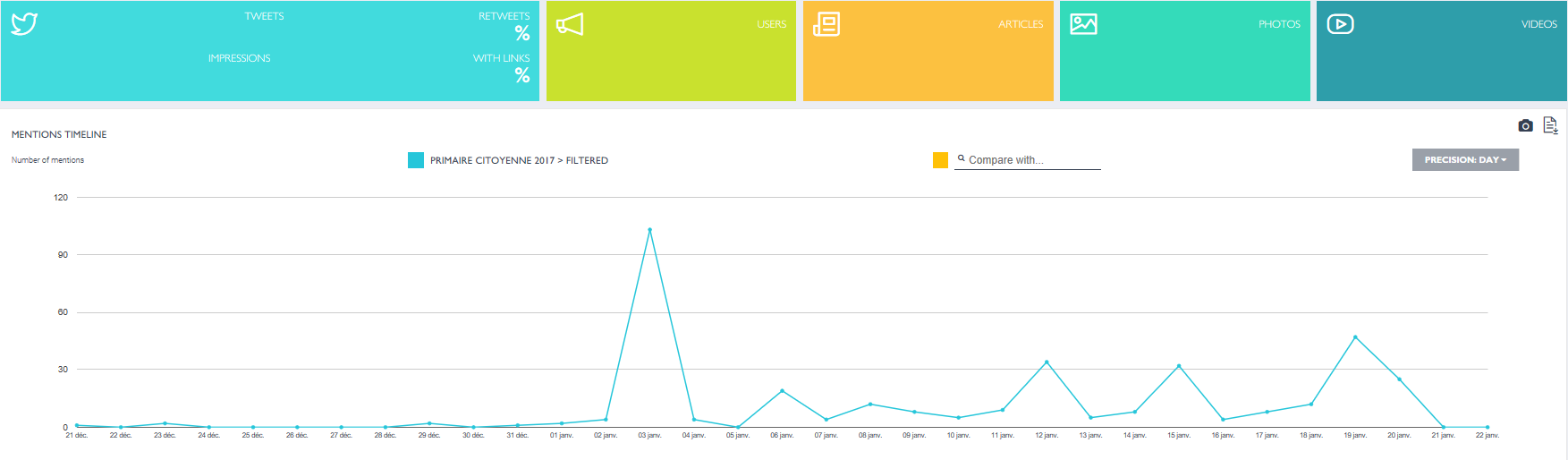
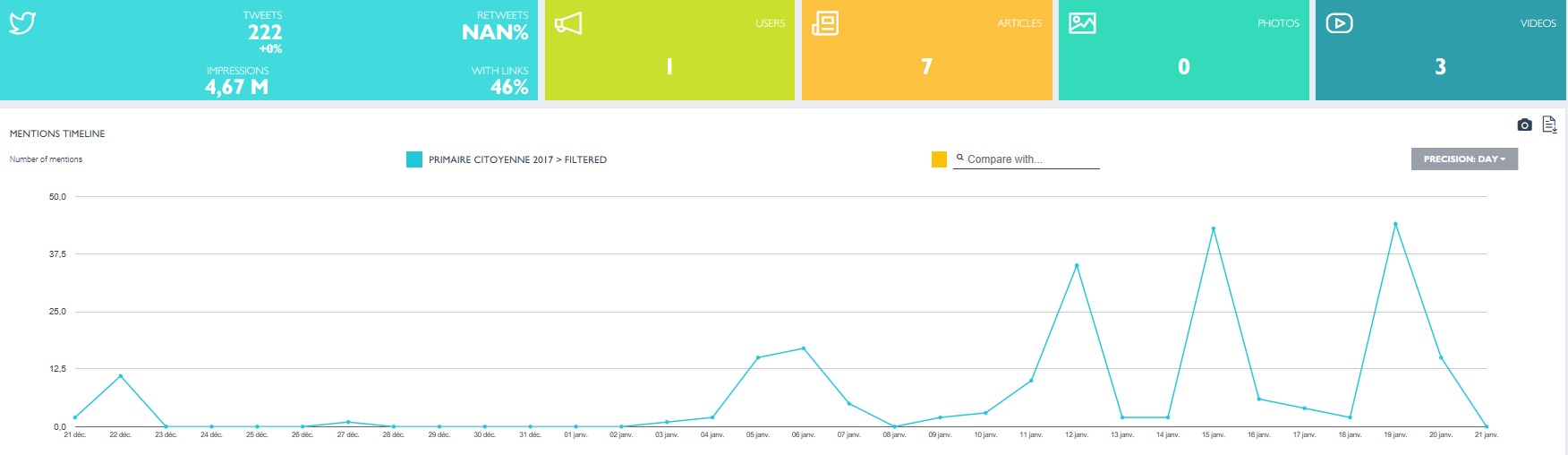
2.4 million tweets in a month, whereas the right-wing primary had generated more than 18 million tweets in 4 months. The volumes are clearly not comparable.
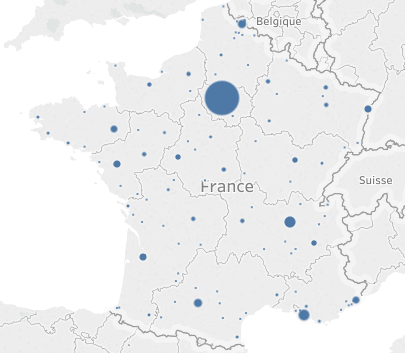
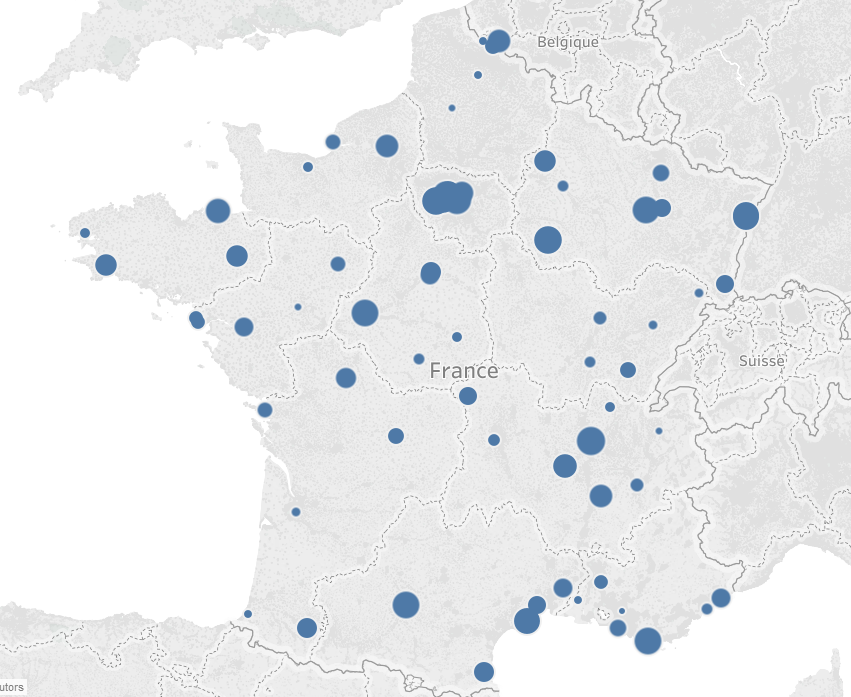
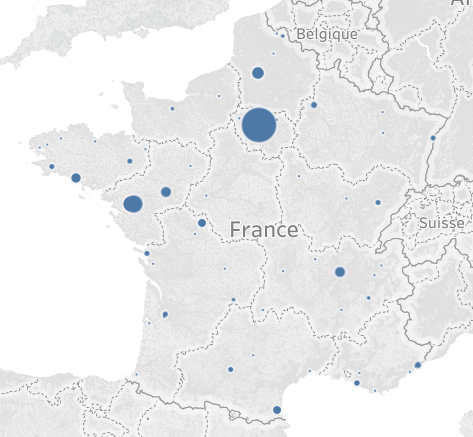
Geographically, the same observation as for the right: interaction is in the major cities:
However, it reaches far fewer places in the provinces than the right:
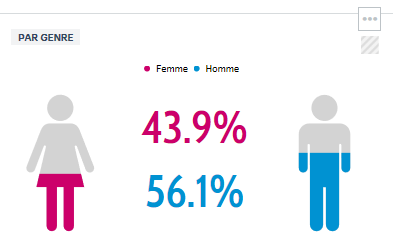
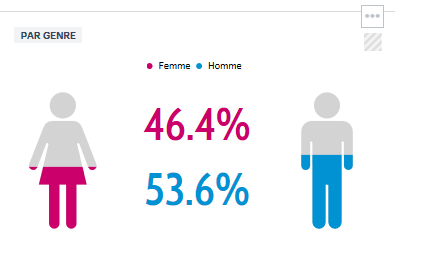
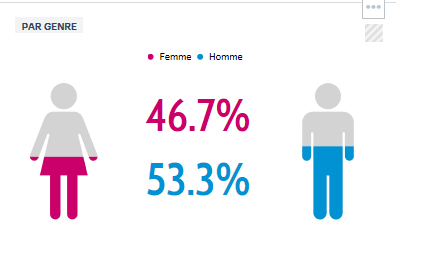
It is also far more men than women:
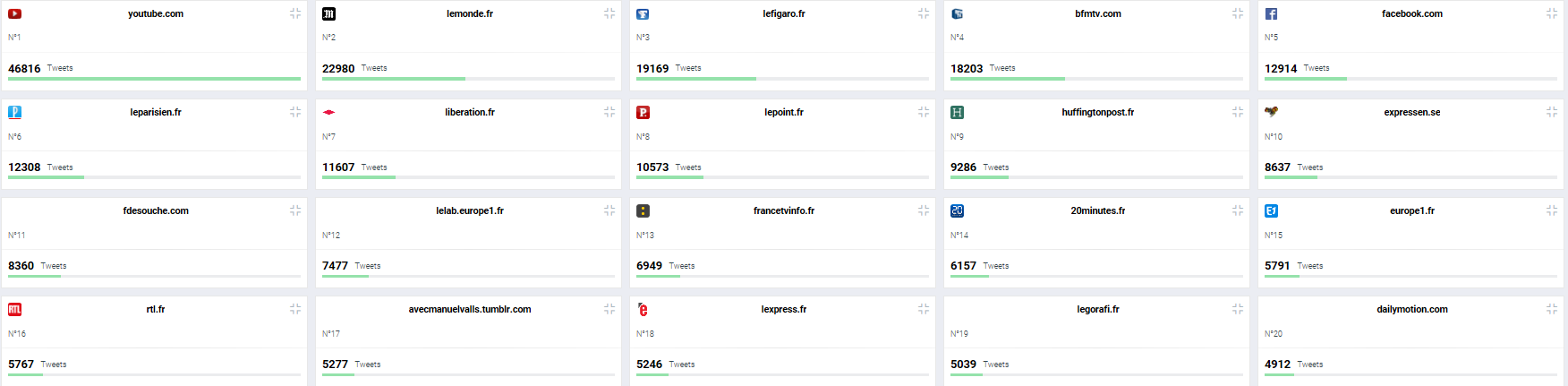
As for the most used sites, Instagram was not used at all, unlike on the right. Le Monde also overtakes Le Figaro.
2. The primary debates
The primary debates generated between 130,000 and 180,000 tweets. This figure shows Twitter users running out of steam, since it kept falling after each debate. It has to be said that imposing 3 debates in 7 days was bound to be wearing.
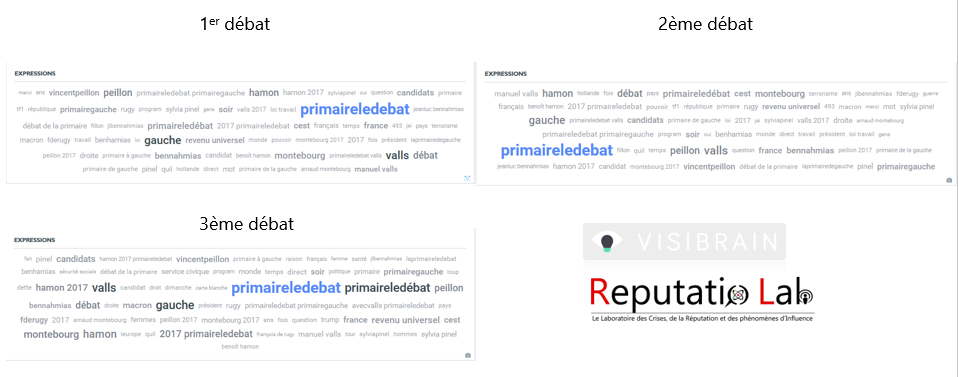
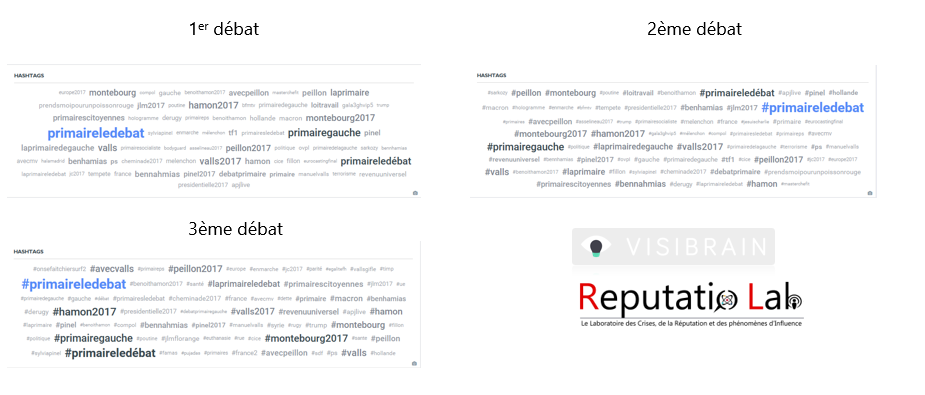
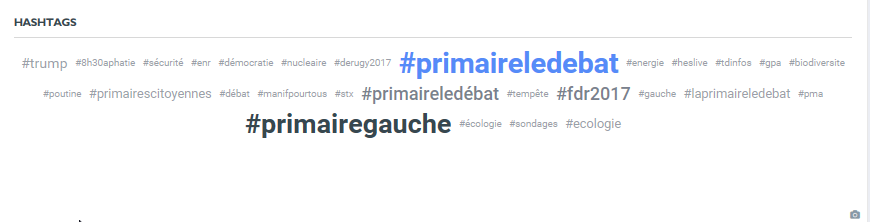
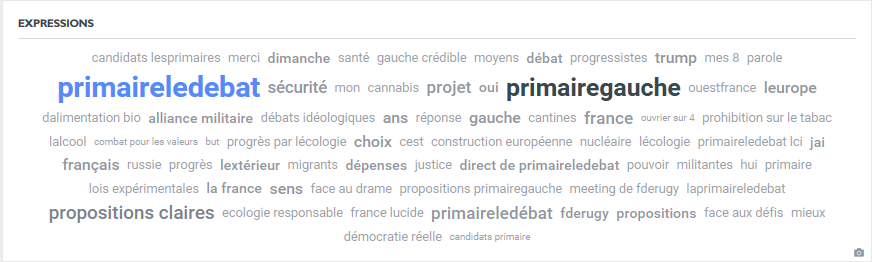
Overall, there is no change in the most tweeted words across the different debates. (Without weighting tweets by retweets)
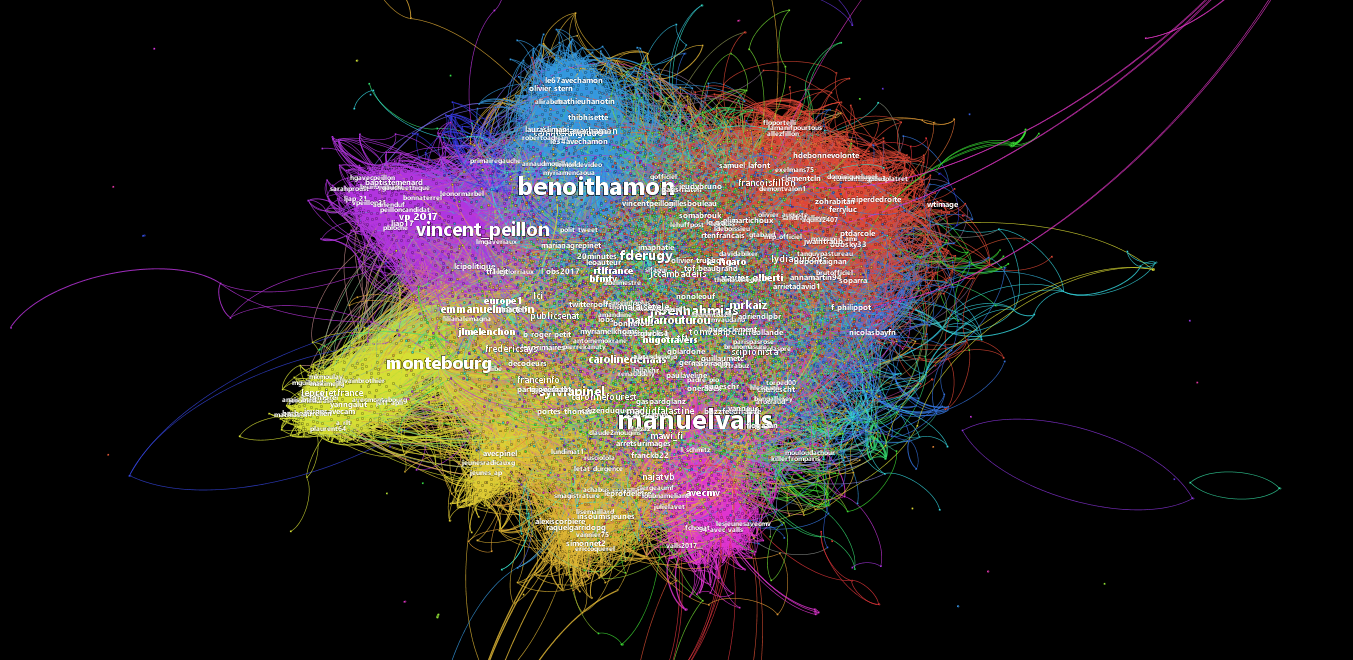
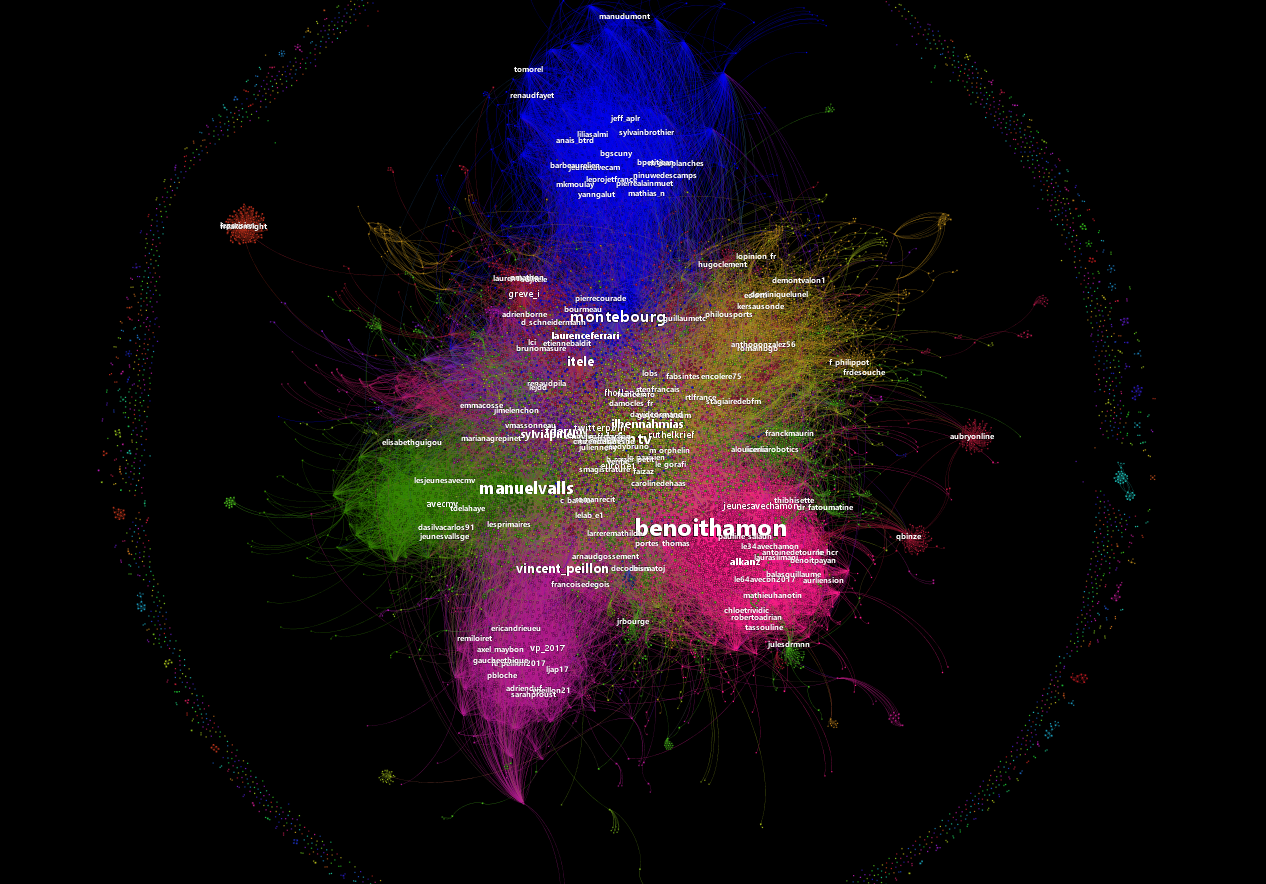
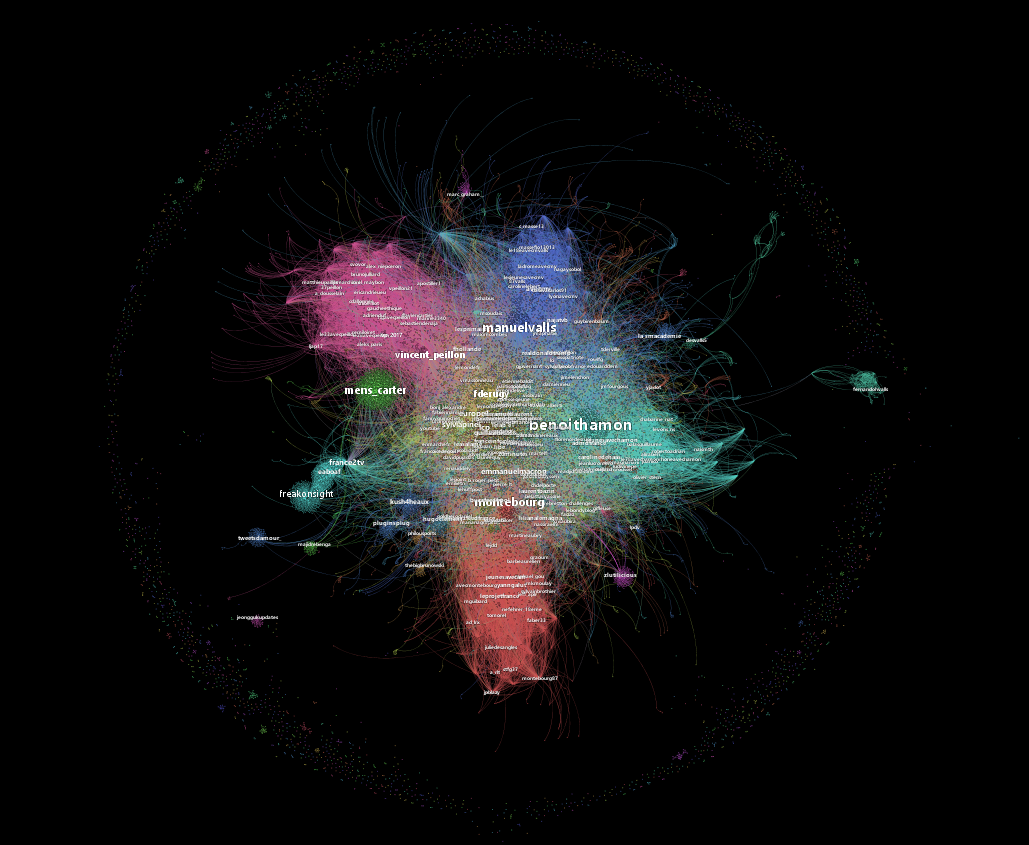
To see the maps at full size, please click on them.
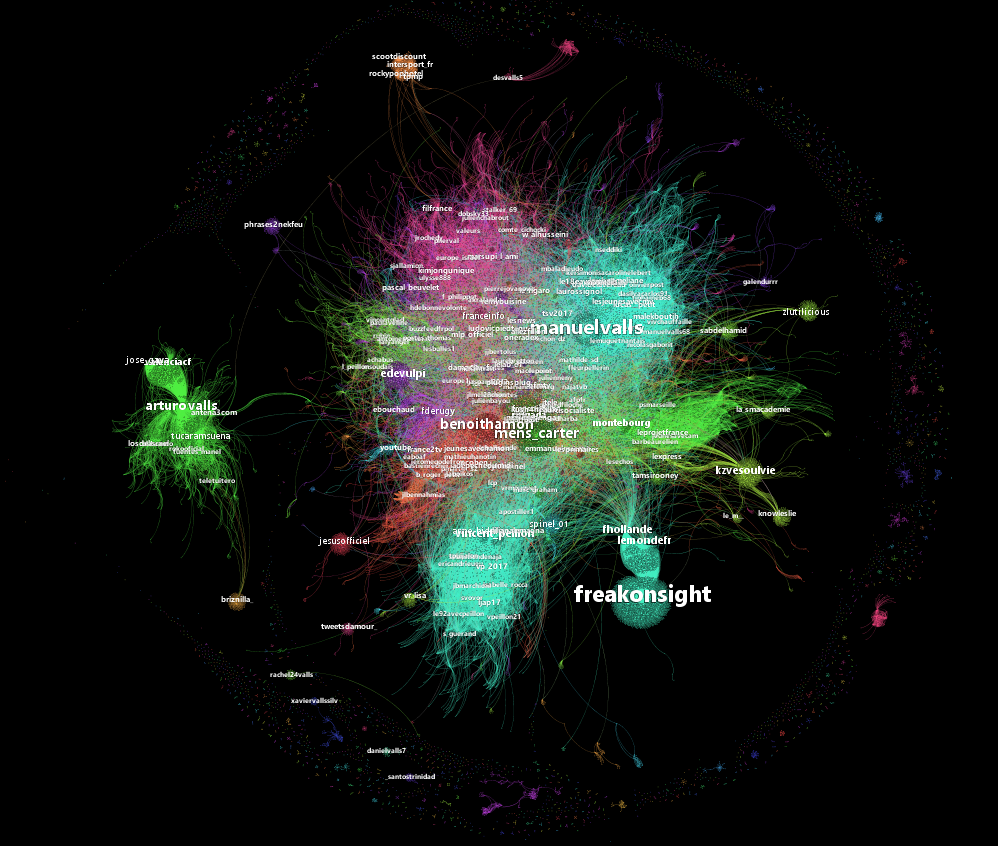
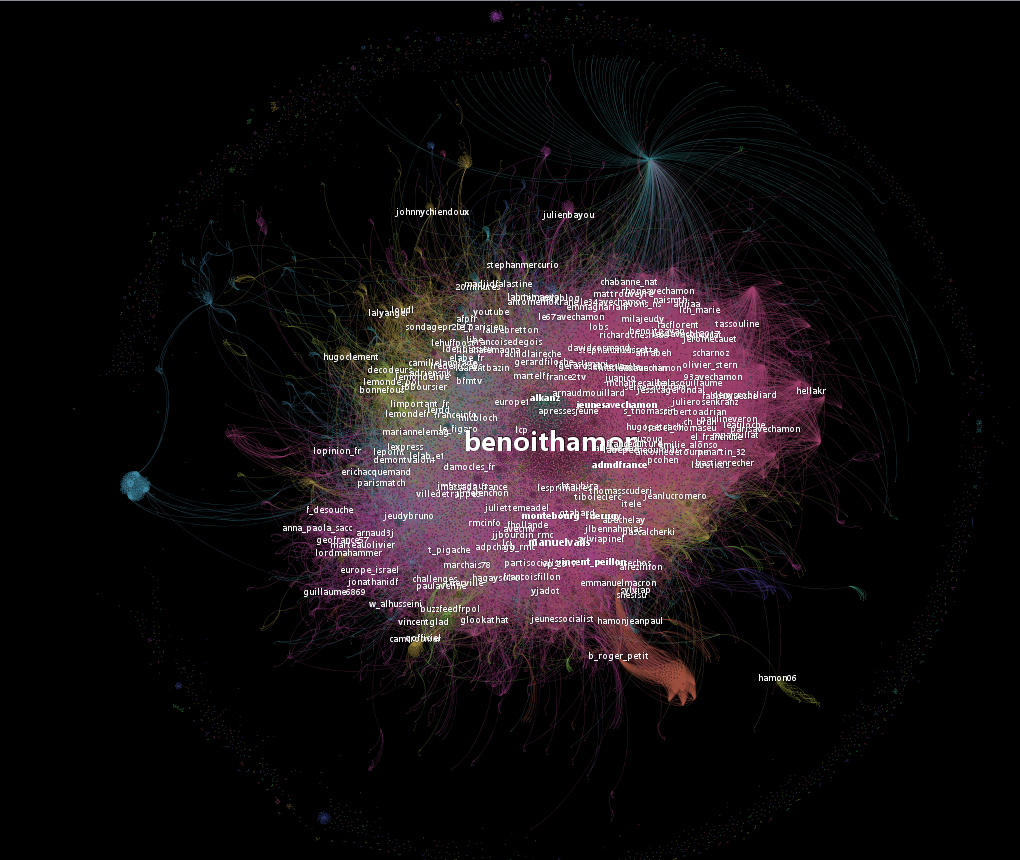
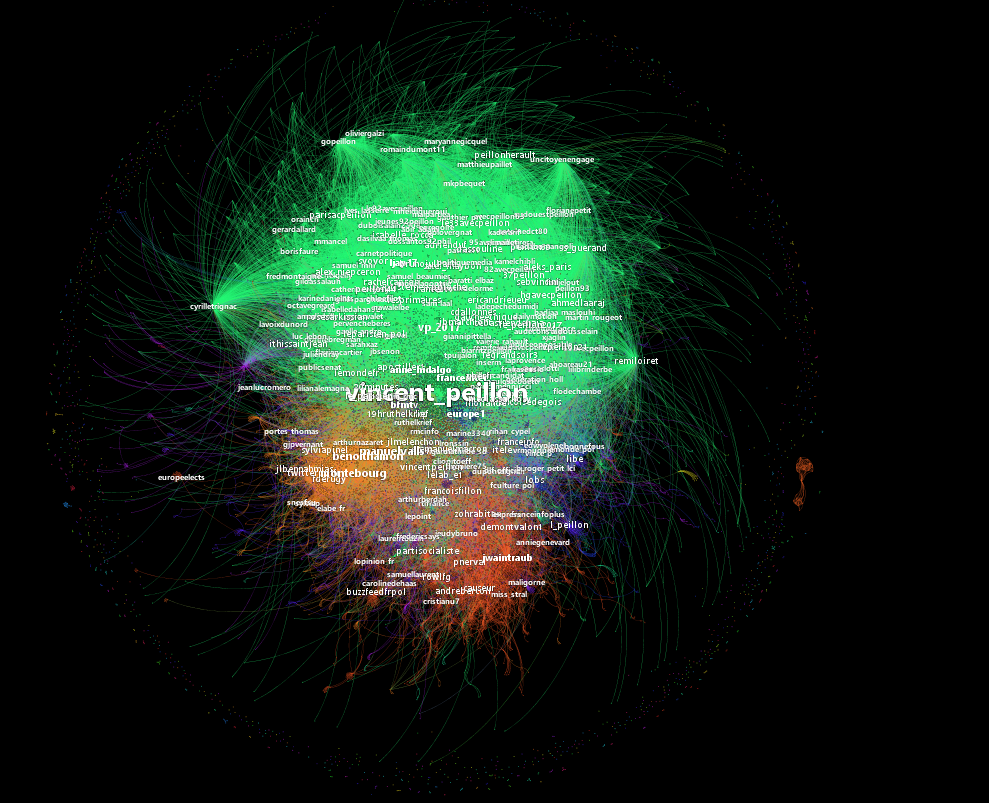
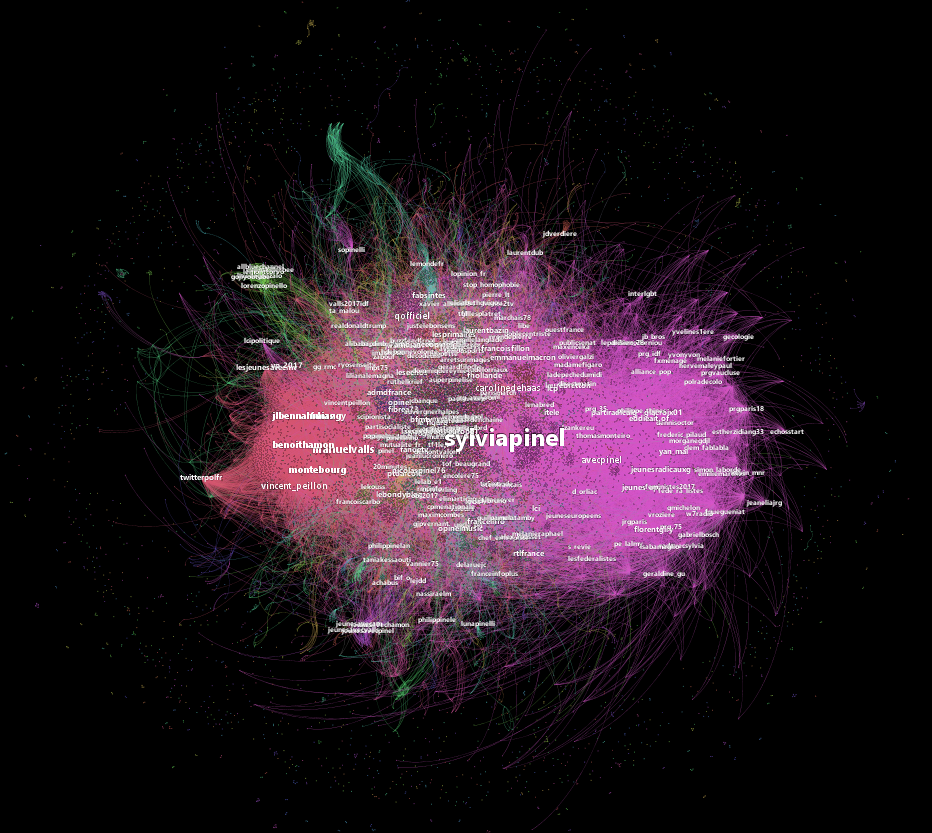
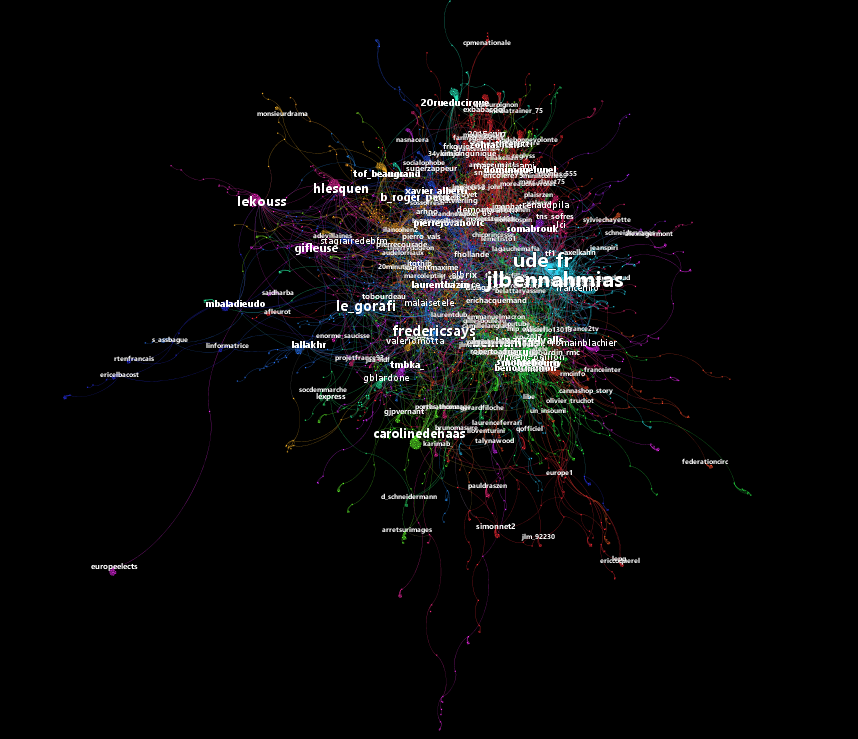
During the first debate, we had a fairly dense cluster with each candidate on their own side: (Filter at 2 interactions)
For the second (unfiltered), we still had the dense cluster with Benoit Hamon, who had a very dense crowd, but because of tweets that resurfaced:
The breakdown of communities was therefore: - Hamon - 13.05% - Valls - 6.28% - Montebourg 5.75% - Peillon 4.88%. For the third, the same observation:
And there Valls narrowly beat Hamon. (- Valls: 7.92% - Hamon: 7.56% - Montebourg: 5.91% - Peillon: 4.22%)
1. Manuel Valls
a) his digital portrait on Twitter
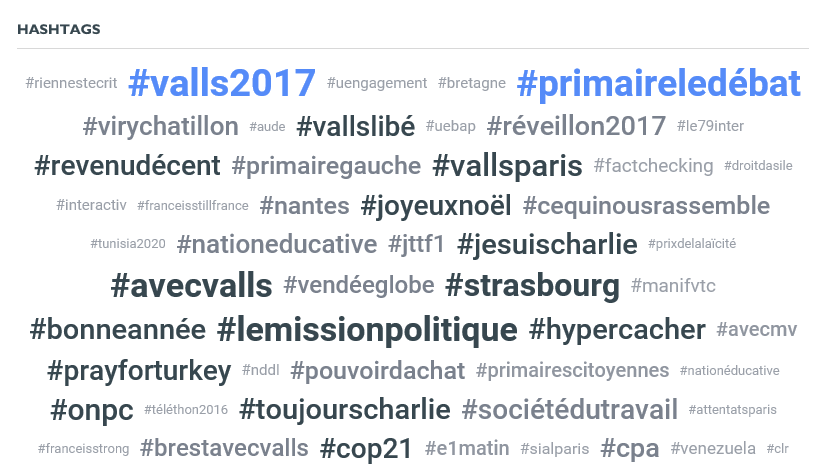
Manuel Valls maintained a constant presence, with obvious peaks at the end of the primary. He was, however, very inactive compared with the others. His hashtags are mainly slogans or themes:
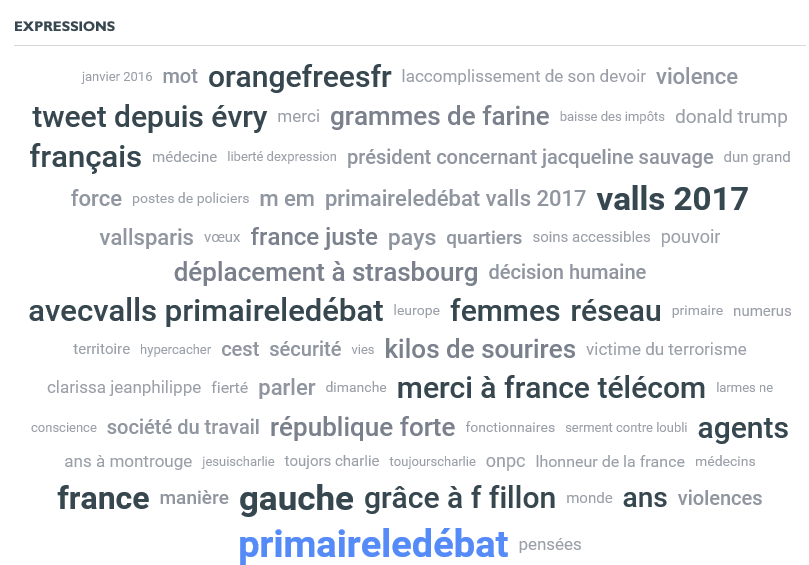
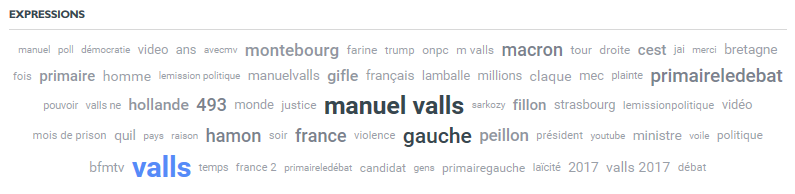
His expressions go in all directions:
b) His audience
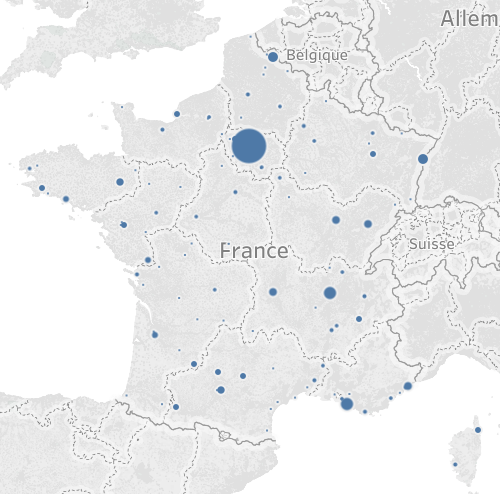
Valls has a presence across the whole country. But it is in Paris that there are the most tweets.
c) What Twitter says about him
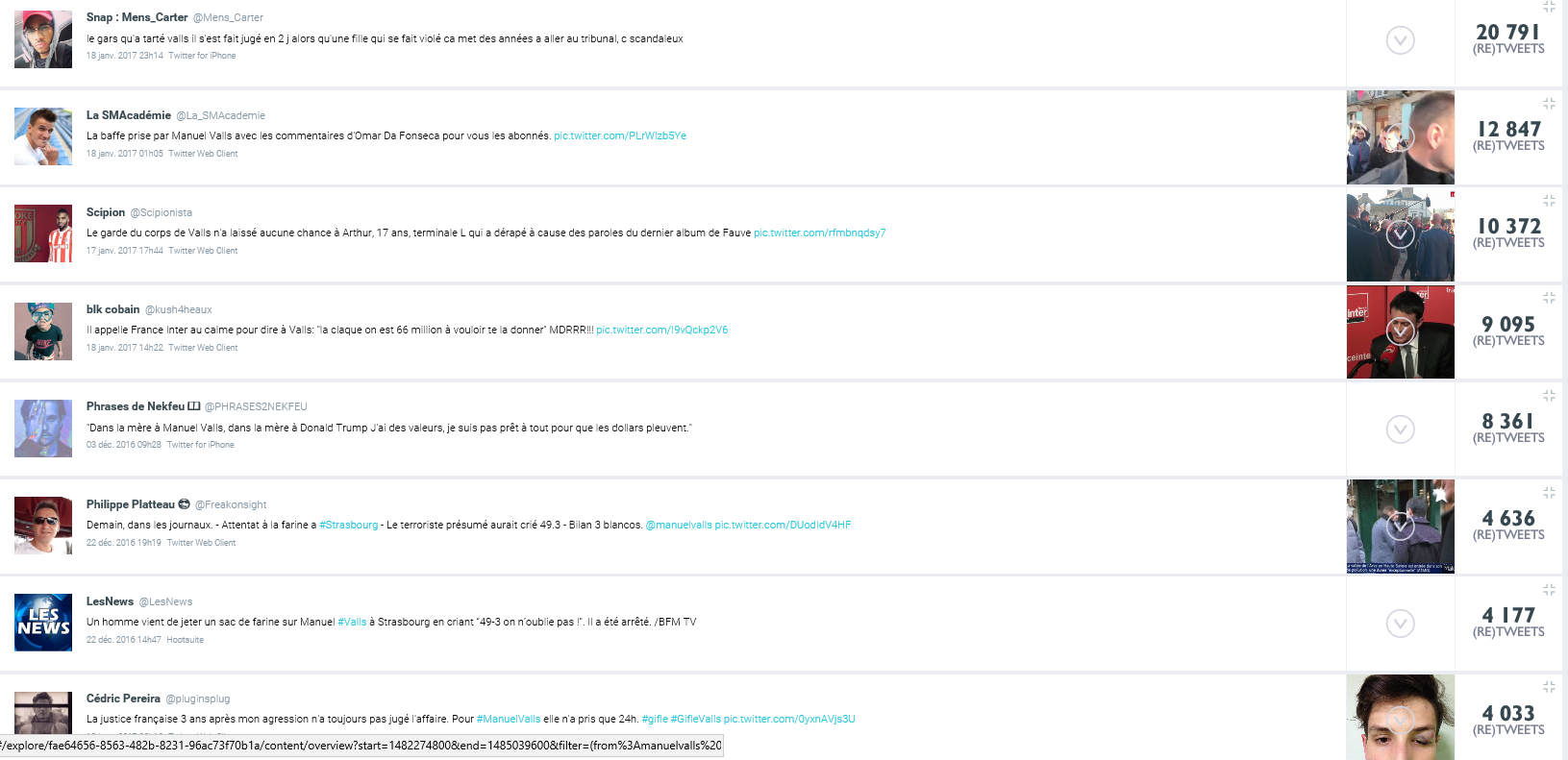
It is the slap that got the most talk on Twitter. It also appears in the top tweet:
4) The Web
2. Benoit Hamon
a) his digital portrait on Twitter
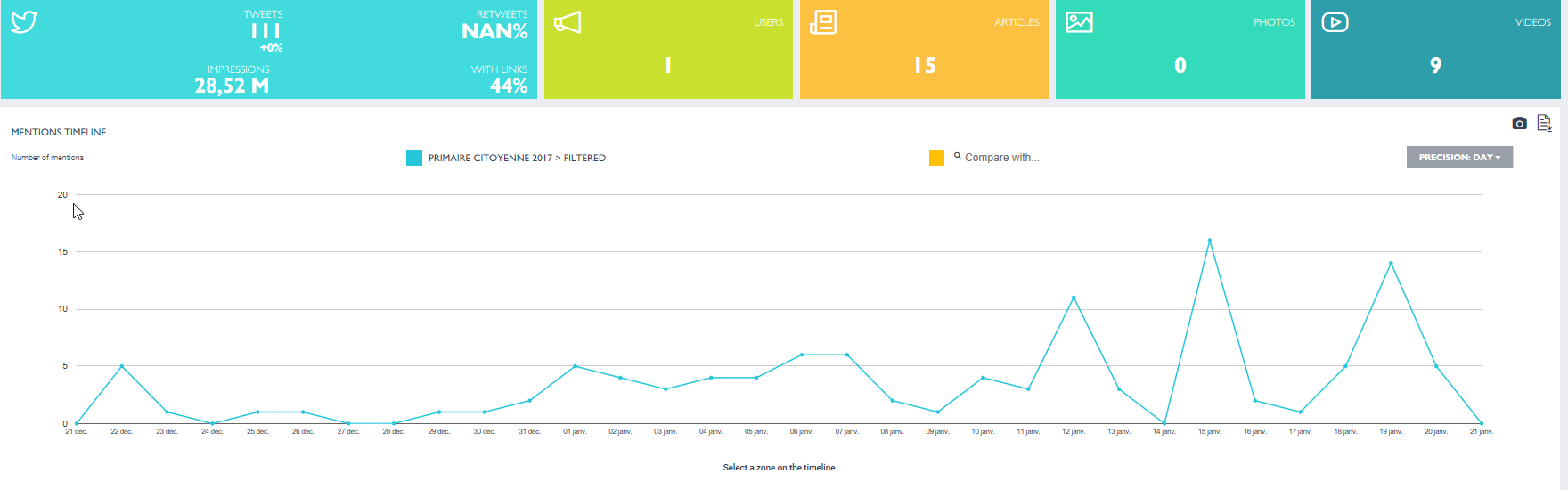
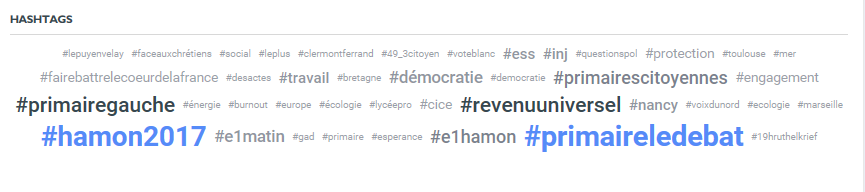
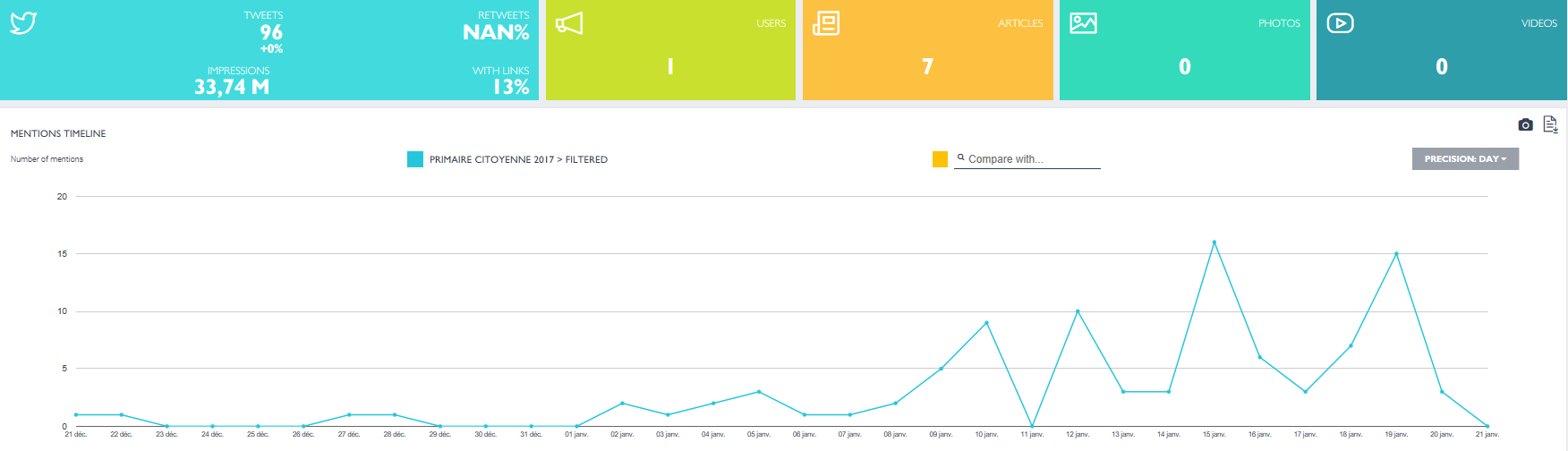
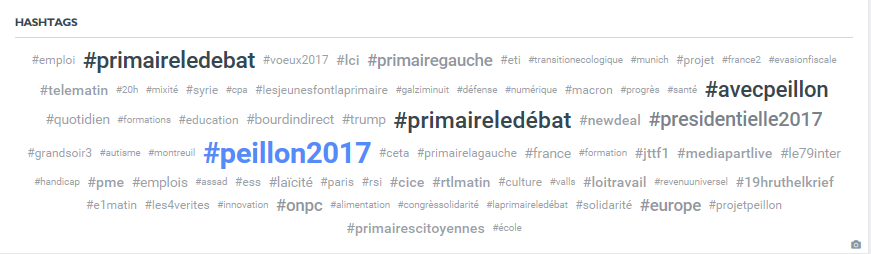
Hamon's presence was mainly concentrated around the debates. It is therefore no surprise that debate hashtags stand out.
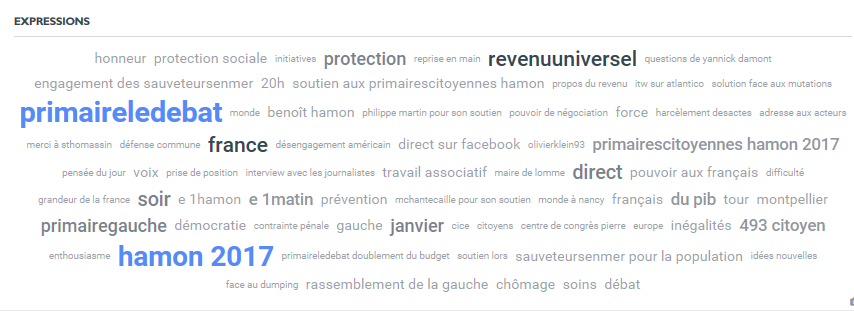
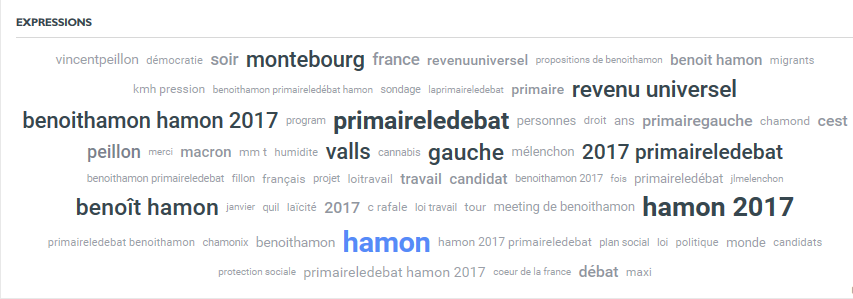
His expressions concern social protection, voluntary-sector work and universal basic income:
b) His audience
Montebourg is present mainly in Paris. And his audience is mainly male:
c) What Twitter says about him
What Twitter says about him is fairly faithful to what he says about himself:
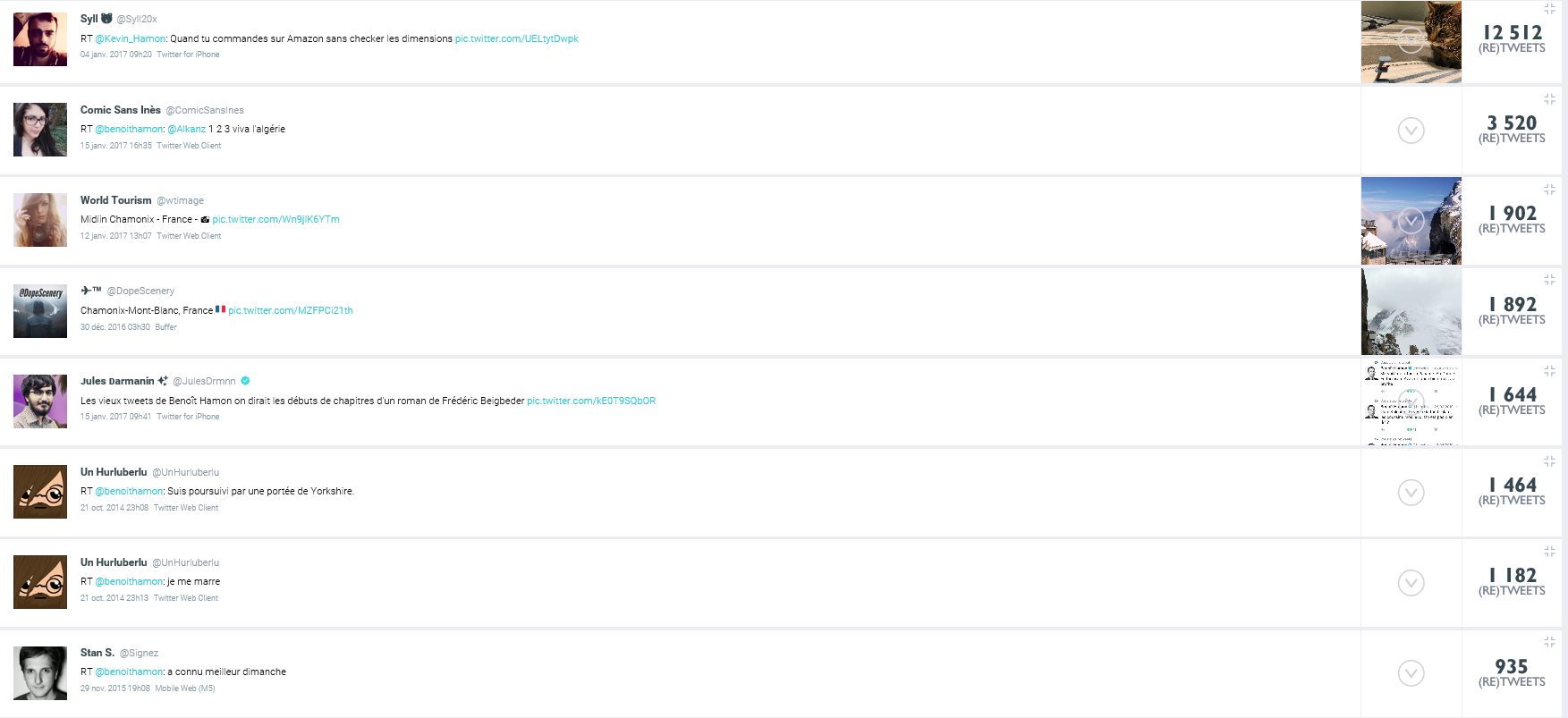
However, the top tweet is entirely filled with his old tweets!
4) The Web
3. Arnaud Montebourg
a) his digital portrait on Twitter
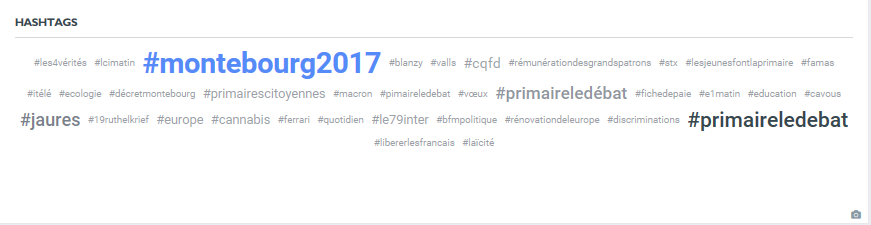
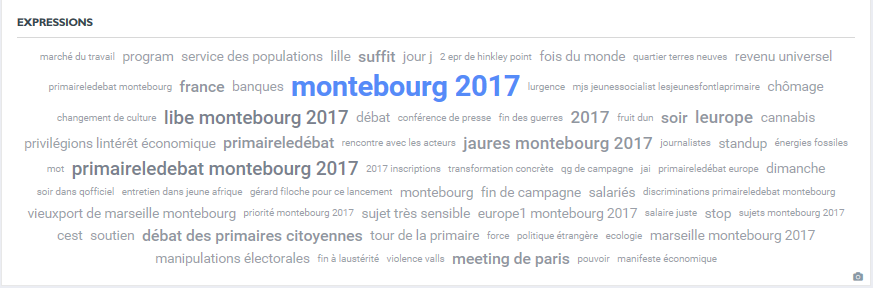
Montebourg also had a presence mainly concentrated around the debates. However, it is his slogan that he uses most. There is also the reference to Jaurès
His expressions have no very clear lines
b) His audience
Montebourg is present mainly in Paris, although the centre is also well represented. His audience is very male:
c) What Twitter says about him
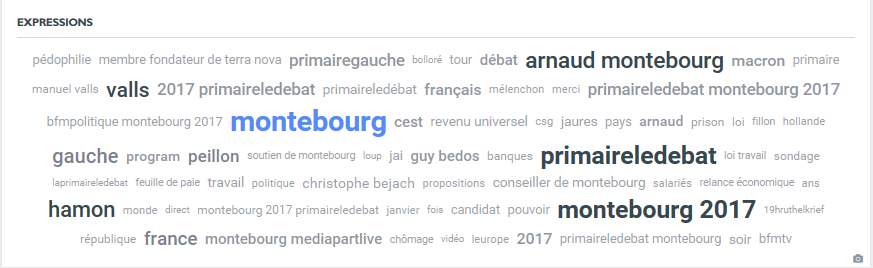
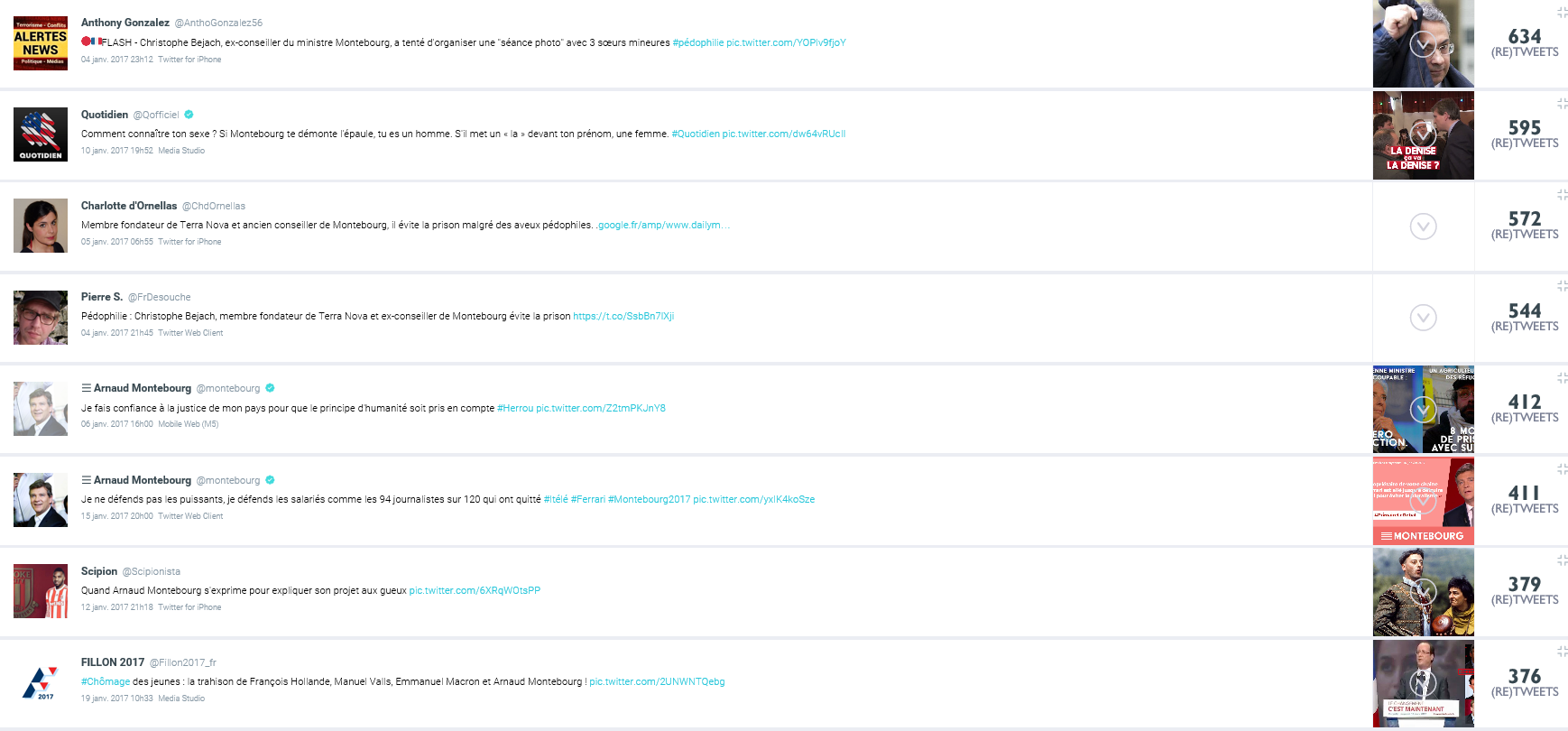
Montebourg without retweets and according to users, it is mainly the scandal around the founder of Terra Nova accused of paedophilia:
This is also found in the top retweets:
4) The Web
4. Vincent Peillon
a) his digital portrait on Twitter
Peillon is measured in his activity. His campaign launch is more active than the debates. In the hashtags, slogans and debates are the most used.
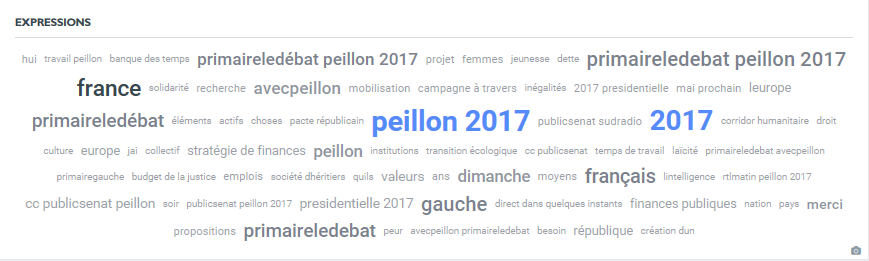
His expressions illustrate every theme:
b) His audience
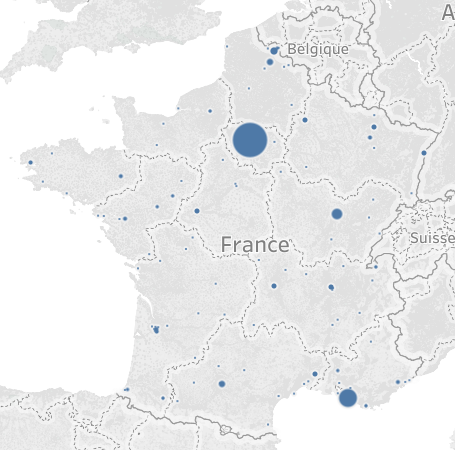
Peillon is present mainly in Paris and the south-east. His audience is male:
c) What Twitter says about him
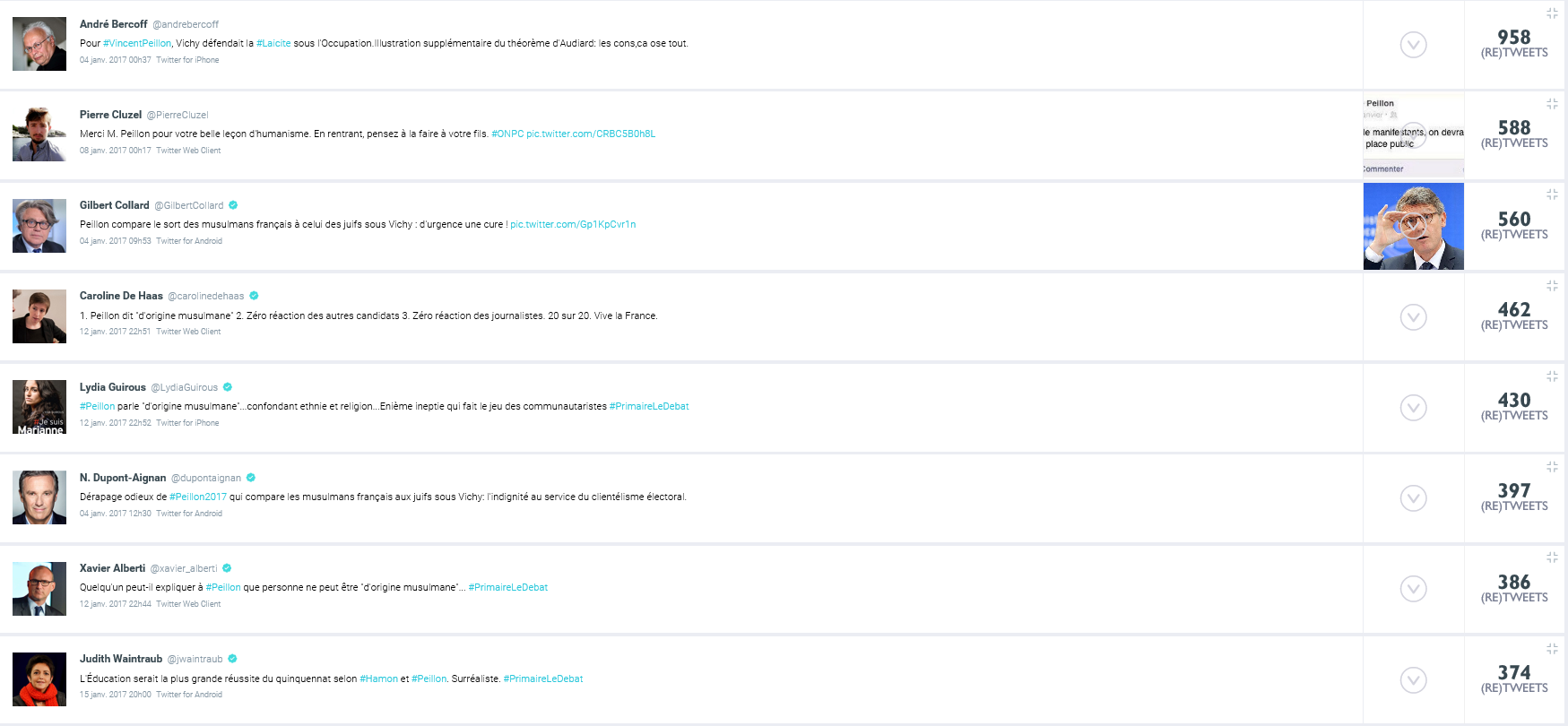
What Twitter says about him relates to his statement on the Jews under Vichy:
Same thing in the top tweets: (The previous chart does not include RTs)
4) The Web
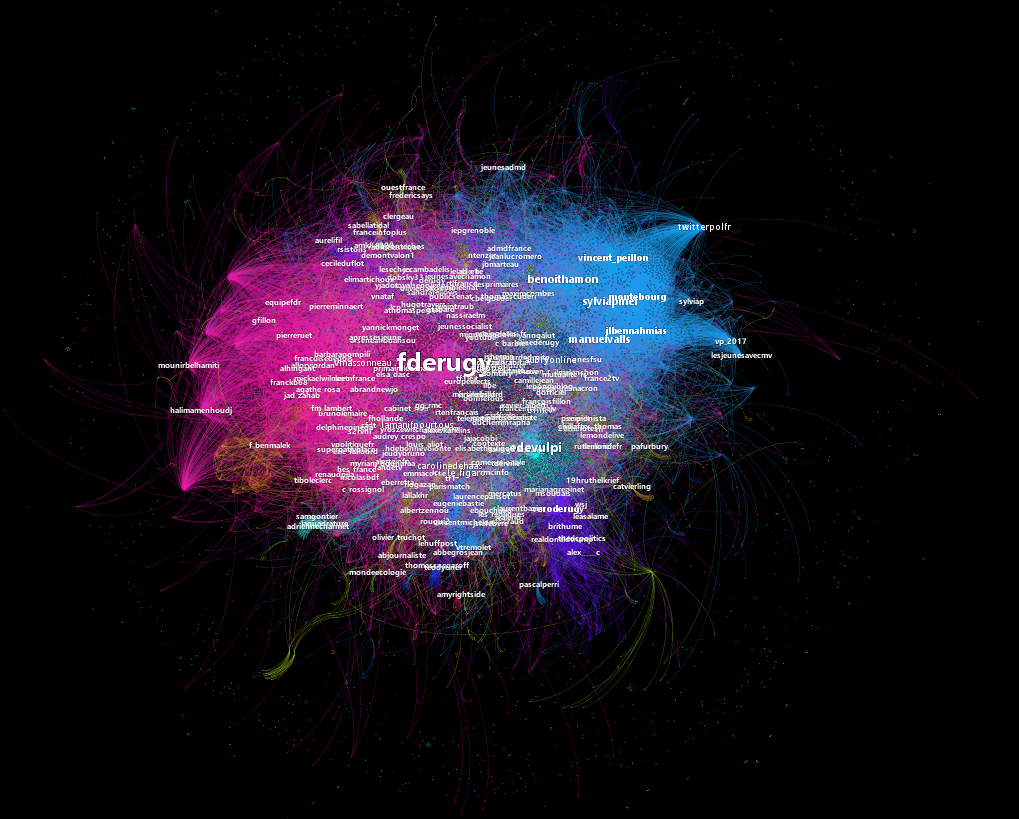
5. François de Rugy
a) his digital portrait on Twitter
De Rugy was completely absent from Twitter except during his campaign. His hashtags stick to the strict minimum: slogan and debates.
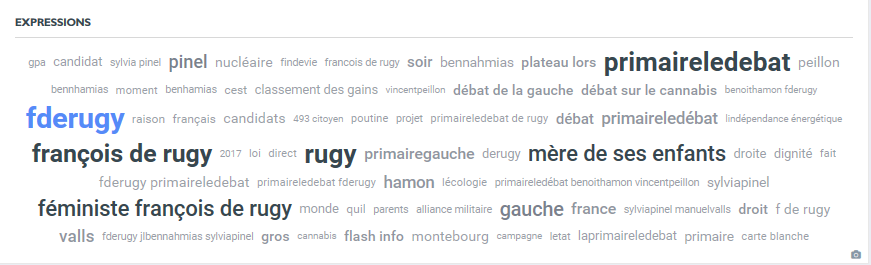
Same for the expressions, which cover more or less every theme:
b) His audience
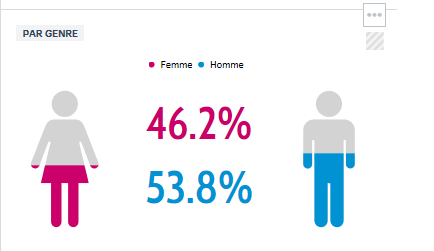
Peillon is present mainly in Paris and the north-west. His audience is male:
c) What Twitter says about him
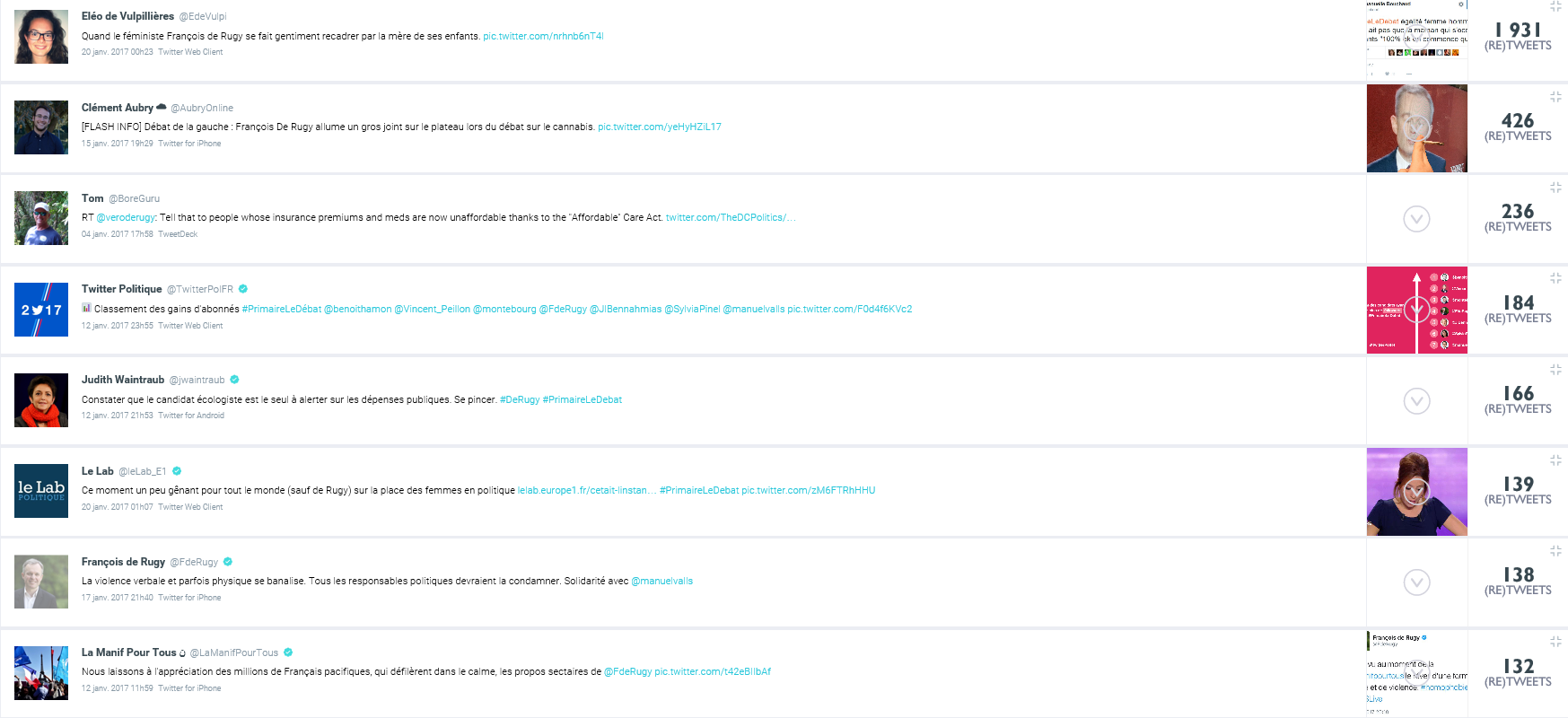
What Twitter says about her mainly concerns feminism and other debates:
4) The Web
6. Sylvia Pinel
a) his digital portrait on Twitter
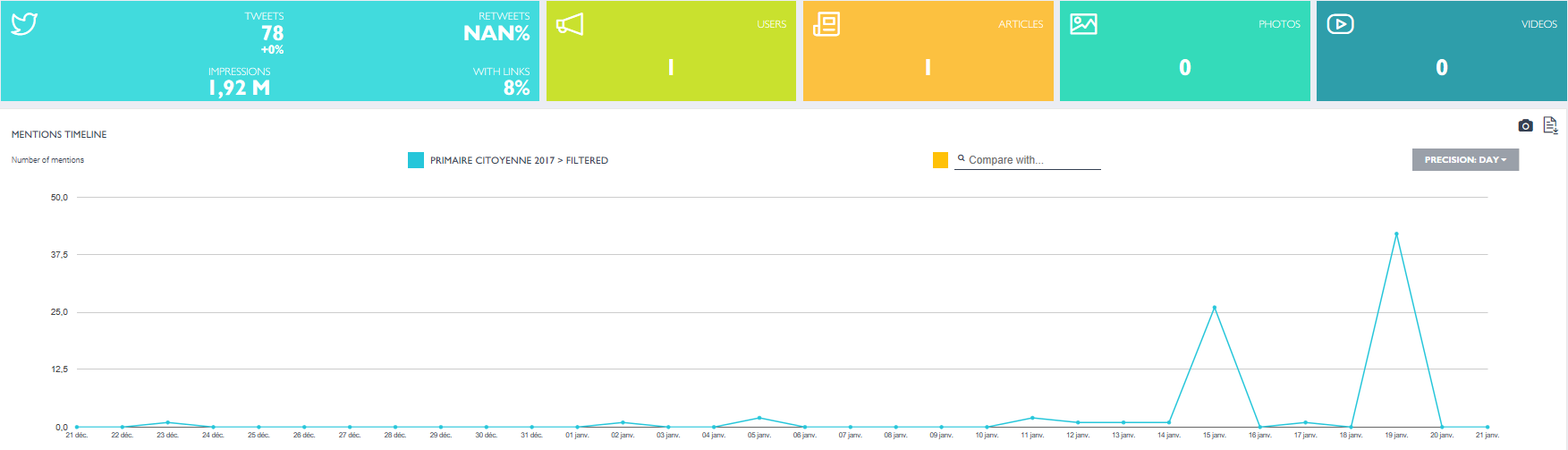
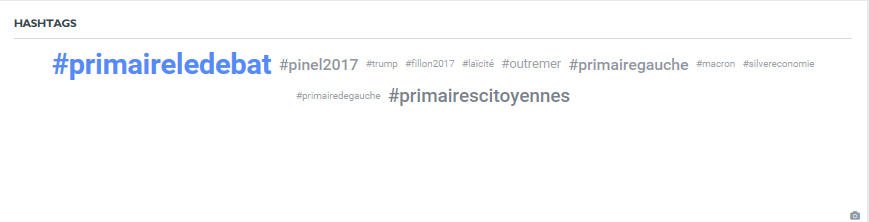
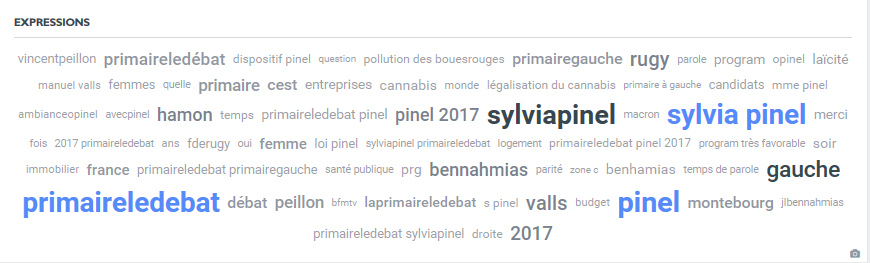
As for Pinel, the activity curve is quite alarming, to the extent that even during the first debate there was nothing. In the hashtags, it is a total knockout as well:
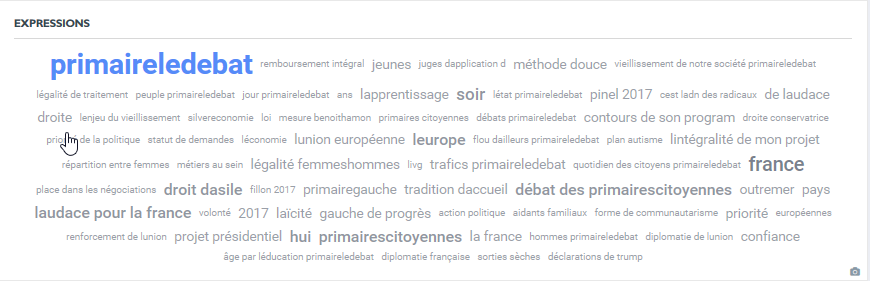
In the expressions, it also casts a very wide net:
b) His audience
Her audience is in Paris or in the north-west of France. She does less well than Valls among women:
c) What Twitter says about him
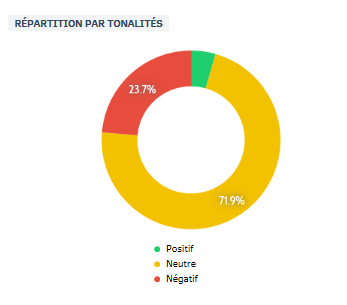
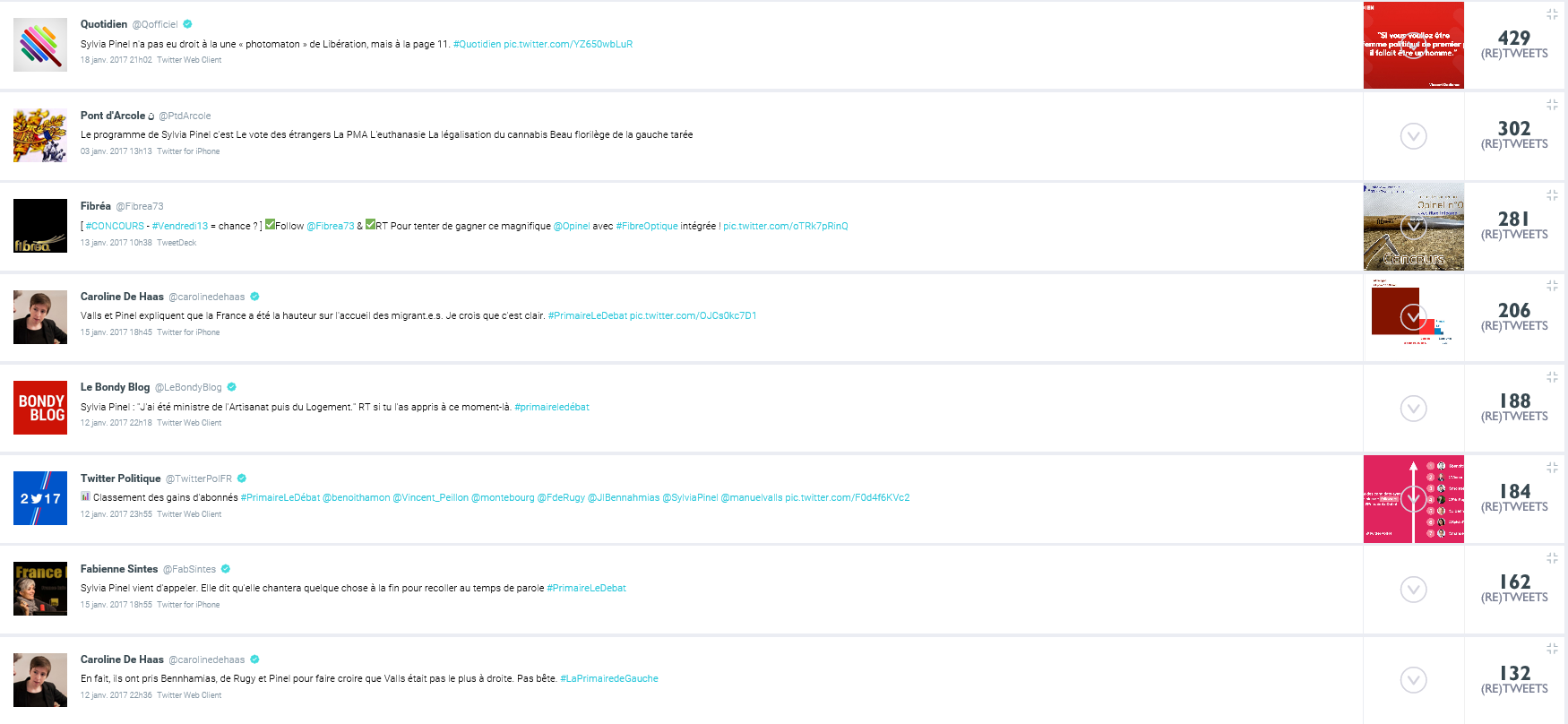
What Twitter says about him is mainly about cannabis.
The top tweet is not very positive:
4) The Web
7. Jean-Luc Bennahmias
a) his digital portrait on Twitter
Bennahmias only retweets, so his activity on Twitter is almost nil.
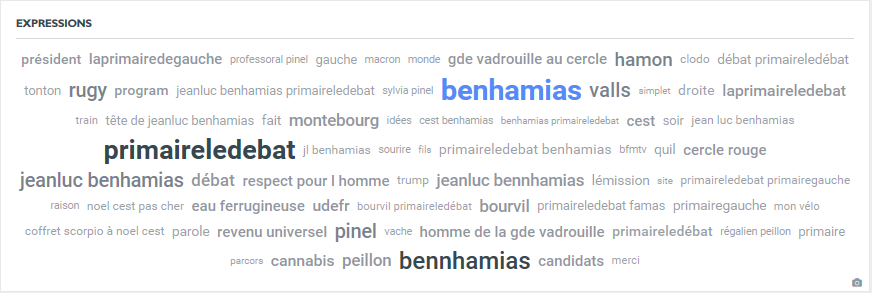
In the expressions, it also casts a very wide net
b) His audience
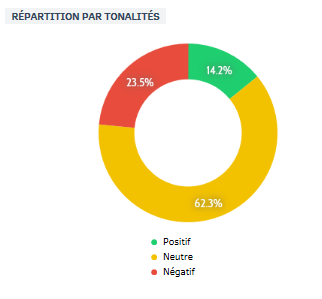
His audience is in Paris and very male:
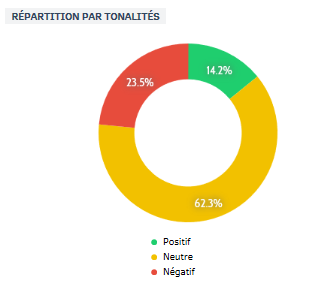
c) What Twitter says about him
Not much of note in his expressions:
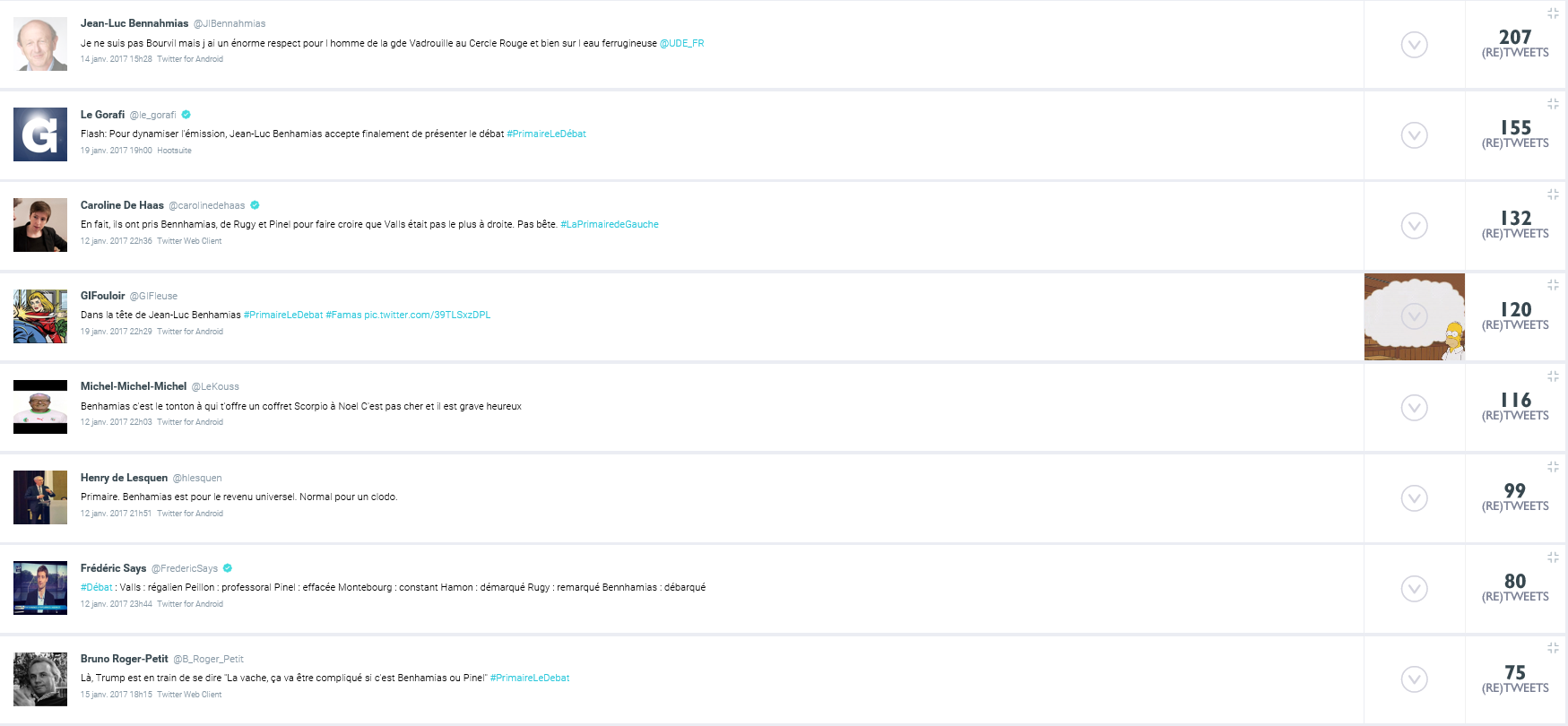
As for the top tweet, it is mainly mockery:
4) The Web
Methodology
All the Twitter results were obtained by Python scripts (Followers) or via Visibrain. Visibrain collected all tweets from 1 June to 11 November with the following rules:
Arnaudmontebourg
amontebourg
contains:montebourg
@montebourg
benoithamon
benoîthamon
bhamon
contains:Hamon lang:fr
@benoithamon
Manuelvalls
mvalls
contains:valls
@manuelvalls
vincentpeillon
contains : peillon
@Vincent_Peillon
francoisderugy
françoisderugy
fderugy
contains:” de rugy”
contains:derugy
@FdeRugy
jeanlucbennahmias
jeanlucbenahmias
@JlBennahmias
contains:benhamias
contains:bennhamias
contains:benahmias
contains:bennahmias
sylviapinel
contains:pinel lang:fr
spinel
@SylviaPinel
primairegauche
primairedelagauche
primairesocialiste
primaireps
laprimaire
laprimairedegauche
laprimairegauche
laprimaireps
laprimairesocialiste
debatprimaire
débatprimaire
primaireledébat
primaireledebat
primairecitoyenne
primairescitoyennes
primairedegauche
“primaire de gauche”
“primaire de la gauche”
primaire gauche
“primaire à gauche”
peillon2017
valls2017
hamon2017
montebourg2017For everything that is not Twitter, I used the Primary panel from Talkwalker. The data run from 13 November to 22 January.
Other data were compared with Brandwatch.