


 ReputatioLab, Saper Vedere's laboratory for crises and reputation · File updated on 13 September 2026 · reputatiolab.com →


Publication rhythm
What thirteen years of investigations teach us
- French disinformation is an ecosystem, not a cloud. By tracing the dissemination chain of 18 false stories already examined by TF1's fact-checkers, the 2026 analysis mapped 121,087 posts, 11,820 accounts and 26,376 reshares: communities, bridge accounts, recurring targets. It is because it is structured that it can be mapped.
- Most fake news is a flop. “Apart from two cases, the propagations are extremely insular, with no impact”. What gives them reach is often their denial: BFMTV appears 1,182 times in this same corpus.
- One target outweighs all the others. 84% of posts target Emmanuel Macron, his entourage or the executive, and the word “Macron” alone accounts for 24,810 posts. The function of the narrative is not to smear one man but to erode trust in everything that carries authority.
- Terror attack rumours are not born on social media. In Nice in 2016, the false hostage-takings at the Buffalo Grill, the Negresco and the Méridien came out of rolling news channels, and those who relay them are not on the spot.
- Manufacturing a crowd costs almost nothing. 242 people and a Tweetdeck are enough for a teenager to get a hashtag trending; 75 fake accounts created overnight were used to launch a rumour against a candidate in 2017.
- State propaganda is seen mostly where it is commented on. On a specific war zone in 2025, X remains the only network genuinely used, Bluesky has no audience, and “French media discussing Russian propaganda are often far more visible than the propaganda itself”.
- Proving interference remains out of reach, and a law will not be enough. All the available indicators are biased, and “fake news” is a term with no stable definition: too broad, it encroaches on fundamental freedoms. The response can only be systemic.
Anatomy of a disinformation ecosystem
From June to November 2025, ReputatioLab took 18 false stories already fact-checked by TF1 and traced their entire chain of dissemination. The result is not a volume, it is a shape. French disinformation is not a diffuse cloud of people sharing anything at all: it is an organised whole, with its communities, its linking accounts, its targets and its geography.
A handful of accounts hold the whole together
The corpus splits into two very unequal populations. On one side, 76.5% of the spreaders, or 11,865 accounts, shared only one of the 18 pieces of fake news: they saw it go by, they shared it, and they never come back. On the other, a handful of bridge accounts relay six or seven distinct rumours. They are not the largest in follower numbers, they are the most versatile, and they are the ones who turn eighteen isolated affairs into an ecosystem. Alongside them, a few super-spreaders with very large audiences, of whom a single retweet is enough to tip a rumour onto another scale of visibility.
This structure explains a counter-intuitive result: there is no disinformation camp. The presidential bunker narrative serves opponents on the right and on the left alike; a sequence on Gaza serves a sphere and its opposite at once, for opposing reasons.
There is no disinformation camp. There are rumours, and each one fits whichever divide suits it. That is precisely what makes these narratives so effective: they belong to no one, so anyone can take them up.
ReputatioLab, How did disinformation networks operate?, 2026A closed circuit of sites, and an unintended accelerator
The shared links draw a circuit that produces and recycles its own narratives. A long-documented technique recurs there: the fake domain name close to a well-known media outlet, such as brutinfo.fr, modelled on france24.com.
| Domain relayed | Occurrences in the corpus |
|---|---|
| magazine.nexus.fr | 3 424 |
| brutinfo.fr | 2 581 |
| Telegram | 2 324 |
| Odysee | 1 101 |
| Rumble | 645 |
| notrepays.fr | 581 |
| stratpol.com | 352 |
The second circuit is less expected: fake news also circulates through its verification. BFMTV appears 1,182 times in the corpus. This is the reactive paradox, which ReputatioLab has documented since 2017: you try to make a community react, it wants to punish the sender, and its punishment promotes the message. The same mechanics explain why a Macronist and Renaissance community of 1,171 accounts appears in the 2026 mapping: it is mostly at work in the response.
State propaganda: what circulates, and what carries
Digital propaganda has invented nothing. The 2016 analysis traces it back to three techniques inherited from pre-Web propaganda, of which only the form has changed.
- Use the mass media. Have existing outlets carry its message, what theory calls the hypodermic needle.
- Failing that, create alternative media. A state with no local media in the targeted country builds one, or imitates one.
- Get into word of mouth. This is the troll factory, where commenters occupy forums and comment sections to create a mass effect.
- Maintain a network logic. Bring the previous two together, to be in the media and in the conversations at once.
This last figure says the essence of what the file has found, year after year: reach and real audience are two different things. In 2017, Russia Today reached 145,017 people through retweets on the French presidential election, but the number of people with more than one interaction with the two Russian outlets remained small, fewer than 15,000 individuals. And 90% of those who interact do so under a pseudonym.
The Islamic State claims to have hacked French ministries. Le Parisien and Le Figaro publish the story, then correct it the next day. In reality, the data were public: a simple search-engine query on government domain files, and records of former senators. Read the analysis
Five days after the start of the conflict, an account renames itself as the official organ of one of the two forces, pays for verification and announces the death of its leader. The message is seen more than 1 million times before being deleted. Alongside it, accounts dormant for nearly 10 years are reactivated, and video game footage is used as proof. Read the analysis
A year of observation separates Bakhmut, where propaganda is running at full tilt, from Avdiivka, where almost nothing circulates any more. Between the two, the death of the Wagner chief brought to a halt the African pages that flooded Facebook. Read the analysis and its network-by-network appendix
In 2025, the question was put differently: is pro-Russian propaganda on every network or confined to X? Restricting observation to a single occupied territory and to the French language, the answer is clear. On Bluesky, barely three relevant posts. On Telegram, activity concentrated on very few channels, with views not exceeding 1,000 for most. On YouTube, a single video above 10,000 views. French-speaking pro-Russian assets have become light, and rely on old resources, African pages on Facebook or accounts created during the health crisis.
In short, French media discussing Russian propaganda are often far more visible than the propaganda itself.
ReputatioLab, Russian propaganda: on every network or confined to X?, 2025Astroturfing: manufacturing a crowd
The word comes from an American senator, Lloyd Bentsen, and from a brand of synthetic turf that imitates natural grass almost perfectly. It referred to companies' attempts to simulate a grassroots surge of support for their cause, as opposed to movements that came from the ground up. The technique is old: Richard Nixon had readers' letters praising his policies sent in bulk, and the tobacco industry created fake support groups. The Web has simply made it accessible to everyone.
The file produced a stable analytical framework, drawn out in 2016 from an operation by the patriosphere against a television programme. Five signs, all of them measurable.
- An unusual publication curve. It starts sharply at the time of the operation, instead of rising then falling as a real topic would.
- Poor messages. Their only purpose is to make noise, so the vocabulary repeats itself.
- A high rate of reshares. Nearly 90% retweets for 10% original messages.
- A high rate of messages per person. 28,702 messages for 3,202 accounts, or 8.96 per person, and more than 50 accounts that had posted more than 100 times.
- A narrow crowd. Everyone is connected to everyone: 2,012 of the 3,202 accounts had also tweeted about the previous operation, or 62.83%.
The accompanying reminder: very little is needed. On the same operation, 20,000 messages published by 6,000 to 8,000 people were enough to break into a televised primary debate. And a teenager from La Réunion, followed for a month in 2016, got rumours trending with 277 accounts registered on a single Tweetdeck, then retweeted them in the same second. Across five operations, his trends mobilised only 8,372 unique accounts in total.
Money also plays a part, when patience runs out. In early 2017, the same analysis identified the first act of botting in the presidential campaign: an account that buys its followers and reshares, runs 135 accounts from a single Tweetdeck and makes them post in the same second. The aim is not to convince but to weigh on the dashboards: word clouds, rankings of influential accounts, quantitative studies published during the campaign.
A trending topic is NOT the most discussed subject on Twitter.
ReputatioLab, How a young troll gets hashtags into trending topics, 2016Small accounts, the most visible and most misleading clue
The share of very low-audience accounts is the easiest sign to measure. It is also the one that misleads most, because a new account can be a bot, a fake profile, or a real person who signs up for the occasion.
Share of accounts with fewer than 100 followers among participants, recorded in the analysis of the Uber campaign and in the astroturfing guide, both from 2016. The last two figures are observed floors, not averages.
 Uber, doubt acknowledged
On the mobilisation campaign against taxis, 6,617 of the 10,089 accounts have fewer than 100 followers, and 450 accounts had been created in the previous four days. Uber then explained that it had emailed 1.5 million users with a pre-written message, which the hourly curve confirms. The analysis's verdict: the picture is entirely unclear, and that is the whole difficulty of relying on a platform's indicators. Read the analysis


Against the filming of a programme in a country accused of persecution, an NGO ran operations of almost military discipline: tweetstorm tutorials, pre-filled links, a dedicated website with a countdown to the programme, then a counter of messages per minute to create a group effect. Read the analysis
Accused of being far-right astroturfing, the campaign was not. Yes to the initial overactivity, one account with 1,230 messages and 7,221 followers in a month, and to the political intent. No to the rest: 218 accounts published 46,894 of the 134,969 messages, or 34.7%, which remains acceptable when the Benalla affair rose to 89% of messages produced by the most active 1%. And the images were genuine. Read the analysis
 A petition without a grassroots base
1,878,874 signatures displayed out of 2,000,000. But in the Follaw panel of the 20,000 people who matter, shares are very limited and always the same. The petition comes directly from a media outlet and a party, does not even have a share button on its site, and the counter is guaranteed by no verification platform. Read the analysis
This last case reverses the usual mechanics. The petitions that have genuinely carried weight all share the same profile: a start that is neither media-driven nor political, massive grassroots uptake, cross-party relays, and press coverage once the propagation is established. Here, it is media coverage that creates the propagation. The relays come down to a handful of titles and programmes.
 Boulevard Voltaire
 CNews
CNews
 Rassemblement national
Le JDD
Borders
Valeurs Actuelles
Rassemblement national
Le JDD
Borders
Valeurs Actuelles
What astroturfing really targets: the journalist
All these operations have the same ultimate target, and it is not the general public. In 2015, a local news item from Reims became a national affair because social media were supposedly ablaze. When the first rolling news channel broke the story at 3 p.m., there were 215 unique messages, 882 with reshares. By the evening, when all the media were covering it, there were 3,211 messages, 912 of them original, produced by 2,500 people. This is what a news agency report described as a firestorm.
In social movements on social media, it is essential to understand their creation and propagation in the early stages.
ReputatioLab, #SaccageParis: astroturfing or activist operation?, 2021Rumours: how they are born, and how they die
This is the oldest subject in the file, and the one where the conclusions have shifted least. As early as 2013, on a micro-event observed live, ReputatioLab describes the engine: a buzz needs something new to keep going, and when there is nothing new left, everyone adds their own detail. That is where the rumour appears. It takes just 1,000 messages at its peak to give a visibility of thousands of people to a story that would otherwise have remained invisible.
The mechanics, in seven beats
The analysis of the four hostage-taking rumours during the Nice attack in 2016 produced the most precise description in the file. It holds beyond terror attacks.
- A real event takes place. A noise, a gathering of police officers. There is always a grain of truth behind a rumour.
- The perception is reclassified. The noise becomes a gunshot, the gathering becomes a hostage-taking.
- The rumour is relayed and embellished. It is no longer happening at the restaurant, but in a hotel, then in another.
- Outside elements seem to confirm it. Response units arrive, a rolling news channel picks up the word.
- The first counter-signals appear. Accounts from relatives, other versions of events.
- A journalist picks up an official's words. First solid indication.
- The official denial arrives. In Nice, more than an hour after the rumour broke.
Three precise lessons emerge, and they contradict common sense. First, the origin: of the four rumours analysed, it is almost always a rolling news channel or a street witness, never an online prankster. Second, the geography: looking at the locations declared in profiles, the spreaders are overwhelmingly elsewhere than in Nice. They are secondary witnesses, then tertiary ones when accounts that cover the news solely from their feed add a conditional. Finally, the audience: the rumours are reshared very little, 307 original messages out of 3,310 for one, 105 out of 3,865 for the other, and it is the denials that capture the reshares.
Rumours are not born on Twitter. There are no little pranksters amusing themselves by starting a rumour on the social network.
ReputatioLab, The mechanics of rumours during terror attacks, 2016Leaving terror attacks aside, three rumour paths recur: the one fabricated from scratch with a fake support, the one a media outlet launches unintentionally, and the one that serves as fuel for an already established narrative.
A website copies the look of a newspaper, one letter off in the address, to host an article about a candidate being funded by a foreign state. Three accounts with generic names push it towards the press and towards the candidate's opponents. The clues point to Iran rather than Russia. The newspaper could have spotted the mirror site two weeks earlier by monitoring the mentions that cited it. Read the analysis
Before the press article that launches the affair: a single post on LinkedIn, 11 on Facebook and 9 on Instagram, none carrying the rumour. The analysis is blunt: we have a story that exists nowhere. The accounts that pick it up afterwards are regulars, but they do not even coalesce. Read the analysis
Content producers, who distort the news because it serves their cause. Relayers, who invent nothing but change the framing. Consumers, who have lost their bearings in the face of an event and to whom the theory offers an explanation that seems more plausible than the truth. Only the third profile can be reached, through education in critical thinking. Read the analysis
The press, the decisive link
As early as 2014, the file documents what would recur in almost every case afterwards: media outlets cite one another as a trusted source and never go back to the primary source. In a single day, three press stories turned out to be a publicity stunt or a rumour, one of them launched by its author precisely to prove that it would circulate without verification. Ten years later, the Olympic Games rumour follows exactly that path.
We no longer look for the information that brings the most meaning, but the one that brings the most views.
ReputatioLab, The press in crisis, 2014Proving interference: the limits of investigation and of the law
This is the most uncomfortable part of the file, and the most consistent. In 2018, as questions of interference entered the public debate, the analysis sets a clear limit: the indicators exist, they give clues, they prove nothing. A pseudonym remains a pseudonym.
| Indicator used | What it shows | Its bias |
|---|---|---|
| Level of output | An activity of 800 to 1,200 messages a day, or nearly one message a minute without sleeping | Real people, very available and highly politically motivated, reach this rate |
| Proximity to a reference ecosystem | Ultra-active accounts also push the media that frame the news in a given direction | Correlation is not causation: it is logical for opposition to those in power and a media counter-power to converge |
| Database of earlier disinformation | Recognising a new operation by its known networks | The base is destroyed by account closures, and some networks are created for the occasion |
On top of this comes an obstacle of volume. In 2018, a social movement generated 10 million messages in a month, whereas the Paris attacks had produced 1 million and the Nice attack 1.5 million. Analysing such a flow exceeds what a team can process in the time the information is circulating.
The 2026 analysis states it in black and white: an account can appear on a map without having shared a rumour, simply because it was talking about it or flagging it with good intentions. This is exactly what explains the presence of a response community of 1,171 accounts in a disinformation corpus. A propagation map names participations, not intentions.
It is impossible to prove Russian interference on the basis of the indicators at our disposal. Only the tech giants and investigative journalists hold the keys.
ReputatioLab, Foreign interference: almost impossible to prove, 2018A month later, the same limit appears on the legal side. A law announced against false information first runs into the question of definition: the term is a catch-all with no theoretical substance, and if it is defined too broadly, it encroaches on freedom of expression and freedom of the press. In an electoral context, the analysis distinguishes three forms that call for three different responses, two of which escape the law entirely. First, an operation built on false information, which uses temporary spaces destined to disappear and circulates the message through real people convinced they are sharing real information. Second, an operation built on truthful information, decontextualised then recontextualised, where nothing is truer than a real video. Finally, editorial framing, which falsifies nothing and falls within a media outlet's editorial line.
What this changes for an organisation
Taken together, these analyses do not say that social media should be feared. They say that most of the indicators read there are wrong, and that decisions taken on those indicators cost more than the phenomenon itself. Three steps follow.
1. Measure the start, not the end
This is the most rewarding step, and the one most often skipped. A screenshot from a monitoring platform taken when the controversy is at its peak shows only the end: once the whole propagation is over, the make-up of the participants bears no relation to that at the start. This is what led #SaccageParis to be attributed to the far right, when the initial community brought together local residents and activists from several opposition parties. The concrete step is a channel audit: who published what, on which network, before the first article. It was enough to establish that the Olympic Games rumour existed nowhere before it appeared in the press, and that the 2025 petition did not come from a grassroots base.
2. Count people, not messages
Volumes mislead because a small number of very active accounts produce a very large number of messages. The ratios to watch are always the same: messages per person, share of reshares, share of very low-audience accounts, concentration among the most active 1%. These are what distinguish 2,500 people from a national firestorm, and 218 accounts from an opinion. And when doubt remains, the file shows that it must be stated: on the Uber campaign, the analysis concludes that the picture is entirely unclear rather than pointing to manipulation.
3. Decide whether to respond, rather than responding by reflex
The reactive paradox is the most costly lesson of the file. A community that wants to punish the sender of a message ends up promoting that message. This is the explicit mechanism behind the 2017 operations against a candidate, and it is also what the Olympic Games rumour shows: by publicly denying it, the institution concerned gave the story a visibility it did not have. The analysis goes as far as naming the standard expected in such a case, four beats that speak about what you are doing rather than what you are denying: we know, we are acting, we care, we will come back.
Two weak signals recur in the file. The first is the domain name: copying a media outlet, one letter off, is a technique documented for years, and the newspaper plagiarised in 2017 could have spotted the site two weeks before the affair simply by monitoring the mentions that cited it without pointing to its own site. The second is the account creation date: 75 fake accounts created in a single night, 450 accounts created in four days, accounts dormant for nearly 10 years reactivated on the same day. Both checks are within reach of any monitoring unit, and they come before the firestorm instead of recording it.
What remains is what these analyses do not promise. They do not make it possible to attribute an operation to a state, and they say so. They do not replace a political, economic and legislative response, which will have to come from all actors at once. What they offer is more modest and more useful day to day: knowing, before deciding, whether you are facing a genuine movement, an organised community, or the noise of a few hundred accounts.
The analyses behind this file
Each lesson in this file points to one of these articles, published by ReputatioLab. They are sorted by sub-theme, from most recent to oldest.
State propaganda and interference

How did disinformation networks operate?
I have always been interested in disinformation dynamics, but it had been a while since I last dived into them. From June to November 2025, we took 18 false stories already fact-checked by TF1 and traced their entire chain of dissemination.
Read on ReputatioLab →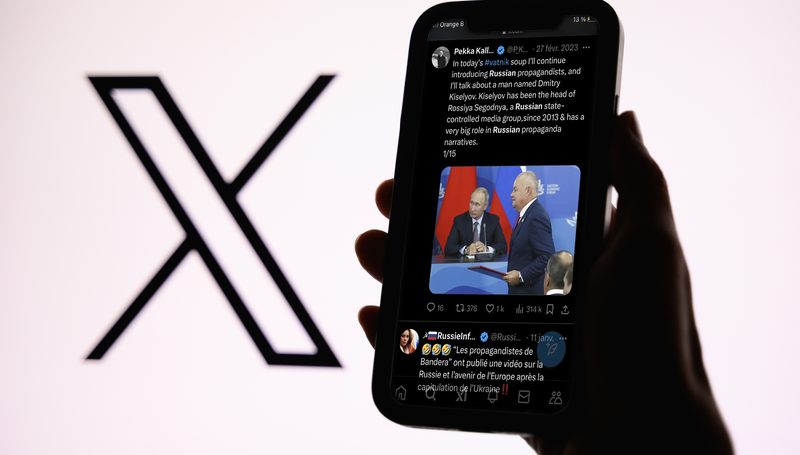
Russian propaganda: on every network or confined to X?
On Monday, Franceinfo published an article headed: “Pro-Russian disinformation is also making its way onto the social network Bluesky”
Read on ReputatioLab →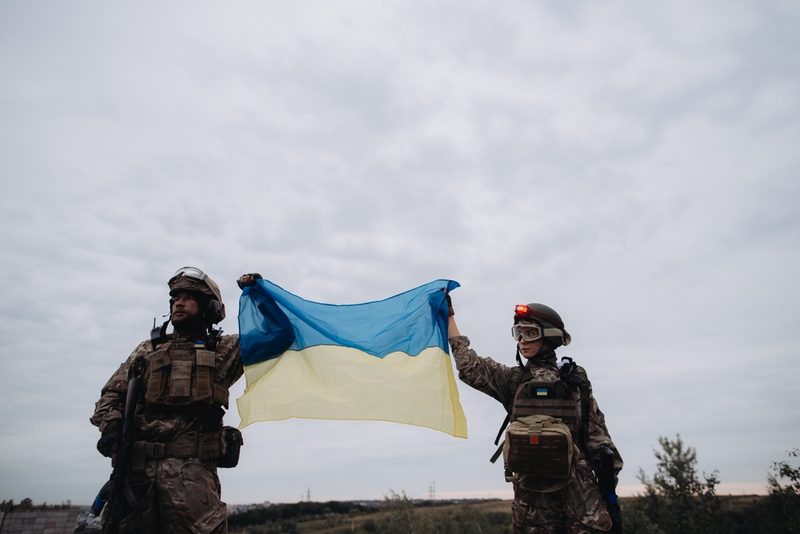
Ukraine: how does propaganda spread on social media?
While the Israeli conflict occupies the media space, Saper Vedere carried out a year-long close analysis of social media exchanges on the Ukrainian conflict.
Read on ReputatioLab →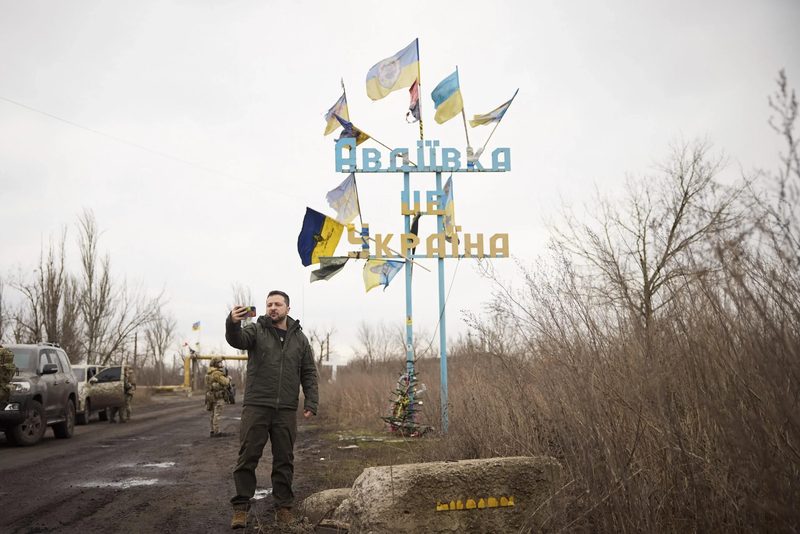
In-depth analysis of the spread of Bakhmut and Adviika on social media
While the Israeli conflict occupies the media space, Saper Vedere carried out a year-long close analysis of social media exchanges on the Ukrainian conflict.
Read on ReputatioLab →
Disinformation sows confusion in the middle of the Sudanese conflict
However complex it may be, Sudan's history has been marked by numerous conflicts throughout the 20th century. Through rebellions and the independence of South Sudan in 2011, the Sudanese state has experienced an unstable political climate for decades.
Read on ReputatioLab →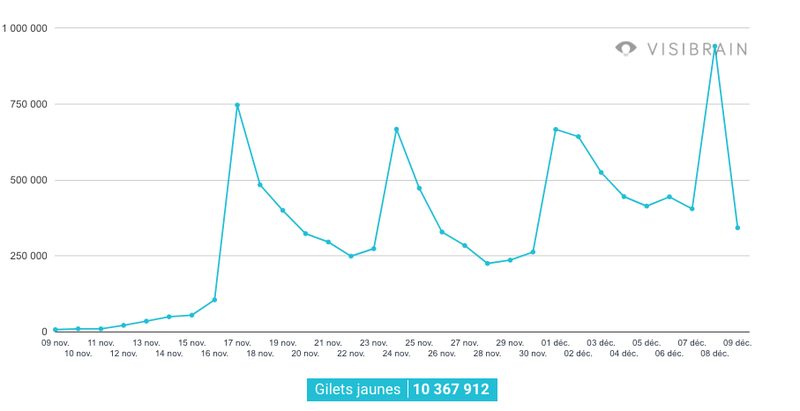
Foreign interference on social media: it is almost impossible to prove
Quite a few journalists are now asking questions about social media analysis following the Yellow Vests phenomenon, notably since the publication of a Times article featuring an analysis by a cybersecurity firm. Naturally, we are at 10 million tweets in a month.
Read on ReputatioLab →
What is the Russian influence on the French presidential campaign?
Russian influence on elections is addressed by many players, notably on the occasion of Trump's election. People also very often talk about the official media organs of Russian propaganda, Sputnik and Russia Today. In practice, how far does this influence extend? Who spreads this information?
Read on ReputatioLab →
What form does state propaganda take on social media?
Increasingly, states and political parties are starting to invest in social media to spread propaganda. What means of propaganda are they currently trying to deploy? An attempt at a portrait. I.
Read on ReputatioLab →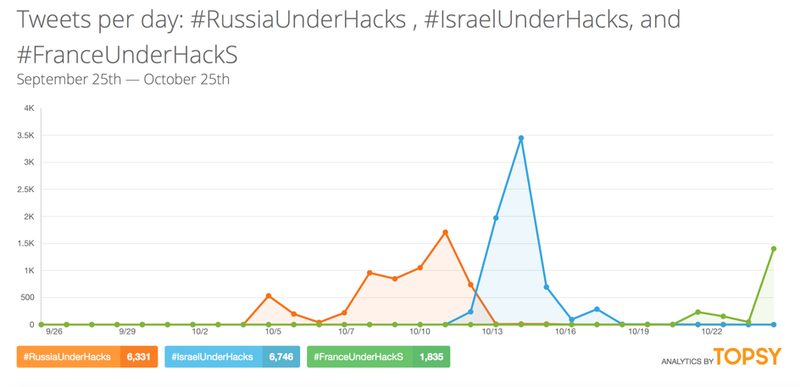
#FranceUnderHacks? A cardboard cyber-propaganda by the Islamic State
On Sunday, the Islamic State launched a “vast” cyber-hacking offensive against France, claiming access to data from the Ministry of Defence and the Ministry of Culture.
Read on ReputatioLab →Astroturfing and fake accounts
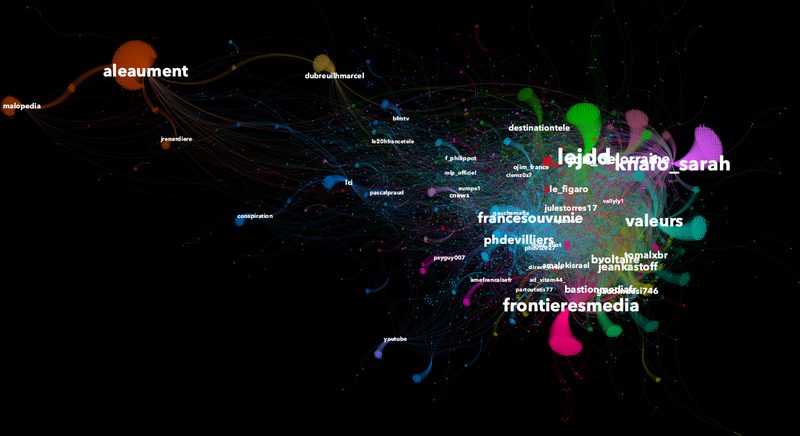
The de Villiers petition: how Reconquête is trying to mimic left-wing mobilisations through astroturfing
Already 1,878,874 signatures out of 2,000,000! This is the impressive figure that introduces the petition launched by Philippe de Villiers, calling for a referendum on immigration.
Read on ReputatioLab →
#SaccageParis: astroturfing or activist operation?
Yesterday morning, on the RTL morning show, Anne Hidalgo wanted to take stock of the #SaccageParis campaign run on social media, which she accuses of being an astroturfing movement led by the far right. So what is really going on? Analysis via Brandwatch What is astroturfing?
Read on ReputatioLab →
How a shadowy outfit created 75 accounts to harm Emmanuel Macron
This Saturday, an operation took place using Mediapart blogs to harm Emmanuel Macron. The attempt, which mobilised 75 fake accounts, was fiendishly orchestrated and fortunately did not take hold.
Read on ReputatioLab →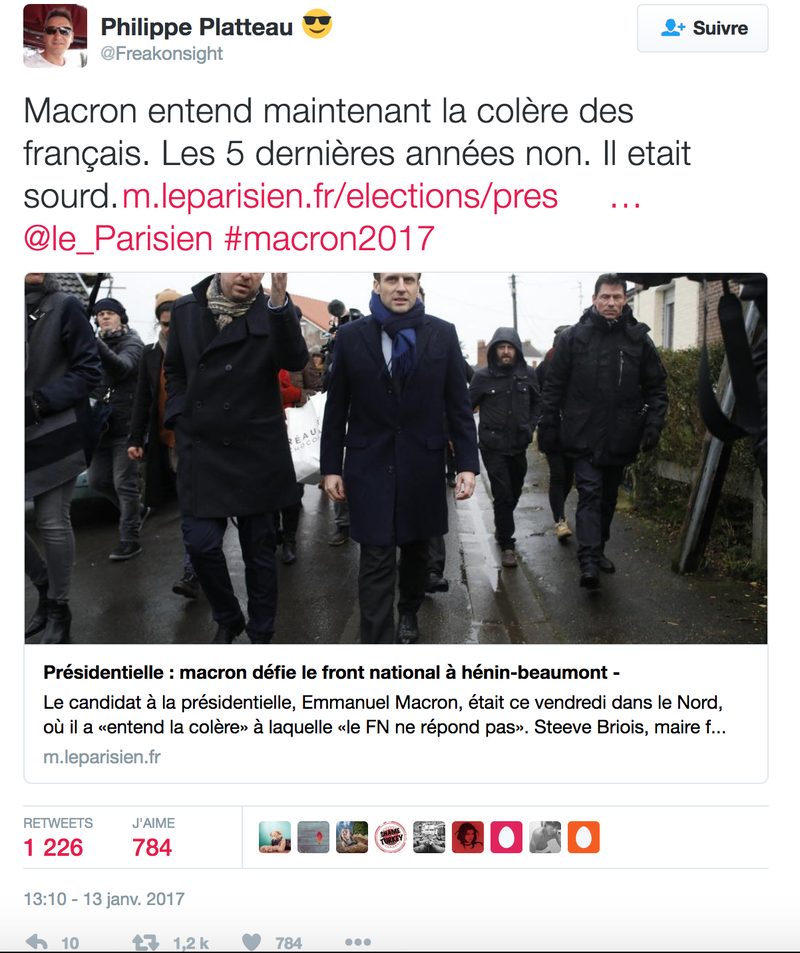
Phil. P., the presidential campaign's first act of astroturfing / botting
It had to happen. I have just unearthed the first genuine use of bots in the French presidential campaign. And it may well have influenced a few quantitative statistical studies based on tweets. Decoding. His name is Phil P., he says he is head of a research unit, and he has been on Twitter for barely 3 months.
Read on ReputatioLab →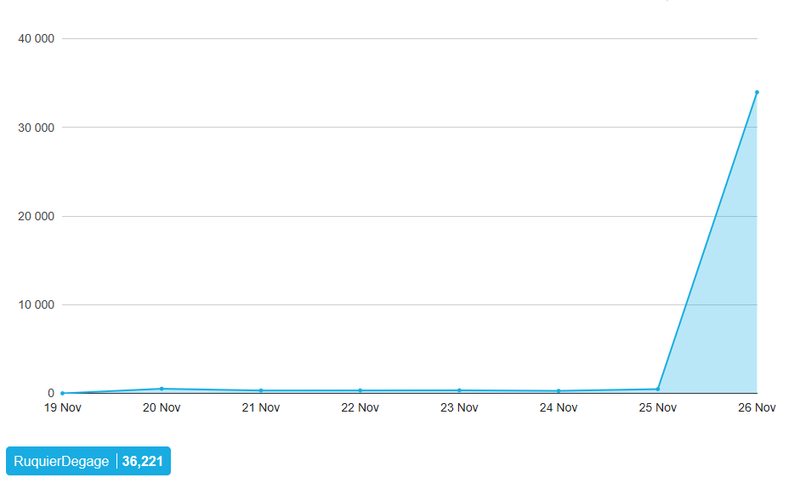
#RuquierDegage, the patriosphere's first openly acknowledged astroturfing
It is Thursday, 10.18 p.m., during the primary debate on France 2. The Patriosphere has just pulled off a coup, having managed to break into the debate thanks to Ali Juppé. All it took was 20,000 tweets from 6,000 to 8,000 people.
Read on ReputatioLab →
How to influence public opinion and journalists through astroturfing?
Avaaz.org, lapetition.be, change.org: online petition sites are flourishing here and there, and with them the number of citizen appeals for public mobilisation. It is a fact that citizens complain about everything and anything, and that they need a way to show they are not alone.
Read on ReputatioLab →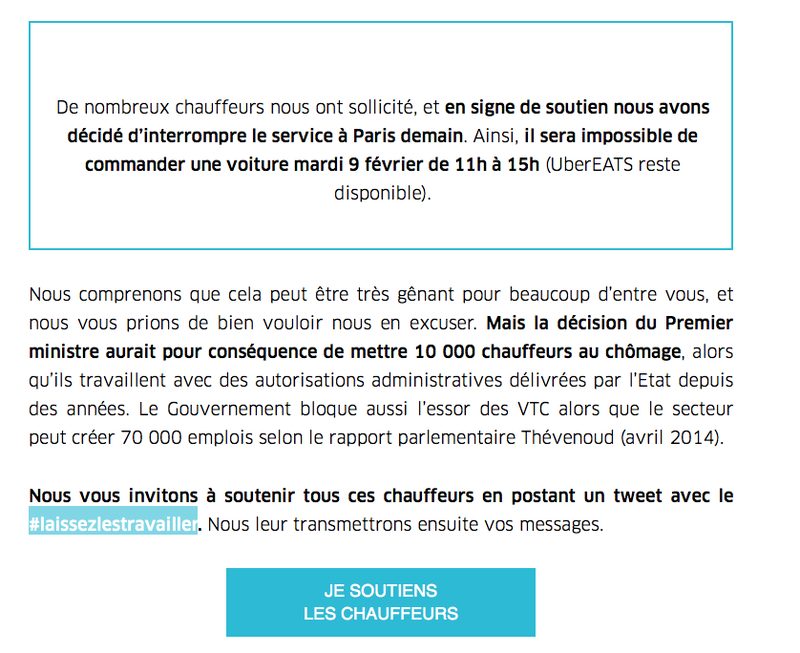
Uber France's #LaissezLesTravailler campaign: a popular mobilisation or astroturfing?
Remember, I told you about the lobbying situation between Uber France and the Paris taxis. Since then, things seem to be going very badly for Uber, with a government that appears to lean towards the taxis.
Read on ReputatioLab →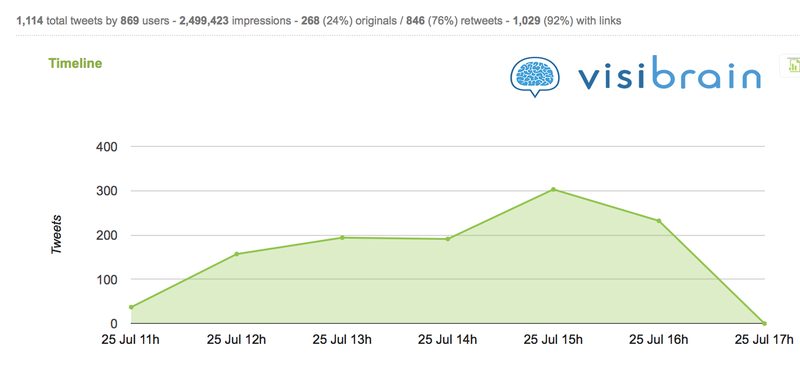
The Reims bikini affair? An astroturfing operation by the FN and media at a loss
In a park in Reims, a man calls out to a group of young women in bikinis with “go and get dressed, it's not summer!”.
Read on ReputatioLab →Rumours: from terror attack to election

Olympic Games cancelled? Anatomy of a rumour
The Olympic Games would supposedly be cancelled by the IOC president following the chaos of the elections. This is the wacky, crazy rumour that circulated to the point of becoming the subject of an article. Is social media to blame? Russian disinformation?
Read on ReputatioLab →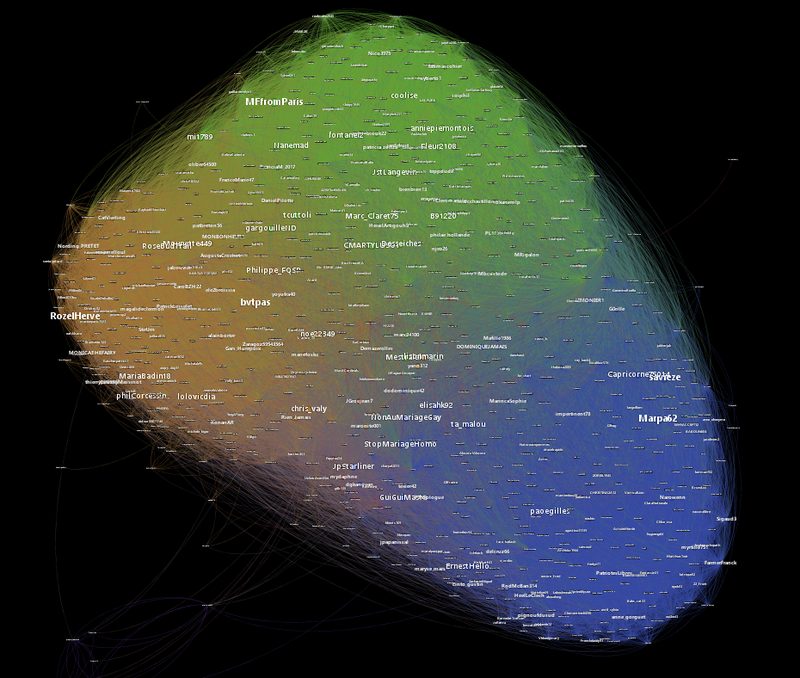
Who spread the main rumours of the French presidential campaign?
Numerous rumours emerged during the presidential campaign. It is therefore worth asking which communities are at work in spreading them. As with my investigations into the rumour of Macron's funding by Saudi Arabia and the one around Cahuzac Macron, it is very difficult to isolate the origin of a rumour.
Read on ReputatioLab →
Le Soir plagiarised: was Marion Le Pen taken in by Iranian propaganda?
At the start of March, a wild rumour rang out on the web by means of a plagiarised copy of the site of Le Soir: Macron and Saudi Arabia were supposedly in cahoots. Since then, European experts have reportedly pointed to Russia in this operation. The rumour therefore had to be investigated, which I did using Brandwatch and Visibrain.
Read on ReputatioLab →
How the Paris rumour about Gallet and Macron moved from the patriosphère to the media
It began with a rumour that was fairly widespread in Paris, to the effect that Macron was gay and in a relationship with Gallet, the head of Radio France. The rumour had been hinted at almost daily by members of the Patriosphère for a long time, and it grew in scale as time went on.
Read on ReputatioLab →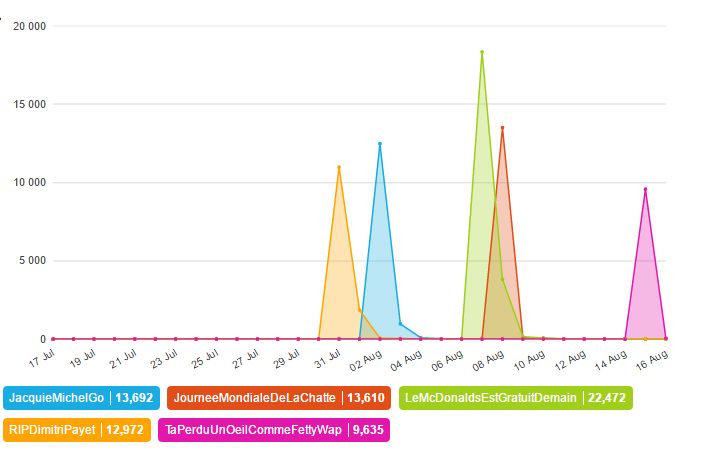
How does a young troll manage to get scandalous rumours and hashtags trending?
His name is Ulrich, he lives in La Réunion and his favourite pastime is creating trending topics on Twitter.
Read on ReputatioLab →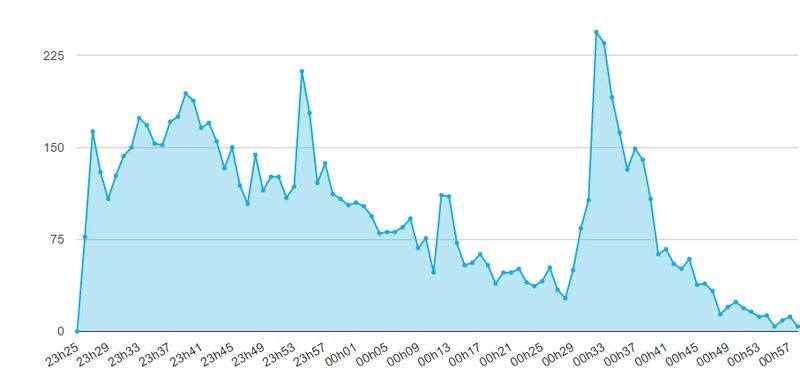
The mechanics of rumours during terror attacks. The case of Nice
Having carried out other analyses in the past, I found it quite interesting to analyse the mechanics of rumours during terror attacks.
Read on ReputatioLab →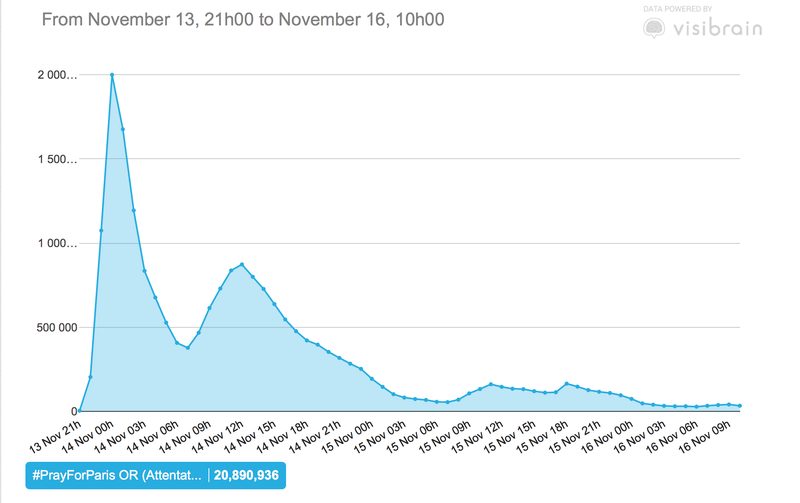
News, conspiracies, false alarms and rumours: the attacks feed on Twitter
The Paris attacks were a moment of total turmoil in which, once again, social media played an utterly incredible role. Never had so many tweets been exchanged, and never had paranoia been observed so closely.
Read on ReputatioLab →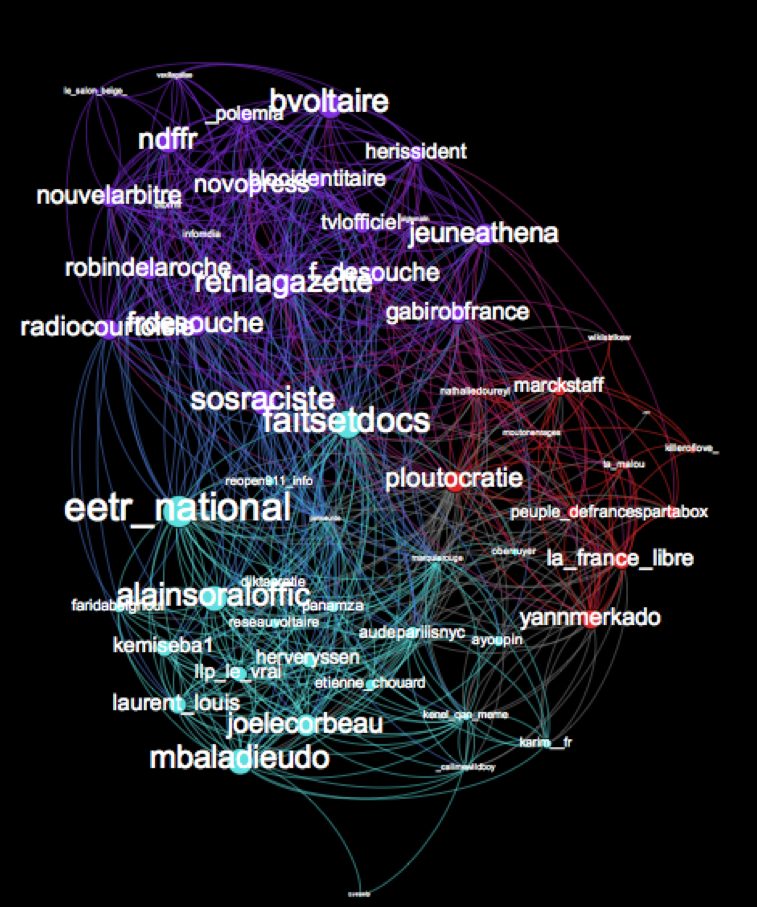
How does information spread for conspiracy theory?
On 12 February, I was a guest at the discussions of the French Government Information Service on conspiracy theory. On that occasion, I applied the methods I usually use to pin down how these theories spread through social media. I. Conspiracy theorists: who are they?
Read on ReputatioLab →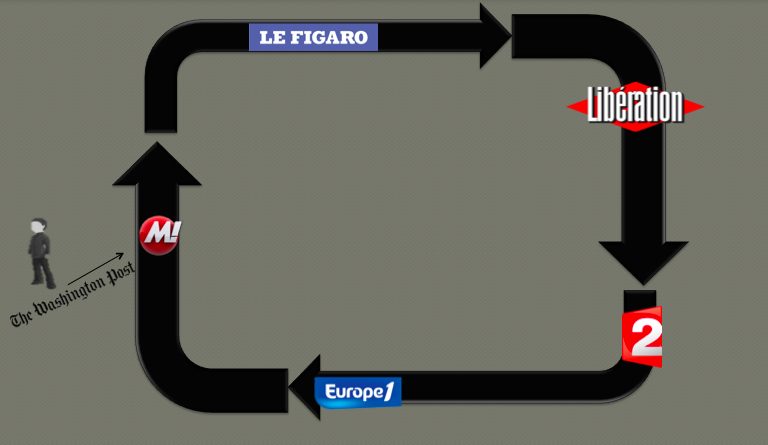
The press in crisis: rumour machine, buzz relay and loss of credibility.
Last week, Tuesday was an absolutely extraordinary day. Why, you may ask? Simply because 100% of its editorial content in the press was hot air.
Read on ReputatioLab →
Rumour and 2.0 lynching on the web
The way rumours and 2.0 lynching of companies begin is an extremely complicated process to map out and observe. Where does it start? How does the rumour evolve? The answer can be found in smaller phenomena, which are therefore more observable than traditional “bad buzz” or rumours. I.
Read on ReputatioLab →And the law?

Anti-fake news law: a grain of sand in the desert
In his New Year address to the press, Emmanuel Macron announced an anti-fake news law in an election context. As it stands, it is an interesting initiative, but it is only a grain of sand in the desert and it will run into many obstacles.
Read on ReputatioLab →