Russian influence on elections is raised by many players, notably around Trump's election. The official media organs of Russian propaganda, Sputnik and Russia Today, will also very often be mentioned. In practice, how far does this influence extend? Who spreads this information? What is the influence of the spreaders on presidential election content? Some answers with Brandwatch and Visibrain.
Key lessons
Sputnik and Russia Today
Sputnik hardly covers the French presidential election at all. Russia Today, by contrast, does so with enormous success, since 145,017 different people were reached. This success should nonetheless be tempered, since the number of people with more than one interaction with the two Russian media outlets remains very small. (Fewer than 15,000 individuals)
The relays of Russian propaganda
The relays of Russian propaganda are mainly grouped around the Fillon, Marine Le Pen and Asselineau communities. It is interesting to see that despite his support for Russia, Mélenchon does not seem to be represented in the communities.
Mainly anonymous
Most of the people interacting do so under a pseudonym. (90%) This raises serious questions.
Russia Today and Sputnik do not replace other media
“Western” media are well represented among the most followed accounts. At least for the Fillon and Asselineau communities. Not at all for Marine Le Pen's accounts, which seem to follow only Russian media.
One common point: Macron
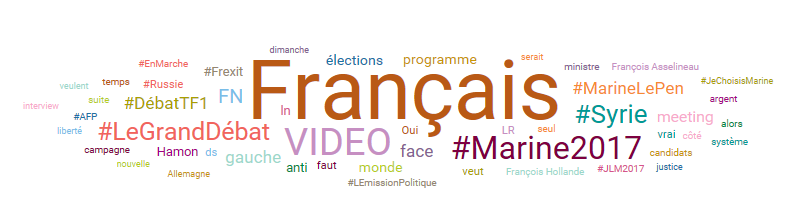
All the communities have one thing in common: running a negative propaganda campaign against Macron. In all 3 communities, it is the most tweeted word, while all the big, widely shared articles are negative towards Macron. The difference in the discussions lies in the candidates they support.
I. Sputnik and RT France
The first stage of my investigation begins with analysing the French-language accounts of Sputnik and Russia Today. To do so, I collected two and a half months of activity on these accounts in order to see the content posted and the users reached.
- Sputnik

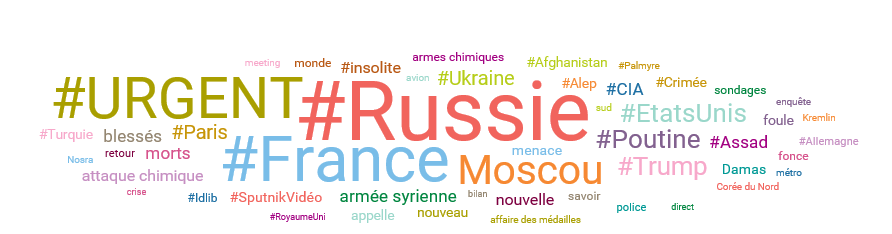
Activity around Sputnik gathered an audience of 57,337 different people in the form of retweets. Net follower gain is fairly limited over the period. The themes covered by Sputnik mostly revolve around Russia, Syria, the USA and Ukraine. No real focus on the French presidential election.
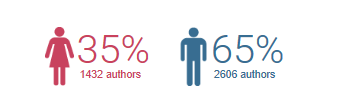
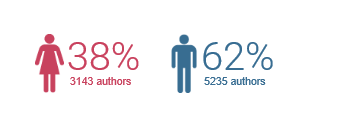
Those who interact are mostly men, but the most interesting point is that for fewer than 10% of those interacting can we determine gender. This means that all the rest of the audience has a pseudonym on the social network Twitter. They therefore do not use their own identity.
2. Russia Today

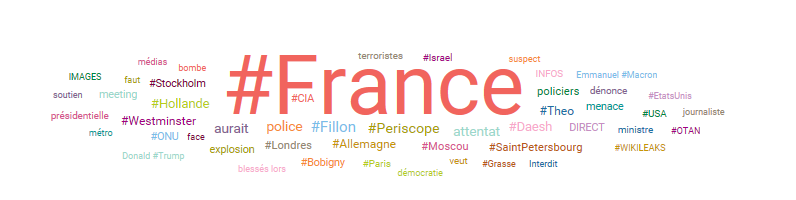
As for Russia Today, the audience in the form of retweets is simply huge: 145,017 different people reached. And the worst of it is that Russia Today's editorial line has been built essentially around France and the presidential election. Among its favourite subjects: Hollande, Fillon and Macron.
Likewise, the share of pseudonyms is also quite huge.
II. Isolating RT/Sputnik fans
The second stage of my work was to gather the users who were captured many times. There are only 14,792 individuals with two interactions. When we take 10 interactions with Sputnik and Russia Today, we are left with only 6,006 identified profiles. I focused on these 6,006 profiles to analyse how these people followed one another. The bigger a point, the more it is followed in the ecosystem. The colour symbolises the community it belongs to. There are 3 main communities.
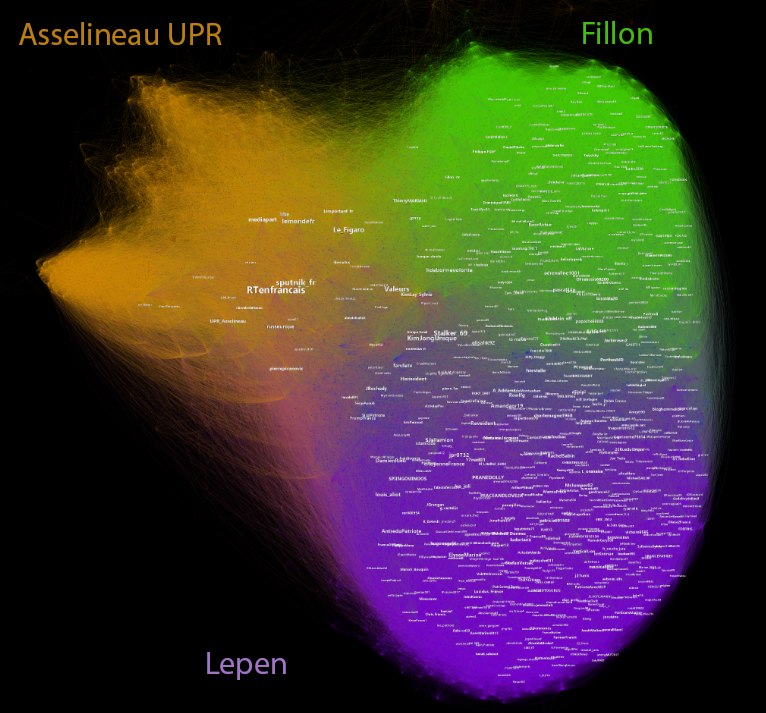
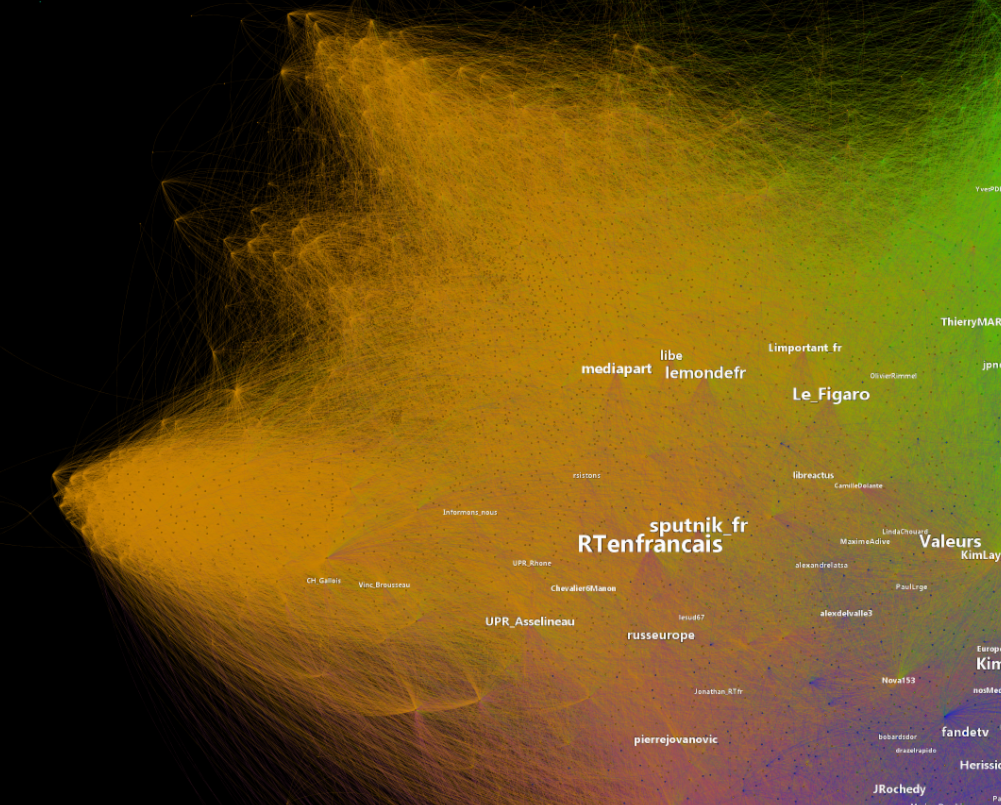
A community very close to Sputnik and Russia Today: the UPR and Asselineau
It is made up essentially of UPR activists. The main media are also there, straddling the Républicains and the UPR, a sign that they also follow traditional media, unlike the identitarian communities.
A republican community - Fillon
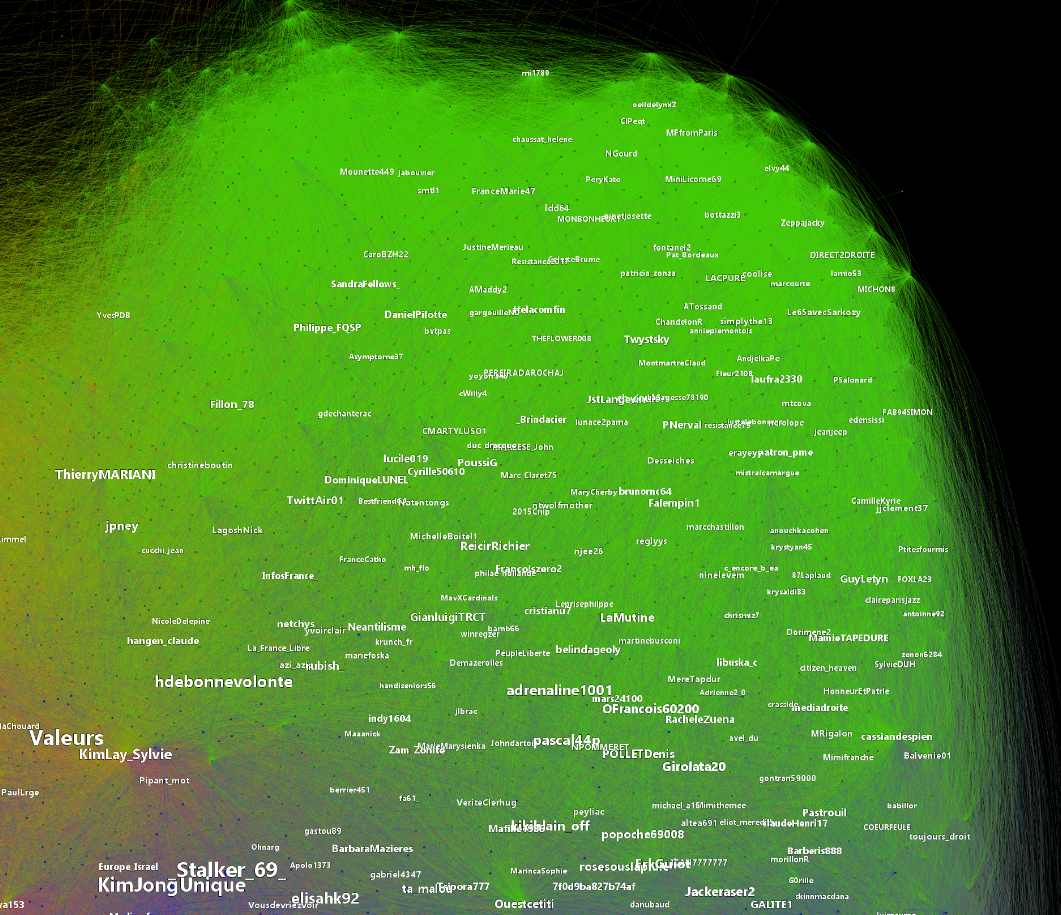
A number of accounts are supporters of François Fillon.
An identitarian community - FN
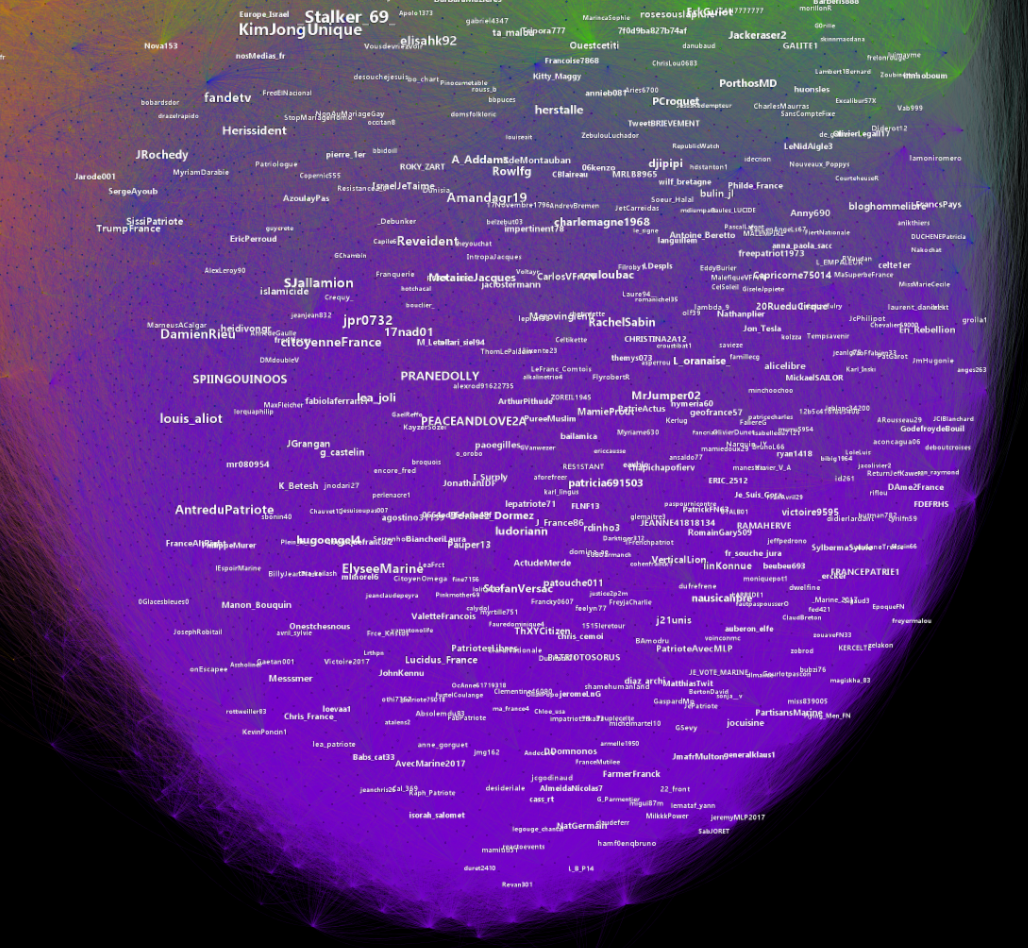
Here these are essentially supporters of Marine Le Pen.
The influencers of these spheres.
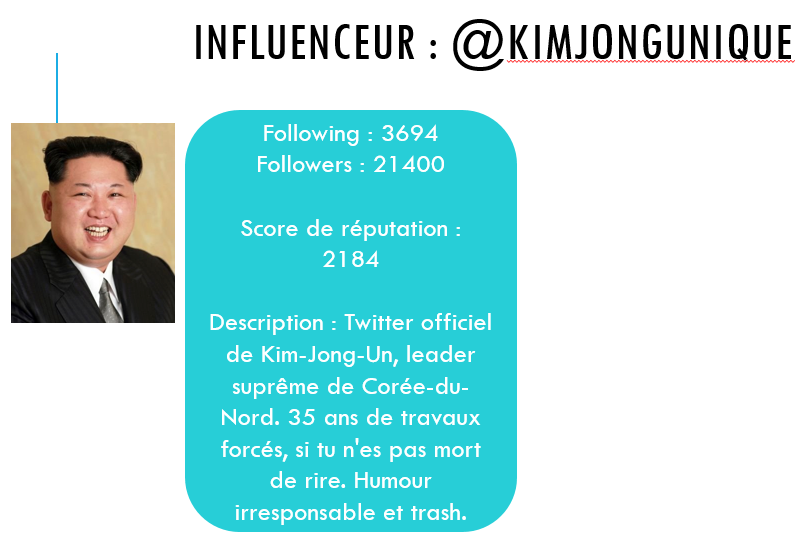
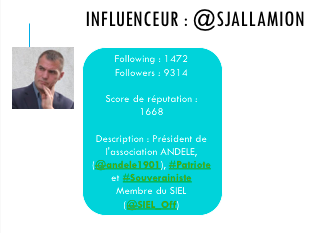
We find both known players from the “patriosphere” and the patriot field, and also traditional media, which shows that the latter are nonetheless placed within this alternative information current.
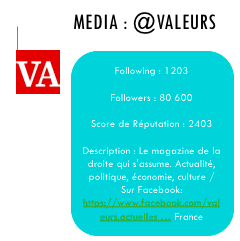
1.Valeurs Actuelles
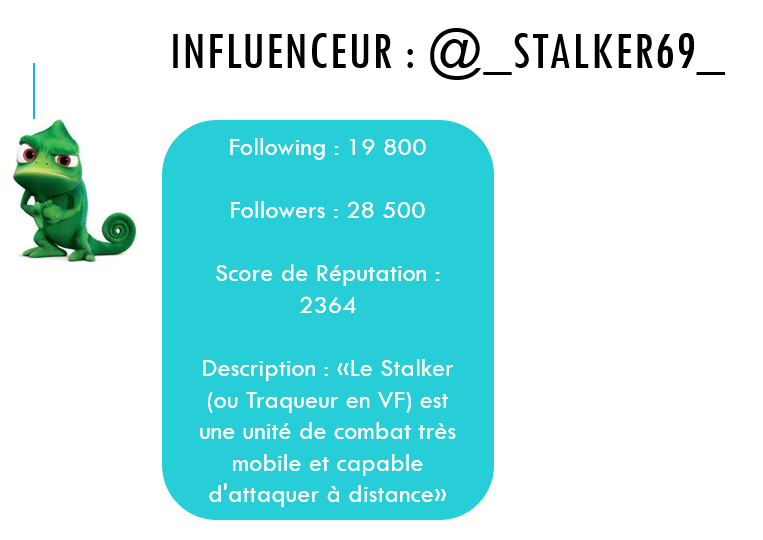
2. Stalker69
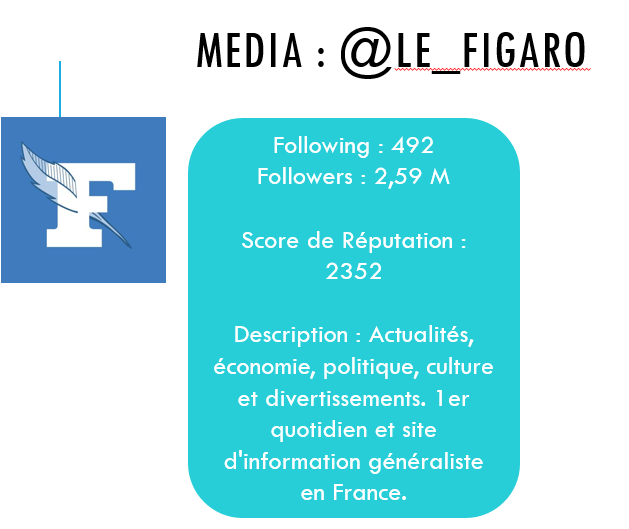
3. Le Figaro
4. Kimjongunique
5. Le Monde
6. Mediapart
7. Sebastien Jallamion
8. Homme de bonne volonté.

9. Jpro732
10. Jacques Sapir
III. What do they talk about in general?
-
The most active.
For the next stage, I put into a Brandwatch panel the 100+ most active towards Sputnik and Russia Today, that is, those with more than 265 mentions/RTs of these main media, in order to see their overall activity, not only on the presidential election.
Their activity is simply colossal, with up to 180,000 tweets a week.

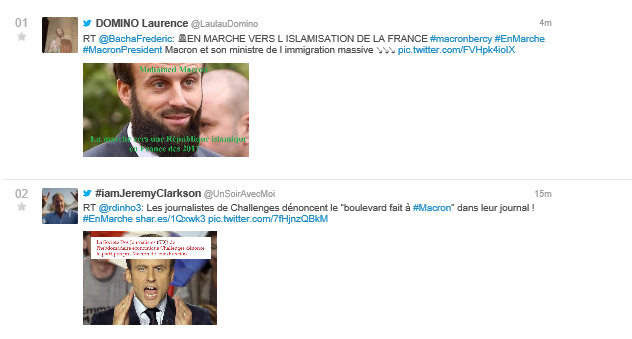
Most of the mentions are to promote Marine Le Pen. We also find #EnMarche tweets
But these tweets are far from positive:
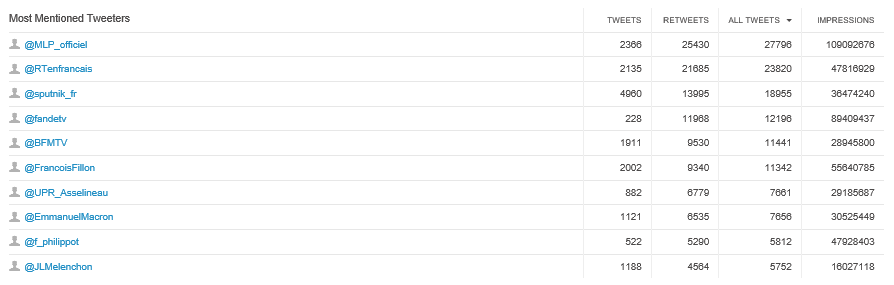
In the tweets, the most mentioned/retweeted are once again Marine Le Pen, Russia Today and Sputnik.
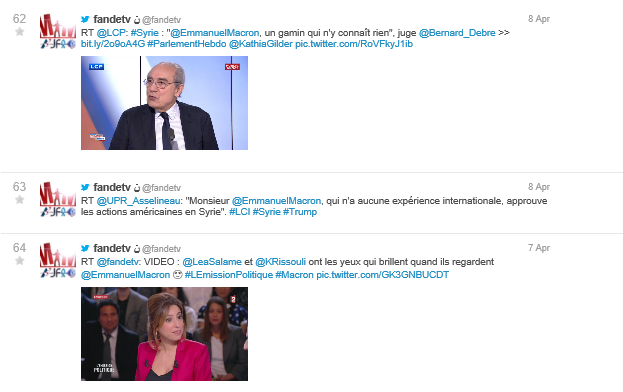
Once again, mentions of Emmanuel Macron are from a negative angle:
 The most shared articles are clearly Russian influence strategies to “frame” certain events.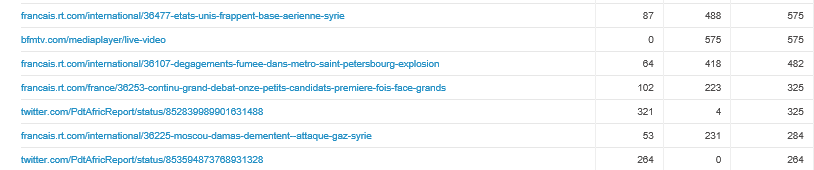
2. By community, on the presidential election
I then took each of the communities to see what they shared.
a) The most Russian community, around Sputnik, Russia Today and the UPR/Asselineau
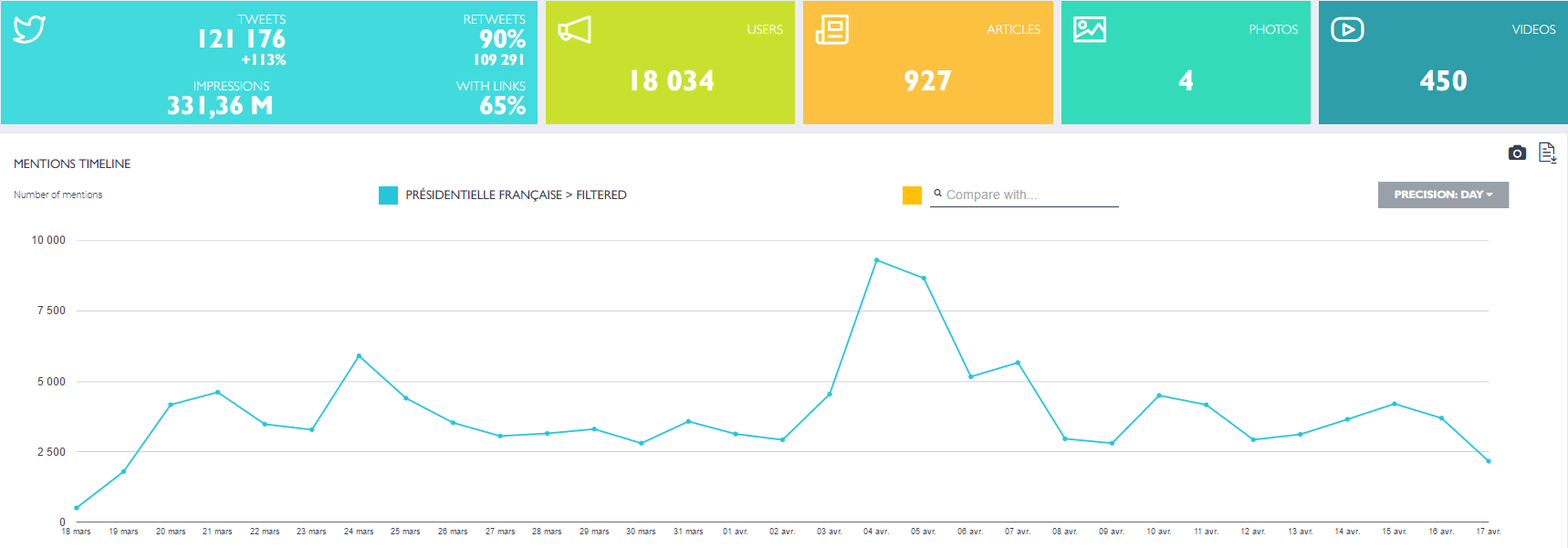
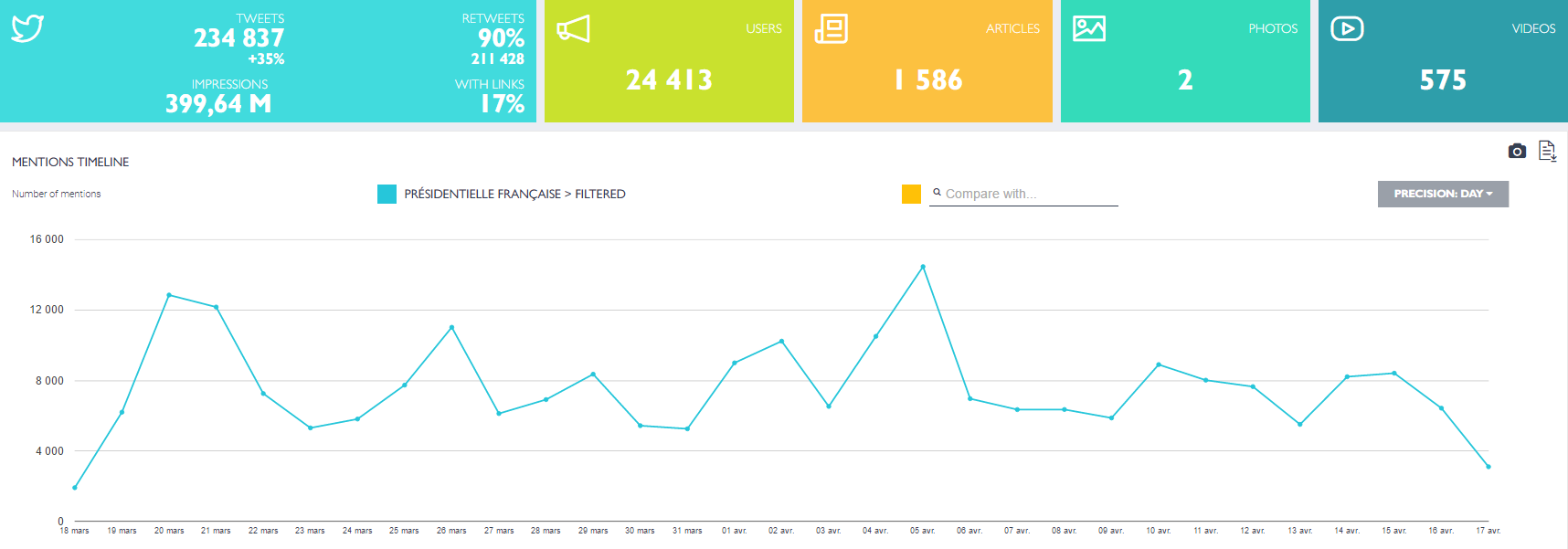
Activity is also quite strong.
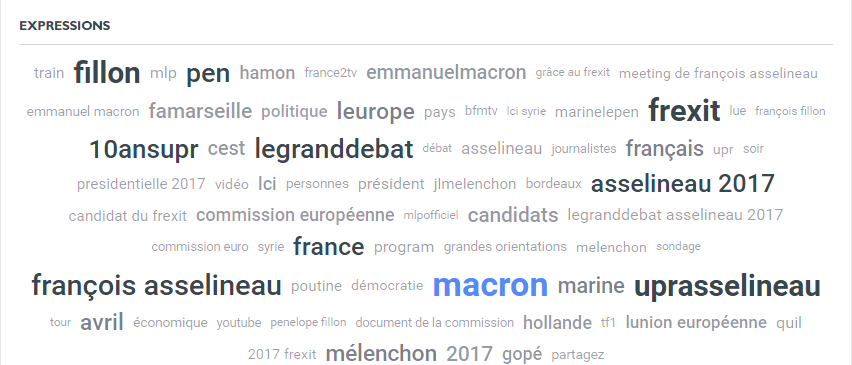
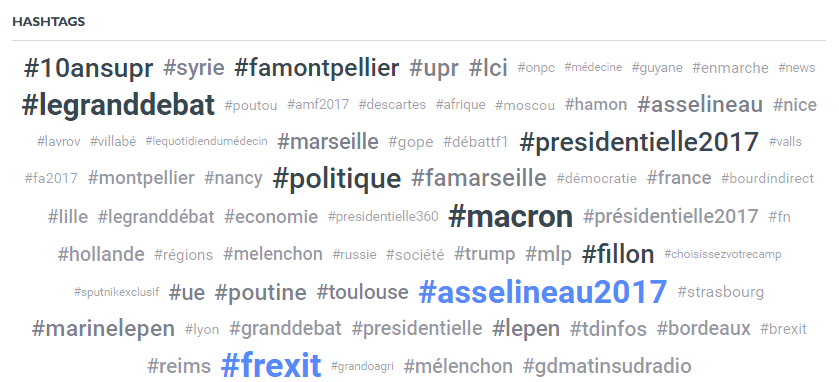
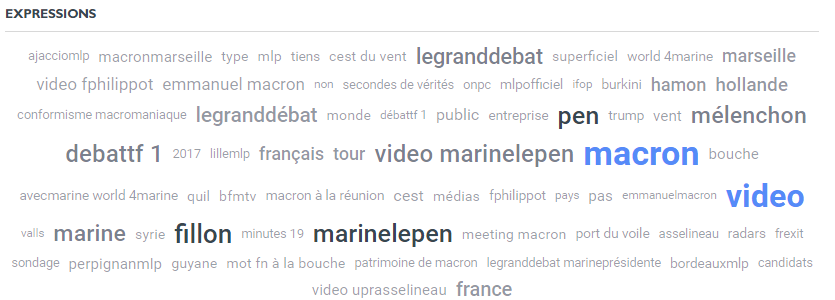
Macron is the most targeted candidate in the conversations. Otherwise, we can see that we are indeed within Asselineau's community. In the hashtags, we find asselineau, marron and Frexit.
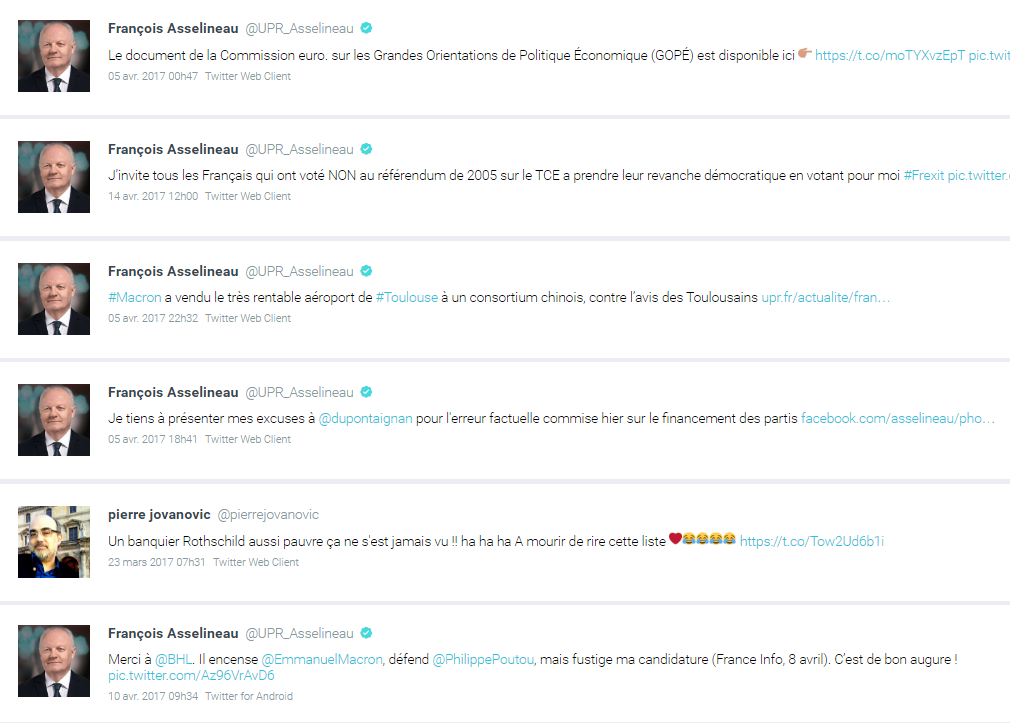
No surprise, then, to find Asselineau's tweets among the most shared:
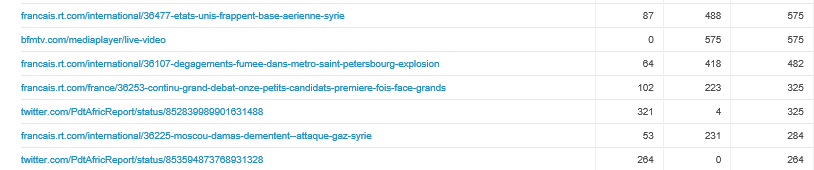
In the articles, Russia Today scores highest:
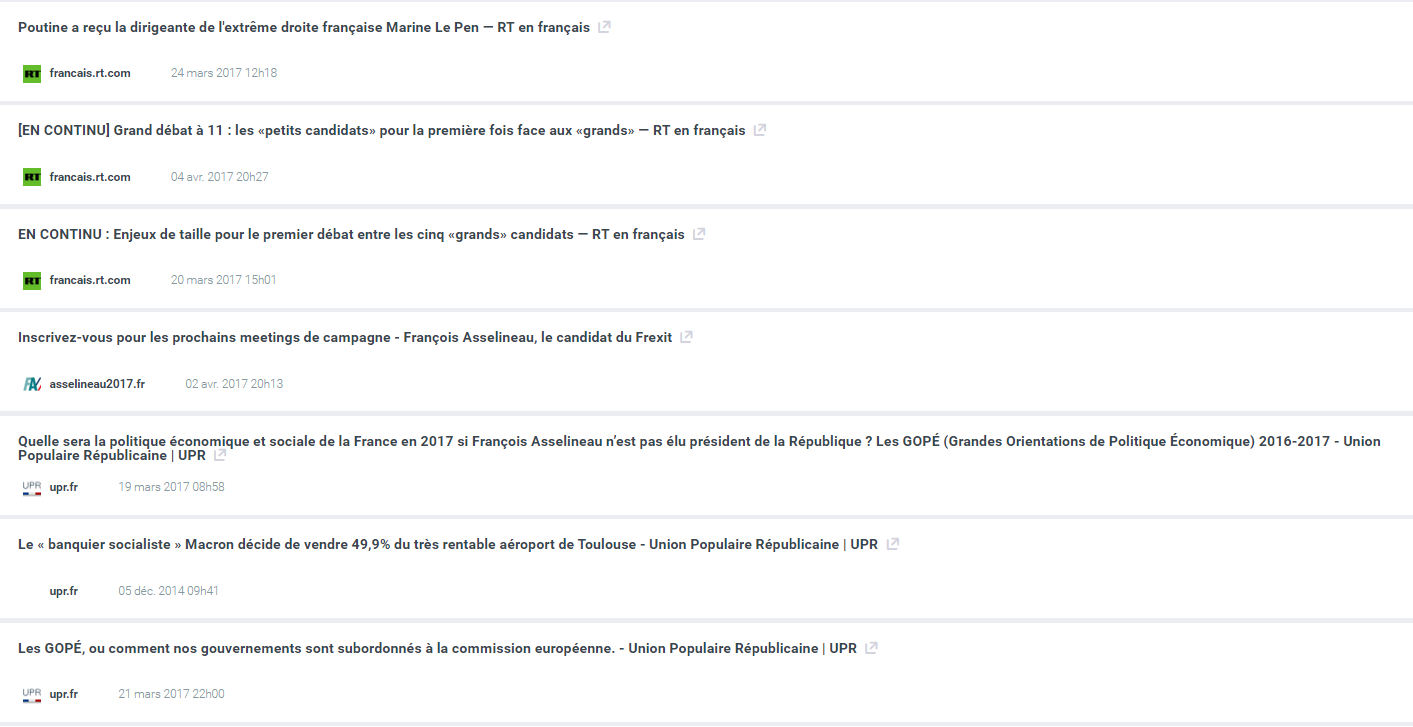
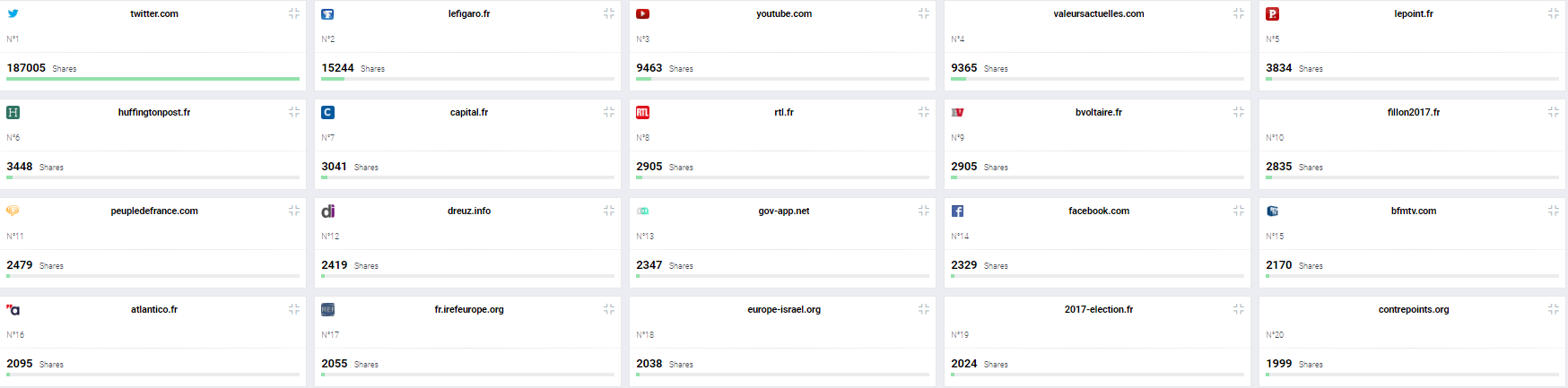
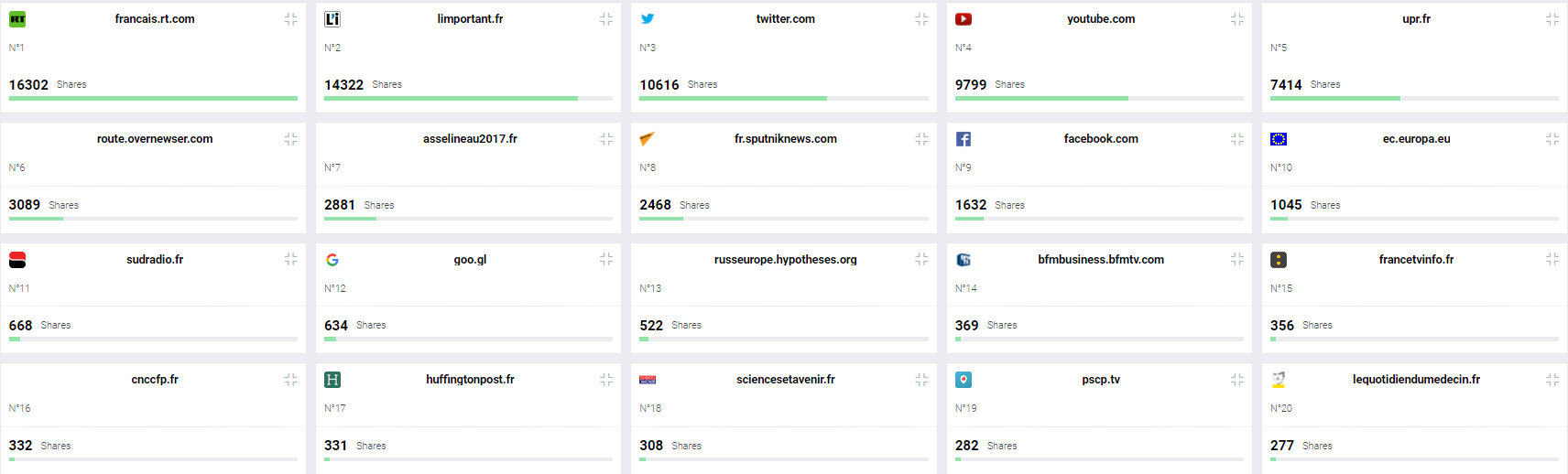
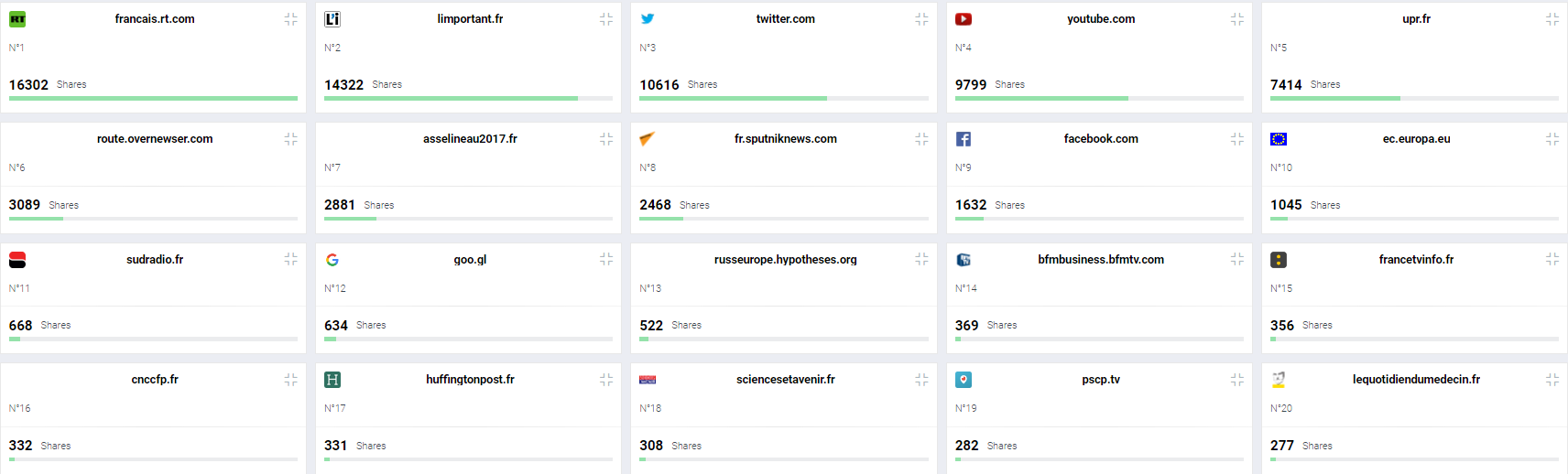
This Russia Today hegemony is also found in the most shared domains:
b) The identitarian / Front National community
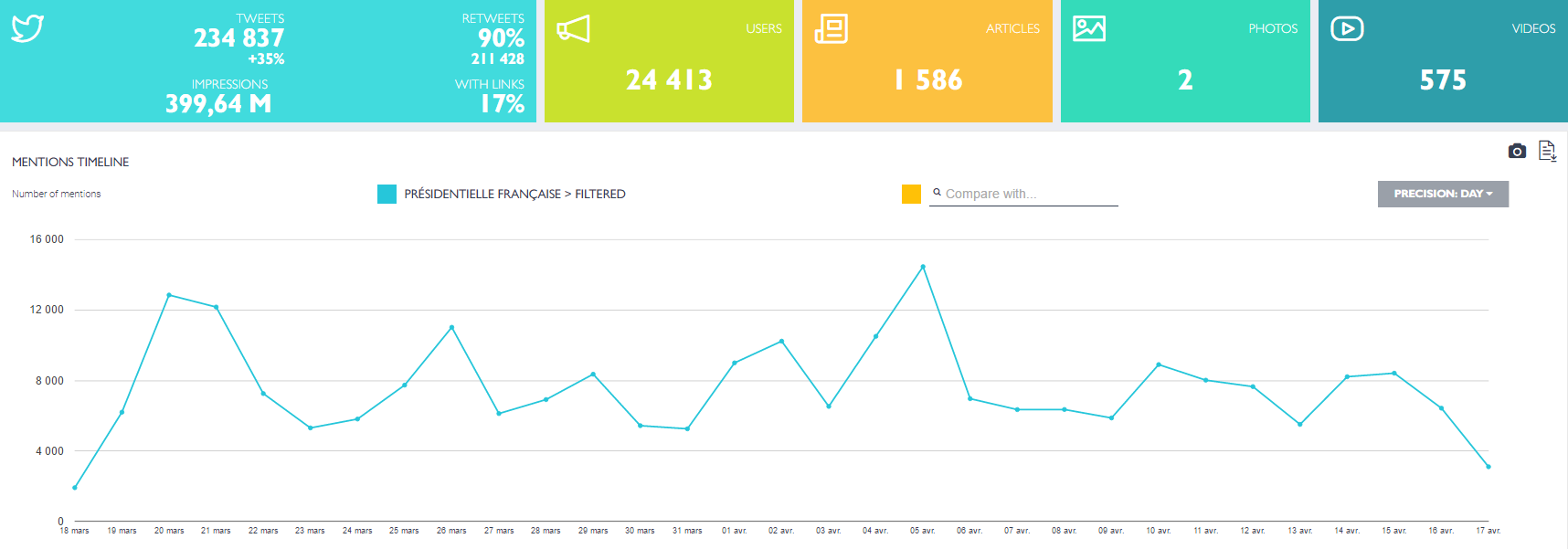
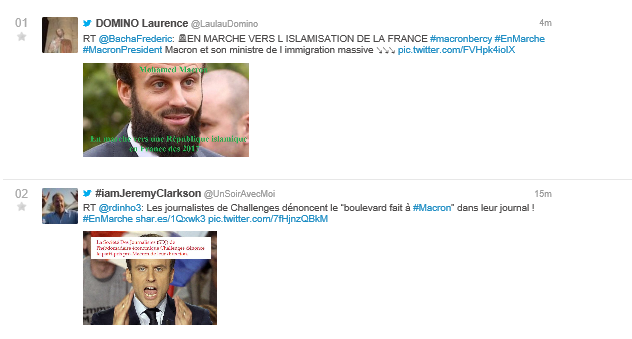
They are twice as active as the UPR. This activity is again very much focused against Macron:
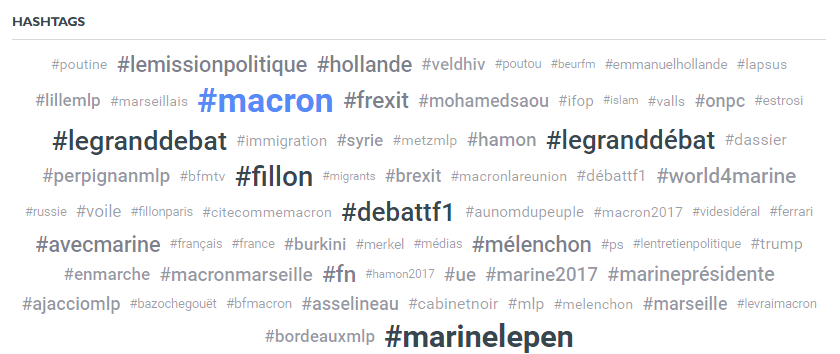
That is why, in the hashtags, apart from Frexit, we find the Mohamed Saou controversy, which hit the centrist candidate hard this week.
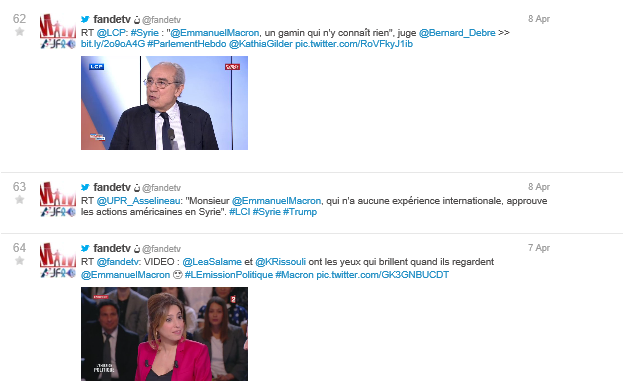
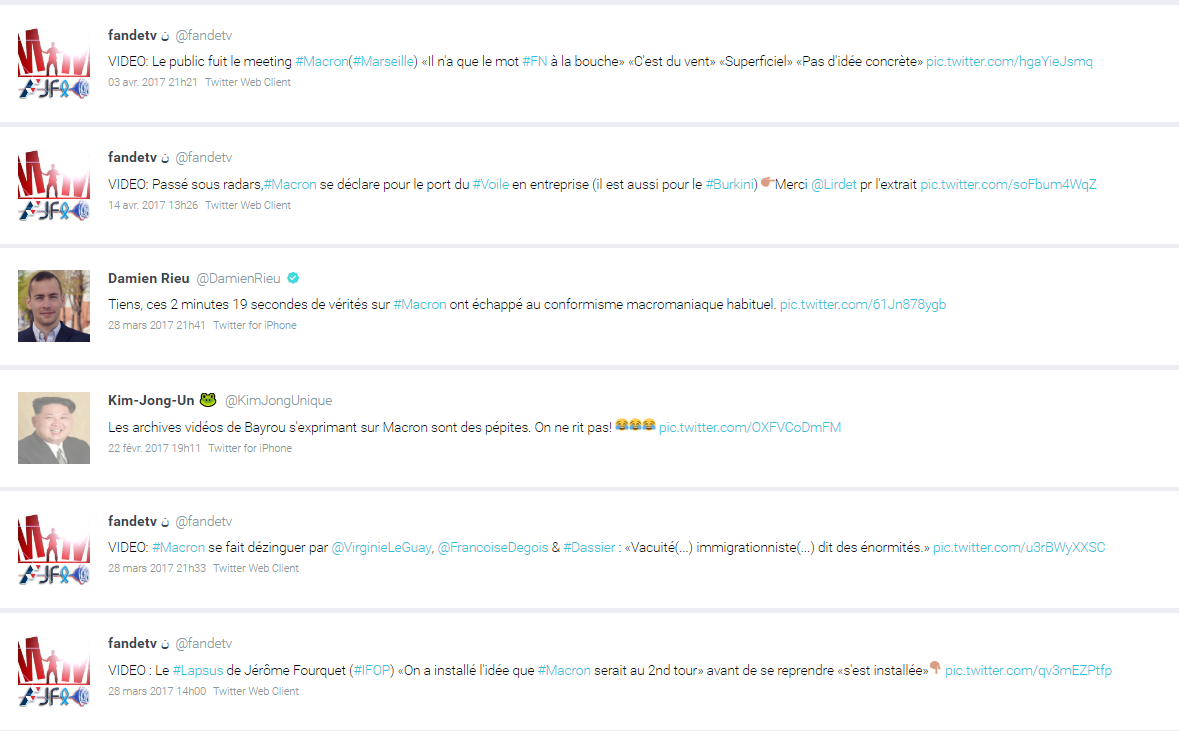
In the top tweets, we mostly find content from fandetv and tweets against Macron. (Almost exclusively that)
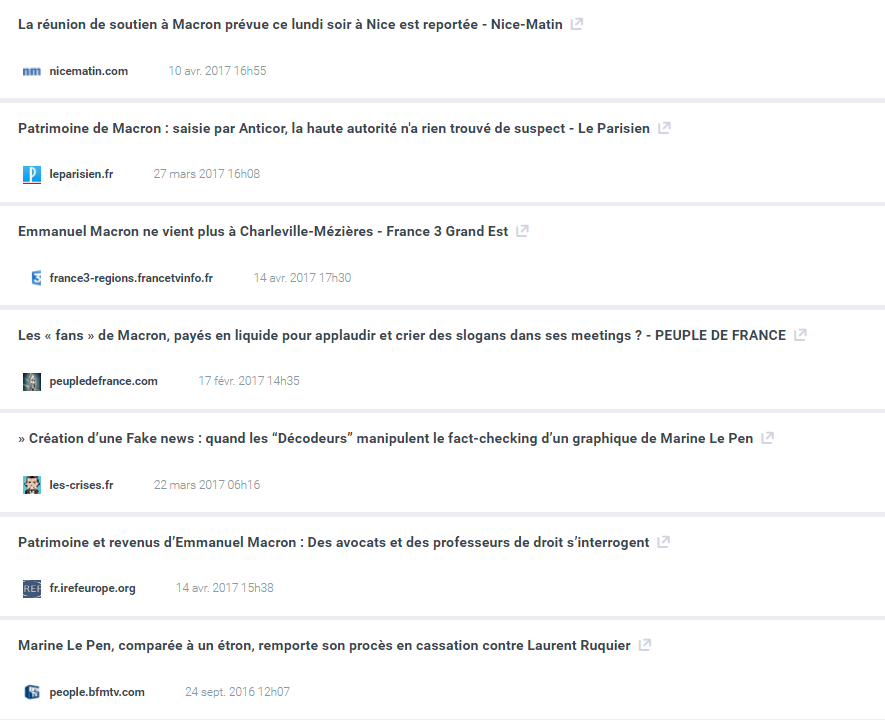
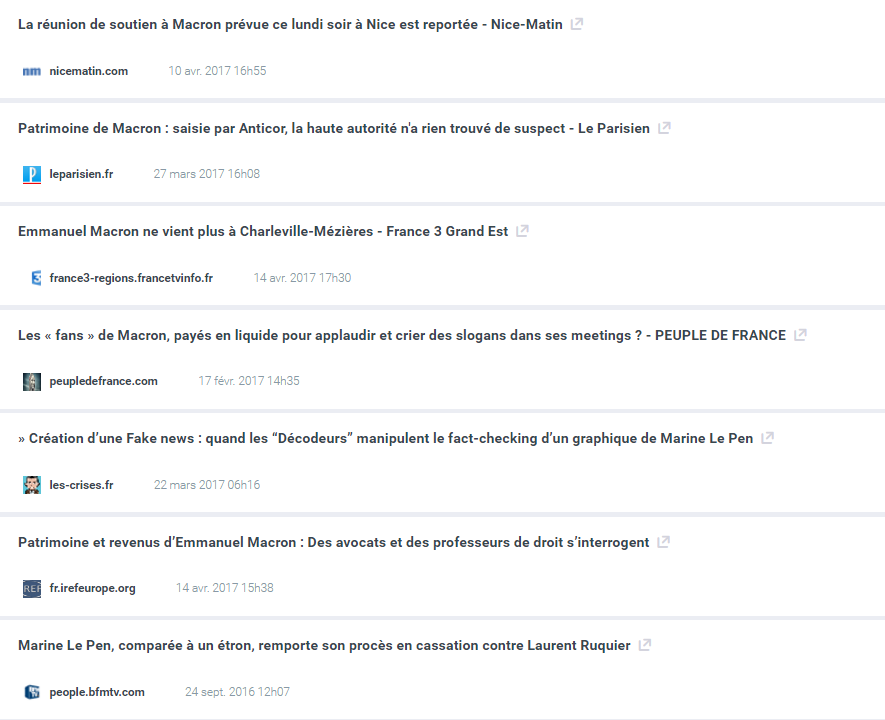
Likewise in the most shared articles: all related to Emmanuel Macron:
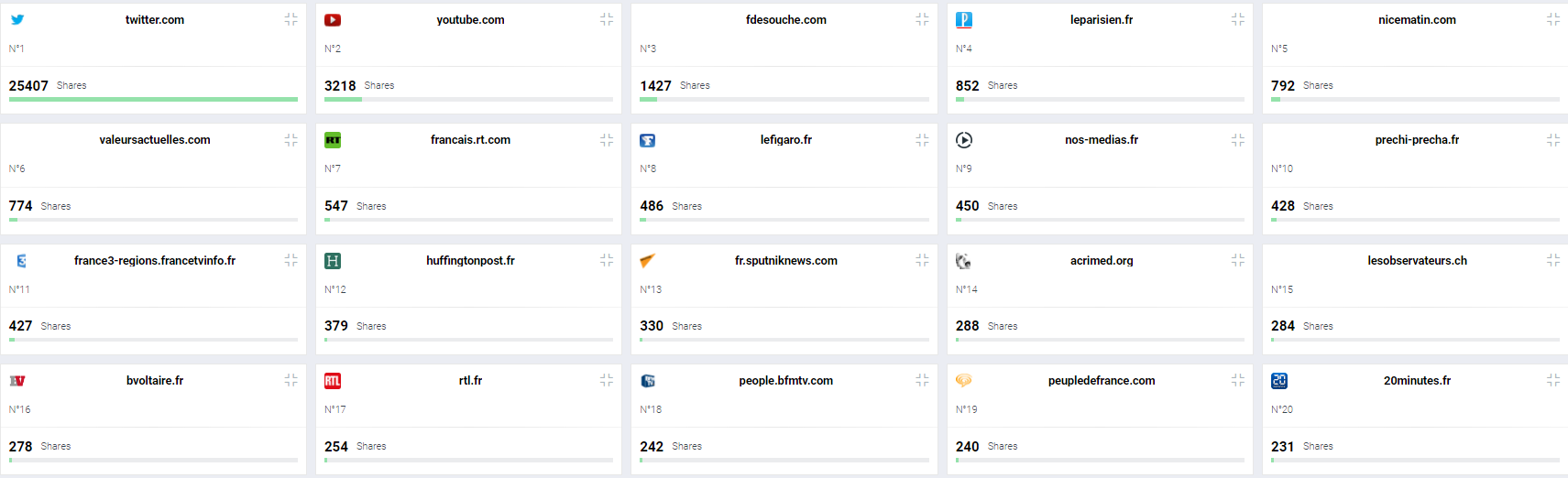
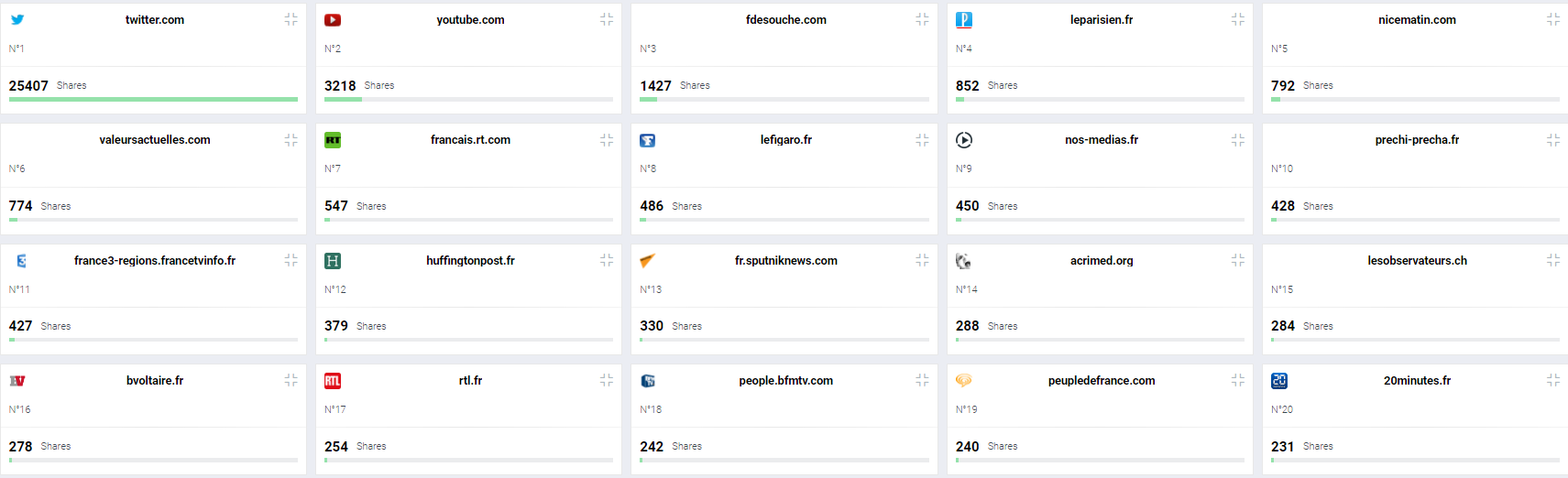
The most shared domain is... frdesouche. To be honest, if Le Parisien and Nice Matin had not published bad articles about Macron, they would certainly be a bit further down the ranking.
The Fillon community
On Fillon's side, Macron is also the most tweeted word:
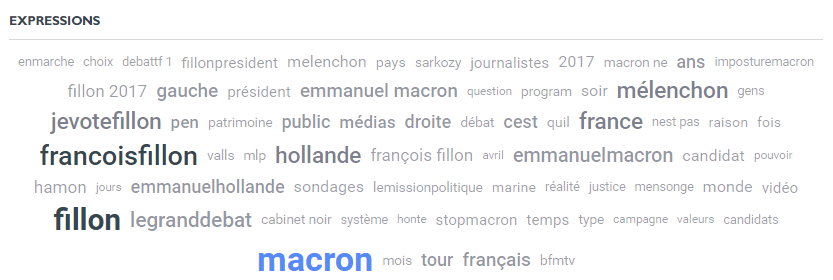
Same thing in the hashtags, amid François Fillon's campaign hashtags:
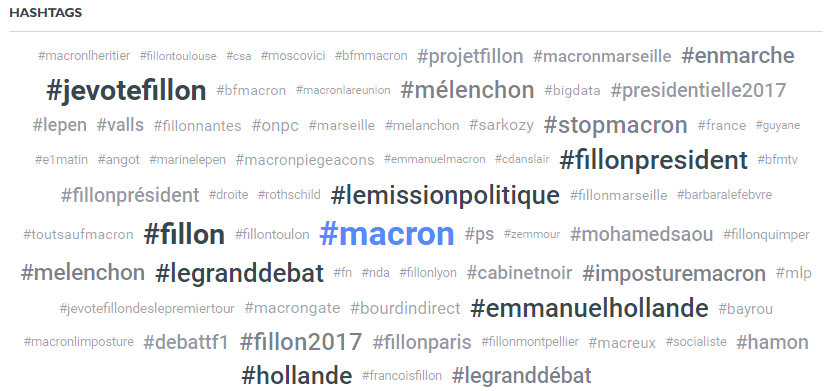
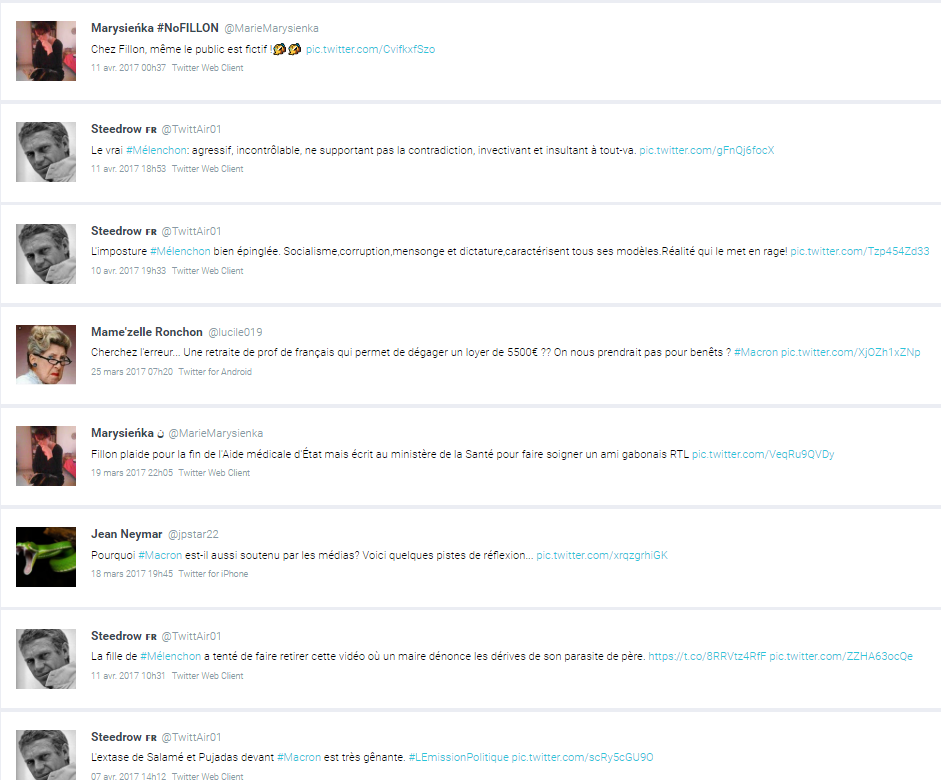
In the top tweets, it is quite interesting to see that there is an anti-Fillon account in the mix that clearly switched sides during the right-wing primaries. Mélenchon and Macron are the most attacked in the tweets:
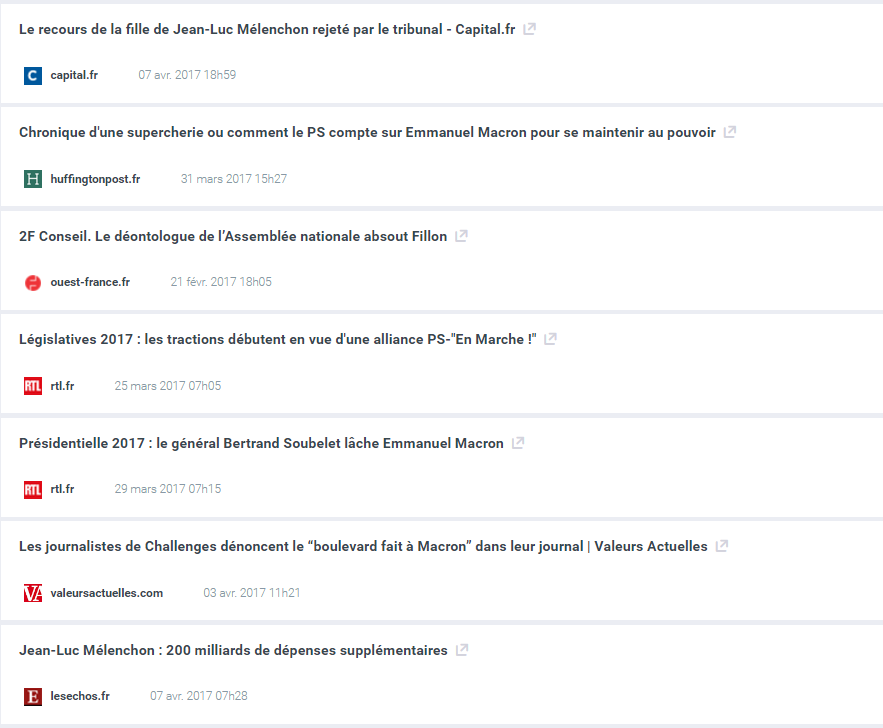
In the articles too, the attacks are mainly on Macron and Mélenchon:
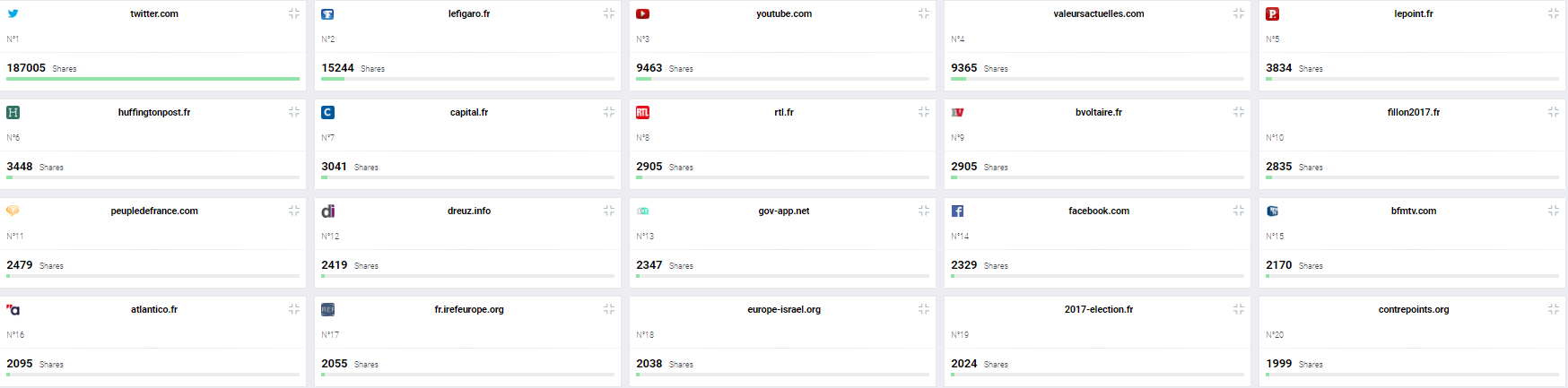
The most-read domains are Le Figaro, Valeurs and Le Point. Russia Today and Sputnik are not among them.