


Phil. P., the presidential campaign's first act of astroturfing / botting
It was bound to happen. I have just found the first genuine use of bots in the French presidential election. And it may well have skewed a few quantitative statistical studies based on tweets. A breakdown.
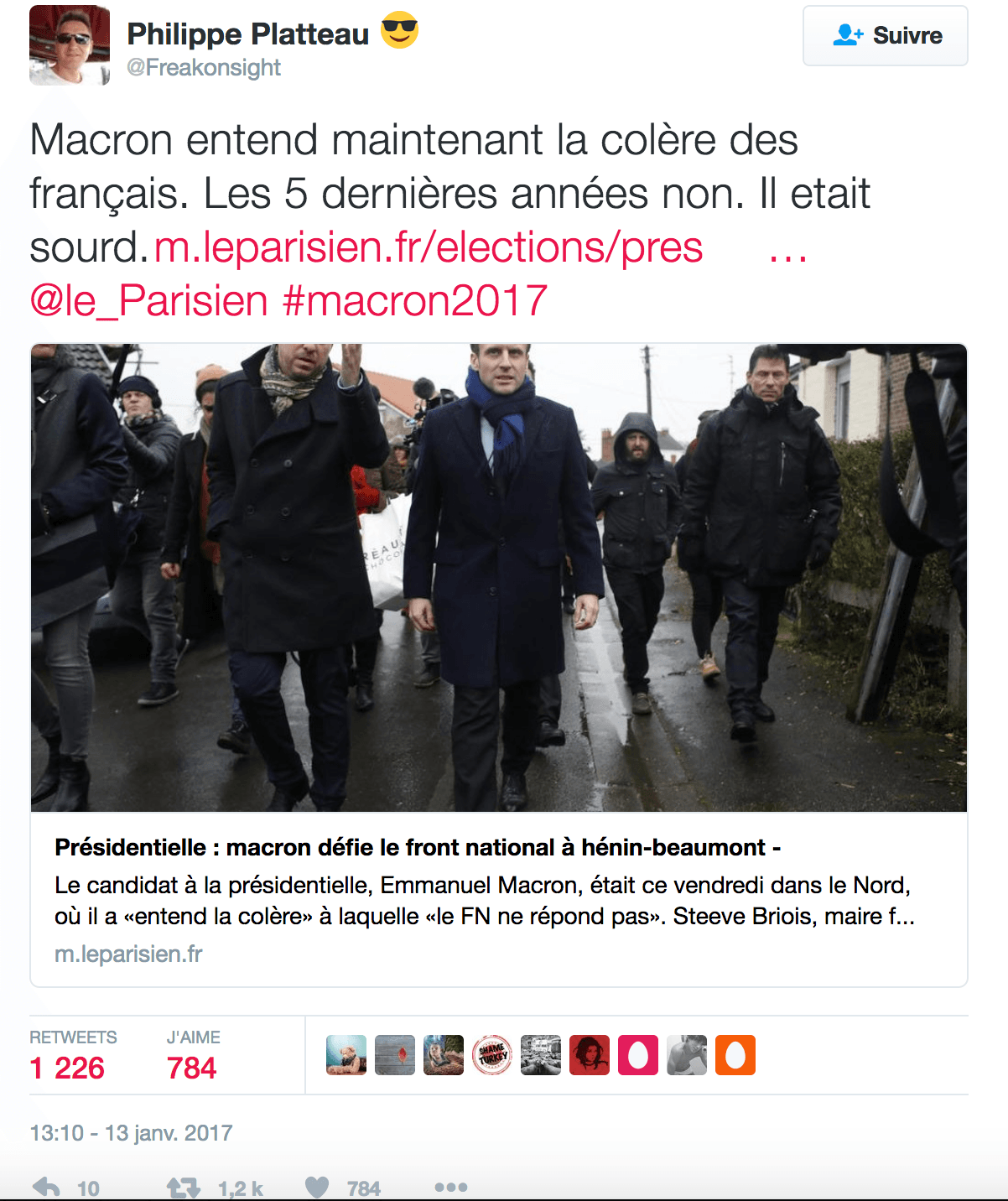
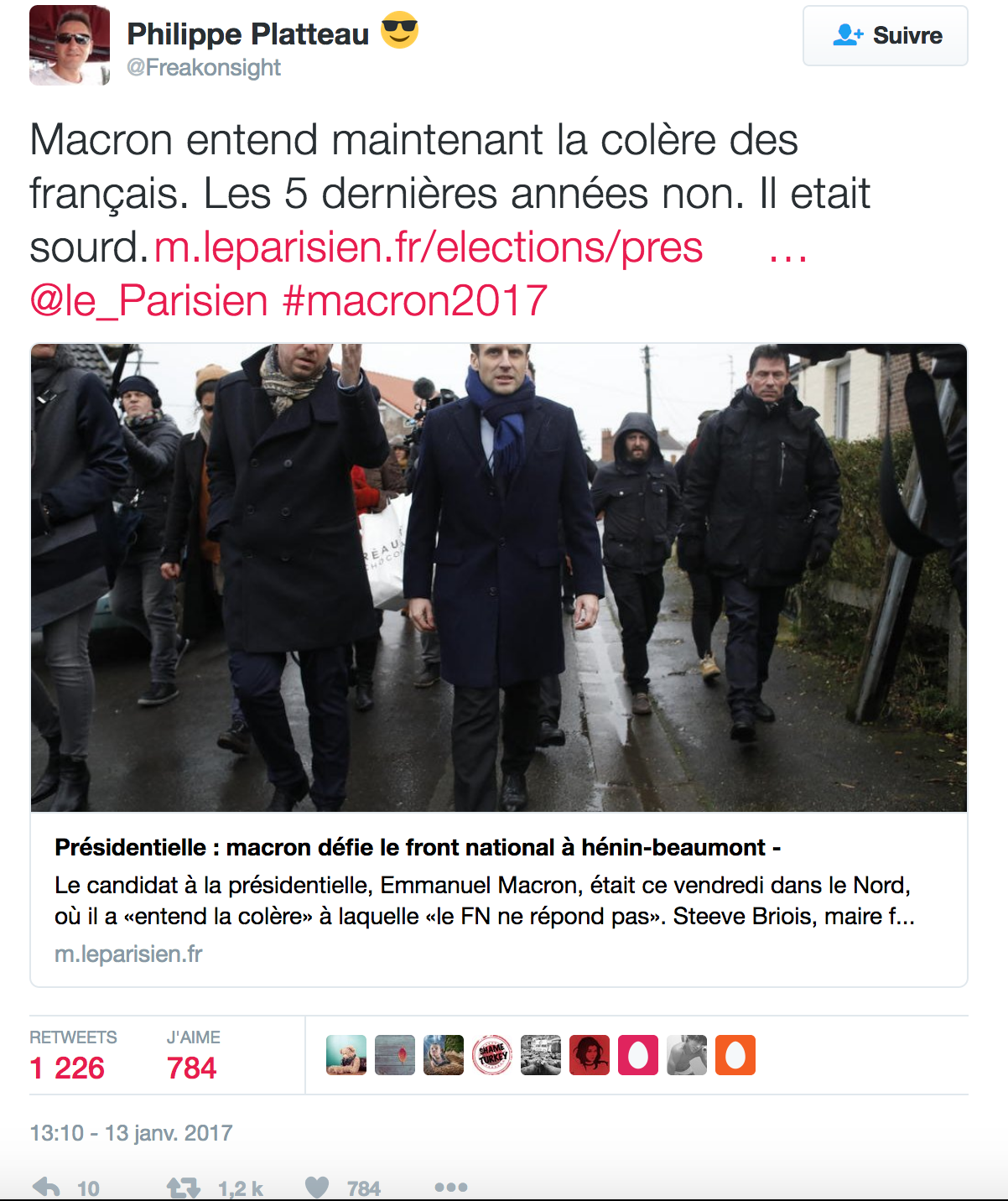
His name is Phil P., he describes himself as a head of a research department and has been on Twitter for barely 3 months. I first spotted him because of a large number of retweets in my political panels. I found it quite surprising that he had more than 1,200 retweets to his name for a simple political tweet.
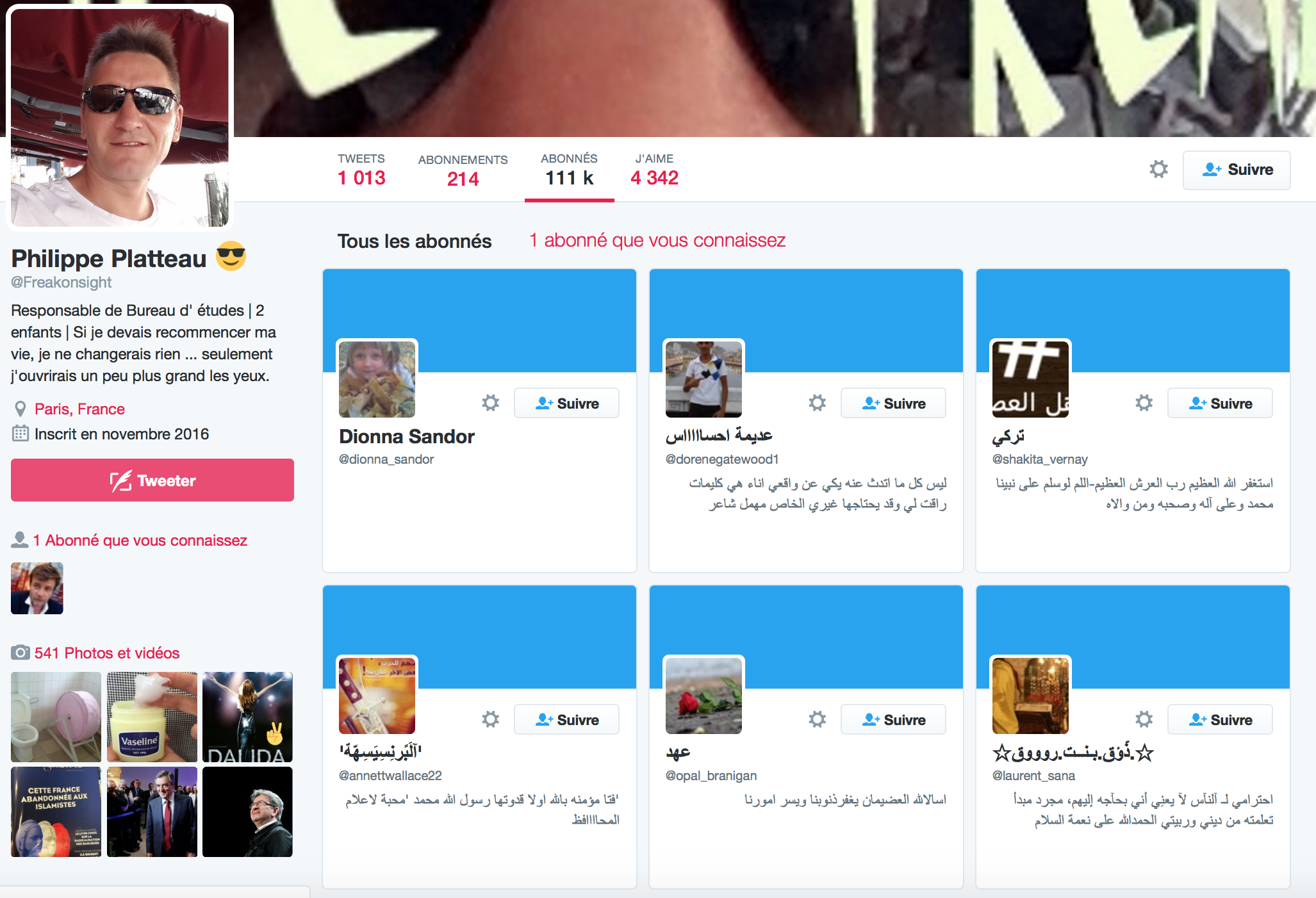
And for good reason: he has obviously bought followers on Twitter:
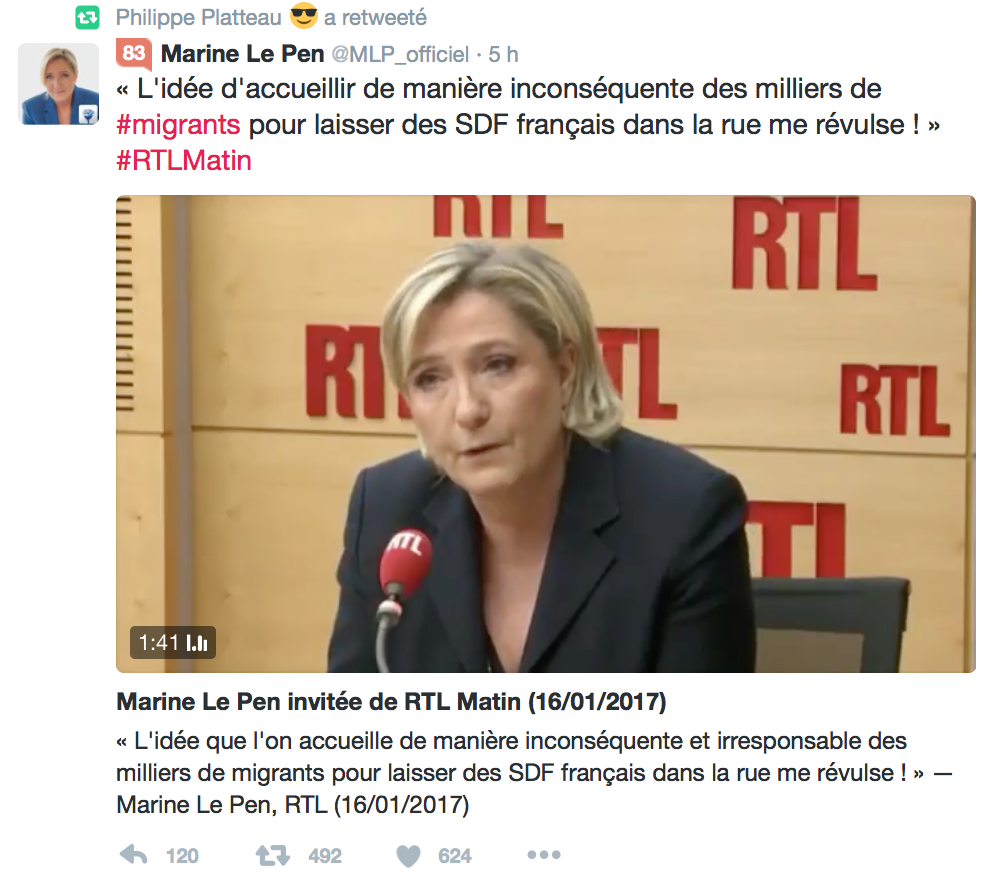
The profile is fairly easy to spot when you look at his tweets, since he retweets Marine Le Pen quite often
When he is not tweeting Fdesouche's articles:
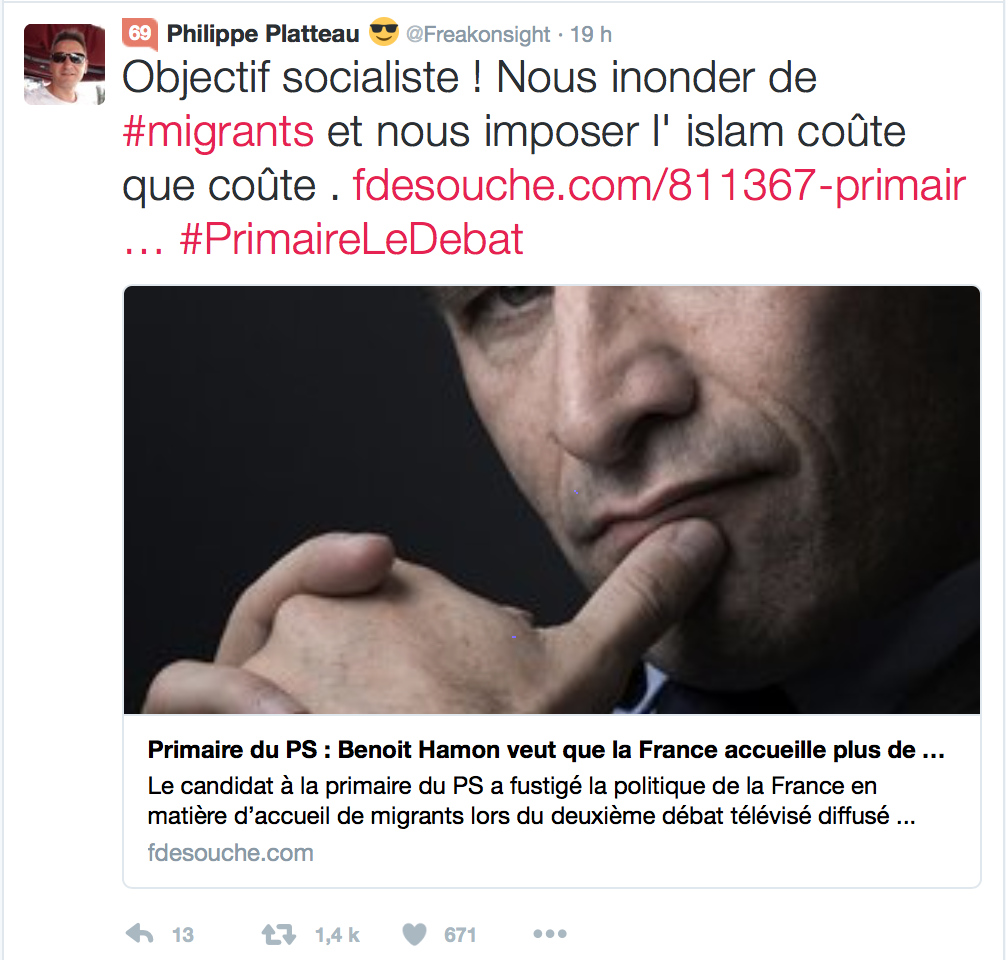
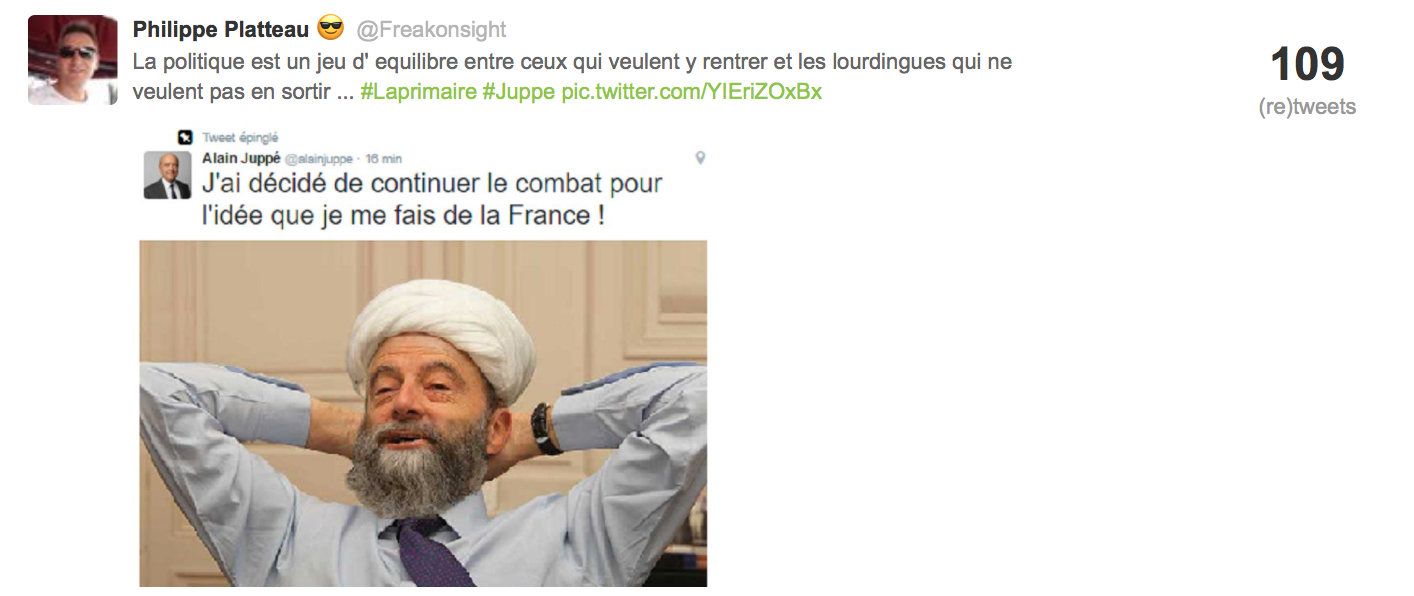
Or among the accounts that helped spread the Ali Juppé phenomenon:
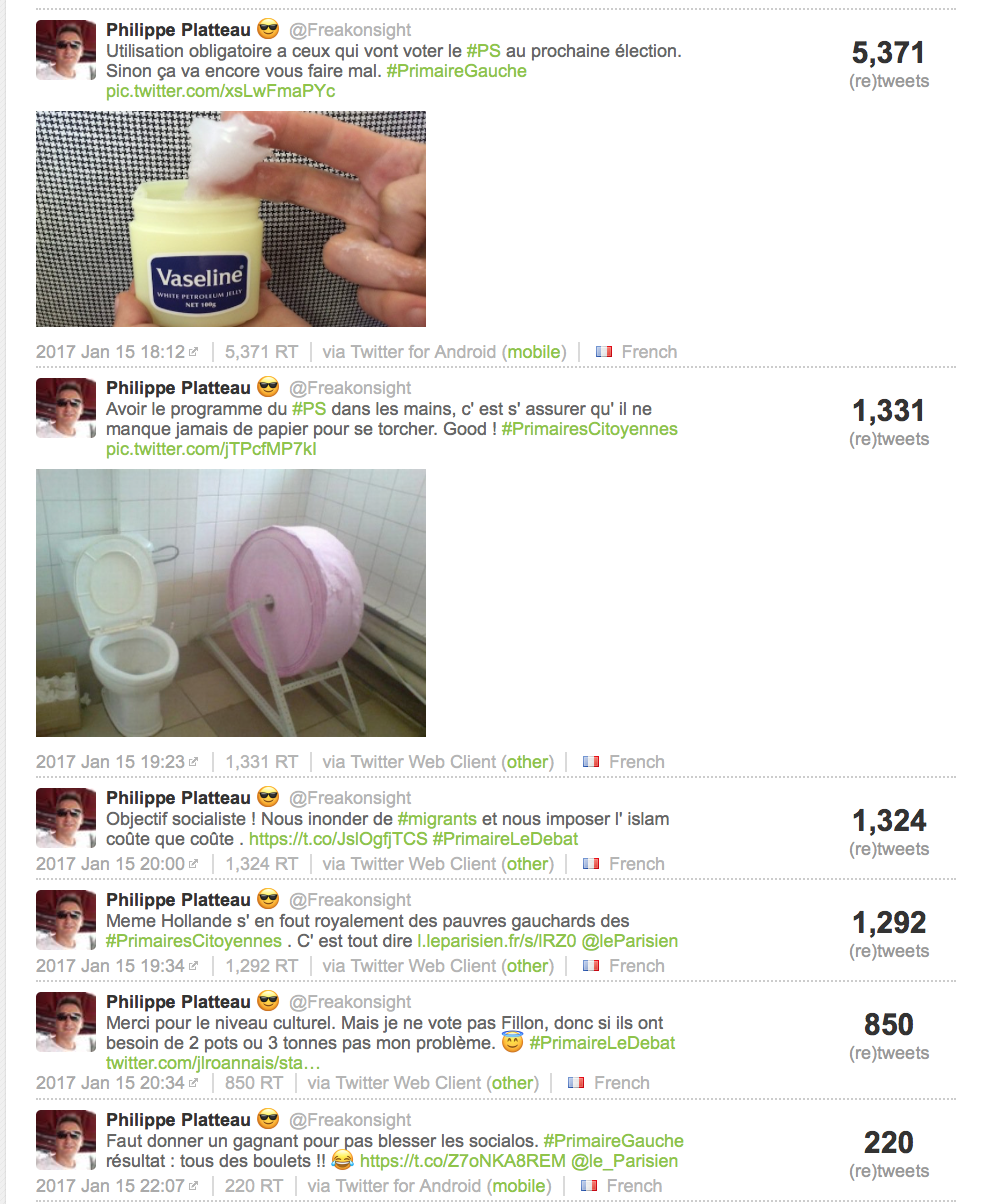
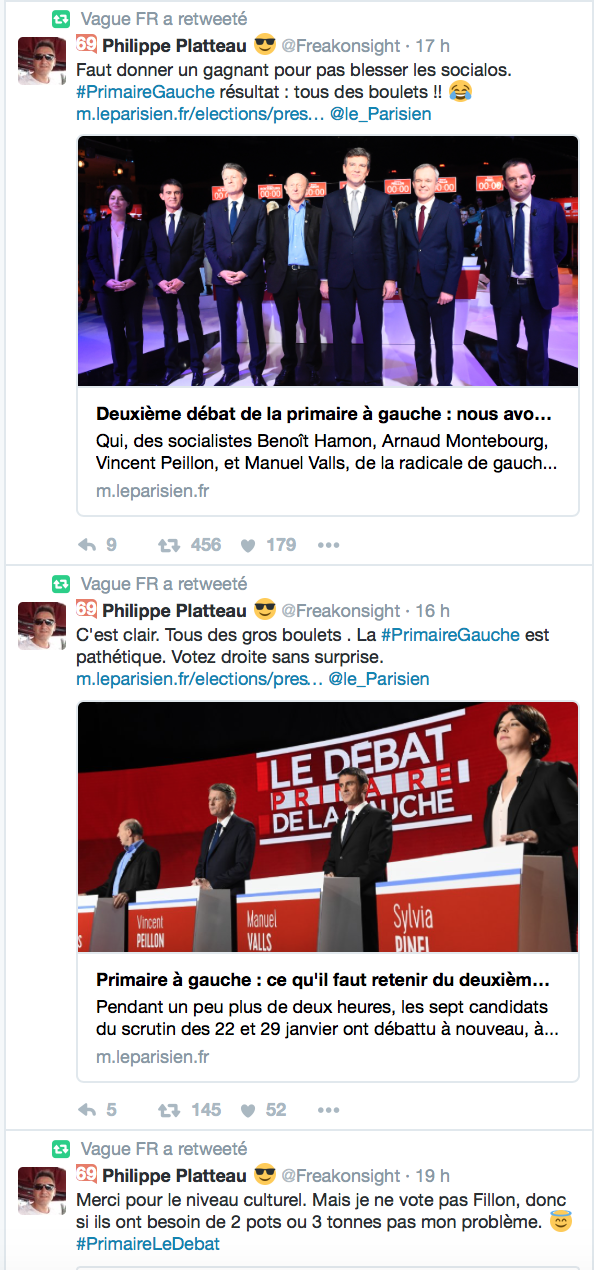
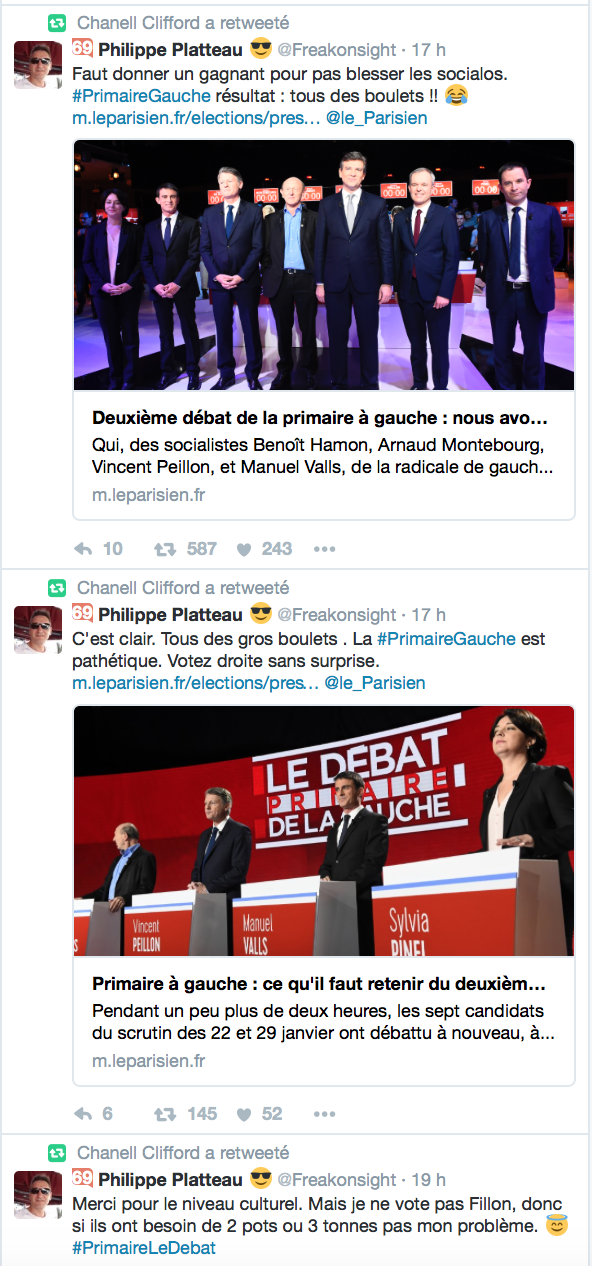
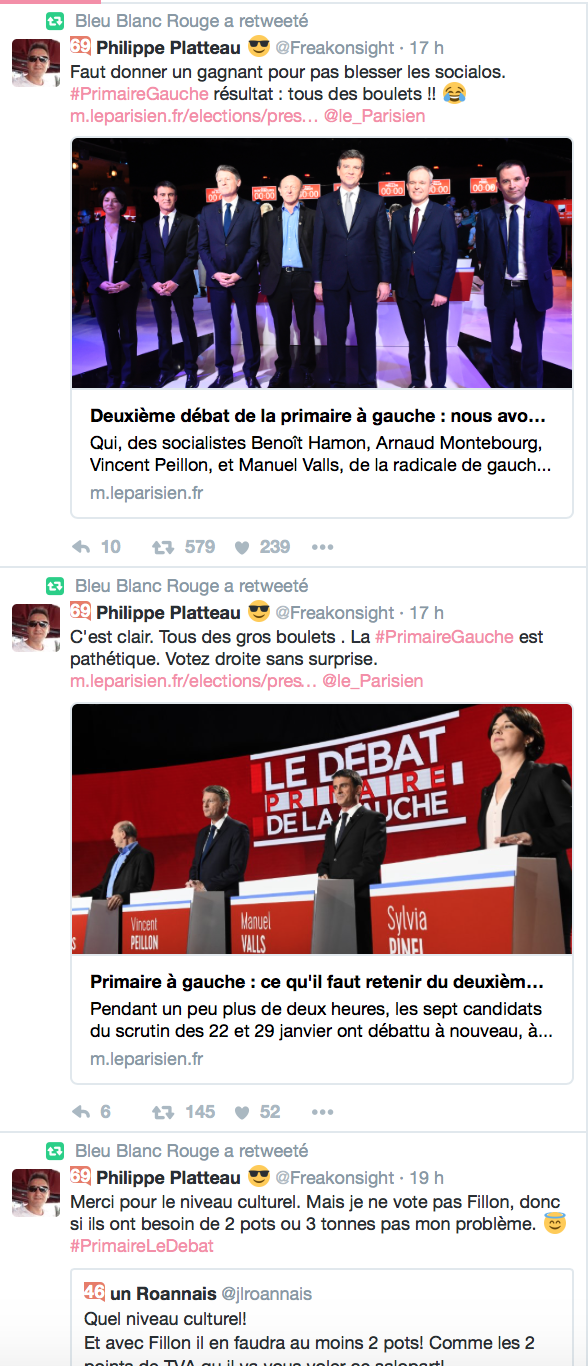
Putting his tweets on the Primary together, the set-up is plainly visible:
Looking at the people who retweeted the various tweets, it is clear they are bots or real accounts paid for by resale platforms:
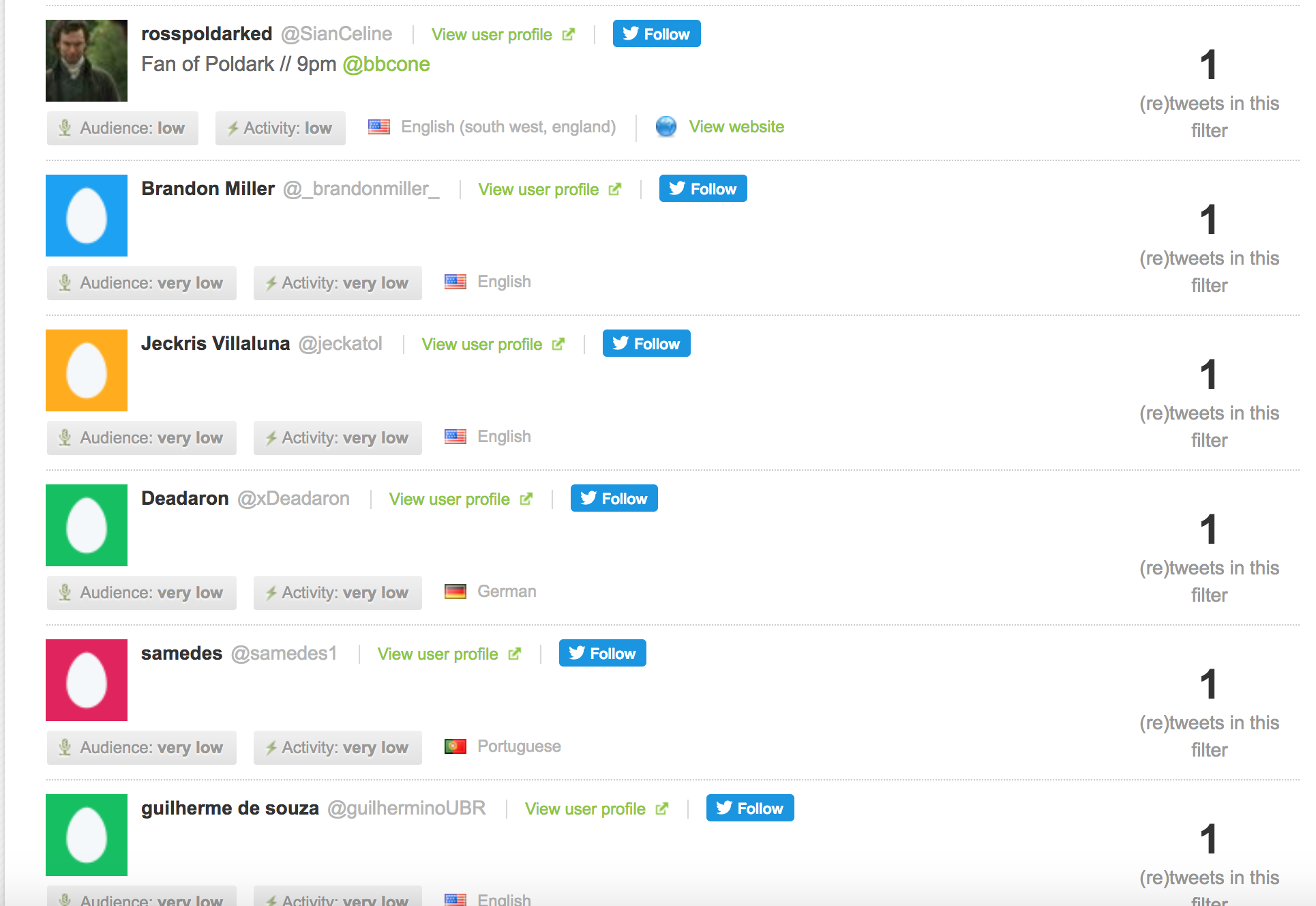
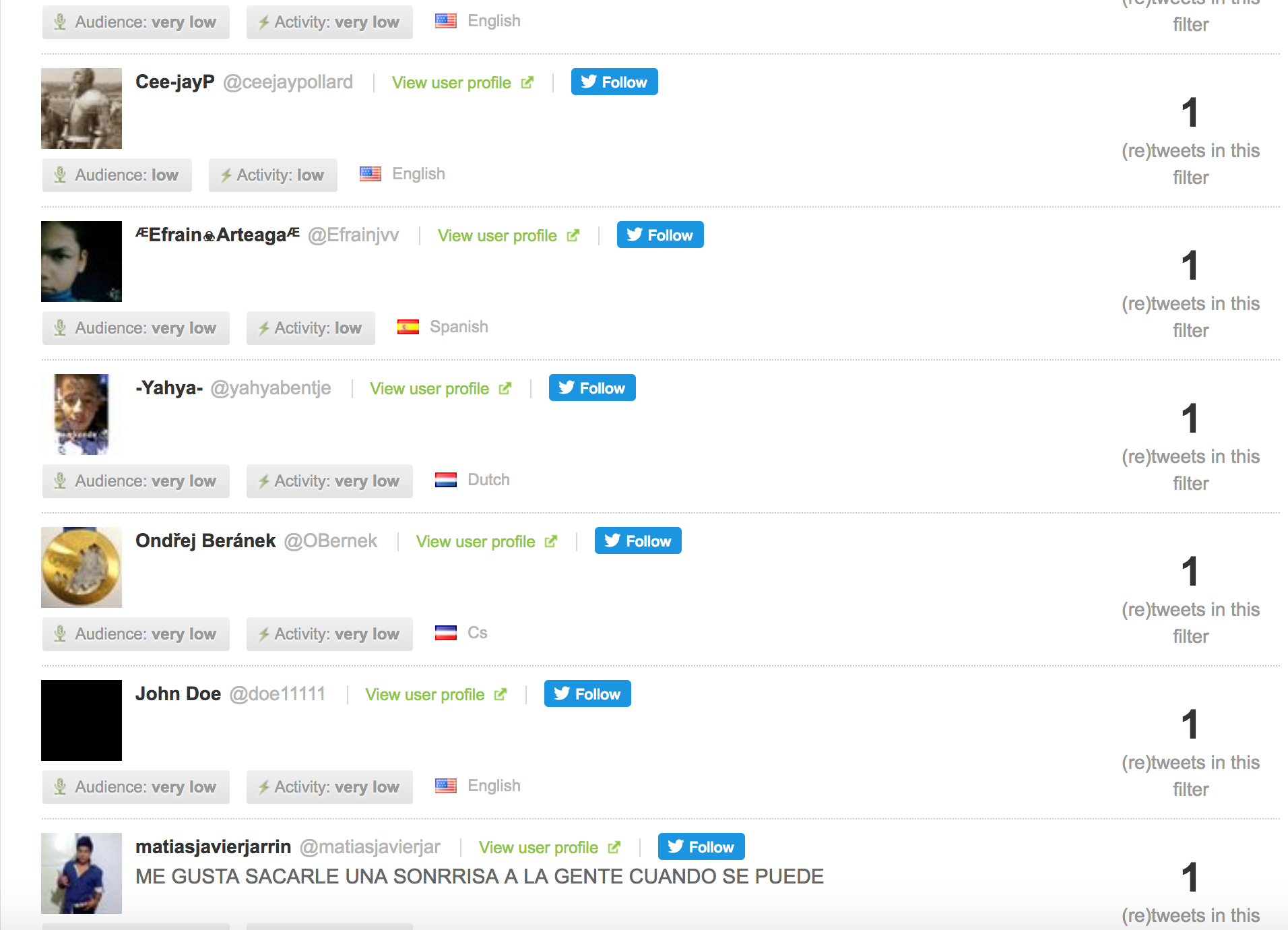
Alongside these accounts, which are clearly bought accounts, we also find this kind of account:


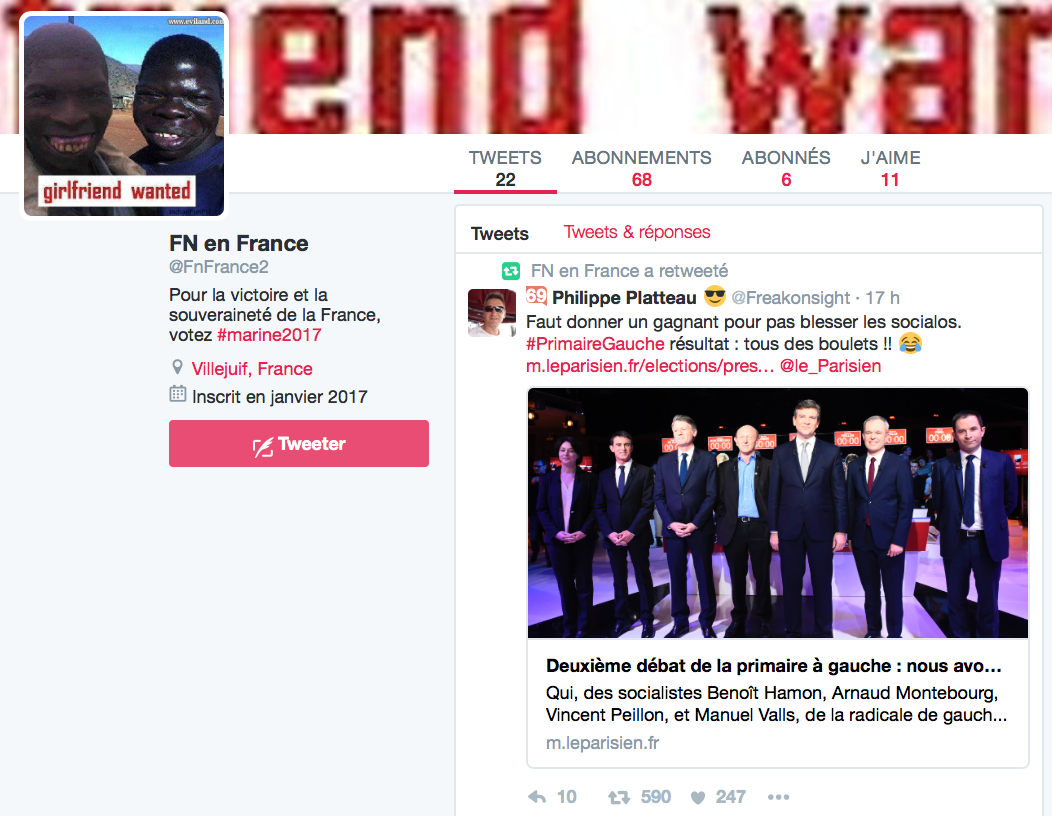
I estimate the number of different accounts praising Trump, the FN and so on at no fewer than 135 accounts!
How?
- For the qualitative side, through his 135 accounts, he uses a technique I have already debunked here: “How does a young troll reach the trending topics?” namely the use of multiple accounts and a TweetDeck that sends the same tweet/retweet through all the accounts. The technique is the same. They all tweet at the same second from TweetDeck.
- For quantitative volume, he bought his followers and retweets from follower/RT farms. However, the price of this kind of service has become quite high:
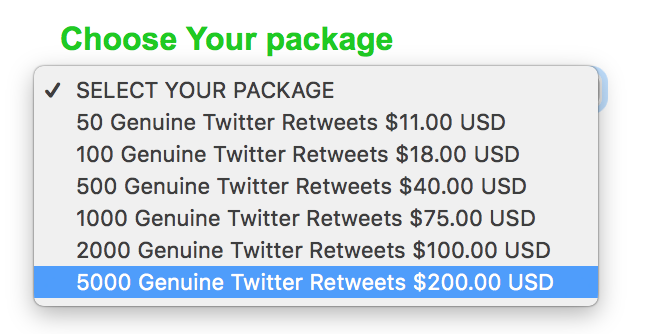
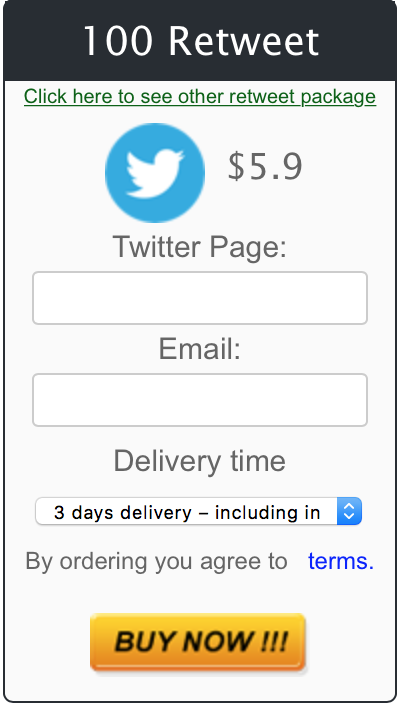
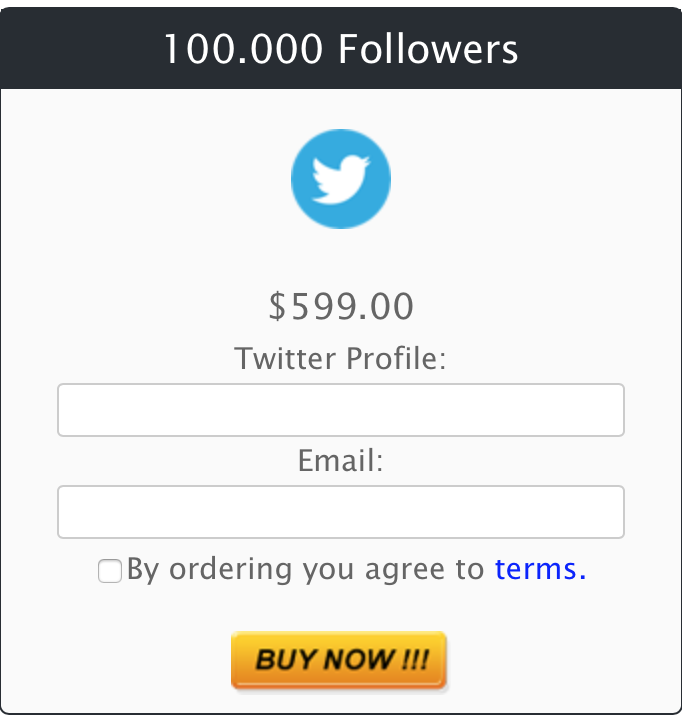
He must therefore have spent between 1,000 and 2,000 euros this month alone.
Why?
- When you look at a hashtag through the Twitter app, the tweets shown are increasingly filtered so as not to flood us with messages. Mainly tweets from accounts with a certain authority appear (number of followers/verified accounts). This makes it possible to be more visible.
- This creates an illusion of majority, a principle used in the theory of the “bandwagon effect”, that is, the tendency to follow a majority.
- At a time when many studies of social media are being published, this makes it possible to strongly skew dashboards such as word clouds and the like.
- TweetDeck accounts can get an item into the trending topics, as I showed with the young troll.
In any case, it proves that influence through the web is a genuine concern.