Not long ago I retraced the crowd panic in Juan-les-Pins through the lens of Twitter. On 6 January we had another crowd panic, in Brussels. It is a chance to look at the similarities and differences between the two phenomena, bearing in mind that the Belgian public is not as “Twittoliky” as the French public.
I. The story
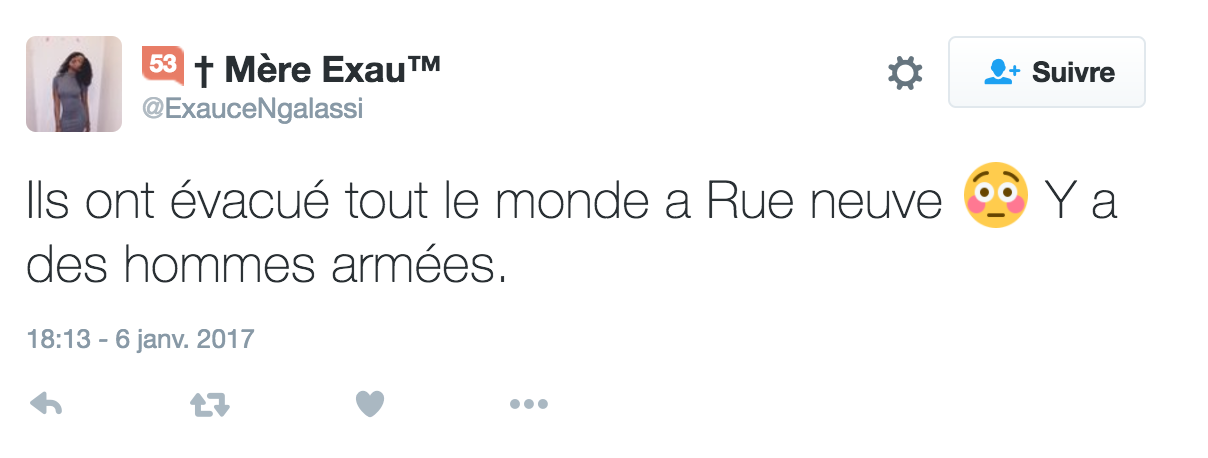
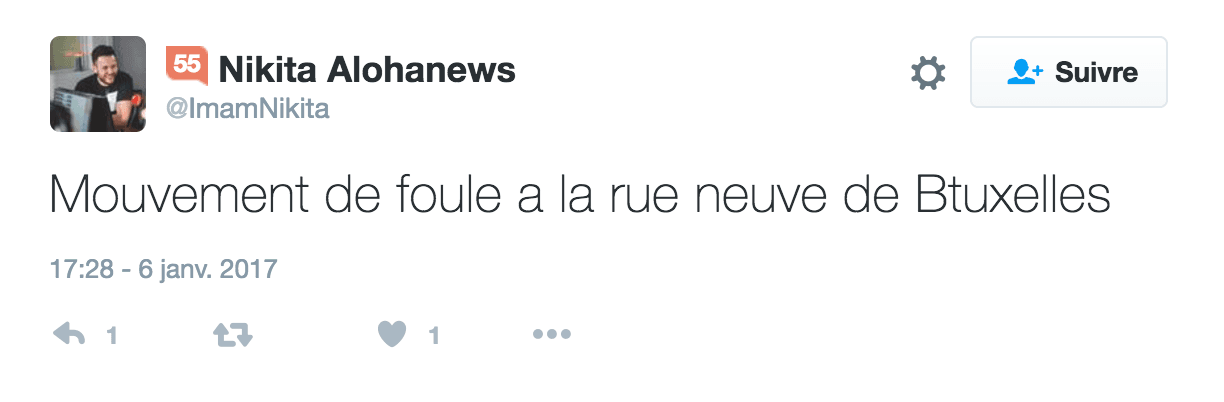
The first tweet about the crowd panic is from a Brussels journalist announcing only a crowd panic (unlike Juan-les-Pins, where an attack was being announced):
The second tweet also comes from a journalist, who talks of panic:
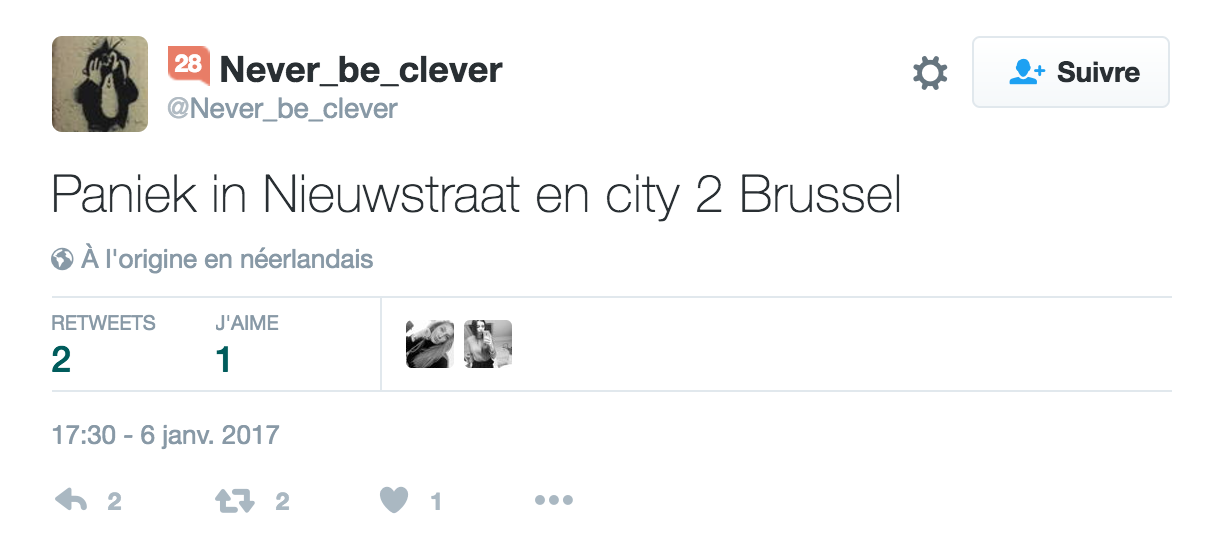
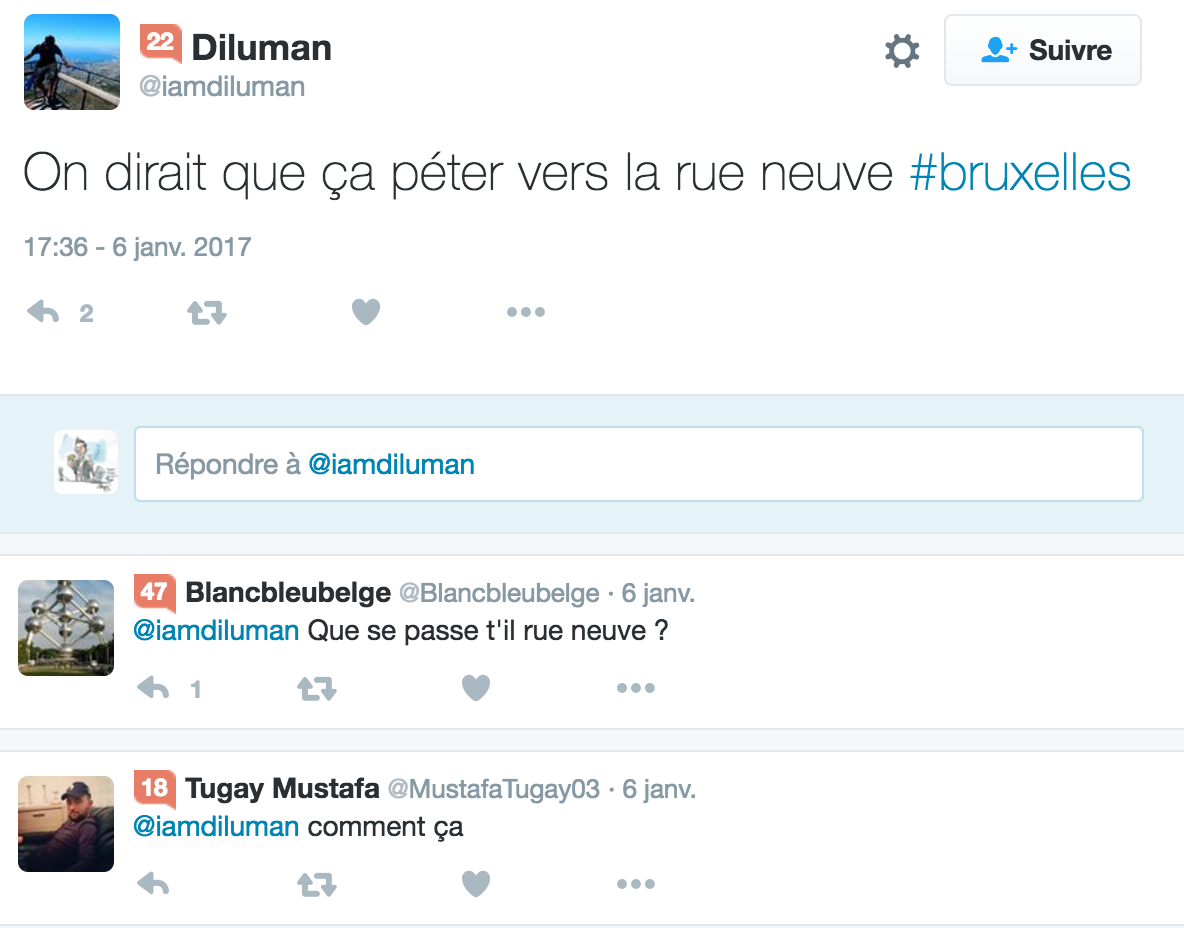
Questions follow immediately:
Any info on Rue Neuve?
- Gauthier Basse (@wwwaltlowww) January 6, 2017
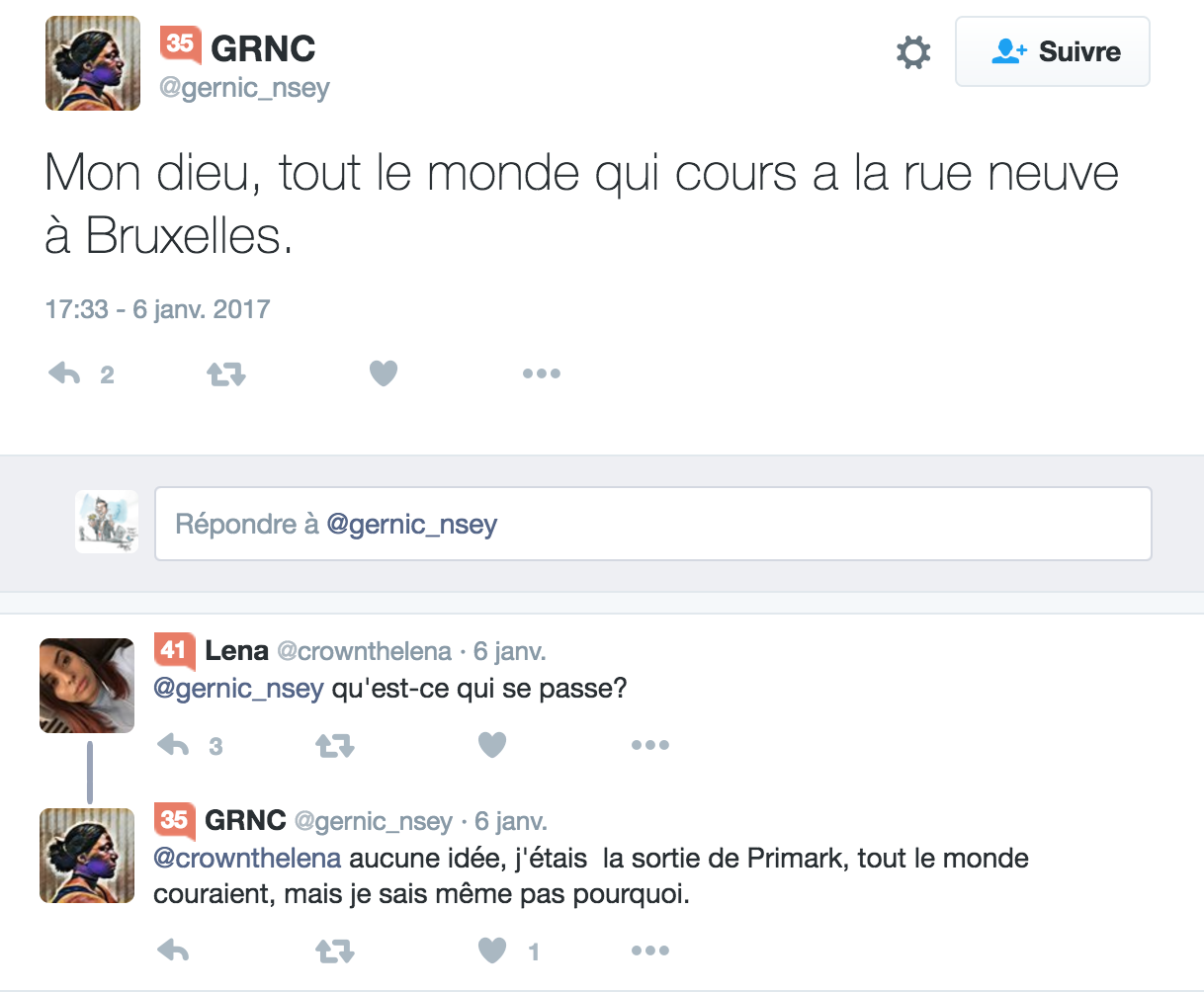
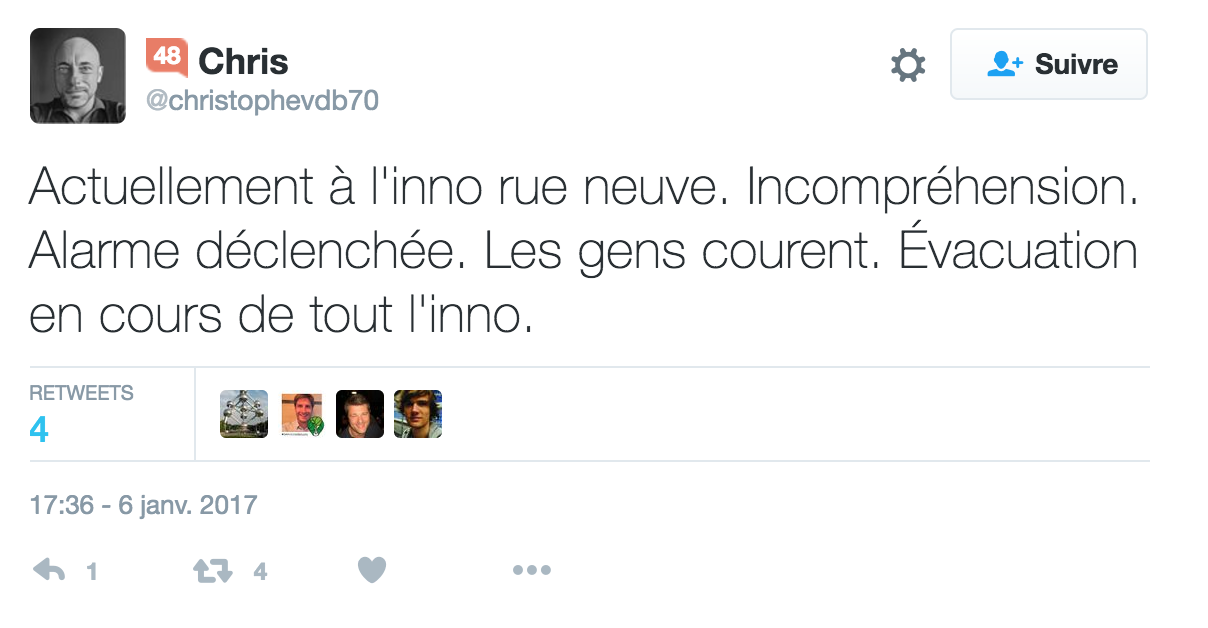
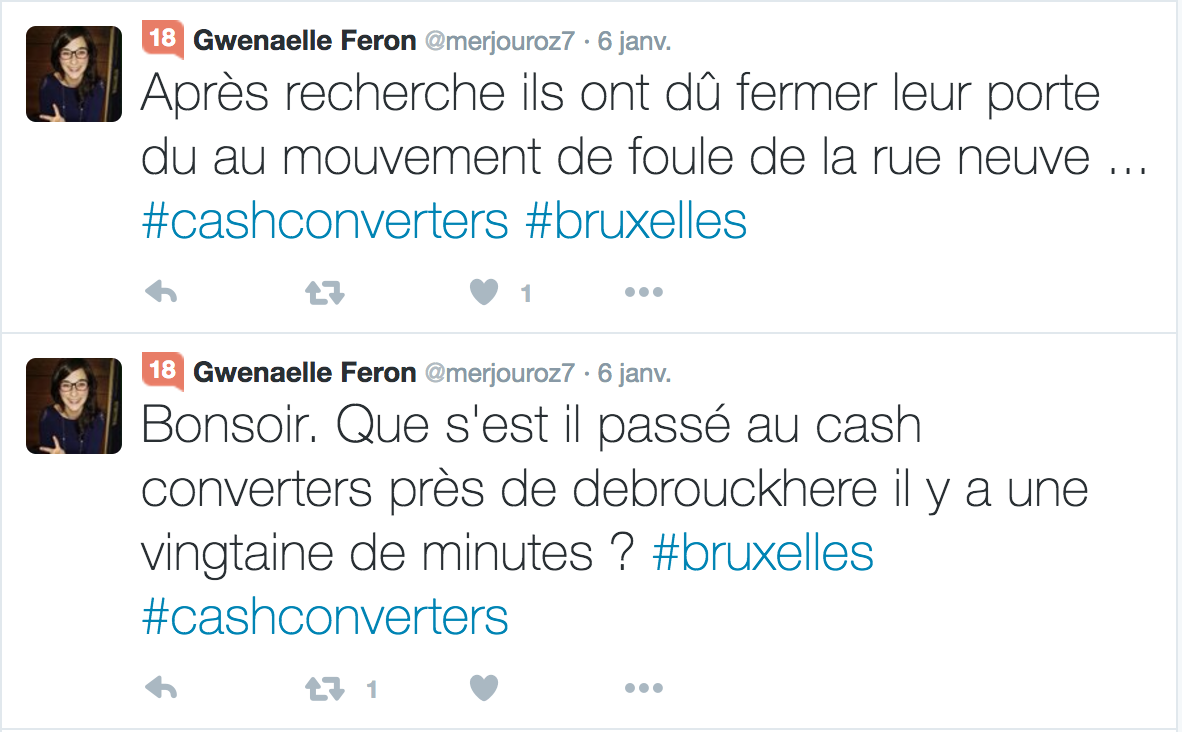
The passers-by's bewilderment takes the form of tweets:
https://twitter.com/LudoBazuyn/status/817408926539018241
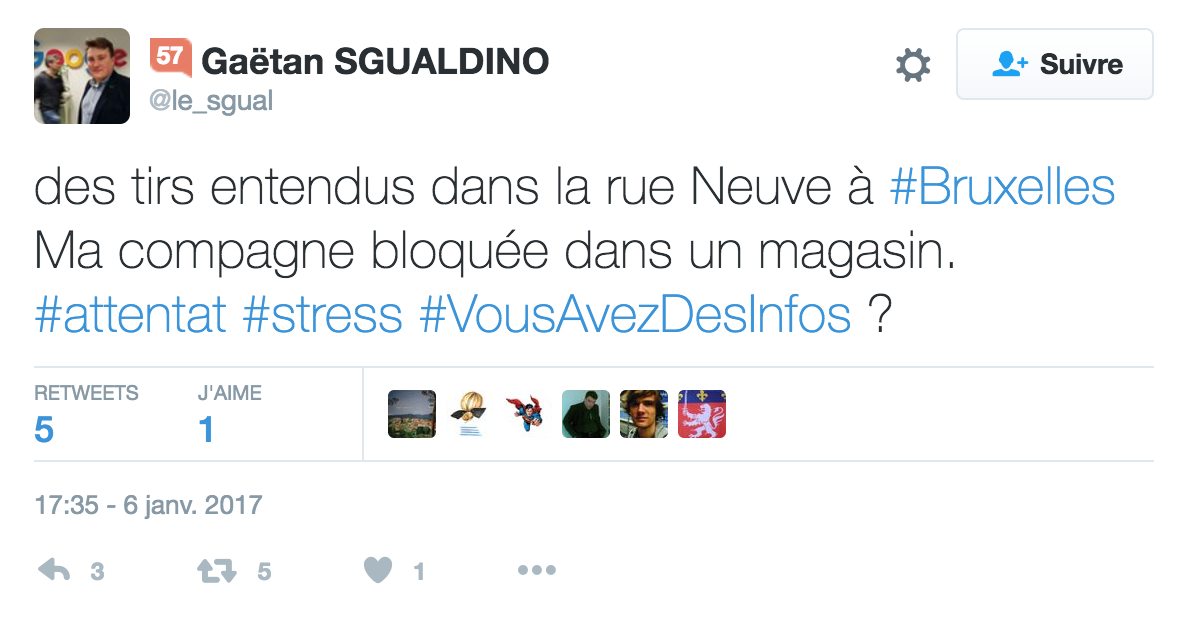
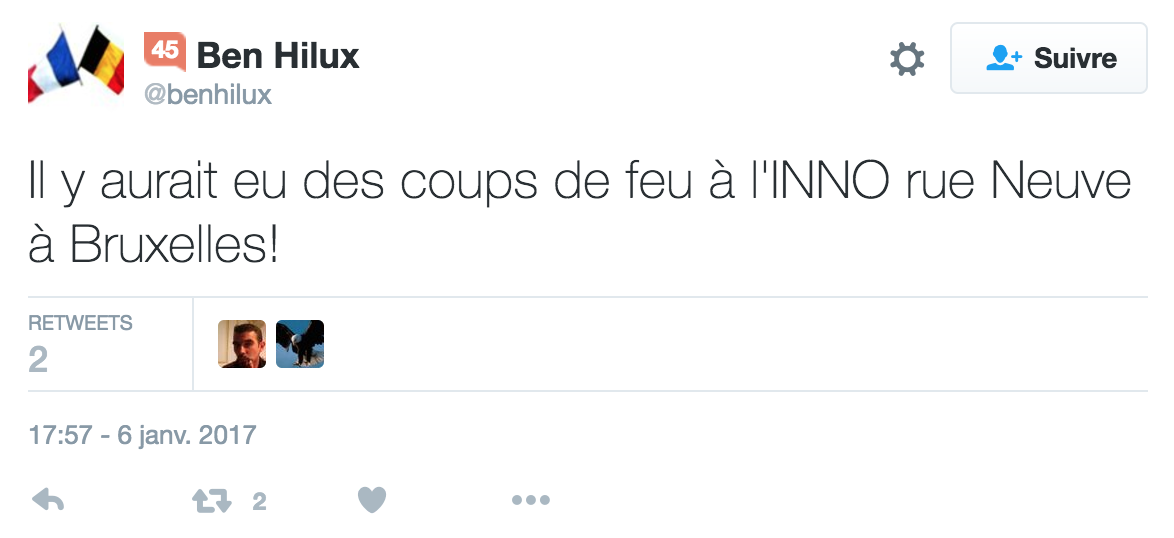
Then comes a first attempt to identify the origin of the crowd panic:
Quickly, this raises questions:
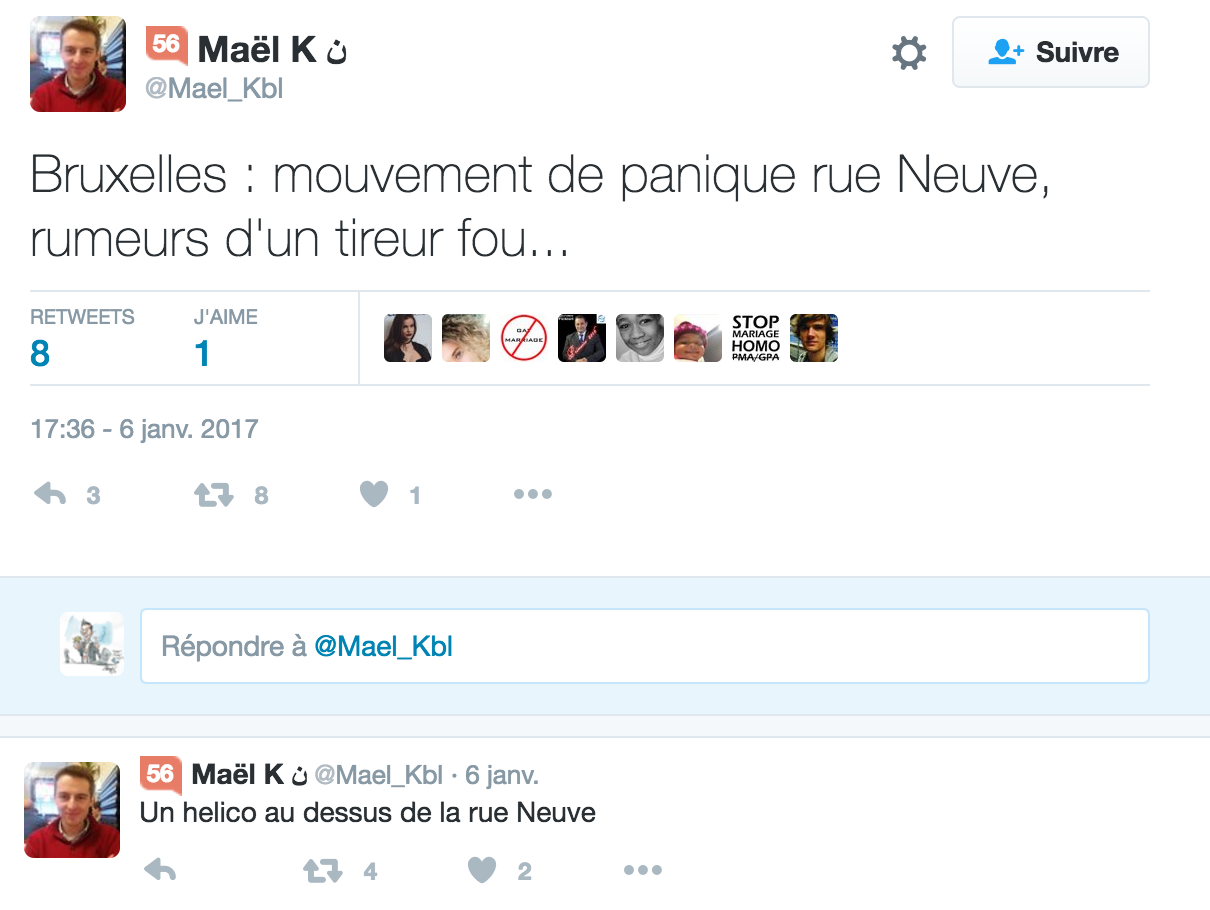
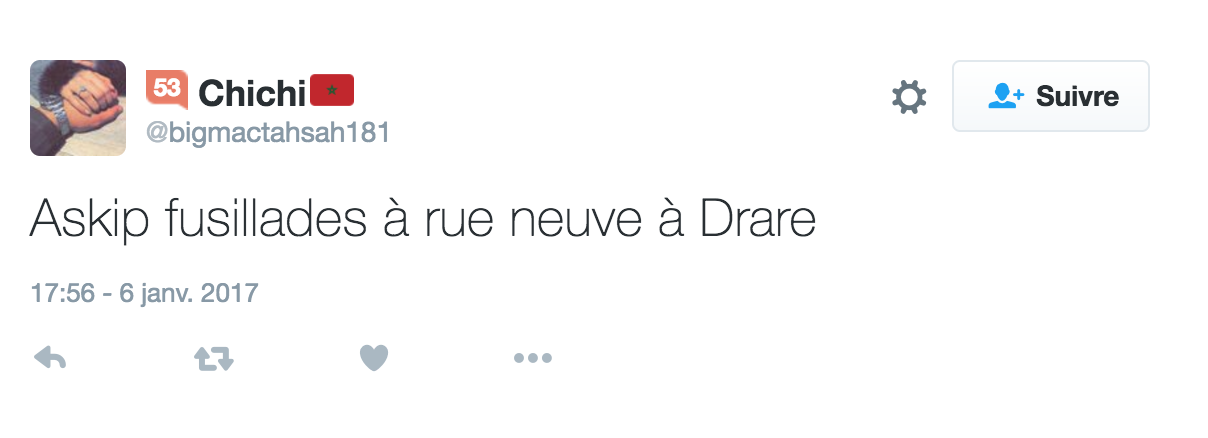
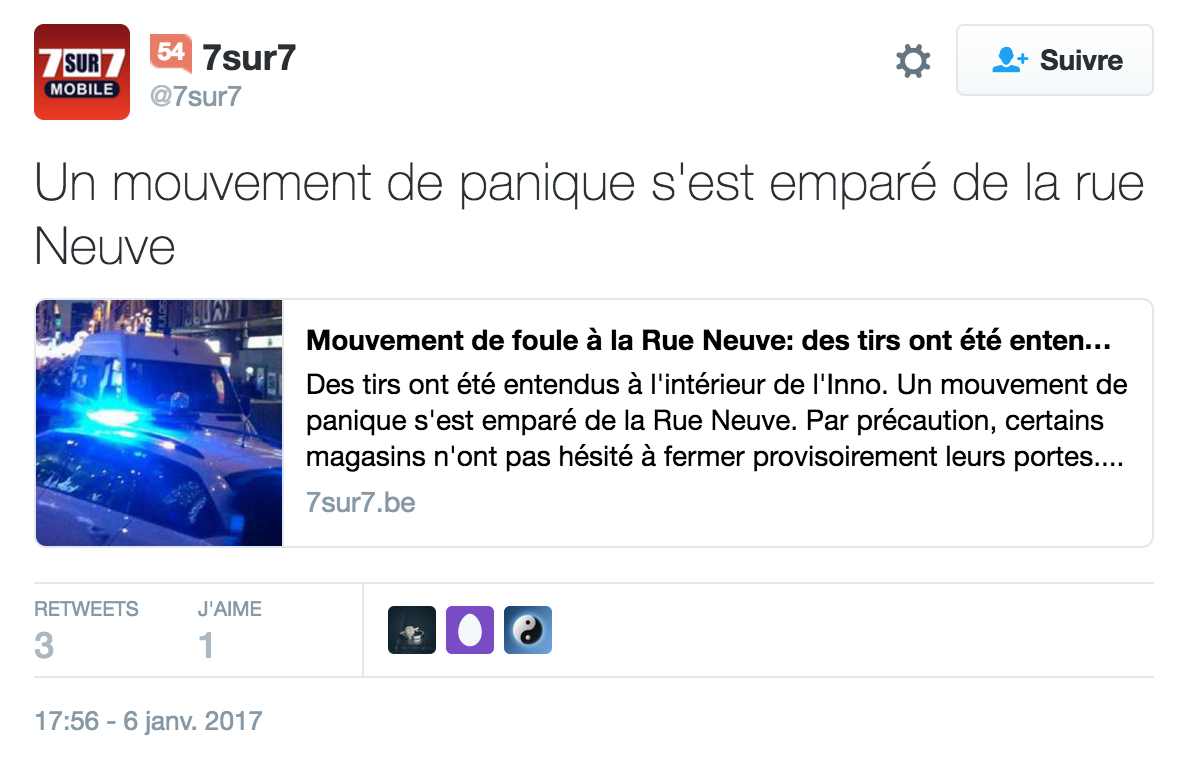
And a scenario can be built, talking of a “mad gunman”, confirmed by outside elements (a helicopter present at the scene):
https://twitter.com/Mael_Kbl/status/817411508489637888
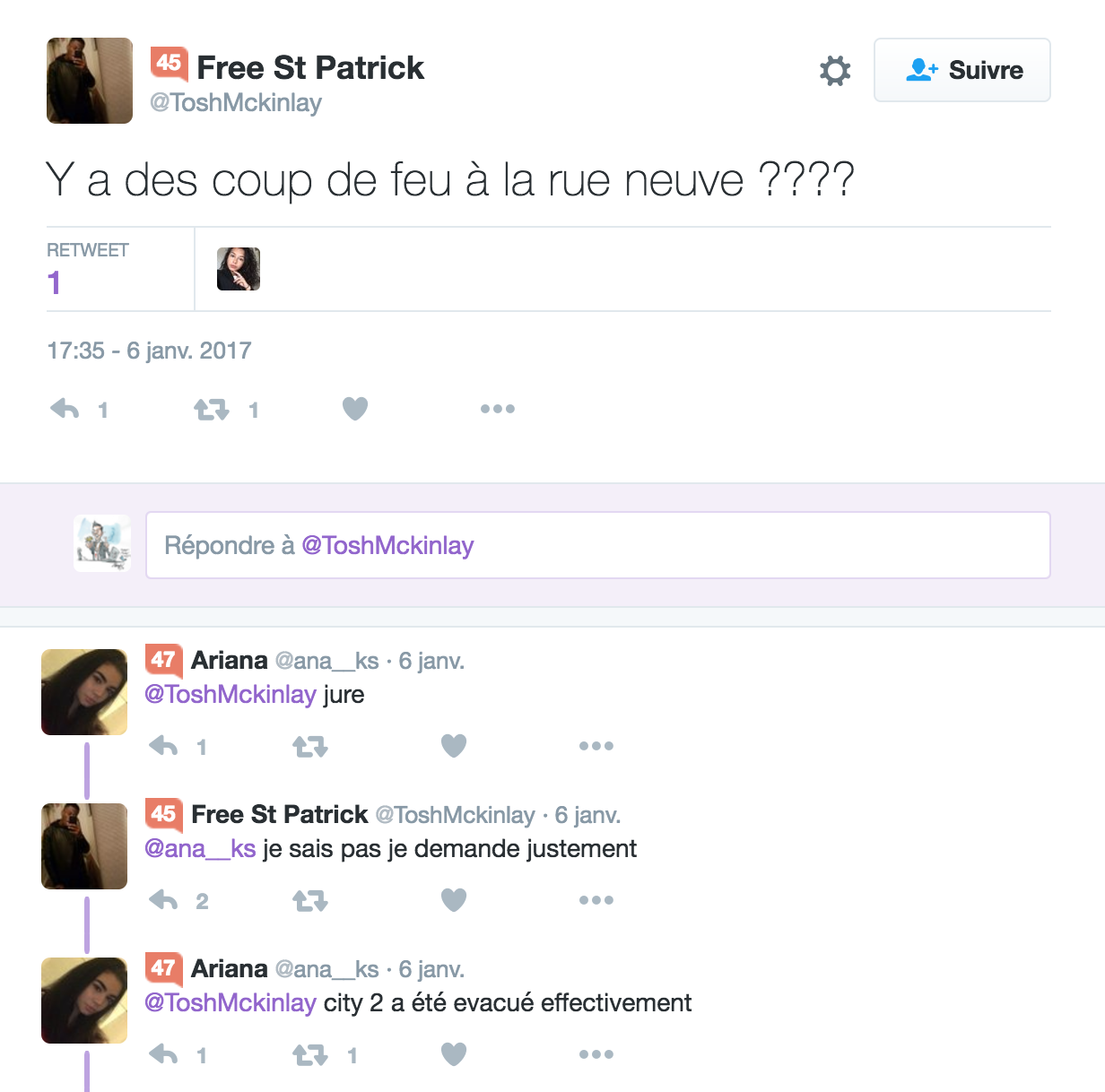
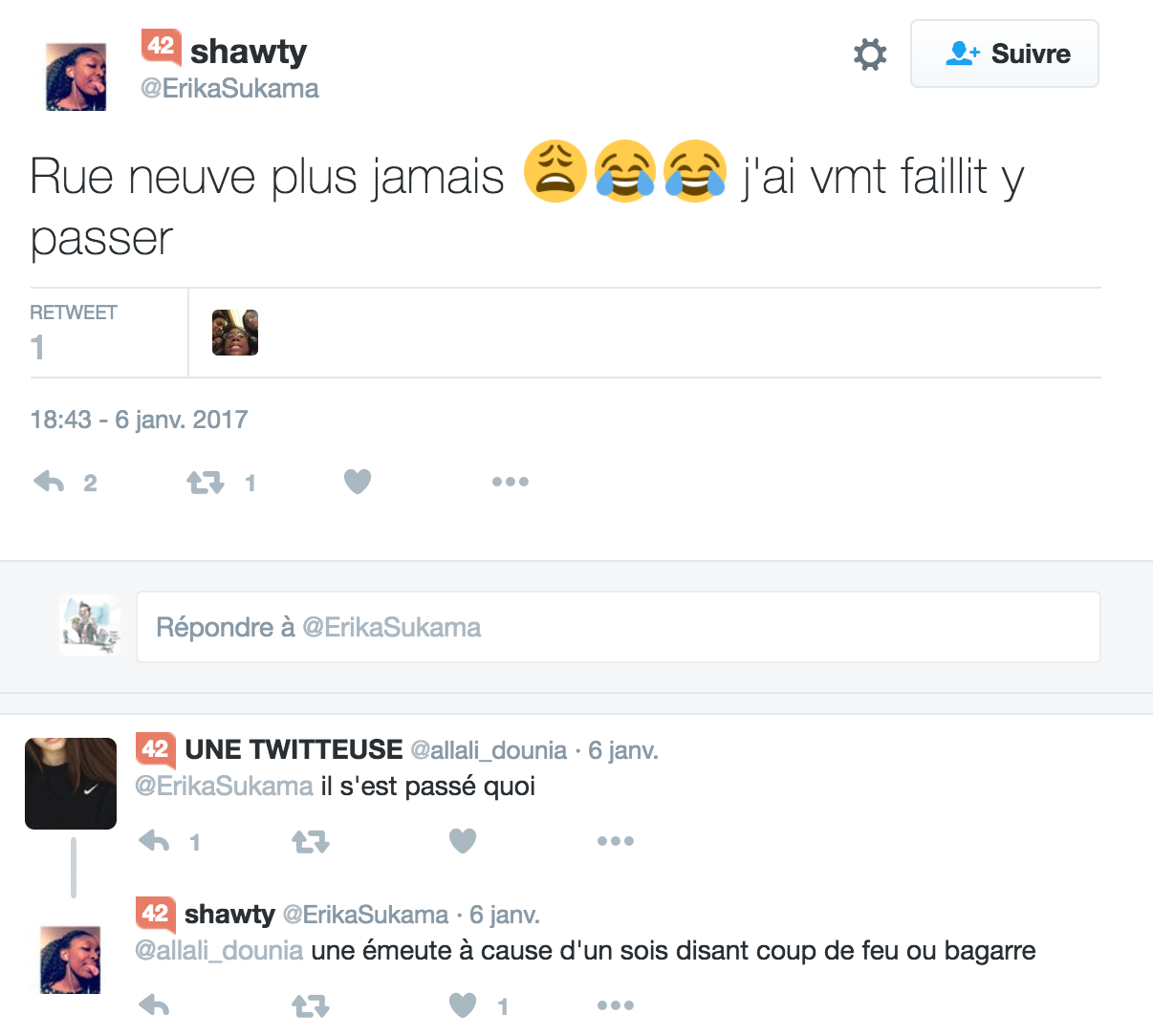
People who are not at the scene then chip in:
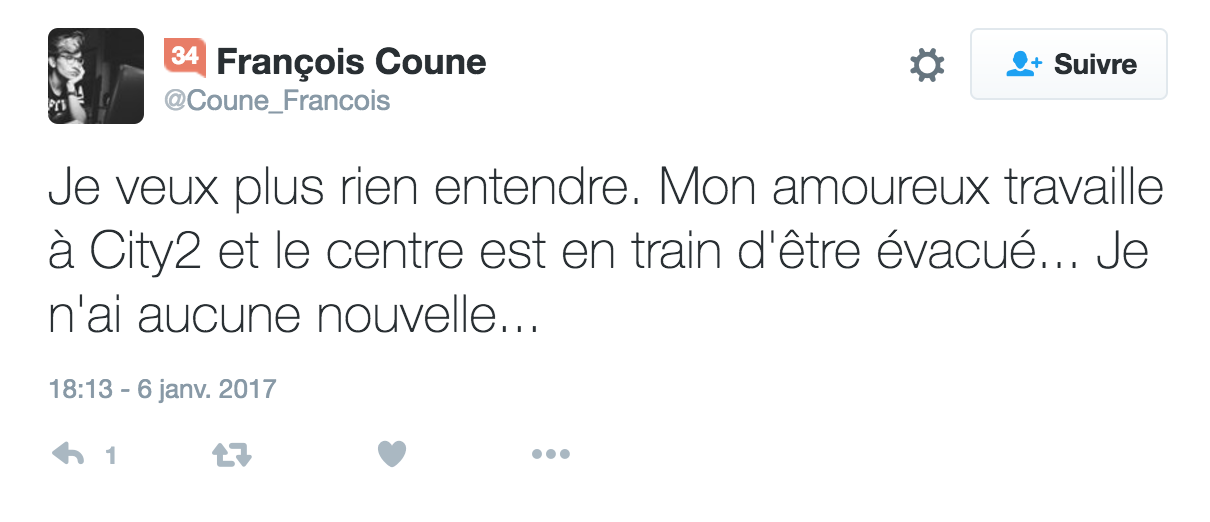
City 2 is then evacuated:
Inno Brussel ontruimd. Totale paniek Nieuwstraat #brussel
- Kathleen Bertrem (@BertremKathleen) January 6, 2017
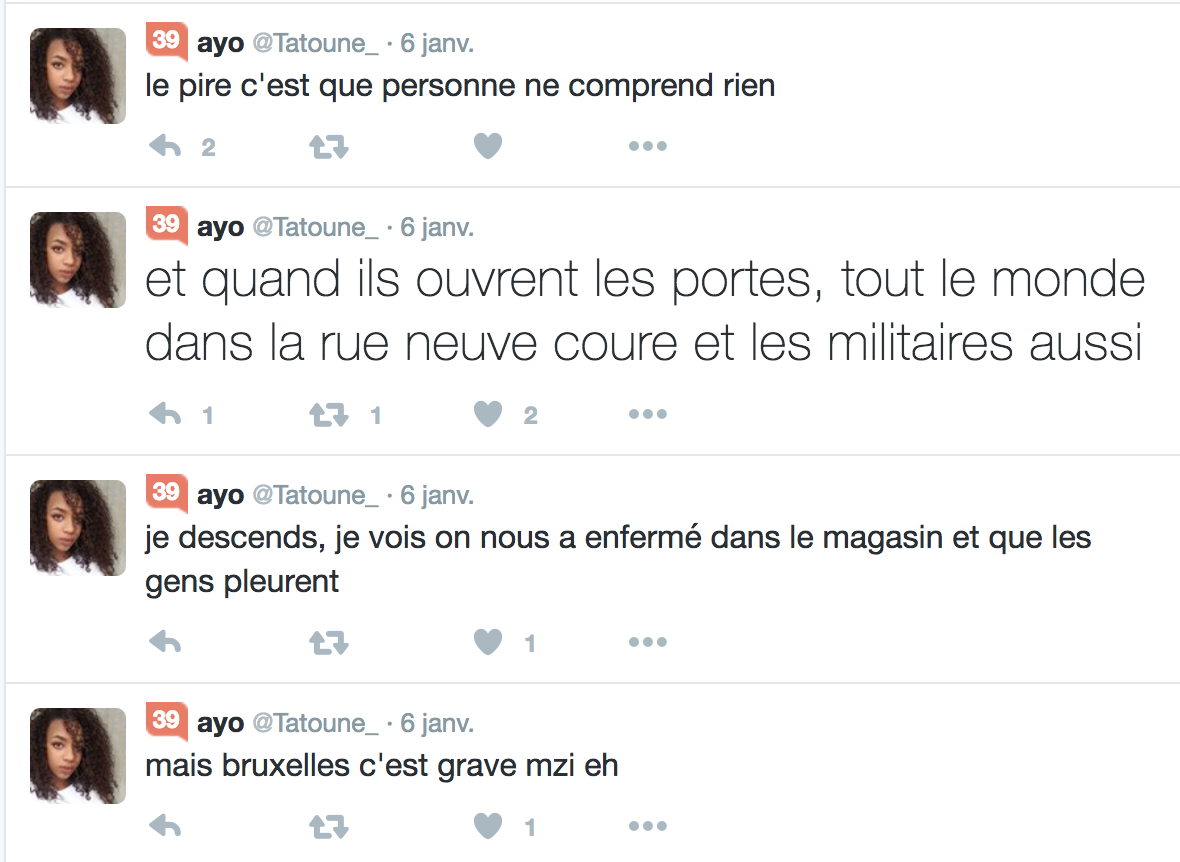
Bewilderment is total:
https://twitter.com/xureIie/status/817410305072529408
The first warnings are issued:
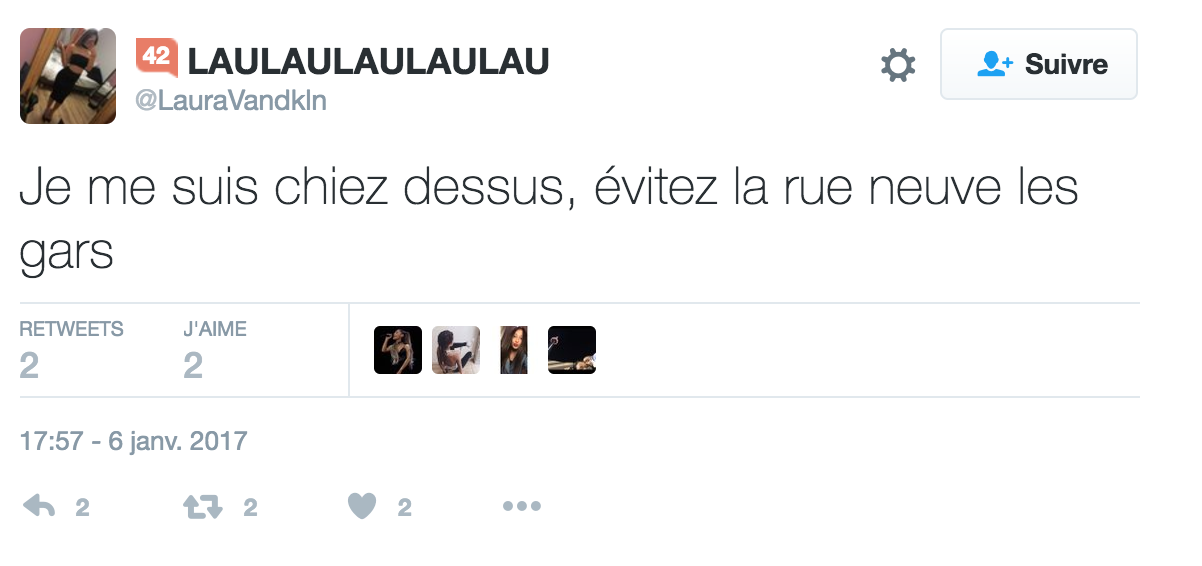
Avoid Rue Neuve
- David Courier (@david_courier) January 6, 2017
Avoid Rue Neuve near City 2
- David Courier (@david_courier) January 6, 2017
The first media outlet is alerted:
Crowd panic on Rue Neuve in Brussels: City 2 evacuated https://t.co/OV2JYyOo3a
- RTL info (@rtlinfo) January 6, 2017
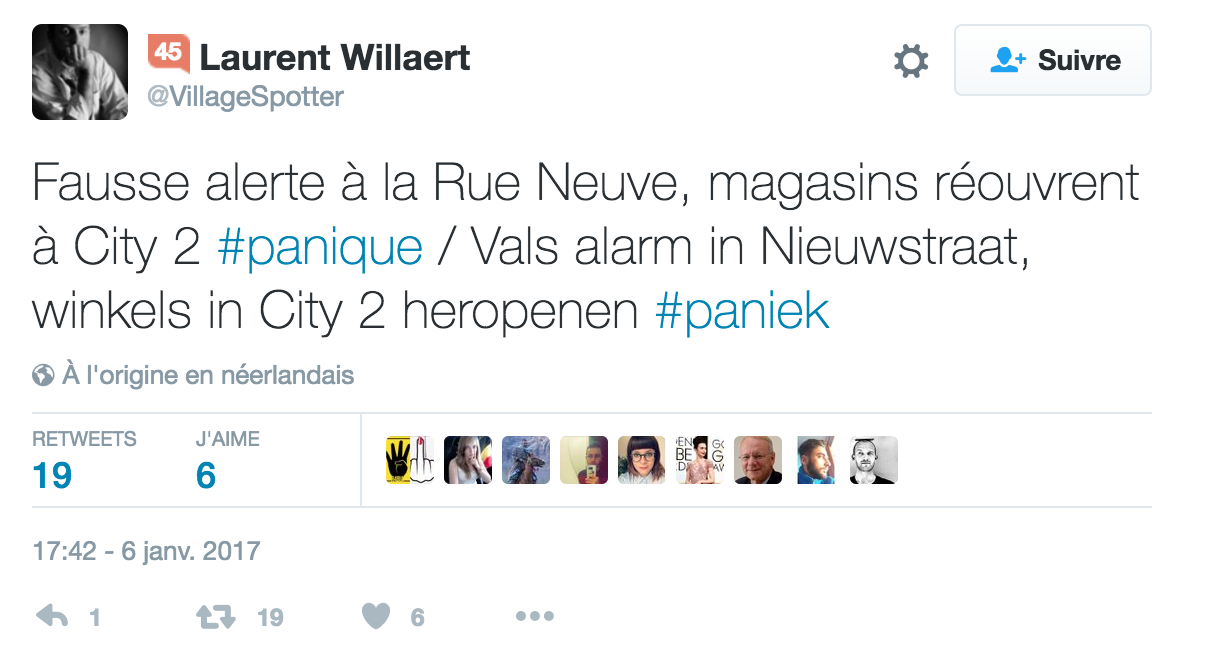
And finally, the denial comes:
However, this does not yet reach all networks:
https://twitter.com/VinceBillz/status/817411532942442498
#Urgent: The #City2 shopping centre evacuated as an emergency #Brussels #Belgium
- Jeffrey Natchez (@Jeffrey_Natchez) January 6, 2017
Others have no idea what happened:
Le Soir is then the first outlet to give the full picture:
Info @lesoir: the arrest of a young man is at the origin of a panic on Rue Neuve. https://t.co/gWxSvDqIAX
- Le Soir (@lesoir) January 6, 2017
Then comes the time for comments and for people wondering what is going on:
https://twitter.com/AtgEiko/status/817413262564360192
https://twitter.com/LudovicVoet/status/817414037638152196
Panic on Rue Neuve... I was told about a shooting but apparently it's just a brawl...
- Radoslav Šoth (@radosoth) January 6, 2017
Then guided us to the emergency exit of her shop. Heard lots of sirens in the street, saw a mil[itary] vehicle
- Fanny Coppens (@FannyCoppens) January 6, 2017
Nor does it stop the rumours:
Including for articles mentioning gunfire even though the rumour had been denied:
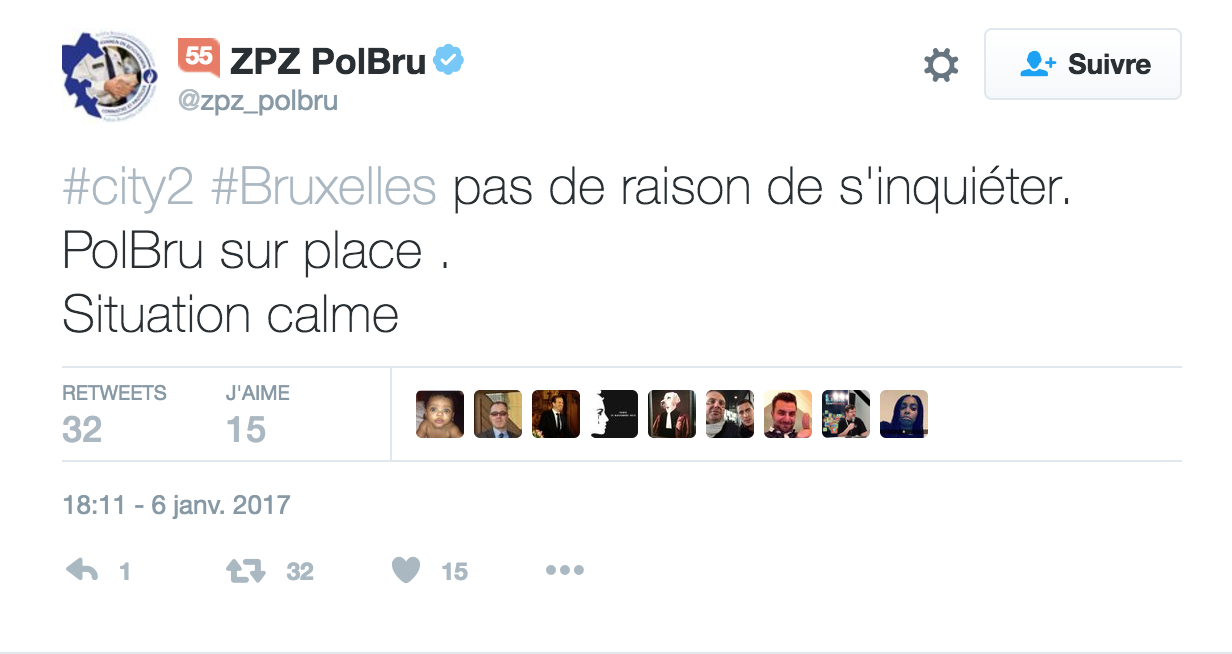
The authorities also communicated:
But here again, this will not calm everyone or end the rumours:
Finally, a medical unit was set up, and the tweets are now almost all from media outlets denying the rumour.
II. Analysis
- Analysis of rumour versus denial
I categorised all the tweets into 4 main types:
- Rumour
- Denial
- Comments
- Questions
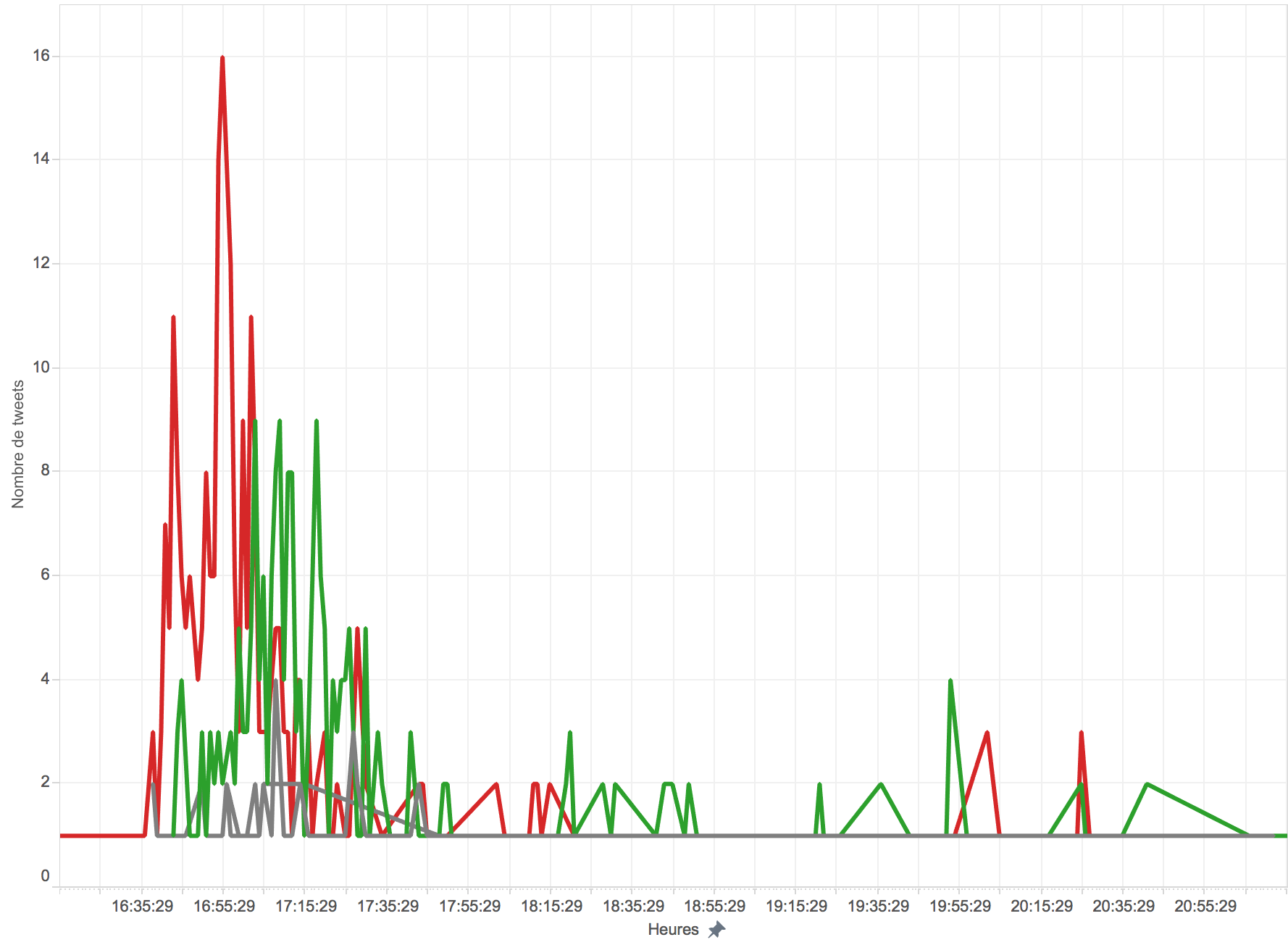
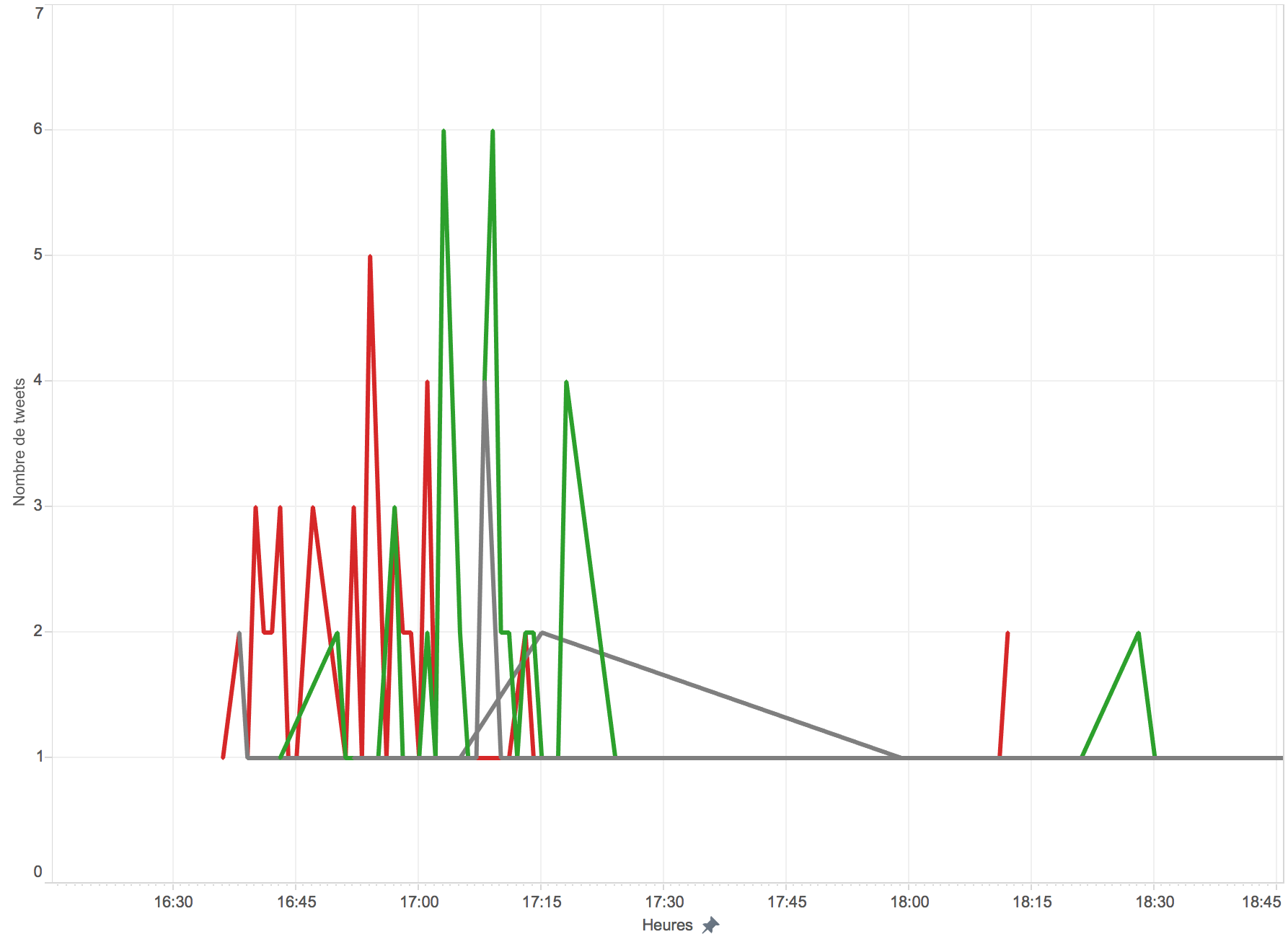
I then plotted the curve of rumour against denial:
The denial of the rumour comes fairly early (an hour must be added for actual times), but it takes more than 1 hour 45 minutes to defeat the rumour. And traces of the rumour still surface afterwards in the form of retweets. If we remove retweets from the equation, the rumour is defeated much more quickly (30 minutes). Note also that the curve of questions still largely follows that of the denial, a sign that despite the denials, some people remain in doubt and are waiting for answers.
This shows authorities and media that it is not enough simply to deny a rumour. They must also monitor and respond to people who are asking questions.
2. SNA analysis
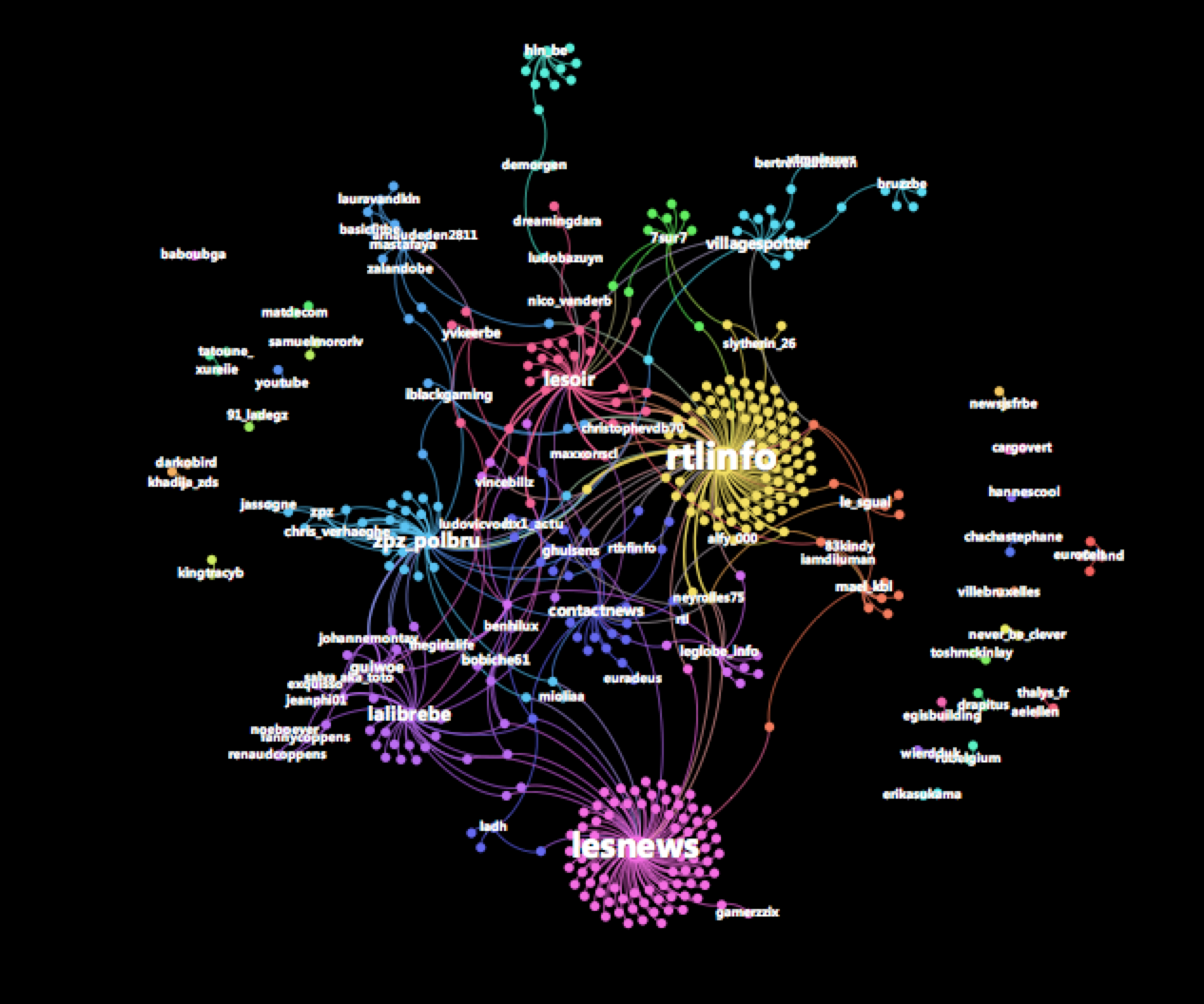
It was of course the media and authorities that were relayed the most:
Problem: many media outlets relayed the crowd panic without giving the explanation. (Unlike Le Soir.)
III. Conclusion
We can draw on elements from the analysis of the Juan-les-Pins crowd panic: