



Communications directors are increasingly exposing themselves on social media and, as a result, becoming ambassadors for their employers. That is why Saper Vedere set out to analyse the media presence of communications directors on Twitter.
- How does a communications director tweet?
- What is their audience?
- Who interacts with them?
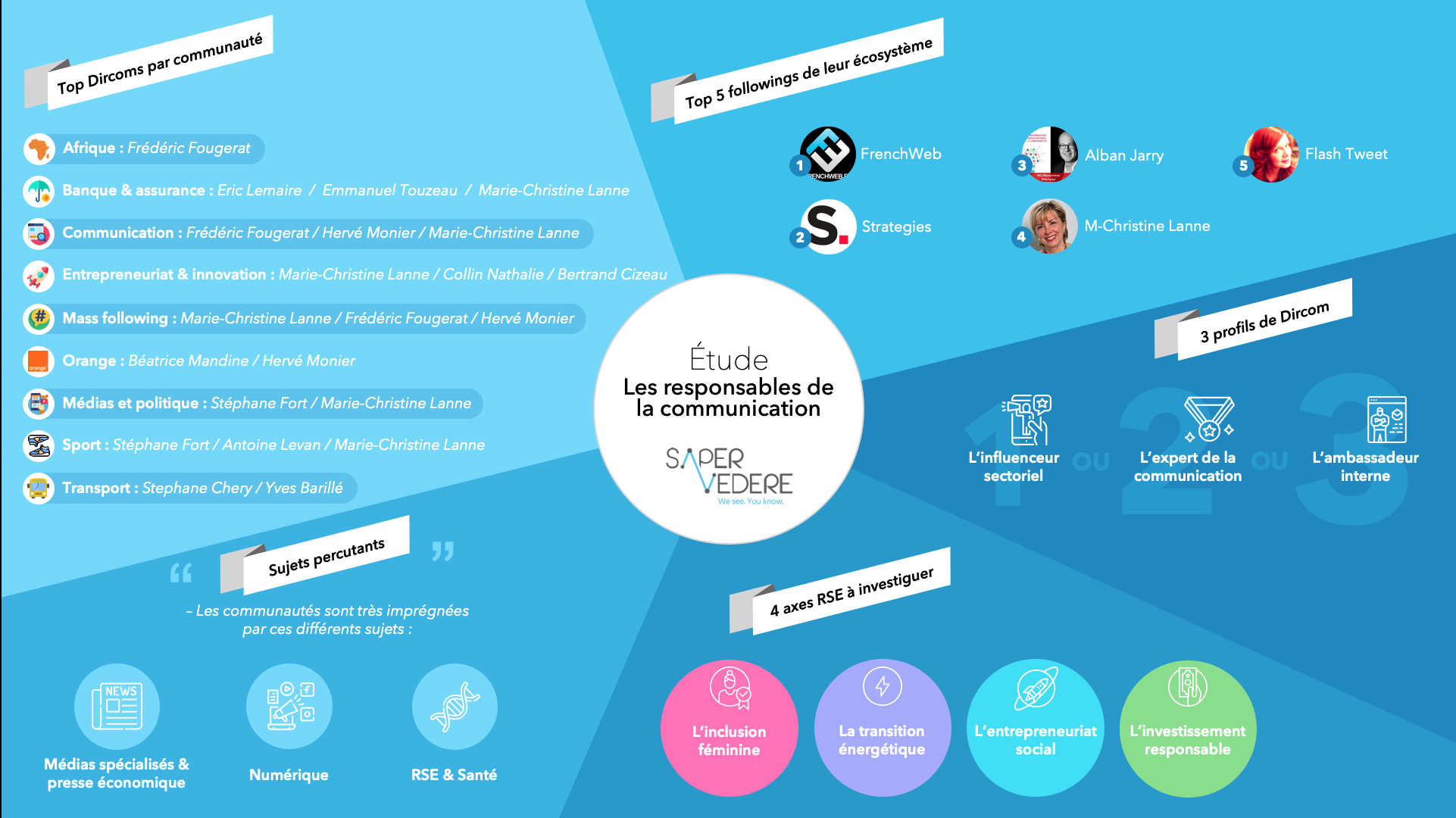
Key findings
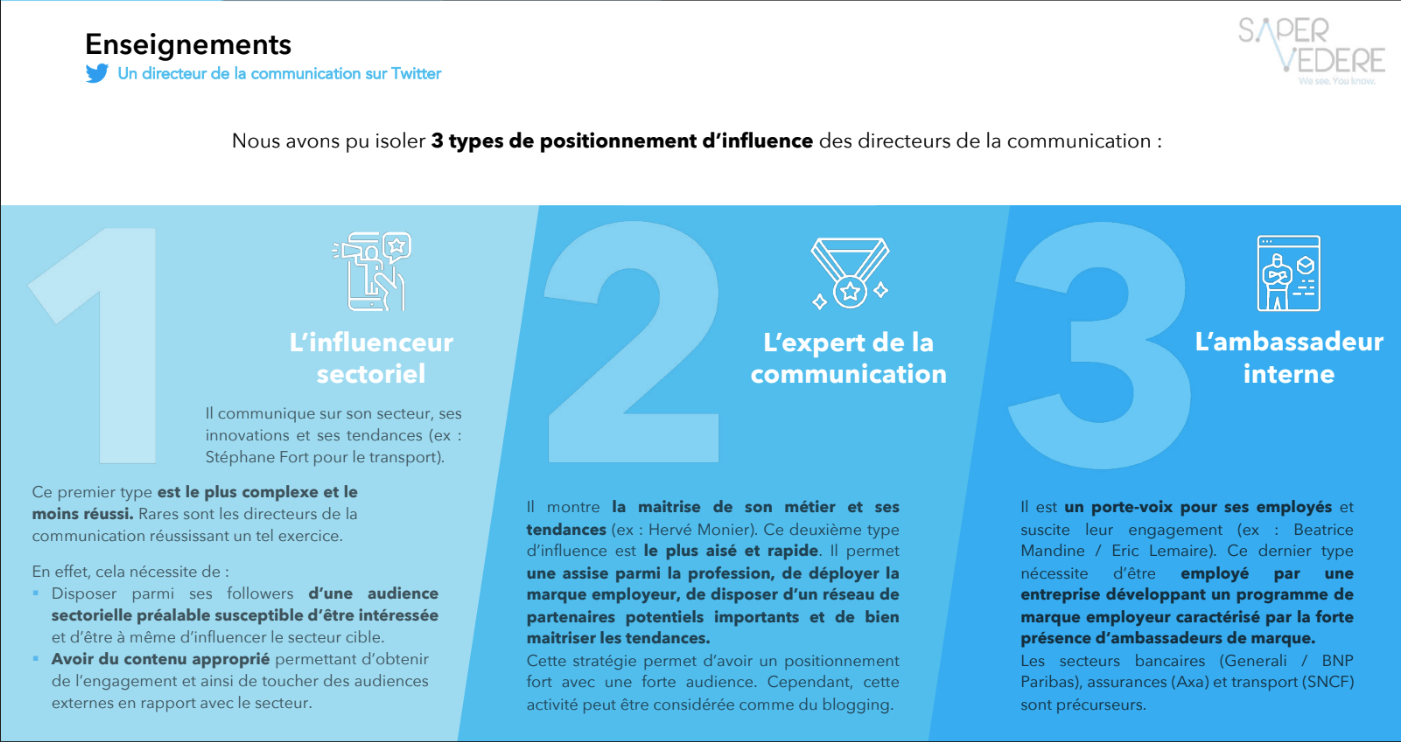
Three types of communications director
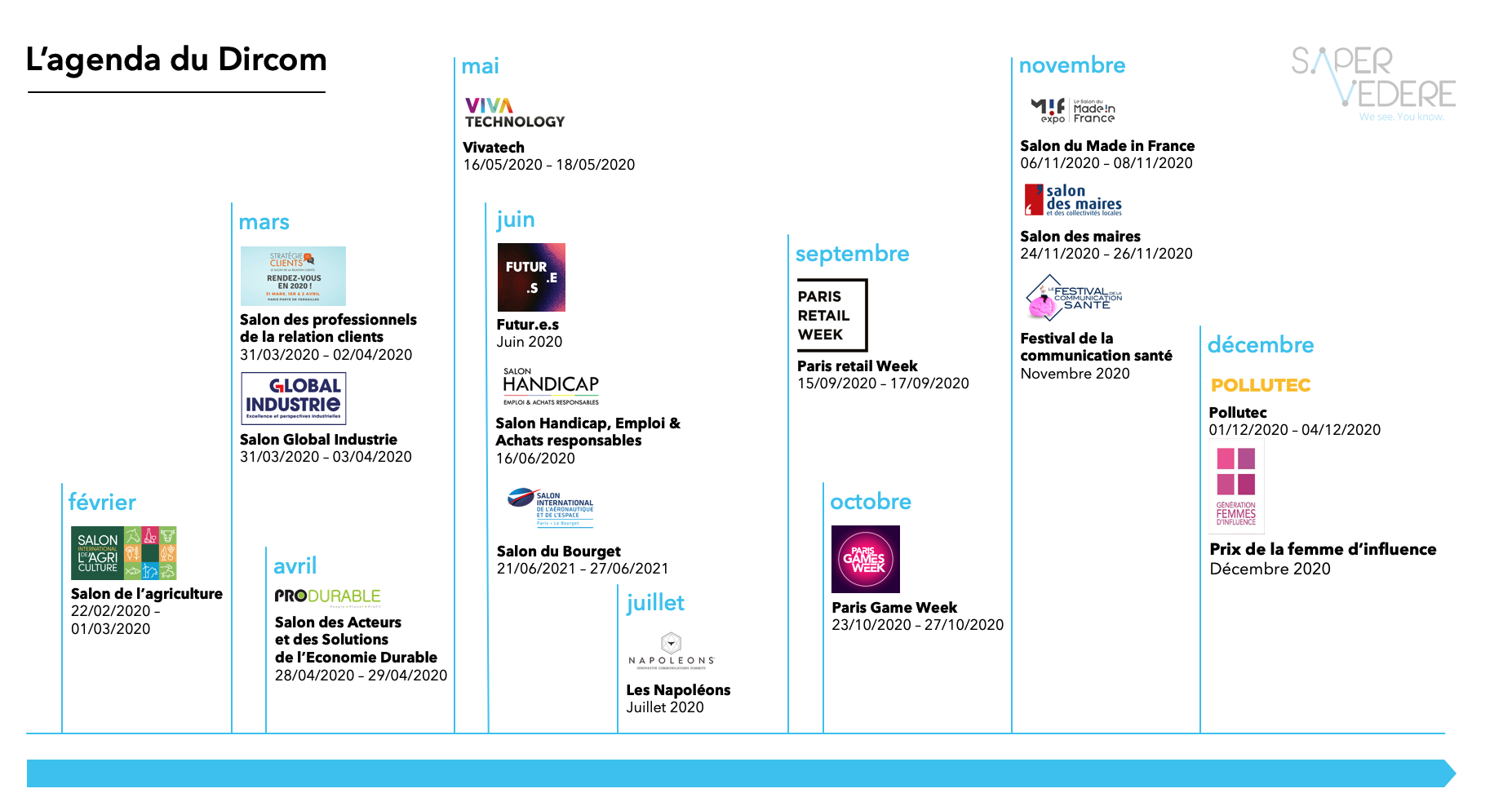
The communications director's agenda
Specialist and business media
Analysis of the media followed by communications directors brings out information sources specialising in communications (We are Com, Stratégies, CB News) and business media. Les Echos is the most-followed outlet, while Aziliz de Veyrinas of La Tribune is the first journalist followed by communications managers.
Heavy use of the mass-following technique
A large proportion of people who practise mass following (i.e. following a large number of people in order to be followed back) gravitate around communications directors. This finding is highlighted by the ecosystems of those who follow them (followers) and of those whom communications directors follow (followings).
Indeed, in both cases a mass-following community is identified by the clustering algorithm and is in fact the largest community. This shows that the audience of these players is due to mutual following.
The importance of digital
The ecosystem of communications directors is strongly marked by digital. This theme is a shared interest across all of their sectors of activity. As a result, Mounir Mahjoubi (the 3rd most-followed politician), Axelle Lemaire and Fleur Pellerin benefited from their terms as ministers of state for digital affairs to be well placed in the various rankings of the personalities most followed by communications managers.
Moreover, the most widely shared hashtags bring out events around digital (Vivatech, CES2019), digital transformation (AI, Transfonum) and digital topics (e-commerce, tech).
A following ecosystem that differs from that of the followers
Only 24% overlap is found between the ecosystem of whom a communications director follows (followings) and the ecosystem of those who are interested in communications directors (followers).
Communities with low engagement
Although communications directors gather a CSR & Health community within their audiences, these communities do not interact with their content. They have no effect on the engagement of their posts.
This shows that when directors talk about their organisation's CSR themes, it does gather an audience, but communications directors still struggle to get that audience to interact and so benefit from those people's networks.
Quiet periods and the difficulty of tweeting original content
The end of the year and mid-August are when communications directors are least active. Naturally, there are fewer tweets at weekends. In addition, 55% of communications directors' messages are retweets.
This shows how hard it is for communications directors to keep up a rhythm of their own outside their organisation's activity.
A difference between communications directors who influence several communities and those who influence only one
Some communications directors can be seen to have influence across several communities (Stéphane Fort, Fréderic Fougerat, Marie-Christine Lanne and Hervé Monier), while others are single-community, meaning they have strong influence in one community only. In this second category we also find communications directors with a strong community made up of their own employees (Axa & Orange).
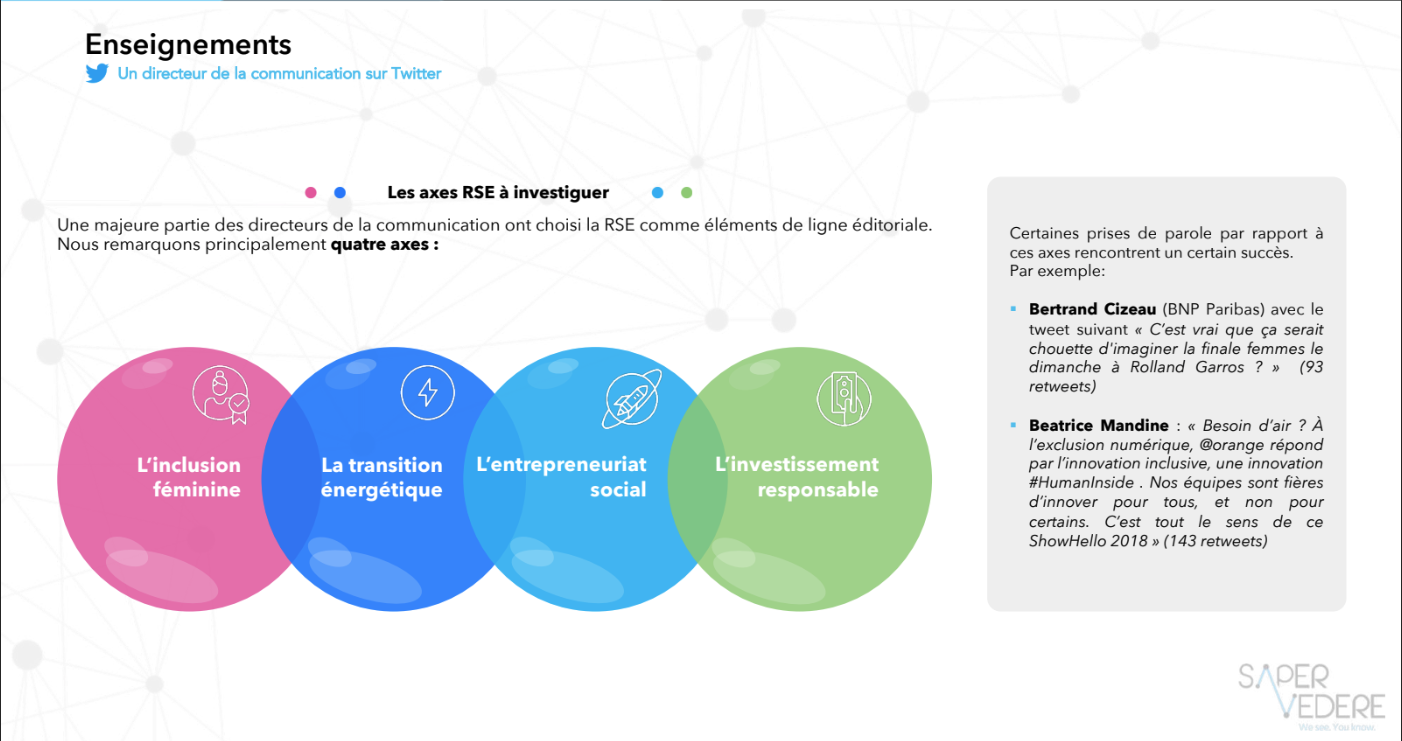
CSR themes
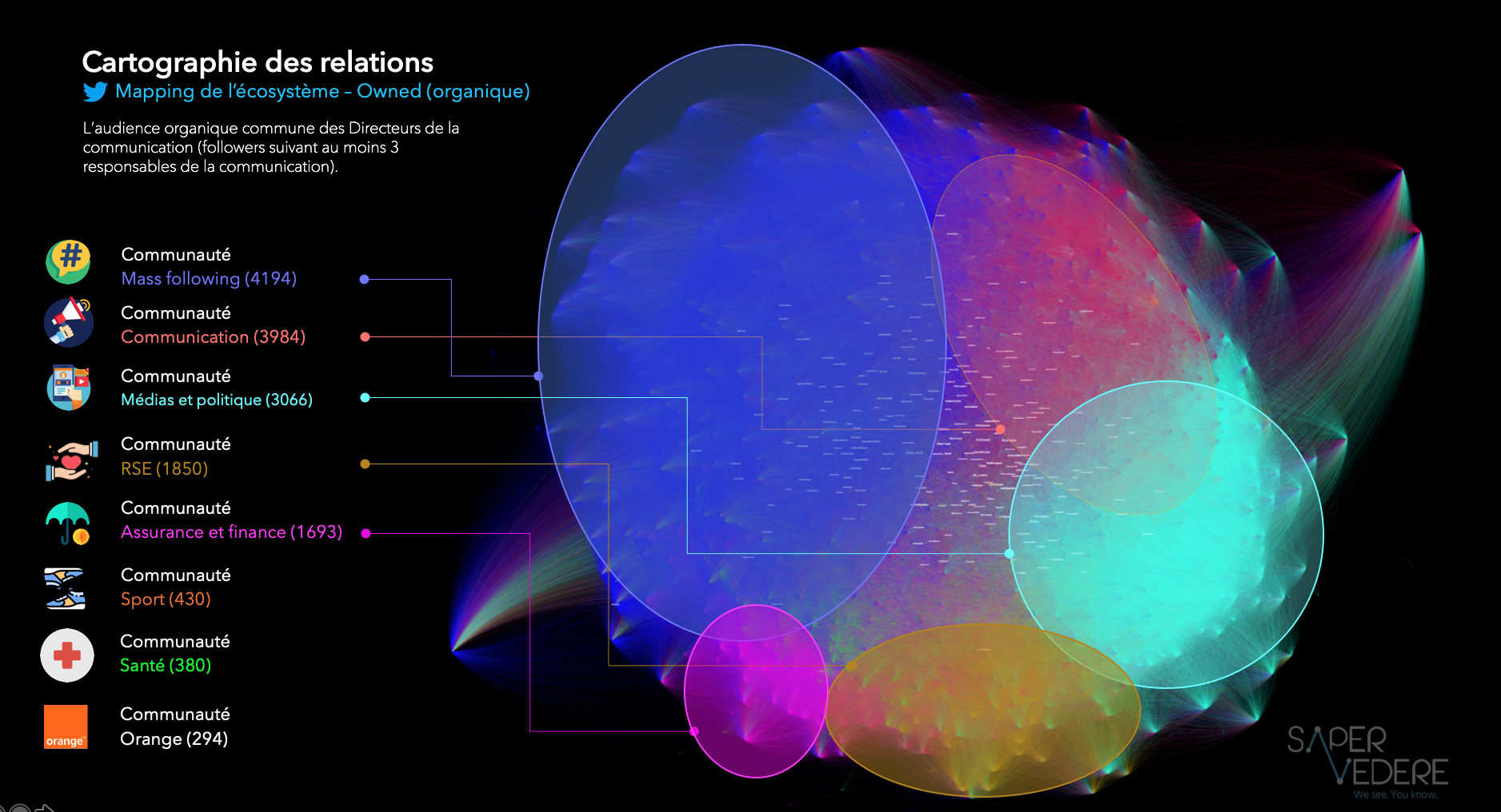
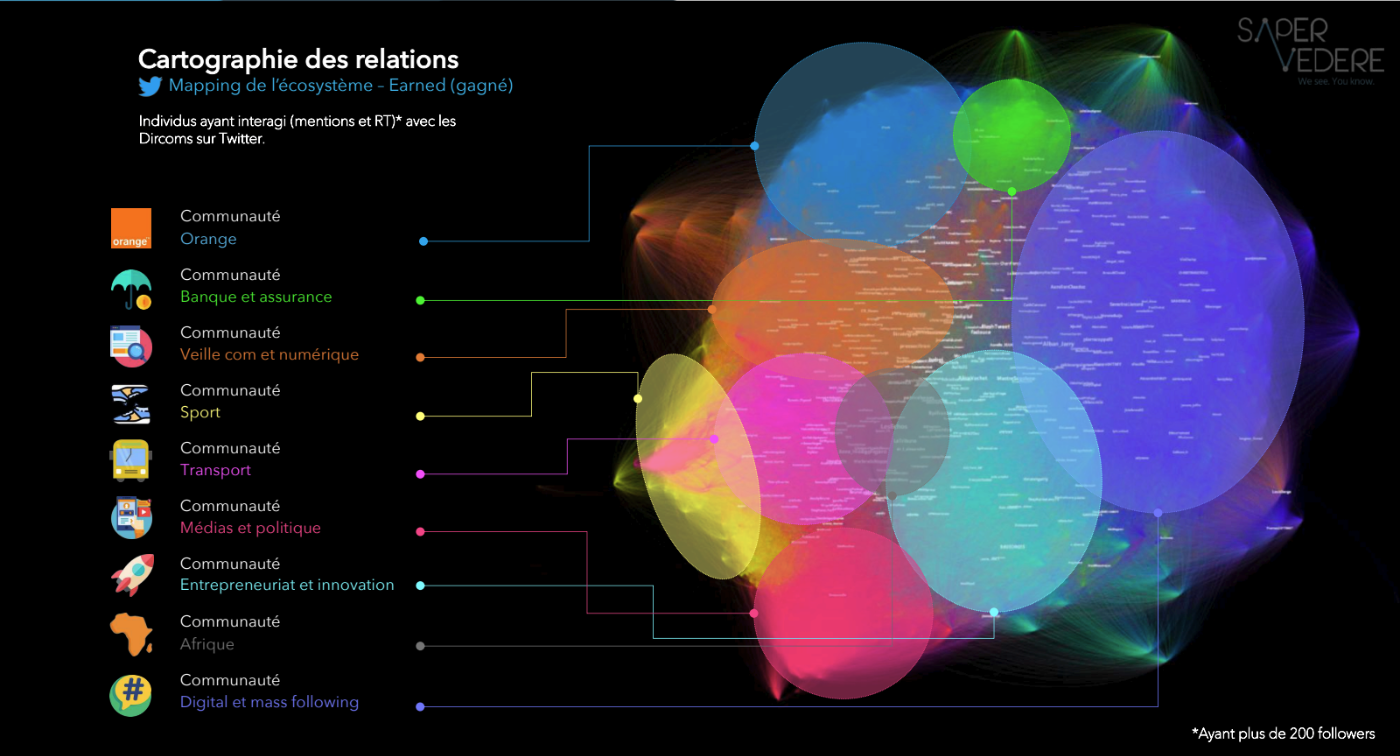
Defined ecosystems
These are the different ecosystems observed (described in more detail in the study on communications directors) with the Owned ecosystem (based on the followers of communications directors) and the Earned ecosystem (based on those who interact with communications directors and have more than 200 followers)
Methodology
To carry out this study, we isolated a list of 55 communications directors based on a number of criteria (membership of the CAC 40, high activity or audience, etc.).
This selection is not intended to be exhaustive, but representative and sufficient to identify lessons and trends. Some other positions may have changed since the start of the study.
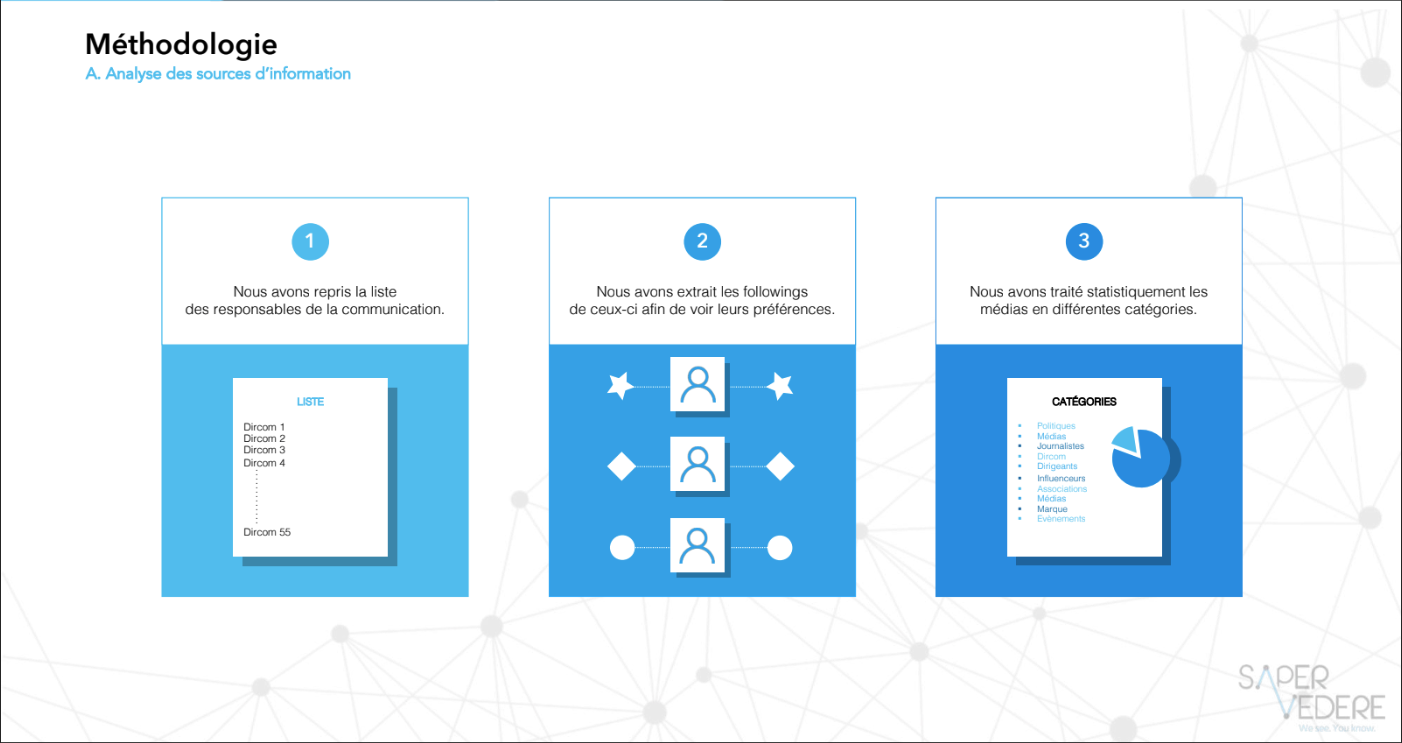
Photo credit: Shutterstock