



If there is one thing that has always surprised me, it is the weak cooperation between communications and public affairs teams within large groups. It also shows in the fact that when we first launched Follaw, public affairs directors had very little interest in the reputational components of their organisation. So I wanted to look at how Follaw’s corpora could be used, but through the eyes of a communications director. Is there a use? And if so, which? To do this, I took all the SBF 120 companies and CEOs and analysed the corpus returned. In the end, after analysis, I saw uses around:
The information back-to-school
- Add scopes that can make up organisations’ reputation: public affairs corpora are generally not covered by traditional monitoring software. Yet corpora such as parliamentary questions or minutes have good visibility and are components of reputation.
- Sector benchmarking: it shows how other organisations handle their agendas, their news and so on.
- Understanding society: the social media panel approach makes it possible to understand the society in which the organisation operates and to calibrate its sectoral and societal knowledge, so as to communicate better afterwards.
Operational uses
- Better identify the right tempo and timing to communicate. Through agendas, where you can see a minister’s presence or travel, it is possible to calibrate your communications well.
- Pre-empt subjects that journalists might cover later. Written questions and questions on current affairs contain a great deal of material with reputational potential, because ministers look into them to answer, and the media cover the matter too. It is therefore a corpus that clearly must not be neglected.
In the end, public affairs data can have certain uses for communications departments, but we must be honest and stress that the reputational value remains low, as volumes are very small and the signals (outside parliamentary questions) can easily be overlooked.
The interest remains essentially sectoral and societal, to better understand organisations’ ecosystems. In the end, nothing beats good collaboration between the communications and public affairs departments (when they are not the same person), as each one’s corpora and topics can help the other!
The appendices
Questions
Questions are clearly the most interesting corpus of all for the reputational components, especially when they are questions on current affairs. These receive greater media coverage but, above all, ministers are (normally) required to answer them and therefore to look into the issue. The types of mention we observe in the questions are:
- State-owned companies are heavily cited by politicians because they have a duty to set an example.
- Sovereignty issues are very strongly raised around organisations
- Projects such as the example below, where politicians echo concerns about societal acceptability
- Redundancy plans in organisations
- Mentions of major players as an example of an issue raised by a politician
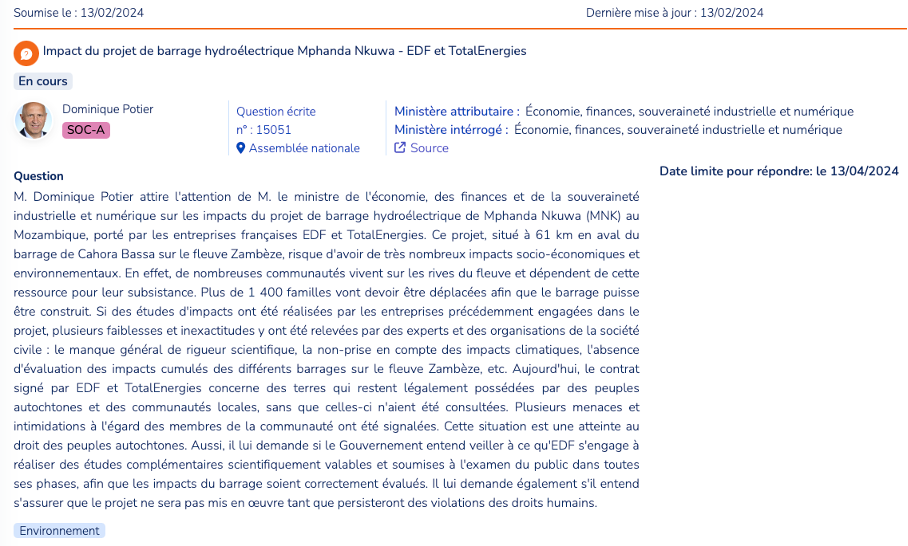
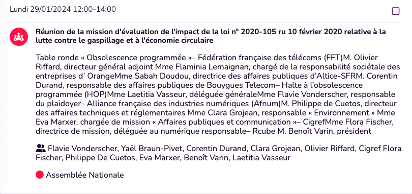
Agenda
The agenda of committees and sittings is fairly useful for following the activity of competing organisations. It very often happens that business leaders are called to give evidence on very specific questions. It is also useful for thematic monitoring.

Press release
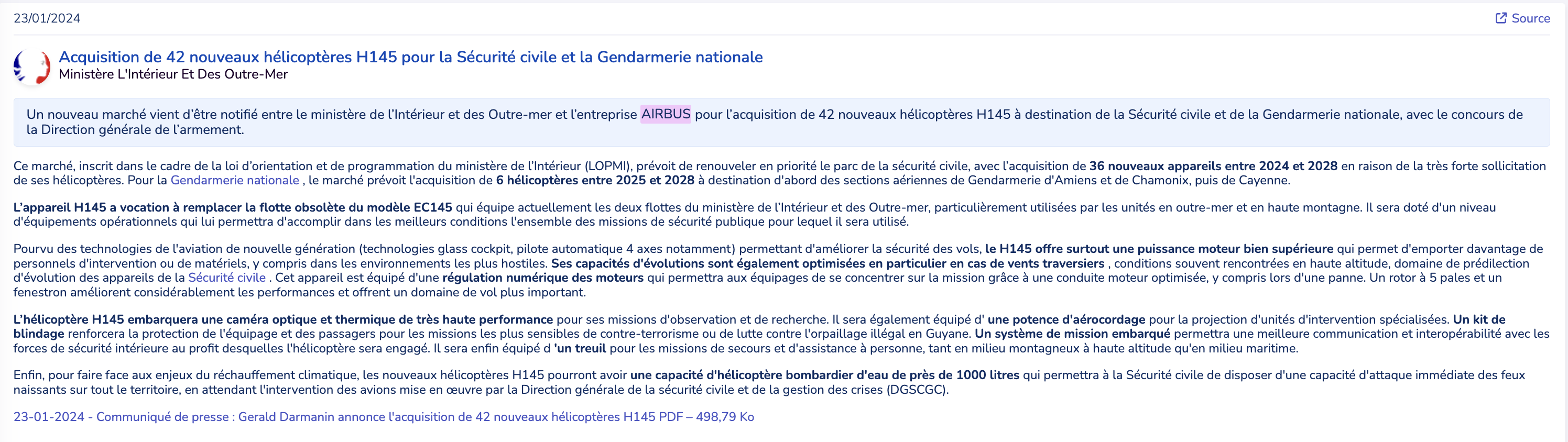
In ministries’ press releases, we isolate several scenarios in which an SBF 120 organisation is mentioned:
- Visit to a site belonging to an organisation (Example of Airbus, where the minister announced the France 2030 plan)
- Partnership between a ministry or a public institution and an organisation (Example of a partnership between Ademe and FNAC Darty)
- Speech by a minister mentioning an organisation (Example of ADP and Air France)
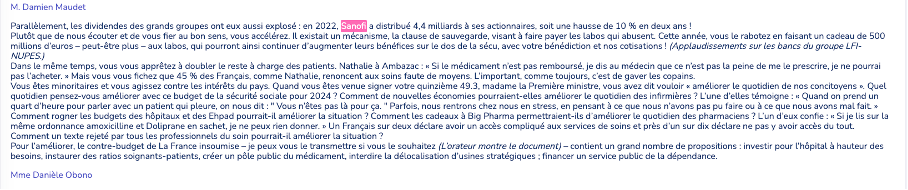
Minutes and reports
In the minutes, we find mere mentions or references with, in the end, little context or information.

Official Journal
Of no particular interest, since the only interesting items already appear in the agenda section.
Petitions
We only considered the petitions published on the National Assembly website. As a reminder, the principle is as follows:
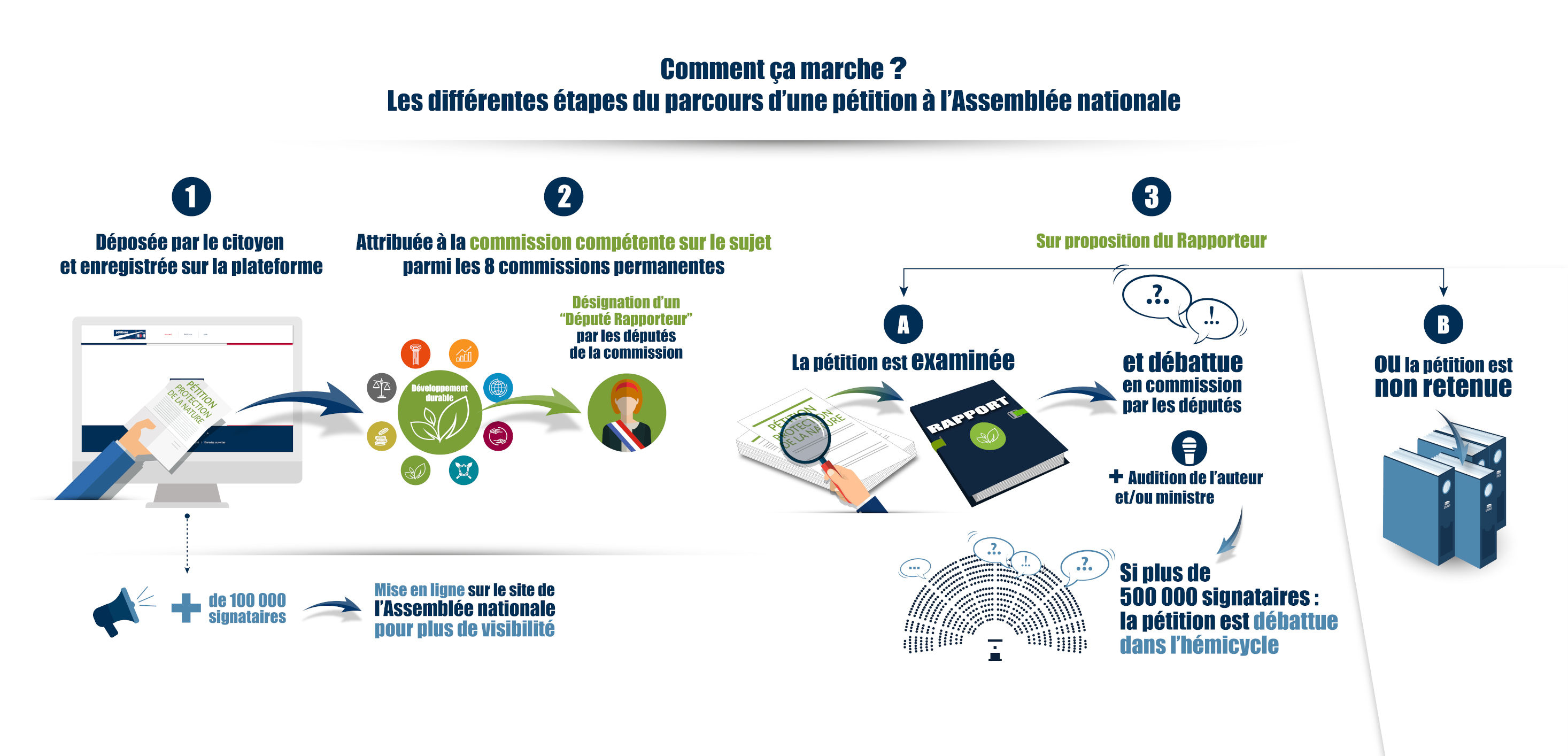
We found nothing of interest in this corpus.